
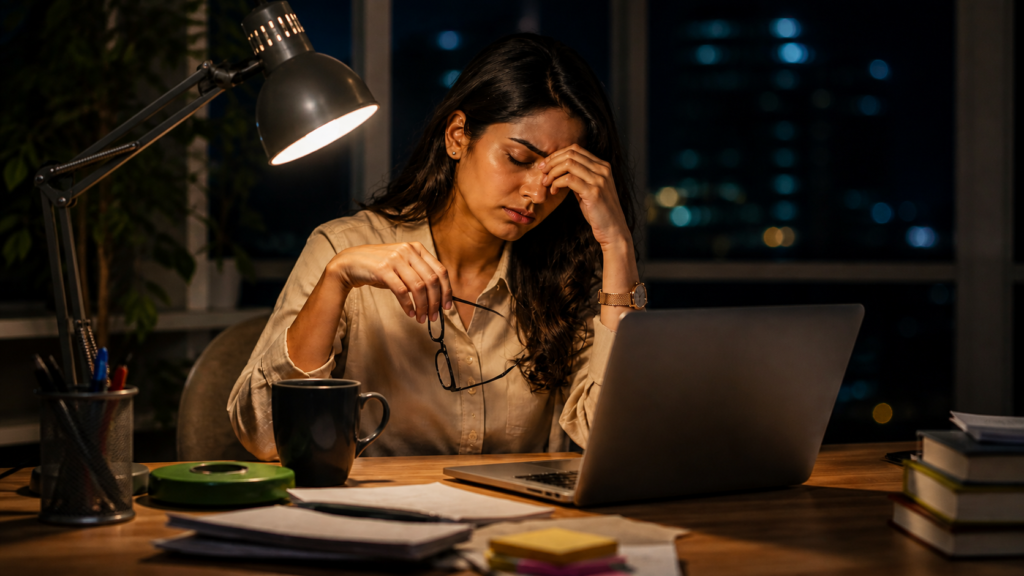
Introduction: Why Women’s Burnout in 2026 Is Different
If you’re a working woman, you’ve probably heard about burnout. But what you might not know is that burnout in 2026 looks completely different than it did just a few years ago—and it’s affecting women far more severely than men.
Recent wellness data shows that over 60% of women report experiencing stress that feels fundamentally different and more complex than before. This isn’t just exhaustion from a long work week. This is a deeper, more intricate form of burnout that impacts both mental and physical health simultaneously.
The alarming statistics tell the story:
- 75% of women report experiencing burnout compared to just 58% of men
- Female burnout rates have increased by 4% while male rates have actually decreased by 3%
- Women are 8 percentage points more likely than men to report struggling or being in crisis
The question isn’t whether burnout is affecting you—it’s whether you can recognize the symptoms before they take over your life. And here’s the challenge: the symptoms of women’s burnout in 2026 are often subtle, misunderstood, and easily mistaken for other conditions.
Let’s break down the five critical symptoms every working woman needs to understand right now.
Understanding Women’s Burnout symptoms in 2026: Why It’s More Complex
Before diving into the five symptoms, it’s important to understand why burnout in 2026 looks different for women.
The modern working woman faces unique pressures that compound stress:
Blurred Boundaries Between Work and Life: Hybrid work environments mean the office never really closes. You’re answering emails at dinner, checking Slack before bed, and starting work before your morning coffee.
The Invisible Second Shift: Women are still expected to excel in multiple roles—professional, caretaker, household manager—simultaneously. This constant context-switching creates sustained mental overload.
Financial Uncertainty: Rising costs of living, economic unpredictability, and wage gaps add financial stress that men statistically experience less acutely.
Digital Overload: Constant notifications, social media comparisons, and always-on connectivity create a nervous system that never gets to rest.
These combined factors mean that burnout in 2026 isn’t just about being tired. It’s about your entire system being overwhelmed.
Read More: Sexual Health & Mental Health: How Anxiety, Depression & Trauma Affect Intimacy (And How to Heal)
1: Emotional Flatness and Detachment
One of the most surprising symptoms of women’s burnout in 2026 is emotional flatness—and it often goes unrecognized.
You wake up, go through your day, hit your deadlines, but inside you feel… nothing. Not stressed exactly, but disconnected. Emotionally numb.
What This Looks Like in Real Life
A marketing manager might still crush her quarterly goals, but feel completely disconnected from the work’s purpose. She meets every deadline, attends every meeting, but feels like she’s operating on autopilot.
This emotional shutdown is deceptively dangerous because:
- It doesn’t match the traditional burnout image. People expect burnout to look like crying, frustration, or visible stress. Emotional flatness is quieter, which means it goes unnoticed longer.
- You keep performing. Your external metrics look fine—your boss is happy, your projects are completed—so you assume you’re fine. But internally, you’re disconnected from what you’re doing.
- It can progress to depression. When emotional flatness persists, it often evolves into clinical depression if left unaddressed.
How to Recognize It
Ask yourself:
- Do you feel emotionally distant from work that once excited you?
- Are you completing tasks but feeling no sense of accomplishment?
- Has your enthusiasm for career goals flatlined?
- Do you struggle to engage emotionally with colleagues or clients?
If you answered yes to three or more, emotional detachment might be your first burnout signal.
2: Unexplained Physical Symptoms
Here’s where women’s burnout in 2026 gets particularly tricky: it manifests in your body.
You start experiencing chronic headaches, muscle tension, digestive issues—but when you visit your doctor, they find nothing medically wrong. The imaging is normal, the blood work is fine, yet the pain persists.
The Body Keeps Score
Your nervous system is designed to handle stress temporarily. When stress becomes chronic—which it does for most working women—your body starts sending distress signals:
Chronic Headaches and Migraines: Tension headaches are among the most common physical manifestations. They’re often tied to muscle tension in the neck and shoulders from prolonged stress.
Muscle Tension and Pain: A working mother might develop chronic neck pain despite no injury. Another woman experiences constant lower back tension. The stress literally lives in your muscles.
Digestive Problems: The gut-brain connection is real. Chronic stress impacts your digestive system, leading to IBS-like symptoms, bloating, constipation, or diarrhea.
Sleep Disruption: You lie awake at night, or you sleep but wake unrefreshed. Your nervous system is too activated to achieve deep, restorative sleep.
Why Doctors Often Miss This
The challenge with stress-related physical symptoms is that they don’t show up clearly on standard medical tests. You might visit three different specialists, get dozens of tests, and everything comes back “normal”—even though you’re clearly suffering.
This is where recognizing the burnout connection matters. These aren’t imaginary symptoms. They’re your body’s way of communicating that your nervous system is overwhelmed.
3: Loss of Interest in Hobbies and Passions
You used to love your weekend runs, your book club, your creative projects. But lately, the thought of engaging in these activities feels exhausting rather than energizing.
This symptom is called anhedonia—the loss of interest in activities you once enjoyed. And it’s a hallmark of women’s burnout in 2026.
Why This Matters
When women are burned out, they often have nothing left to give to themselves. All their energy is depleted by work, household responsibilities, and other obligations. The idea of adding “self-care” on top of everything feels like another task, not pleasure.
You might find yourself:
- Declining invitations from friends
- Canceling hobbies you once prioritized
- Preferring isolation over social engagement
- Saying “maybe next week” to activities you actually enjoy
The Danger of Isolation
This symptom is particularly concerning because it often leads to increased isolation. As women withdraw from activities and social connections, they lose the support systems that could help them recover.
4: Difficulty Concentrating and Declining Productivity
Paradoxically, burned-out women often report working longer hours while their actual productivity declines.
You spend nine hours at your desk but only get four hours of focused work done. Your concentration is fragmented. You open the same email three times without really reading it. You start tasks and abandon them halfway through.
The Cognitive Impact
Chronic stress impacts your prefrontal cortex—the part of your brain responsible for focus, decision-making, and memory. When this area is compromised, you experience:
- Brain fog: Difficulty thinking clearly or articulating ideas
- Decision fatigue: Feeling paralyzed by simple choices
- Forgetfulness: Forgetting commitments, tasks, or information you normally retain easily
- Reduced creativity: Struggling to generate ideas or problem-solve
The Vicious Cycle
Here’s where it gets worse: as your productivity declines, you feel guilty. This guilt creates more stress. The increased stress further impairs your concentration. You’re trapped in a downward spiral.
5: Physical and Emotional Exhaustion Despite Rest
The final—and perhaps most telling—symptom of women’s burnout in 2026 is persistent exhaustion that doesn’t improve with rest.
You take a day off, sleep in, do relaxing activities, but you still wake up feeling depleted. A week of vacation provides temporary relief, but within days of returning to work, the exhaustion returns.
More Than Just Being Tired
This isn’t regular fatigue that responds to sleep and rest. This is nervous system exhaustion—your entire system is running on empty.
You might experience:
- Persistent fatigue despite adequate sleep
- Feeling drained after minimal social interaction
- Lack of motivation to do anything, even enjoyable activities
- Feeling like you’re running on fumes all day
Why This Happens
When your nervous system is chronically activated (stuck in fight-or-flight mode), it never truly recovers. Rest and sleep help, but they don’t fully address the underlying nervous system dysregulation. You need more targeted intervention.
What You Can Do: Practical Steps to Address Women’s Burnout
Recognizing these Women’s Burnout symptoms women is the first step. Now what?
Immediate Actions
1. Get a Professional Assessment: Talk to your doctor or therapist about what you’re experiencing. Rule out underlying medical conditions, but also discuss burnout specifically.
2. Take Your Leave Seriously: If your company offers women mental health days or professional leave, use them. Don’t feel guilty about prioritizing your health.
3. Set Boundaries: Start saying no to non-essential commitments. This is not selfish—it’s necessary for your survival.
Medium-Term Changes
4. Invest in Nervous System Regulation: Practices like yoga, breathwork, meditation, and therapy specifically targeting nervous system healing can help your body transition out of stress mode.
5. Restructure Your Life: Consider whether your current work situation is sustainable. This might mean negotiating different hours, finding a new role, or making bigger changes.
Workplace Solutions
Talk to your HR department about:
- Women Mental Health resources and counseling coverage
- Flexible work arrangements
- Workload assessment and redistribution
- Mental health awareness training for management
The Bottom Line: You’re Not Alone, and It’s Not Your Fault
If you recognize yourself in these five symptoms, know this: you’re not alone. You’re not weak. You’re not failing.
What’s happening is that your body and mind are telling you that something needs to change. The question is whether you’ll listen.
The good news is that women’s burnout in 2026, while serious, is increasingly recognized and addressed. More companies are taking mental health seriously. More resources are available. More women are speaking up.
Your burnout is not a character flaw. It’s a signal that the current system isn’t working for you. And that signal deserves your attention.
Key Takeaways
✓ Women’s burnout in 2026 manifests differently than traditional burnout
✓ Emotional flatness is often the first subtle symptom
✓ Physical symptoms like chronic pain often accompany psychological burnout
✓ Loss of interest in hobbies indicates serious burnout
✓ Productivity decline despite longer hours is a red flag
✓ Persistent exhaustion that doesn’t respond to rest requires intervention
✓ Professional support and workplace changes are essential for recovery
Resources & Next Steps
If you’re experiencing burnout:
- Speak to a mental health professional (therapist, counselor, or psychiatrist)
- Talk to your HR department about available resources
- Contact your doctor to rule out medical causes
- Consider workplace accommodations or changes
- Join support communities for working women
Read More: Wearable Technology in 2026: From Tracking to Programming—What Health Pros Need to Know