
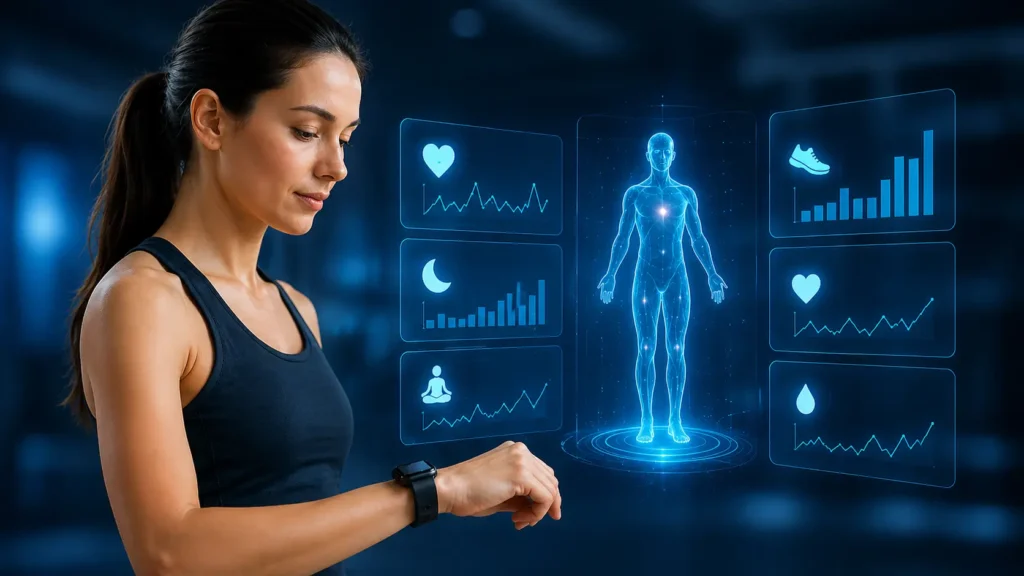
Introduction: Wearable Technology in 2026
The fitness industry has undergone a dramatic transformation over the past two decades, but few shifts have been as profound as the evolution of wearable technology. What once began as simple step counters has evolved into sophisticated health management systems that capture heart rate variability, sleep patterns, muscle readiness, and even fall detection. For health professionals navigating this landscape, understanding this evolution isn’t optional—it’s essential.
In 2026, wearable technology has reclaimed its position as the #1 fitness industry trend, and for good reason. Nearly half of all U.S. adults now own a fitness tracker or smartwatch, fundamentally changing how fitness professionals approach client coaching and program design. But here’s the critical shift: we’ve moved beyond the era of simple tracking. Welcome to the era of intelligent programming.
This blog post explores what this means for your practice, how wearable technology is transforming client outcomes, and the actionable strategies you need to leverage this technology in 2026.
The Evolution: Why Wearable Technology Matters Now
From Gadgets to Clinical Tools
Ten years ago, wearables were novelty items—fun additions to a fitness regimen but rarely integrated into professional coaching. Today, they’re sophisticated biosensors that rival clinical-grade monitoring equipment.
The data tells the story:
- 345+ million people used fitness apps in 2024 alone
- Nearly 50% of U.S. adults own a fitness tracker or smartwatch
- Wearable adoption has created a $850+ million app download market
But adoption numbers don’t tell the full story. What matters to health professionals is accuracy and actionability. Modern wearables now capture:
- Advanced heart rate variability (HRV) data for recovery assessment
- Sleep architecture analysis including REM and deep sleep percentages
- Muscle readiness metrics that indicate training capacity
- Fall detection and crash detection for older adult populations
- Stress biomarkers that correlate with mental health outcomes
- Real-time training load monitoring that prevents overtraining
Why Wearable Technology in 2026 Is Different
The question is no longer “should my clients wear a tracker?” It’s shifted to “how do I use real-time data to make better programming decisions?”
This fundamental shift from tracking to programming is reshaping professional practice across clinical, corporate, and commercial fitness settings.
Understanding the Tracking-to-Programming Shift
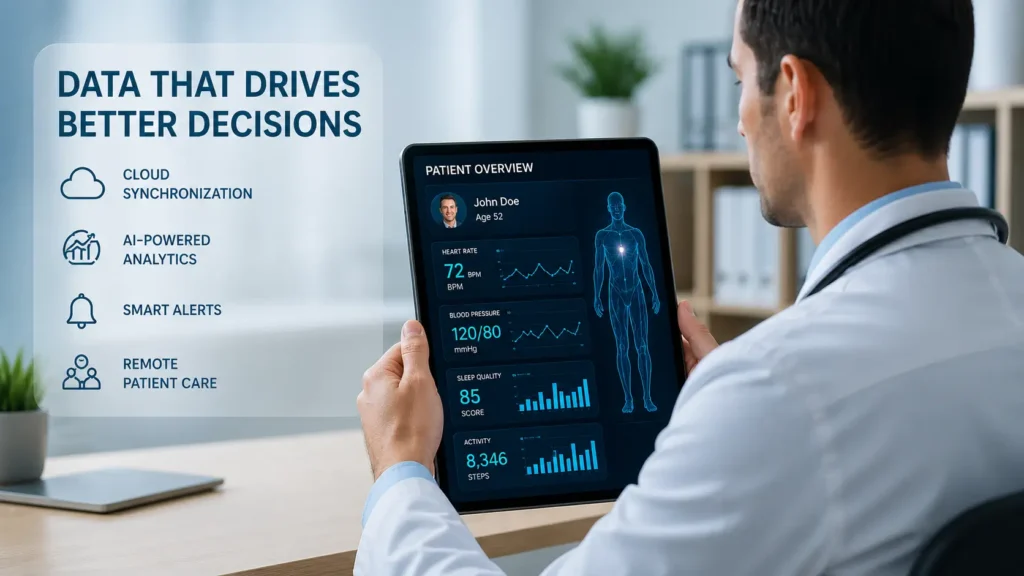
Wearable Technology in 2026
What Does “Programming” Actually Mean?
In 2026, wearable data informs dynamic, real-time adjustments to exercise programming. Instead of a static weekly plan, clients receive personalized adaptations based on their physiology.
Here’s how it works:
A client’s smartwatch captures that they slept poorly, experienced elevated stress biomarkers, and show low heart rate variability. Instead of following Tuesday’s scheduled strength session, a health professional might recommend:
- A restorative yoga session instead of high-intensity interval training
- Extra recovery time with mobility work
- Stress-reduction protocols including breathwork
This isn’t guesswork—it’s physiology-informed coaching.
The Data Translation Challenge
Wearable data means nothing without professional interpretation. This is where health professionals gain competitive advantage. You become the bridge between raw data and actionable programming.
Key skills you need:
- Understanding HRV thresholds and what they mean for your client
- Interpreting sleep data in context of training stress
- Recognizing overtraining patterns before injury occurs
- Communicating data insights in client-friendly language
- Integrating wearable feedback into periodized programs
How Advanced Wearable Technology Are Changing Program Design
Real-Time Adaptation: The Competitive Edge
Traditional programming operates on a fixed schedule: Monday is upper body, Wednesday is lower body, Friday is conditioning. Wearable-informed programming asks: Is this the right workout for this person today?
Practical applications for health professionals:
1. Recovery Monitoring
- Track accumulated fatigue across multiple clients
- Identify which athletes need active recovery vs. rest
- Prevent burnout before it impacts performance
2. Sleep-Based Adjustments
- Poor sleep = reduced neuromuscular coordination
- Adjust intensity and complexity on low-sleep days
- Recommend mobility work instead of heavy strength training
3. Stress Integration
- Combine training stress with life stress data
- Recognize when emotional stress compounds training load
- Modify intensity to support mental health
4. Injury Prevention
- Monitor biomechanical compensation patterns
- Identify early warning signs of overuse
- Adjust volume before injury occurs
AI Powered Personalization: Your New Coaching Partner
Modern wearables paired with artificial intelligence create dynamic programming that adapts in real time. This isn’t replacing your expertise—it’s amplifying it.
AI algorithms can now:
- Analyze thousands of data points simultaneously
- Identify individual response patterns across clients
- Predict optimal training windows based on physiology
- Generate personalized exercise recommendations
- Flag recovery needs before fatigue becomes critical
As one leading sports medicine expert noted: “Your workout will no longer be planned around guesswork. It will be programmed by your physiology, updated in real time by the data your wearables already collect and translated into actionable client-centered decisions.”
Practical Integration: How to Use Wearables in Your Practice
Step 1: Choose the Right Wearable Platform
Not all wearables are created equal. For health professional integration, consider:
- Medical-grade accuracy for heart rate variability and respiration
- API integration with your coaching platform
- Client data privacy compliance (HIPAA for clinical settings)
- Real-time data access not delayed syncing
- Professional-friendly dashboards designed for coaches, not just consumers
Leading options include Oura Ring, WHOOP, Apple Watch with professional apps, and Garmin devices—but your choice depends on your specific population.
Step 2: Establish Baseline Data
Before making programming decisions based on wearable data, you need baseline metrics:
- One week of normal data to understand your client’s baseline HRV
- Two weeks of sleep patterns to identify typical sleep architecture
- Stress baseline under normal conditions
This prevents overreacting to single outliers and helps you recognize true physiological shifts.
Step 3: Integrate Data Into Your Coaching Communication
Data means nothing if clients don’t understand it. Create simple frameworks:
Example Dashboard Communication:
- Green (excellent): Train as planned, push hard if desired
- Yellow (moderate): Follow plan but monitor intensity
- Red (compromised): Reduce intensity, focus on recovery modalities
Step 4: Combine Wearable Data With Professional Judgment
This is critical: Wearables inform decisions; they don’t make decisions.
Always combine:
- Wearable data (objective)
- Client feedback (subjective)
- Your professional assessment (clinical judgment)
- Training goals and context (big picture)
The Mental Health Connection: New Frontier in 2026
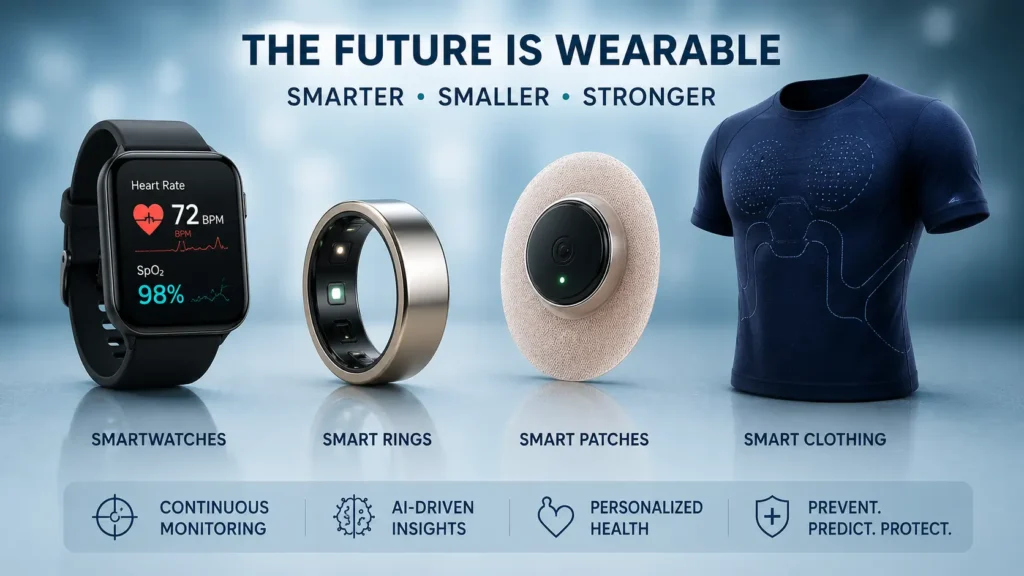
Exercise for mental health has risen to #6 in fitness industry trends, up from #8 just two years ago. Wearables play a crucial role here.
Stress biomarkers captured by modern wearables provide objective data on:
- Anxiety levels throughout the day
- Sleep quality impacts on mood
- Exercise-induced stress reduction
- Recovery’s role in emotional regulation
Health professionals can now prescribe movement with mental health targets, not just physical fitness targets. “Reduce stress biomarkers by 15%” becomes a measurable, achievable goal.
Common Challenges and Solutions
1: Data Overwhelm
Solution: Start with 3-4 key metrics (HRV, sleep, training load, recovery). Master these before expanding.
2: Client Confusion
Solution: Create simple visual dashboards. Most clients don’t need raw data—they need interpretations.
3: Accuracy Concerns
Solution: Cross-reference wearable data with client feedback. Validate against your own observations before programming changes.
4: Privacy and Data Security
Solution: Use HIPAA-compliant platforms. Be transparent about data collection and storage.
Future-Proofing Your Practice
The wearable technology landscape evolves rapidly. Position yourself ahead of the curve:
- Stay educated: Follow ACSM trends reports and professional certifications
- Experiment: Test new wearables and platforms with early adopter clients
- Build competencies: Learn data interpretation and basic statistics
- Connect with tech: Understand how APIs work and how data integrates with your systems
- Maintain the human element: Wearable Technology enhances—never replaces—the coach-client relationship
Conclusion: Your Competitive Advantage in 2026
Wearable technology has transitioned from novelty to necessity in professional fitness practice. The health professionals who thrive in 2026 aren’t those who simply collect more data—they’re those who translate data into better client outcomes.
The shift from tracking to programming represents a maturation of the fitness industry. Your clients no longer want to hit arbitrary step targets or follow generic weekly plans. They want evidence-based, personalized programming that respects their unique physiology, psychology, and lifestyle.
By mastering wearable technology integration, you’re not just keeping pace with industry trends—you’re elevating your professional value proposition. You become less of a “fitness professional” and more of a “personal health engineer,” architecting sustainable wellness through data-informed decision-making.
Read More: PCOD vs PCOS: What Every Woman Should Know