Wildfire Smoke Health Effects 2026
Wildfire season has become a near-yearly reality across much of the United States, and with it comes a less visible but very real health concern: smoke. Whether the fires are burning in your own state or drifting in from hundreds of miles away, wildfire smoke can affect air quality — and your health — long after the flames themselves are out.
In this guide, we’ll cover Wildfire smoke health effects 2026, common wildfire smoke breathing symptoms, who is most at risk, and practical ways to protect your lungs from wildfire smoke, both outdoors and inside your home.
Disclaimer: This article is for general informational purposes only and is not a substitute for professional medical advice. I am not a doctor. If you or someone you know is experiencing severe breathing difficulty or chest pain, seek emergency medical care immediately.
Read More: Micro Workouts: The 10-Minute Fitness Solution for Busy People
What’s Actually in Wildfire Smoke?
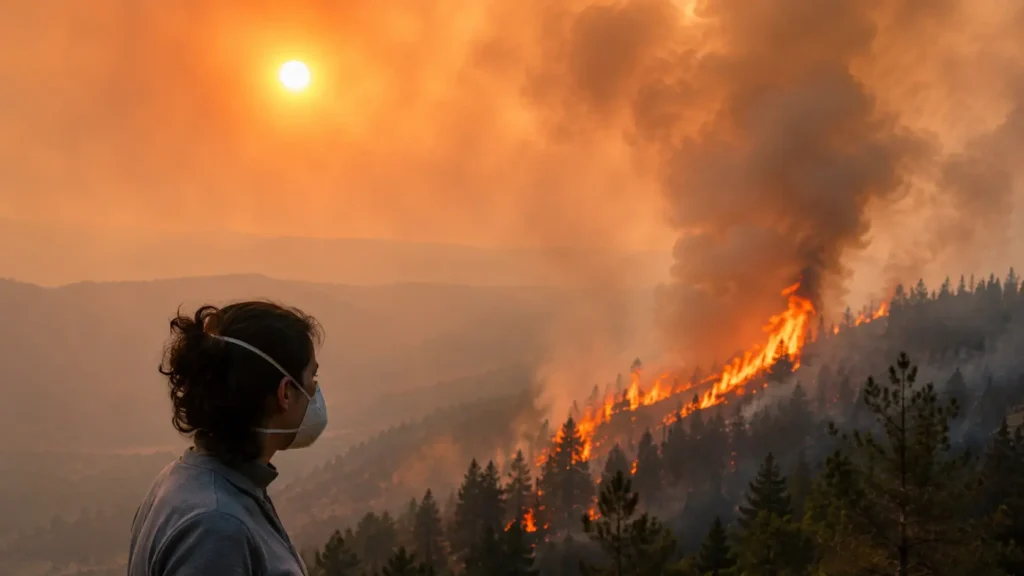
Wildfire smoke isn’t just ash and haze. It’s a complex mixture of gases and fine particles, including carbon monoxide, nitrogen oxides, and a group of pollutants known as PM2.5 — particulate matter so small it can travel deep into the lungs and even enter the bloodstream. <cite index=”6-1″>Wildfire smoke also contains other pollutants such as acrolein and formaldehyde</cite>.
Because these particles are so tiny, you don’t need to see or smell heavy smoke to be affected. Even a hazy sky in a city far from any active fire can signal unhealthy PM2.5 levels.
Wildfire smoke health effects 2026
Understanding the current landscape of wildfire smoke health effects matters, especially as research continues to evolve. Here’s what’s well established, and what’s newly emerging.
Short-Term Effects
<cite index=”1-1″>Short-term exposure to wildfire smoke can cause effects ranging from minor issues like eye and respiratory irritation to more serious problems such as worsened asthma, heart failure, and even premature death.</cite> <cite index=”1-1″>Fine particles act as respiratory irritants, and high exposure levels can lead to persistent coughing, phlegm, wheezing, and difficulty breathing.</cite>
Effects on the Body’s Defenses
<cite index=”1-1″>Exposure to PM2.5 may also interfere with the body’s ability to clear inhaled viruses and bacteria from the lungs</cite>, which is one reason respiratory infections can sometimes spike during and after heavy smoke events.
Cardiovascular Impact
Smoke exposure doesn’t just affect the lungs. <cite index=”2-1″>Research from the 2022 wildfire season in Montana looked at how fine particulate matter exposure related to in-home blood pressure readings</cite>, adding to a growing body of evidence connecting wildfire smoke to cardiovascular strain.
Emerging 2026 Research: Long-Term Exposure and Cancer Risk
One of the more notable developments in 2026 is new research presented at a major cancer research conference. <cite index=”4-1″>The study, which has not yet been peer-reviewed, found that people exposed to higher levels of wildfire smoke over a three-year period had an increased risk of several cancers, including lung, colorectal, breast, bladder, and blood cancers</cite>. While this research is still early and requires further validation, it signals that the health conversation around wildfire smoke is expanding beyond short-term breathing issues.
Mental and Cognitive Effects
Smoke exposure has also been linked to non-respiratory effects. <cite index=”1-1″>Some early evidence suggests short-term smoke exposure may be associated with preterm birth risk and measurable impacts on cognitive performance</cite>. Ongoing research is also examining links between prolonged smoke exposure and stress-related conditions.
Wildfire Smoke Breathing Symptoms to Watch For
Knowing the common wildfire smoke breathing symptoms can help you respond early, before minor irritation turns into something more serious.
Common symptoms include:
- Coughing or a scratchy, sore throat
- Wheezing or shortness of breath
- Chest tightness or discomfort
- Burning or watery eyes
- Runny nose or sinus irritation
- Headaches
- Fatigue or unusual tiredness
- Worsening of existing asthma or COPD symptoms
<cite index=”8-1″>These symptoms occur because wildfire smoke exposure is linked to inflammation and oxidative stress in the respiratory system</cite>, which can affect anyone, though the severity often depends on exposure duration, air quality levels, and individual health.
When Symptoms Signal a Medical Emergency
Seek medical attention promptly if you or someone nearby experiences:
- Severe shortness of breath or trouble breathing
- Chest pain or pressure
- Lips or face turning bluish
- Confusion or difficulty staying alert
- Symptoms that don’t improve after leaving the smoky environment
Who Is Most at Risk from Wildfire Smoke?
While wildfire smoke can affect anyone, certain groups face a higher risk of complications:
- Children: Their lungs are still developing, and they breathe more air relative to their body size.
- Older adults: Age-related changes in lung and heart function increase vulnerability.
- People with asthma or COPD: Smoke can trigger flare-ups and worsen baseline symptoms.
- People with heart disease: <cite index=”1-1″>Wildfire smoke exposure has been associated with exacerbation of heart failure</cite> in vulnerable individuals.
- Pregnant individuals: Emerging research points to possible links between smoke exposure and preterm birth risk.
- Outdoor workers: Prolonged outdoor exposure increases cumulative smoke intake.
- People without access to air conditioning or air filtration: Limited ability to create a clean indoor space raises exposure risk.
How to Protect Your Lungs from Wildfire Smoke Outdoors
If you live in or near an area affected by wildfire smoke, a few practical habits can meaningfully reduce your exposure.
- Check the Air Quality Index (AQI) daily. Sites like AirNow.gov provide real-time local air quality data.
- Limit outdoor activity when AQI is elevated, especially strenuous exercise, which increases how much smoke you inhale.
- Wear a properly fitted N95 or P100 respirator when you must be outdoors in smoky conditions. <cite index=”13-1″>Surgical masks are not effective at filtering out fine smoke particles</cite>, so they shouldn’t be relied on for protection.
- Reschedule outdoor plans — workouts, yard work, and errands — for times when smoke levels are lower.
- Keep car windows closed and use recirculated air mode if you must drive through smoky areas.
- Consult a doctor before using a respirator if you have an existing breathing condition, since masks can make breathing feel more difficult for some people.
Protecting Yourself from Wildfire Smoke Indoors
A common misconception is that staying indoors automatically means clean air. In reality, wildfire smoke indoors can still pose a health risk if your home isn’t sealed or filtered properly.
How Smoke Gets Into Your Home
Smoke particles are small enough to enter through gaps around windows, doors, vents, and even small cracks in the building structure. <cite index=”9-1″>Even inside a home without proper filtration, wildfire smoke can cause symptoms like coughing, a runny nose, wheezing, or burning eyes</cite>.
Steps to Reduce Wildfire Smoke Indoors
- Keep windows and doors closed during smoke events, and seal obvious gaps with weatherstripping or tape if needed.
- Create a “clean room.” <cite index=”11-1″>Choose a room with no fireplace and as few windows and doors as possible, then use a portable air cleaner in that space while avoiding activities that add particles to the air</cite>.
- Use a HEPA air purifier. <cite index=”9-1″>Fine wildfire smoke particles, known as PM2.5, are best removed using air purifiers with HEPA filters paired with a strong fan</cite>.
- Consider a DIY box fan filter if commercial purifiers aren’t available. <cite index=”11-1″>This involves attaching one or more furnace filters to a box fan using tape, brackets, or a bungee cord, offering a temporary alternative to store-bought air cleaners</cite>.
- Avoid activities that worsen indoor air, such as burning candles, frying food, vacuuming without a HEPA filter, or smoking indoors.
- Run your HVAC system with a high-efficiency filter, if your system supports one, to help filter air throughout the home.
- Air out your home once smoke clears, opening windows briefly to refresh indoor air when outdoor AQI improves.
- Know your backup options. <cite index=”11-1″>If home filtration isn’t possible, a large, air-conditioned public building such as a shopping mall can offer temporary relief from smoke exposure</cite>.
Long-Term Wildfire Smoke Exposure: Why It Matters
Occasional smoke exposure is one concern, but repeated or prolonged exposure over months or years is where researchers are focusing increasing attention. <cite index=”3-1″>As wildfire activity in the western US continues to increase alongside shifting climate patterns, researchers have linked wildfire smoke and fine particulate matter exposure to both short- and long-term premature mortality, along with higher rates of hospital admissions and emergency department visits for respiratory and cardiovascular issues</cite>.
This growing body of research is part of why public health experts increasingly recommend year-round awareness of air quality, not just during active fire events nearby.
FAQs: Wildfire Smoke Health Effects 2026
What are the most common wildfire smoke breathing symptoms? Coughing, throat irritation, wheezing, chest tightness, and shortness of breath are among the most reported symptoms during smoke exposure.
Is wildfire smoke dangerous indoors even with windows closed? Yes. Smoke particles can still enter through small gaps, vents, and door seams, which is why using a HEPA air purifier or a designated clean room is recommended during smoke events.
How can I protect my lungs from wildfire smoke if I have asthma? Stay indoors with filtered air when possible, keep rescue medication accessible, monitor AQI levels closely, and consult your doctor about an action plan for smoke season.
Do N95 masks really help with wildfire smoke? Yes, when worn correctly, N95 or P100 respirators can filter out fine smoke particles far more effectively than cloth or surgical masks.
Can wildfire smoke affect people far from the actual fire? Yes. Smoke can travel hundreds of miles, meaning people in states with no active wildfires can still experience elevated PM2.5 levels and related health effects.
Final Thoughts: Wildfire Smoke Health Effects 2026
Wildfire Smoke Health Effects 2026 extend well beyond a smoky sky and a scratchy throat. From short-term breathing symptoms to emerging research on long-term cardiovascular and cancer-related risks, smoke exposure is a public health issue that deserves ongoing attention — especially as wildfire seasons continue to intensify across the USA.
Read More: Mosquito-Borne Illnesses in Summer 2026: Symptoms and Prevention Tips