
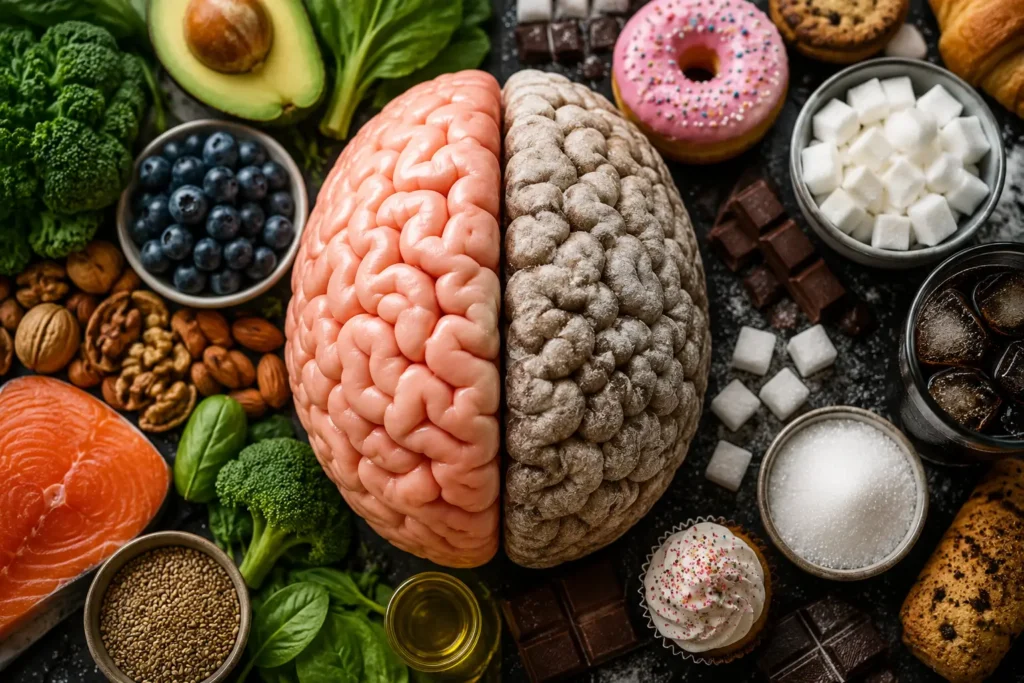
Introduction: My Wake-Up Call About Sugar and Brain Health
Three years ago, I noticed something troubling. My 52-year-old brother started forgetting important dates and struggled with brain fog throughout the day. He’d walk into rooms and forget why. His doctor ran tests—everything came back “normal.” That’s when I started researching the connection between sugar and brain health in adults, and what I discovered shocked me.
I’m not a doctor or nutritionist. I’m a blogger who’s spent 15 years writing about health, and I’ve learned to dig deep into research. What I found was compelling: the sugar we consume daily isn’t just affecting our waistlines—it’s silently damaging our brains.
This article shares everything I’ve learned about sugar’s impact on brain health and gives you 7 practical, immediately actionable steps you can take starting today. No extreme diets. No complicated protocols. Just real strategies that work.
How Sugar Actually Affects Your Adult Brain
The Simple Science
When you eat sugar, your body converts it to glucose, which enters your bloodstream. Your Brain Health normally loves glucose—it’s fuel. But here’s the problem: when you consume too much refined sugar, something goes wrong in your brain.
Think of it like this: if your Brain Health is a car, glucose is the premium fuel it needs. But high sugar consumption is like constantly overfilling the tank and using the wrong grade of fuel. Eventually, the engine gets damaged.
Here’s what actually happens:
- Insulin Resistance Develops – Your brain stops responding properly to insulin signals. This is called “brain insulin resistance,” and research shows it’s a precursor to cognitive decline.
- Inflammation Takes Over – Excess sugar triggers chronic inflammation in your brain tissue. Imagine constant low-grade fire slowly burning your neural connections.
- Protein Buildup Occurs – Sugar promotes the accumulation of harmful proteins (amyloid and tau) in your brain—the exact proteins associated with dementia and Alzheimer’s.
- Memory Formation Weakens – The hippocampus, your brain’s memory center, is particularly sensitive to sugar damage. High sugar intake literally makes it harder to form and retain memories.
I learned this the hard way when I helped my brother understand his brain fog. Once he saw these connections, he became motivated to make changes.
Read More: Myopia vs Hyperopia: Symptoms, Causes, and Treatments Compared
The Warning Signs
Before we talk about solutions, let’s identify the problem. Do you experience any of these?
- Afternoon brain fog – Feeling mentally cloudy after lunch
- Memory lapses – Forgetting names, dates, or why you walked into a room
- Energy crashes – Feeling exhausted without obvious reason
- Difficulty focusing – Can’t concentrate on work for more than 30 minutes
- Brain fatigue – Mental exhaustion after minimal mental effort
- Mood swings – Sudden irritability or anxiety
- Sleep problems – Difficulty sleeping despite feeling tired
- Sugar cravings – Constant desire for sweet foods
If you checked even three of these, sugar might be affecting your brain health right now.
The good news? These symptoms are often reversible once you reduce your sugar intake.
7 Simple Ways to Protect Brain from Sugar Damage
Identify Your Hidden Sugar Sources
The biggest obstacle to reducing sugar isn’t willpower—it’s not knowing where sugar is hiding.
Most people think sugar only comes from desserts and candy. Wrong. The real culprits are:
Breakfast Items:
- Flavored yogurt (can contain 20g+ sugar—that’s like eating two candy bars)
- Granola (12-15g per serving)
- Breakfast cereals marketed as “healthy”
- Orange juice and smoothies (24-30g per glass)
Lunch/Snack Items:
- Salad dressings (3-5g per serving)
- Pasta sauce (6-8g per serving)
- Protein bars (10-15g, despite marketing claims)
- Dried fruit (nature’s candy—concentrated sugar)
Condiments:
- Ketchup (4g sugar per tablespoon!)
- BBQ sauce (7g per tablespoon)
- Store-bought smoothies (40-60g per bottle)
My suggestion: Spend one day reading labels. Just one day. Write down everything you eat and the sugar content. You’ll likely be shocked.
My brother did this and discovered he was consuming 80+ grams of sugar daily—more than double what his brain could handle healthily.
Swap Three Daily Items
Here’s where most people fail: they try to change everything at once. You don’t need to.
Start with just three items you consume regularly:
Swap #1 – Breakfast
- Instead of: Flavored yogurt + granola
- Eat: Plain Greek yogurt + berries + handful of almonds
- Sugar reduction: 25-30g per day
Swap #2 – Afternoon Snack
- Instead of: Protein bar or cookie
- Eat: Apple with almond butter or cheese and crackers
- Sugar reduction: 10-15g per day
Swap #3 – Beverage
- Instead of: Orange juice or sweetened coffee
- Drink: Water with lemon or unsweetened tea
- Sugar reduction: 20-30g per day
That’s 55-75g of sugar eliminated daily without feeling deprived.
The 48-Hour Reset
Here’s a powerful psychological hack: eliminate sugar for just 48 hours.
This isn’t about permanent restriction. It’s about resetting your taste buds and seeing how much better you feel. Most people report:
- Clearer thinking within 24 hours
- Better sleep on night two
- Reduced Sugar cravings by day three
- Noticeable energy boost
What to eat during 48 hours:
- Eggs and toast with butter
- Grilled chicken with vegetables
- Salmon with sweet potato
- Nuts and cheese
- Berries (limited, whole fruit only)
- Beans and legumes
- Olive oil and vinegar dressing
The key: don’t restrict calories or eat tiny portions. Just eliminate sugar-containing foods. Eat normal amounts—you’ll feel satisfied.
I did this with my brother, and he texted me mid-day: “I haven’t had brain fog like this in years. This is incredible.”
Understand Food Labels
This is your superpower. Once you can read labels, you control your sugar intake.
The trick: Look for “Total Carbohydrate” and subtract “Fiber.” The remainder is sugar impact.
Example:
- Granola bar: 30g carbs, 2g fiber = 28g net sugar impact
- Apple: 25g carbs, 4g fiber = 21g but spread across whole food
Rule of thumb:
- Breakfast: Aim for less than 10g added sugar
- Snacks: Less than 5g
- Meals: Less than 8g per serving
- Beverages: Ideally 0g
Here’s a pro tip: Don’t just look at “Sugar” on the label. Look for these hidden names:
- High fructose corn syrup
- Cane juice
- Honey
- Maple syrup
- Agave nectar
All are sugar. Your brain doesn’t care if it’s “natural” sugar—too much is too much.
Step 5: Replace Sugar Cravings
Your brain won’t let you white-knuckle through cravings forever. Replace, don’t restrict.
When you crave sweets:
- Eat berries (high fiber, lower sugar than other fruits)
- Make “nice cream” (frozen banana blended with almond butter)
- Have dark chocolate (70%+ cocoa, just one square)
- Drink herbal tea with a tiny splash of honey
- Eat nuts with a date (combination of protein and natural sweetness)
The psychology here is important: you’re not denying yourself pleasure. You’re changing what “pleasure” looks like.
Optimize Your Eating Schedule
When you eat affects sugar’s impact on brain health.
Better timing strategy:
- Eat protein and fat first (they slow sugar absorption)
- Eat veggies second
- Eat starches/fruit last
Example:
- Bad: Eat toast, then eggs, then orange juice
- Good: Eat eggs, then toast with butter, small glass of diluted juice
This simple reordering can reduce blood sugar spikes by 25-40%, which directly protects your brain.
Also important: don’t skip meals. Skipping breakfast then eating high-sugar lunch creates a blood sugar rollercoaster that damages your brain more than consistent moderate sugar.
Create Your “Brain-Healthy Week” Template
The easiest way to maintain change is to create a template.
Monday Example:
- Breakfast: Eggs, whole grain toast, berries
- Lunch: Grilled chicken, brown rice, broccoli
- Snack: Apple with almond butter
- Dinner: Salmon, sweet potato, spinach salad
Tuesday Example:
- Breakfast: Greek yogurt (unsweetened), walnuts, blueberries
- Lunch: Turkey sandwich on whole grain, side salad
- Snack: Cheese and nuts
- Dinner: Lean beef, quinoa, mixed vegetables
Plan just seven days and rotate. This removes decision fatigue—the #1 reason people fail.
What to Expect as You Make Changes
Week 1-2: The Transition Phase
- Possible headaches (your brain is adjusting)
- Cravings (they peak then fade)
- Improved mood
- Better sleep
Week 3-4: The Transformation
- Clear brain fog—this is the big one
- Better focus and concentration
- More stable energy throughout the day
- Reduced cravings (90% gone by week 3)
Week 5-8: The New Normal
- Memory improvement noticeably better
- Mental clarity becomes baseline
- Sleep is deeper and more restorative
- Energy is stable, never crashing
My brother reported significant improvements by week 3. His wife mentioned he seemed “like himself again.”
The Sustainable Approach
Here’s what I learned: temporary changes create temporary results.
Don’t think: “I’ll quit sugar for 30 days then go back to normal.”
Think: “I’m making permanent changes to protect my brain for the next 30 years.”
This mindset shift changes everything.
You don’t need perfection. Aiming for 80% compliance is realistic and still effective:
- Sugar-free 80% of the time
- Allow one dessert or sugary treat 20% of the time
- Life happens—don’t beat yourself up over occasional indulgence
The Brain Health can recover from occasional sugar spikes. It can’t recover from daily, chronic high-sugar consumption.
When to See a Professional
This blog post is educational, not medical advice. If you experience:
- Severe memory loss
- Persistent brain fog not improving after 4 weeks
- Difficulty with basic tasks
- Mood changes affecting your life
See your doctor. Rule out other causes and get professional guidance.
But for most people—those with normal cognitive function who want to maintain and improve brain health—these steps work remarkably well.
The Bottom Line: Your Brain Health Is Listening
Your brain is incredibly adaptive. It responds quickly to changes in your lifestyle, especially diet.
The good news? You don’t need dramatic changes. You need consistent, small steps.
The steps in this article are all manageable. None require special supplements, expensive programs, or extreme dieting. Just practical changes that work.
My brother’s journey from brain fog and memory lapses to clear thinking took about 8 weeks of following these principles. He still enjoys life. He still has the occasional dessert. He’s just more intentional.
Your challenge this week:
- Pick one sugar source you consume daily
- Replace it with a healthier alternative
- Notice how you feel after 3 days
That’s it. One change. Let me know if you notice a difference.
Your brain will thank you.
FAQs: Brain Health
Q: Will I have to give up sugar completely? No. The goal is reducing excess sugar, not eliminating it entirely. Most people thrive on 25-35g added sugar daily. The average American consumes 80-120g.
Q: How quickly will I notice changes? Brain Health fog typically improves within 2-4 weeks. Memory improvements take 6-8 weeks. Sleep usually improves within days.
Q: What if I have a family history of dementia? These changes become even more important for you. Start sooner rather than later. Prevention is far easier than treatment.
Q: Are artificial sweeteners okay? They’re better than sugar for brain health, but they don’t solve the underlying problem of “training” your palate to crave sweets. Minimize both.
Q: Can I exercise instead of changing diet? Exercise is excellent for brain health. But diet matters more. Ideally, do both.
Read More: Fresh Garlic vs Garlic Powder: Nutrition, Benefits & Best Choice (2026)