
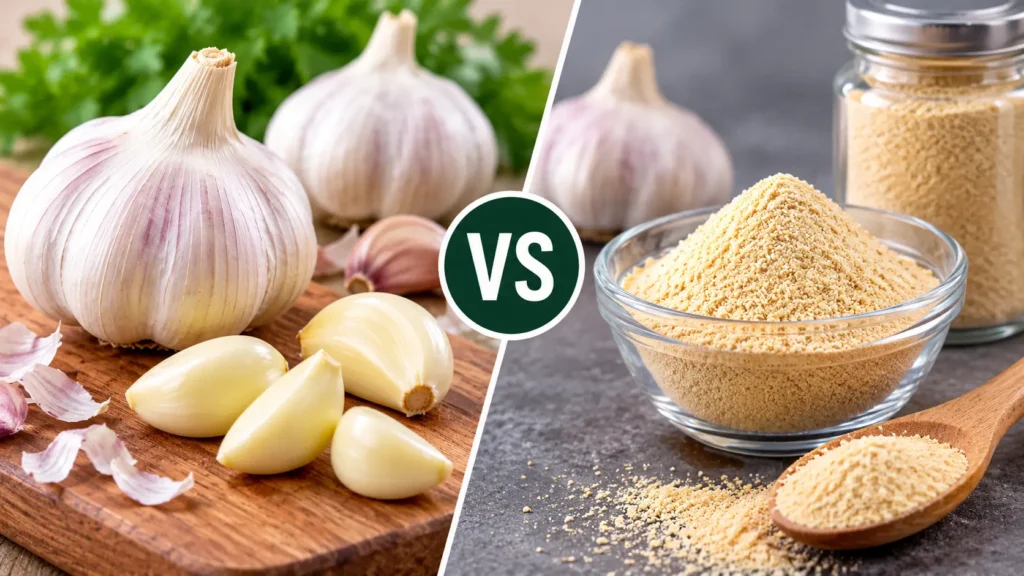
Fresh Garlic vs Garlic Powder
If you love cooking, chances are you’ve stood in your kitchen wondering whether to reach for a fresh garlic clove or the jar of garlic powder sitting in your spice rack. It’s a small decision, but it can actually make a real difference — both in flavor and in nutrition.
This is one of the most common questions home cooks and health-conscious eaters ask: fresh garlic vs garlic powder — which one is actually better? In this article, we’ll break down the nutrition facts, health benefits, Fresh Garlic vs Garlic Powder Taste differences, and practical uses of both, so you can decide what works best for your meals and your body.
Disclaimer: This article is for general informational purposes only and is not a substitute for professional medical advice. I am not a doctor. Please consult a qualified healthcare provider before making significant changes to your diet, especially if you are on medication or have an existing health condition.
Read More: Best Vitamins for Hair Growth and Thickness: The Complete Guide
Why This Comparison Matters
Garlic has been used for thousands of years, not just as a flavor booster but also as a natural remedy in many cultures. Today, it comes in two main forms in most kitchens:
- Fresh garlic — the raw bulb and cloves you peel and chop yourself
- Garlic powder — dried, ground garlic used as a convenient seasoning
Both are popular, but they aren’t nutritionally identical, and they don’t behave the same way in cooking. Understanding the difference helps you get the most flavor and the most health benefit out of every dish.
Fresh Garlic Nutrition Value
Fresh garlic is low in calories but rich in beneficial plant compounds. A single clove (about 3 grams) of raw garlic typically contains:
- Calories: around 4-5 kcal
- Carbohydrates: about 1 gram
- Protein: a small amount (under 0.2g)
- Vitamin C, Vitamin B6, and manganese in trace amounts
- Allicin — the sulfur compound responsible for garlic’s smell and many of its health properties
Allicin is the key here. It forms when raw garlic is crushed or chopped, and it’s considered one of the main reasons fresh garlic is associated with health benefits.
Garlic Powder Nutrition Facts
Garlic powder is made by dehydrating and grinding garlic cloves. Because it’s concentrated, the nutrition profile looks a bit different per equal weight, but keep in mind it’s usually used in much smaller quantities.
Per teaspoon of garlic powder (about 3 grams), you can expect roughly:
- Calories: around 9-10 kcal
- Carbohydrates: about 2 grams
- Fiber: a small amount
- Sodium: minimal, unless mixed with garlic salt
- Lower allicin content, since drying reduces the compound significantly
So when comparing garlic powder nutritional value to fresh garlic gram-for-gram, garlic powder is more calorie-dense simply because the water content has been removed. But since people use much less of it per dish, the actual nutritional impact per serving is often similar or even lower than fresh garlic.
Fresh Garlic Health Benefits and Side Effects
Fresh garlic has been studied for a range of potential health benefits. Some of the most commonly discussed include:
- Heart health support — some studies suggest garlic may help support healthy blood pressure and cholesterol levels
- Immune system support — garlic is often used traditionally to help the body fight off common colds
- Antioxidant properties — the sulfur compounds in garlic may help reduce oxidative stress
- Anti-inflammatory potential — some research points to garlic’s role in reducing inflammation markers
The key advantage of fresh garlic is that crushing or chopping it activates allicin, which is largely responsible for these effects. This is why many nutrition experts recommend letting chopped garlic sit for a few minutes before cooking — it allows allicin to fully form.
Garlic Powder Benefits and Side Effects
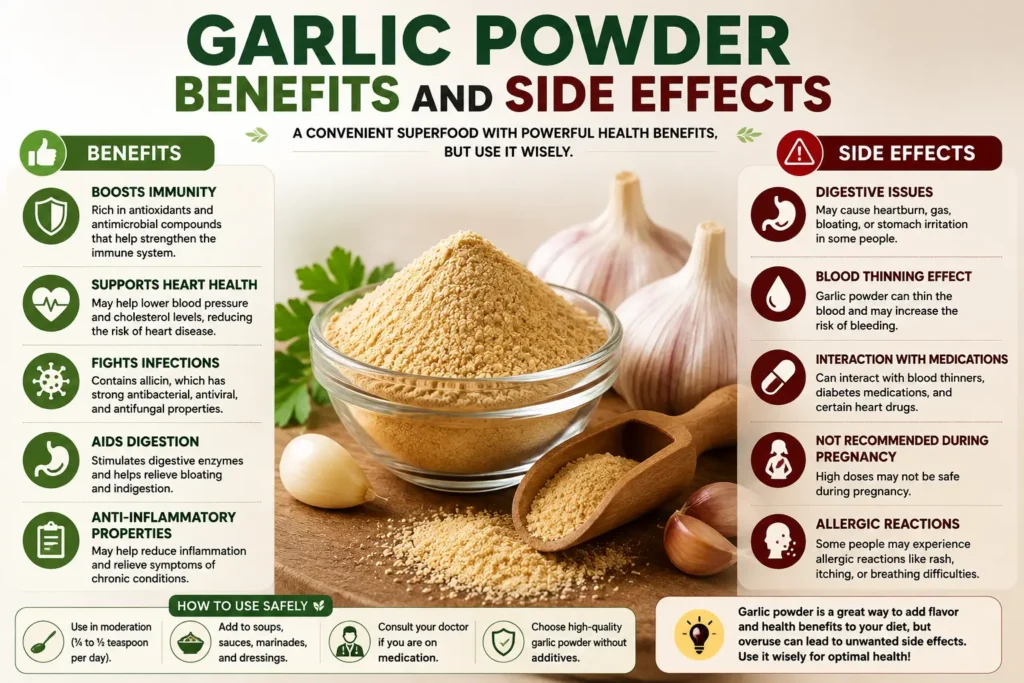
Garlic powder isn’t without its own advantages. Here’s a balanced look:
Benefits:
- Long shelf life compared to fresh garlic
- No peeling, chopping, or lingering smell on hands
- Easy to measure and mix into dry rubs, marinades, and spice blends
- Still contains some beneficial sulfur compounds, though in lower amounts than fresh garlic
Possible side effects (for both forms):
- Digestive discomfort in sensitive individuals, especially in large amounts
- Garlic breath or body odor
- Possible interaction with certain blood-thinning medications — always check with a doctor if you’re on medication
- Garlic powder blends (like garlic salt) can be high in sodium, which matters for people watching their salt intake
Fresh Garlic vs Garlic Powder Taste
This is where the difference becomes very noticeable in cooking.
- Fresh garlic has a sharp, pungent, slightly spicy bite when raw, and mellows into a warm, slightly sweet flavor when cooked or roasted.
- Garlic powder has a milder, more uniform, slightly sweeter and toasted flavor. It blends more evenly into dry seasonings and doesn’t have the same “bite.”
If a recipe calls for a bold, fresh garlic punch — like a garlic butter sauce or a pasta aglio e olio — fresh garlic is usually the better pick. For dry rubs, spice blends, or dishes where you want a subtle, evenly distributed garlic flavor, garlic powder works beautifully.
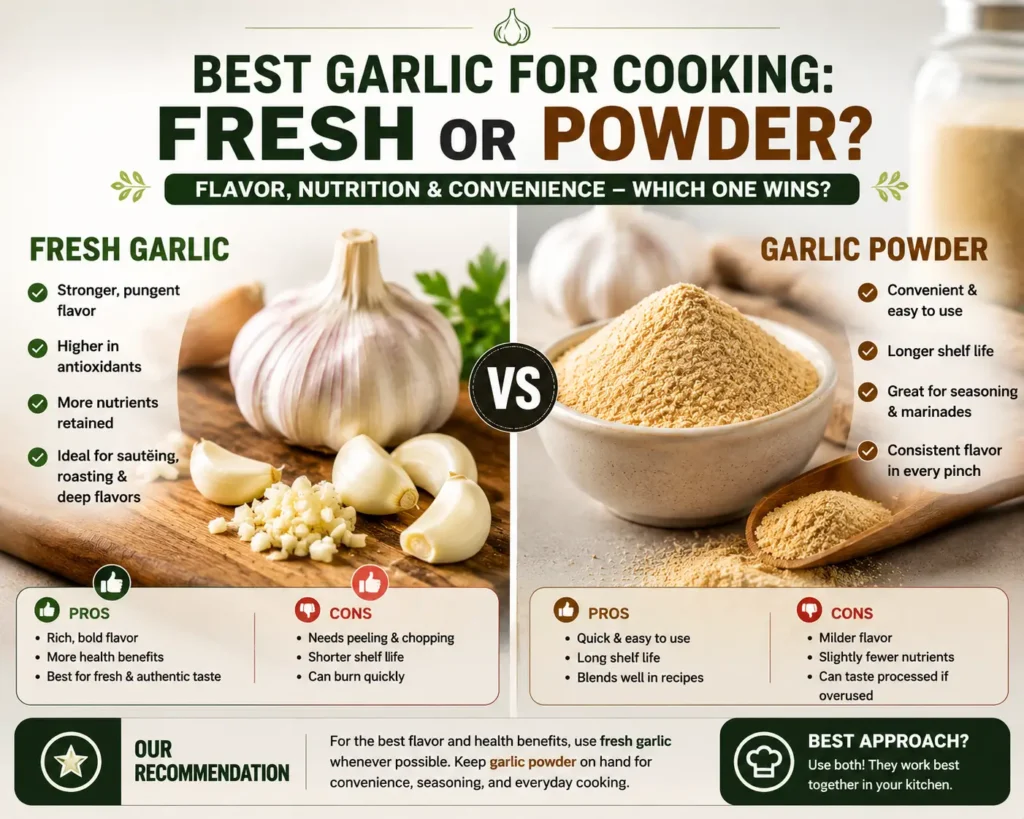
Best Garlic for Cooking: Fresh or Powder?
Here’s a simple way to decide which one to use, depending on what you’re making:
Use fresh garlic when:
- You’re making sauces, dressings, or dips where raw garlic flavor matters
- You want the potential health benefits of allicin
- You’re sautéing or roasting and want depth of flavor
- Time isn’t a major constraint
Use garlic powder when:
- You’re making dry rubs, seasoning blends, or marinades
- You need a longer shelf-stable option
- You want a milder, more consistent flavor
- You’re short on prep time
Many experienced cooks actually keep both in their kitchen and switch between them depending on the dish — there’s no single “correct” answer, just the right tool for the right recipe.
Fresh Garlic vs Garlic Powder Comparison: Quick Summary Table
| Factor | Fresh Garlic | Garlic Powder |
|---|---|---|
| Flavor intensity | Strong, sharp, pungent | Mild, sweet, toasted |
| Allicin content | Higher (when crushed/chopped) | Lower (reduced by drying) |
| Shelf life | Short (weeks) | Long (months to a year+) |
| Convenience | Requires peeling/chopping | Ready to use instantly |
| Best for | Sauces, dressings, roasting | Dry rubs, spice blends, marinades |
| Calorie density | Lower per gram (more water) | Higher per gram (concentrated) |
Which Is Healthier: Fresh Garlic vs Garlic Powder?
If we’re talking strictly about health potential, fresh garlic generally has the edge, mainly because of its higher allicin content when properly crushed or chopped. However, Fresh Garlic vs Garlic Powder is not “unhealthy” — it still offers some of garlic’s beneficial compounds, just in a milder form, and it’s a practical way to add garlic flavor to dishes where fresh cloves aren’t convenient.
The real answer depends on your goals:
- If you’re aiming for the maximum possible health benefit, lean toward fresh garlic.
- If you want convenience, consistency, and long shelf life without sacrificing flavor entirely, garlic powder is a solid everyday choice.
For most people, using a mix of both — fresh garlic for dishes where it shines, and garlic powder for quick seasoning — is the most practical and balanced approach.
FAQs: Fresh Garlic vs Garlic Powder
Is 1 teaspoon of garlic powder equal to how many cloves of fresh garlic? As a general kitchen rule, 1/8 teaspoon of garlic powder is roughly equal to one small fresh garlic clove. So 1 full teaspoon of garlic powder is roughly equivalent to 3-4 fresh cloves in flavor strength, though this can vary by brand and freshness.
Does garlic powder have the same health benefits as fresh garlic? Garlic powder retains some of garlic’s beneficial compounds, but the drying process reduces allicin levels significantly compared to fresh, crushed garlic.
Can I substitute garlic powder for fresh garlic in any recipe? In most cooked dishes, yes — you can substitute one for the other using the ratio above. For raw preparations like garlic-forward dressings or dips, fresh garlic usually gives a better result.
Is garlic powder bad for you? Plain garlic powder in normal culinary amounts is not considered harmful for most people. Just watch out for garlic salt blends, which can be high in sodium.
Final Thoughts: Fresh Garlic vs Garlic Powder
At the end of the day, the debate between fresh garlic vs garlic powder isn’t really about picking a winner — it’s about knowing which one fits your recipe, your schedule, and your health goals. Fresh garlic brings intensity and slightly more of garlic’s natural health-supporting compounds, while garlic powder offers unmatched convenience and a longer shelf life without losing all of garlic’s benefits.
Read More: 21 Day Ginger Turmeric Drink Challenge: Benefits, Recipe & Side Effects