
Introduction
Iron deficiency is one of the most common nutritional deficiencies worldwide, affecting millions of women globally. Yet many women don’t realize they have it because the symptoms develop gradually and are often attributed to stress or aging.
If you’re experiencing persistent fatigue, weakness, or shortness of breath, you might be dealing with iron deficiency symptoms in women. The good news? Understanding this condition and exploring natural iron sources for anemia can help you regain your energy and vitality without relying solely on supplements.
What is Iron Deficiency and Why Does it Matter?
Iron is essential for creating hemoglobin, the protein in red blood cells that carries oxygen throughout your body. When your body lacks sufficient iron, it can’t produce enough healthy red blood cells, leading to anemia.
Women are particularly vulnerable to iron deficiency due to:
- Menstrual blood loss (the primary cause)
- Pregnancy and postpartum period
- Vegetarian or vegan diets
- Digestive disorders affecting nutrient absorption
- Heavy use of certain medications
Read More: Measles Outbreak 2026 Bangladesh Deaths Children Latest: What Indian Parents Should Know
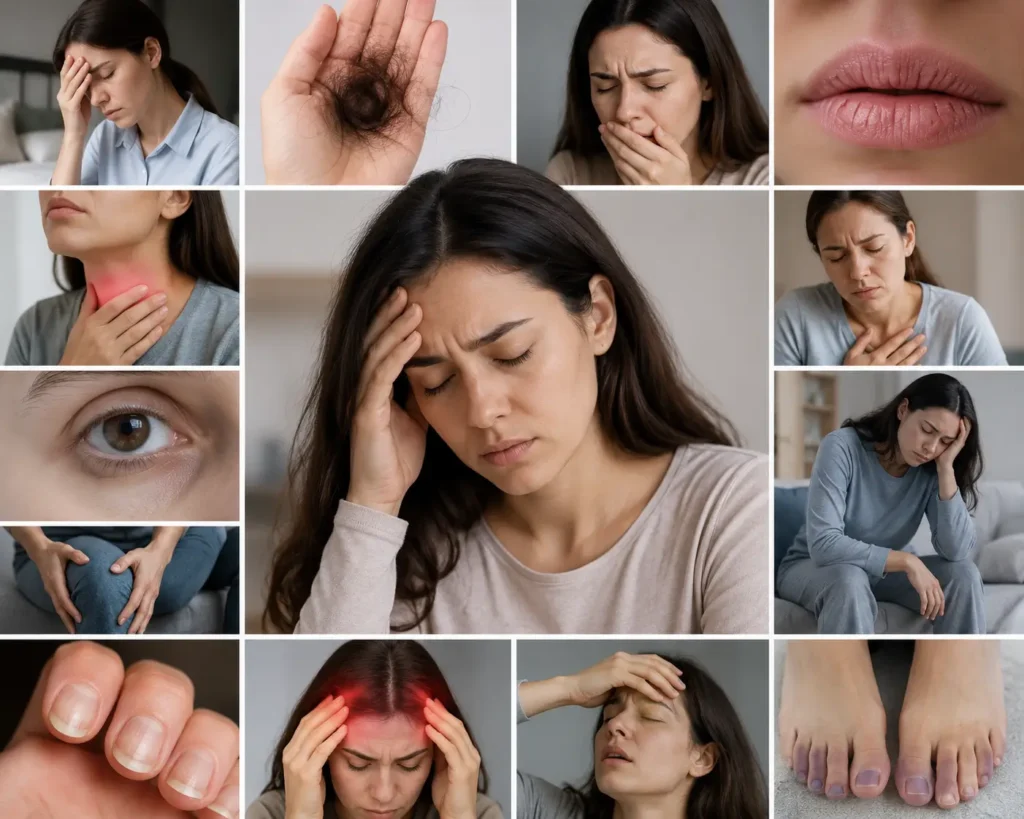
Iron Deficiency Symptoms in Women: Complete Checklist
Recognizing these signs early can help you seek treatment before the condition worsens:
Physical Symptoms
- ✓ Extreme fatigue (the most common symptom)
- ✓ Weakness and lethargy
- ✓ Shortness of breath during light activities
- ✓ Dizziness or frequent headaches
- ✓ Pale or yellowish skin tone
- ✓ Cold hands and feet
- ✓ Brittle nails that break easily
- ✓ Restless leg syndrome (uncomfortable sensations in legs)
Cognitive Symptoms
- ✓ Brain fog and difficulty concentrating
- ✓ Poor memory
- ✓ Irritability and mood changes
- ✓ Difficulty sleeping
When to See Your Doctor
If you experience iron deficiency fatigue treatment becomes necessary when:
- Fatigue persists for more than 2 weeks
- Symptoms worsen despite dietary changes
- You’re pregnant or planning pregnancy
- You have heavy menstrual bleeding
- You’re following a restrictive diet
- You have a family history of anemia
A simple blood test (hemoglobin and ferritin levels) can confirm iron deficiency. Don’t ignore these warning signs—early intervention prevents serious complications.
Top 10 Best Iron Rich Foods for Women
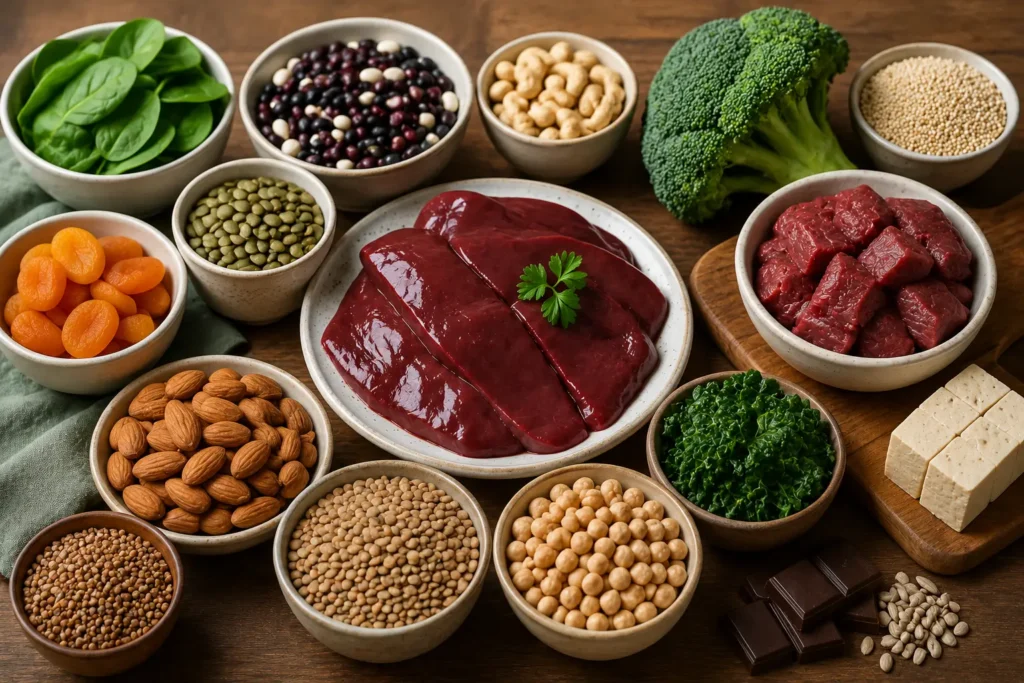
Not all iron is created equal. There are two types: heme iron (from animal sources, better absorbed) and non-heme iron (from plant sources). Here’s a breakdown of the most effective options:
High-Heme Iron Sources
- Red Meat (Beef) – 2.6mg per 100g
- Highest bioavailability (15-35% absorption)
- Ideal for severe deficiency
- Chicken Liver – 11mg per 100g
- Extremely nutrient-dense
- Also rich in B vitamins
- Oysters & Clams – 28mg per 100g
- Most iron-rich seafood option
- Also contain vitamin B12
- Dark Poultry (Chicken Thighs) – 1.3mg per 100g
- More iron than breast meat
High Non-Heme Iron Sources
- Spinach – 2.7mg per 100g (cooked)
- Classic iron source
- Pair with vitamin C for better absorption
- Lentils – 3.3mg per cooked cup
- Plant-based protein + iron
- Budget-friendly and versatile
- Chickpeas – 4.7mg per cooked cup
- Excellent for vegetarians
- High in fiber and protein
- Pumpkin Seeds – 15mg per ¼ cup
- Convenient snack option
- Also contain zinc and magnesium
- Dried Apricots – 6.3mg per cup
- Natural sweetness
- Great for snacking
- Dark Chocolate (70% cacao) – 7mg per 100g
- Delicious and nutritious
- Contains antioxidants
Iron Absorption Tips: Boost Your Iron Intake Naturally
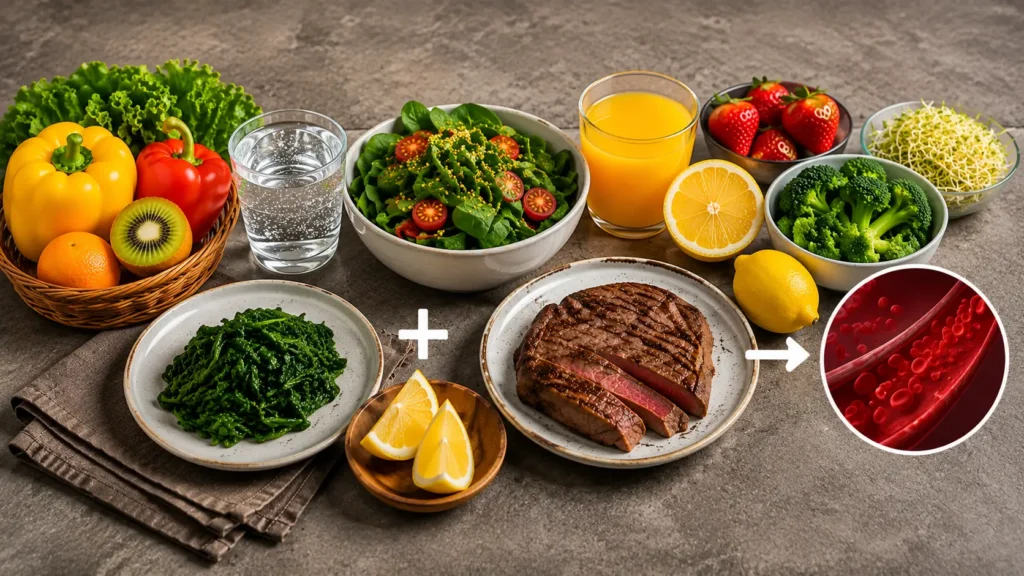
Simply eating iron-rich foods isn’t enough—your body needs to absorb the iron effectively.
Maximize Iron Absorption
- Pair iron with Vitamin C: Combine iron-rich foods with citrus fruits, tomatoes, or bell peppers. For example, eat spinach with orange juice or lentils with lemon dressing.
- Cook in cast iron cookware: Small amounts of iron leach into food during cooking
- Avoid coffee and tea with meals: These inhibit iron absorption by up to 50%
- Take iron supplements away from calcium: Calcium blocks iron absorption
- Consume iron on an empty stomach: If possible, take 1-2 hours before or after meals (though this may cause nausea)
- Include meat with plant-based iron: Heme iron helps absorb non-heme iron
Simple Iron-Boosting Recipes
Green Smoothie Bowl (Iron + Vitamin C)
- 1 cup cooked spinach
- 1 banana
- ½ cup orange juice
- ¼ cup lentils (cooked)
- 1 tbsp pumpkin seeds
- Top with granola
Iron content: ~6mg per serving
Lentil & Tomato Soup
- 1 cup lentils (boiled)
- 2 cups tomato puree
- 1 onion, garlic
- Olive oil and spices
- Serve with whole grain bread
Iron content: ~8mg per bowl
Final Thoughts
Iron deficiency symptoms in women shouldn’t be ignored or dismissed as normal aging. By incorporating natural iron sources for anemia through whole foods and smart preparation methods, you can naturally boost your iron levels and reclaim your energy.
Remember, while diet plays a crucial role, working with your healthcare provider ensures you address any underlying causes and maintain optimal iron levels for long-term health.
Start by adding one iron-rich food to your daily meals this week. Your body will thank you.
Read More: Best Foods Rich in Vitamin B12 for Brain Health — Choices for People Over 40 and 50
Informational Content