
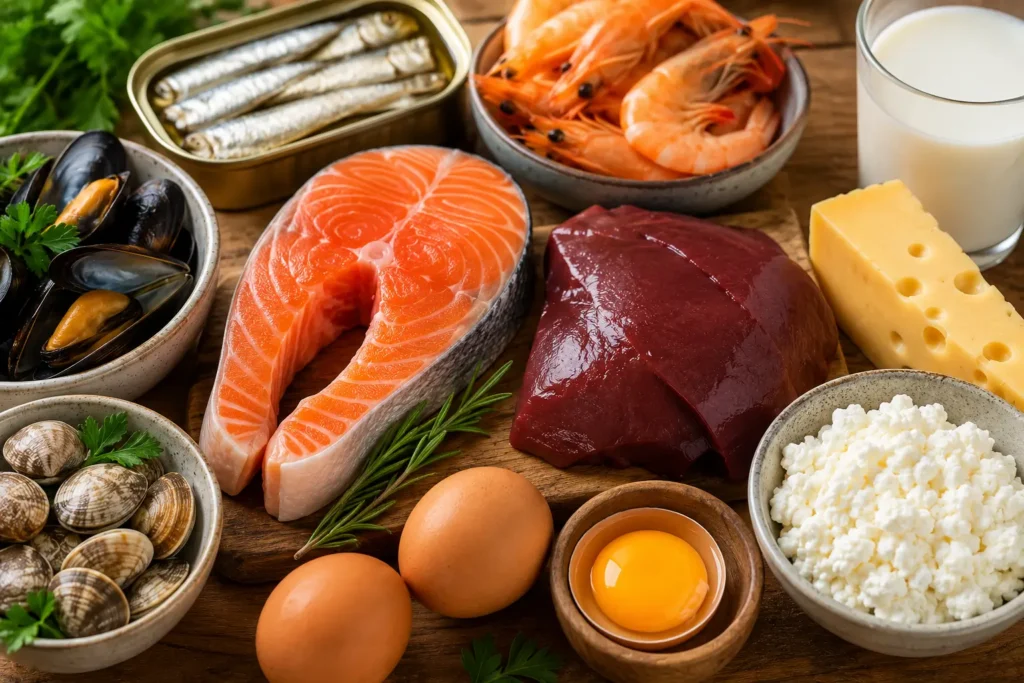
Best Foods Rich in Vitamin B12 for Brain Health
Vitamin B12, also known as cobalamin, is one of the most critical nutrients for brain health, memory, and nerve function. And a brand new study published on May 22, 2026 by researchers at the University of California, San Francisco (UCSF) has issued a shocking warning: the current standard B12 guidelines may not be sufficient to protect the aging brain.
What New 2026 Research Says About Vitamin B12 and Your Brain
The May 2026 UCSF study enrolled 231 healthy adults with an average age of 71 — none of whom had dementia. Their blood B12 levels averaged well above the official U.S. minimum of 148 pmol/L. Yet researchers found a troubling pattern: even participants with B12 levels considered “normal” showed signs of cognitive issues and brain changes associated with accelerated aging.
The study’s conclusion was clear — current B12 guidelines may be set too low, particularly for adults over 50 whose bodies absorb the vitamin less efficiently.
Read More: Causes of Irregular Periods in Women in Their 30s
This finding aligns with earlier research published in the journal Neurology showing that low B12 levels are linked to accelerated brain volume loss in older adults — meaning your brain may literally be shrinking faster if your B12 is insufficient.
The bottom line: if you are over 40 or 50, simply meeting the minimum recommended B12 intake may no longer be enough. You need to be proactive about eating high-B12 foods regularly and getting your levels checked.
Why People Over 40 Absorb Less Vitamin B12
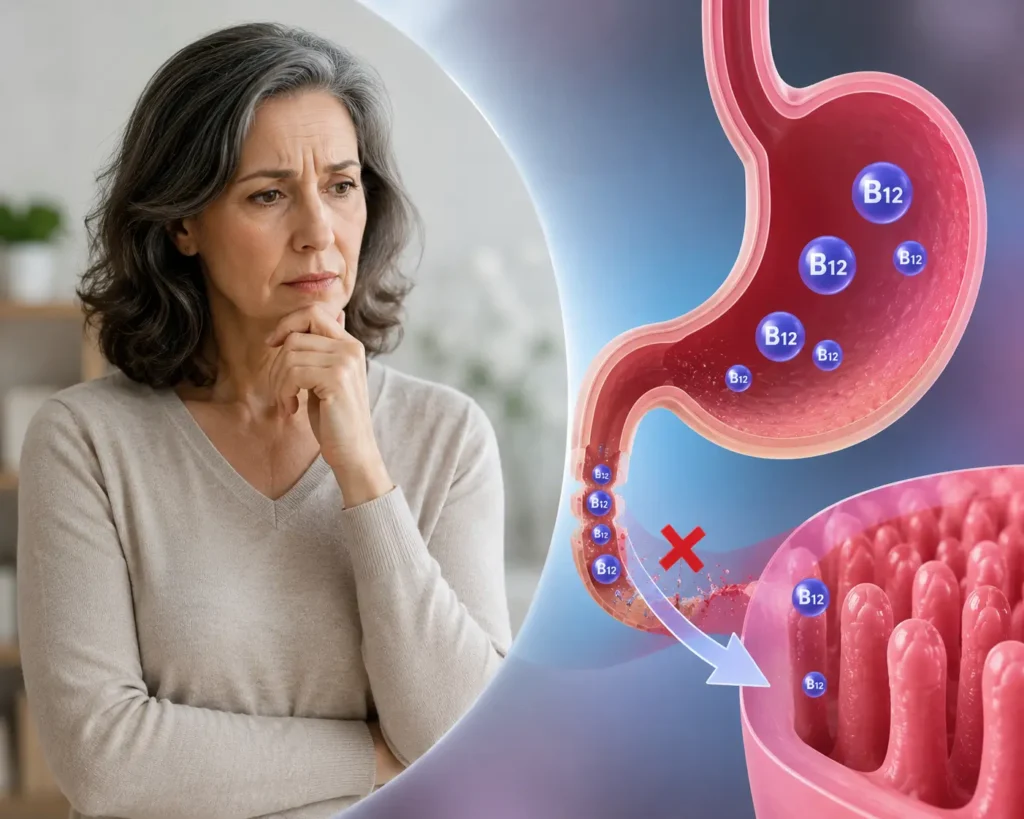
Before we get to the food list, here is something crucial to understand: absorption, not just intake, is the real problem after 40.
Your body absorbs B12 through a two-step process involving stomach acid and a protein called intrinsic factor. As you age, both of these change:
- Stomach acid production decreases after 40, reducing B12 absorption from food
- Intrinsic factor production declines after 50, making absorption even harder
- Certain medications — especially metformin (for diabetes) and antacids (PPIs) — further block B12 absorption
- Vegetarian and vegan diets carry high deficiency risk since B12 is almost exclusively found in animal foods
Research shows that up to 43% of adults over 50 may have insufficient B12 levels — many without knowing it, because symptoms develop slowly over years.
Warning Signs of Vitamin B12 Deficiency Over 40
Watch out for these signs — they are often mistaken for normal aging:
- Brain fog — difficulty concentrating, slow thinking
- Memory lapses — forgetting names, words, or recent events
- Tingling or numbness in hands and feet
- Fatigue and weakness even after adequate sleep
- Mood changes — irritability, low mood, or mild depression
- Balance problems when walking
- Pale or yellowish skin
- Swollen or inflamed tongue
If you recognise several of these signs, speak to your doctor and request a blood test for serum B12 and methylmalonic acid (MMA) — the most accurate markers
7 Best Foods Rich in Vitamin B12 for Brain Health Over 40 and 50
Here are the top B12-rich foods, ranked by their B12 content per serving — all backed by NIH nutritional data:
Clams — The Undisputed B12 Champion
B12 per 3 oz serving: 84.1 mcg — over 3,500% of daily requirement
Clams are by far the richest natural source of B12 on the planet. Just a small serving delivers an extraordinary amount of the vitamin. They are also rich in iron and omega-3 fatty acids — both important for brain health.
Beef Liver — A Nutritional Powerhouse
B12 per 3 oz: 70.7 mcg
Beef liver is one of the most nutrient-dense foods in existence. It delivers enormous amounts of B12 alongside folate, iron, and vitamin A. Even eating it once or twice a month significantly boosts B12 levels. Avoid if you have gout or high cholesterol.
Sardines — The Underrated Brain Booster
B12 per 1 cup: 13.3 mcg
Sardines are small but extraordinarily powerful. They are packed with B12, omega-3s, calcium, and selenium — making them one of the most complete brain-health foods available. They are also low in mercury, making them safer than larger fish.
Low-Fat Dairy — Milk, Yoghurt, and Cheese
B12 per cup of milk: 1.3 mcg | per cup yoghurt: 1.1 mcg
Dairy is one of the most easily absorbed sources of B12 and is especially useful for people over 50 who have reduced stomach acid. Greek yoghurt is particularly beneficial as it also contains probiotics that support the gut-brain connection.
Eggs — Simple, Daily, and Effective
B12 per large egg: 0.6 mcg
Eggs provide a modest but consistent source of B12 that is easily absorbed. The B12 in eggs is concentrated in the yolk, so whole eggs — not egg whites — are important. Two eggs daily contributes meaningfully to your B12 intake alongside other foods.
Fortified Breakfast Cereals — Key for Vegetarians
B12 per serving: 0.6–6 mcg (varies by brand)
For vegetarians, vegans, or anyone who avoids animal products, fortified cereals are the most practical daily B12 source. Check labels carefully — B12 content varies widely between brands. Look for cereals with at least 25% of daily B12 per serving.
Nutritional Yeast — The Vegan B12 Solution
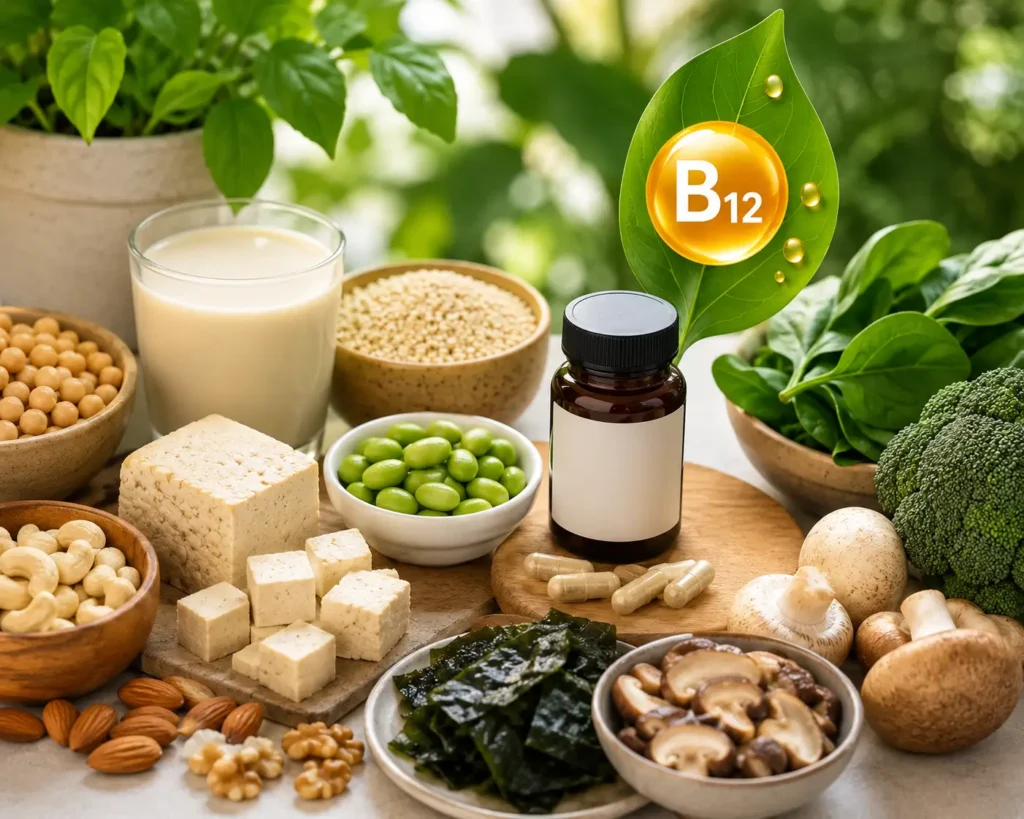
B12 per 2 tbsp: 2.4–8 mcg (fortified brands)
Nutritional yeast is the most concentrated plant-based B12 source available. It has a naturally cheesy, nutty flavour that works well in pasta, soups, salads, and toast. This is a must-have for vegetarians and vegans over 40.
How Much Vitamin B12 Do You Actually Need After 40?
| Age Group | Official NIH Recommendation | What Experts Now Suggest |
|---|---|---|
| Adults 14+ | 2.4 mcg per day | May be too low for brain protection |
| Adults 50+ | 2.4 mcg (same) | 500–1,000 mcg supplement often recommended |
| Pregnant women | 2.6 mcg per day | Follow doctor’s guidance |
| Breastfeeding | 2.8 mcg per day | Follow doctor’s guidance |
Key insight from 2026 research: The official minimum of 2.4 mcg may be sufficient to prevent clinical deficiency — but it may not be enough to protect the aging brain from cognitive decline. Adults over 50 are advised to discuss higher intake with their doctor.
Should You Take a B12 Supplement Over 40?
Many doctors and dietitians recommend supplements for adults over 50 because food absorption alone may not be sufficient due to reduced stomach acid and intrinsic factor. Here is when to consider supplementing:
- You are vegetarian or vegan
- You take metformin for diabetes
- You take antacids or PPIs regularly
- You have had gastrointestinal surgery
- You are over 65 years old
- Blood test shows levels below 300 pmol/L (even if technically “normal”)
Which form is best? Look for methylcobalamin — this form crosses the blood-brain barrier more effectively than the cheaper cyanocobalamin found in most budget supplements.
FAQ
Q: What are the best foods for vitamin B12 for brain health over 40? The top foods are clams, beef liver, salmon, tuna, sardines, lean beef, dairy products, eggs, fortified cereals, and nutritional yeast. Salmon and lean beef are particularly recommended by neurologists for older adults.
Q: Why does vitamin B12 deficiency worsen after age 50? After 50, the stomach produces less acid and less intrinsic factor — both needed for B12 absorption. This means even a diet high in B12 foods may not deliver adequate levels to the brain.
Final Thoughts
The science is clear: vitamin B12 is non-negotiable for brain health after 40 and 50. And the groundbreaking 2026 UCSF research has raised the stakes even further — what was once considered a “safe” B12 level may no longer be enough to protect your memory and cognitive function as you age.
Start by adding more salmon, lean beef, eggs, and dairy to your diet this week. If you are vegetarian or vegan, fortified nutritional yeast and a methylcobalamin supplement are your most reliable allies.
Your brain is your most valuable asset. Feed it accordingly — starting today.
Read More: First Steps After Breast Cancer Diagnosis — A Survival Guide