
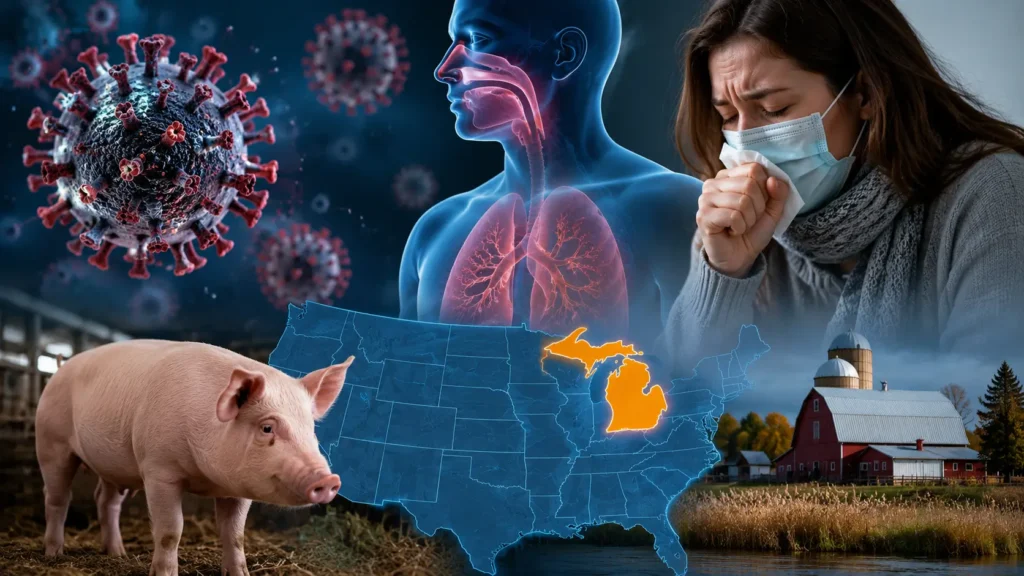
H1N2 Swine Flu Case in Michigan 2026
Michigan health officials confirmed a human case of H1N2 swine flu in Michigan in 2026, followed shortly after by two additional cases linked to the same agricultural fair. If you’re trying to understand what actually happened, how serious it is, and what it means for anyone who spends time around pigs or attends county fairs, this guide breaks it down using official health department updates.
Disclaimer: This article is for general informational purposes only and is not medical advice. I am not a doctor. For personal health concerns, please consult a qualified healthcare provider or your local health department.
Read More: Micro Workouts: The 10-Minute Fitness Solution for Busy People
What Happened: The Swine Flu Case in Michigan, August 2026
The first confirmed swine flu case in Michigan in August 2026 involved an Ionia County resident who had exhibited swine at the Kent County Youth Fair, held August 3–8 at the Grand Agricultural Center of West Michigan in Lowell. The individual tested presumptive positive for influenza A(H1N2) variant virus at the state health lab, and the result was confirmed by the CDC on August 14, 2026.
Shortly after, the Michigan Department of Health and Human Services (MDHHS) reported two more confirmed cases — both patients under 18 — who developed symptoms during the week ending August 15, 2026. Investigators found that these two patients had not had contact with each other, but both had attended the same agricultural fair where sick pigs had been present. Neither was hospitalized, one received antiviral treatment, and both recovered.
A few key details from the investigation so far:
- The fair’s swine barn was closed and sick pigs were isolated after a pig died suddenly and others developed high fevers.
- Laboratory testing confirmed swine influenza A in the affected animals.
- Health departments have been contacting other fair exhibitors and visitors to check for additional illness.
- No evidence of person-to-person spread has been identified in connection with these cases.
- These Michigan cases represent the third and fourth confirmed human infections with a variant influenza virus in the United States during the 2025–2026 flu season — all four have been H1N2.
What Is H1N2 Variant Influenza?
“Variant” flu viruses are influenza strains that normally circulate in pigs, not people. When one of these viruses is detected in a human, public health agencies label it with a “v,” as in H1N2v. These infections are considered rare and sporadic, and they’re almost always linked to direct or indirect contact with pigs — most commonly at agricultural fairs, where people and swine are in close proximity for days at a time.
This isn’t a new phenomenon. Since 2010, the United States has recorded around 44 confirmed H1N2v infections, the large majority tied to fair exposure. A notable exception was a 2018 cluster of 13 cases, one of which had no identified swine contact, suggesting that limited person-to-person transmission is possible, even if uncommon. The 2024–25 flu season also included a swine-origin H1N2v case reported from Iowa, in a patient whose investigation did not identify direct or indirect swine contact — a reminder that exposure sources aren’t always confirmed.
H1N2 Variant Symptoms in Humans
According to MDHHS, H1N2 variant symptoms in humans closely resemble seasonal flu, which is part of what makes variant infections hard to catch without lab testing. Reported symptoms include:
- Fever
- Cough
- Runny nose
- Body aches
- Nausea
- Vomiting
- Diarrhea
In most reported cases, illness has been mild, and patients have recovered without hospitalization. That said, health officials note that variant influenza infections can occasionally cause more severe disease, even in otherwise healthy people. Possible complications include pneumonia, which may require hospitalization, and in rare cases, death. Officials also note that the time between exposure and symptom onset can be as long as 10 days, though symptoms more commonly appear sooner.
Swine Flu Exposure From Pigs in the USA: How It Spreads
Swine flu exposure from pigs in the USA typically happens through close contact with infected animals — being in the same barn, touching pigs, or being exposed to respiratory droplets from a sick animal. Agricultural fairs create a higher-risk setting because they bring together:
- Pigs from many different farms and locations in one place
- Large numbers of exhibitors, many of them children, in prolonged direct contact with animals
- Visitors moving in and out of swine barns over several days
Because variant flu symptoms are so similar to seasonal flu, cases can go undetected without laboratory confirmation at a state health department or the CDC, which likely means some infections aren’t captured by surveillance data.
At this stage in the Michigan investigation, officials have not identified any spread between the confirmed patients themselves, and the overall risk to the general public has been assessed as low.
Who Is at Higher Risk of Complications
Public health officials flag the following groups as more likely to experience complications from variant influenza infection:
- Children younger than 5 years old
- Adults 65 years of age and older
- Pregnant individuals
- People with chronic health conditions such as asthma, diabetes, or heart disease
- People with weakened immune systems or certain neurological conditions
If you fall into one of these groups and have had recent contact with pigs at a fair or farm, it’s worth mentioning that exposure to a healthcare provider if you develop flu-like symptoms.
H1N2 Swine Flu Case in Michigan Prevention
A few practical points from health officials:
- No dedicated human vaccine exists for swine-origin flu viruses, and the regular seasonal flu vaccine does not protect against H1N2v.
- Antiviral medications, such as oseltamivir and zanamivir, can be used to treat influenza infections, including variant strains, and are most effective when started early.
- Basic precautions around pigs can reduce risk: wash your hands after contact with animals, avoid eating or drinking in barns or show areas, and avoid contact with pigs that appear sick.
- If you’re sick, stay away from pigs and other people until you’ve recovered, generally waiting about a week after illness onset or until symptoms have resolved, per health department guidance.
What This Means If You Live in Michigan or Attend Fairs
For most people, this remains a low-risk, localized situation tied to a specific fair and specific animals. But if you or your family plan to exhibit or visit Swine Flu barns at county and state fairs later this season, it’s reasonable to:
- Wash hands thoroughly after handling animals or spending time in barns
- Avoid close contact with pigs that seem lethargic, are coughing, or have a fever
- Watch for flu-like symptoms in the days after a fair visit, especially in children or anyone in a higher-risk group
- Contact a healthcare provider and mention the animal exposure if symptoms develop, so testing can be considered if needed
FAQs: H1N2 Swine Flu Case in Michigan 2026
Is the Michigan H1N2 swine flu case contagious between people? Health investigators have not found evidence of person-to-person spread connected to these particular cases. Historically, H1N2v infections have occasionally shown limited human-to-human transmission in rare clusters, but the vast majority of cases are traced back to direct or indirect pig exposure.
Can you get swine flu from eating pork? No. Variant influenza spreads through contact with infected pigs or contaminated environments, not through eating properly cooked pork or pork products.
How many H1N2v cases have there been in the 2025–2026 flu season? As of the latest Michigan update, these cases represent the third and fourth confirmed human variant influenza infections reported nationally this season, with all four linked to H1N2.
Does the seasonal flu shot protect against H1N2 variant flu? No. The regular seasonal influenza vaccine is not designed to protect against swine-origin variant viruses like H1N2v.
Final Thoughts: H1N2 Swine Flu Case in Michigan 2026
The 2026 Michigan H1N2 cases are a reminder that variant influenza, while rare, is something health officials actively track every time people and pigs share close quarters, especially at agricultural fairs. The current cases appear mild, contained, and traced to a known source, with public health teams monitoring for any additional illness. If you’ve had recent contact with pigs and start feeling unwell, it’s worth letting a healthcare provider know about that exposure.
Read More: Mosquito-Borne Illnesses in Summer 2026: Symptoms and Prevention Tips