
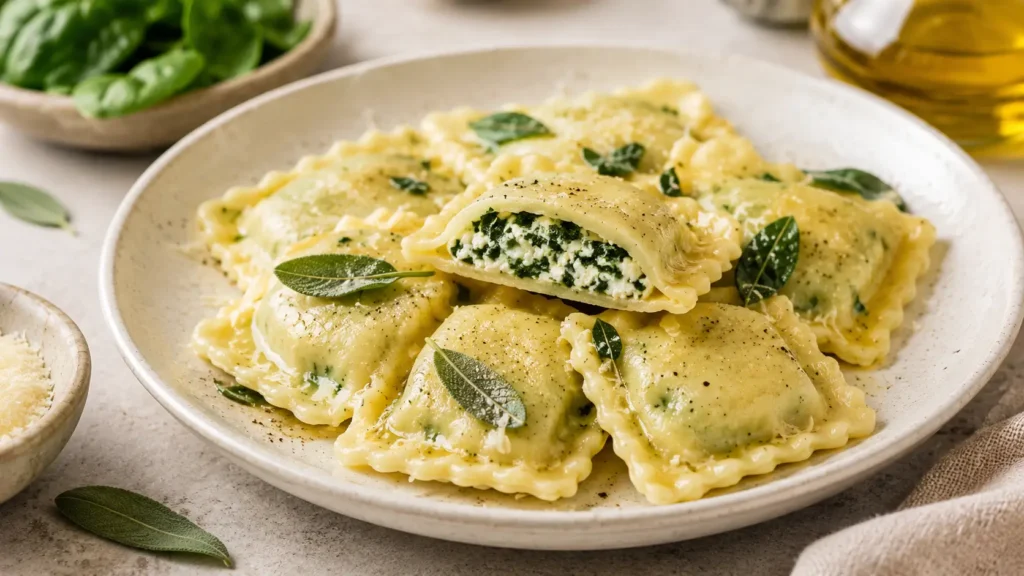
Is Spinach and Ricotta Ravioli Healthy
Few dishes feel as comforting as a warm bowl of spinach and ricotta ravioli. Soft pasta pillows filled with creamy cheese and earthy greens, tossed in butter, olive oil, or a light tomato sauce — it’s the kind of meal that tastes indulgent but might actually be doing more for your body than you’d expect.
So the real question is: is spinach ricotta ravioli healthy, or is it just another comfort-food trap? In this guide, we’ll break down the nutrition, calories, benefits, and possible downsides of this classic Italian dish, and finish with a simple, easy spinach ricotta ravioli recipe you can make at home tonight.
Quick disclaimer: I’m not a doctor or registered dietitian. This article is for general informational purposes only and isn’t a substitute for professional medical or nutritional advice. If you have specific health concerns, please talk to a qualified healthcare provider.
Read More: Burn 500 Calories at Home: 9 Easy No-Gym Workouts for Beginners (2026)
What Is Spinach and Ricotta Ravioli?
Ravioli is a traditional Italian pasta made of two thin sheets of dough sealed around a filling. In this version, the filling combines cooked, chopped spinach with fresh ricotta cheese, often seasoned with nutmeg, garlic, parmesan, salt, and pepper. The parcels are boiled until tender and usually served with:
- Melted butter and sage
- A light tomato or marinara sauce
- Olive oil and parmesan
- A simple cream sauce
It’s a dish that shows up on Italian restaurant menus everywhere, but it’s also simple enough to make at home — which, as you’ll see below, matters a lot when it comes to how healthy the final plate actually is.
Spinach Ricotta Ravioli Nutrition: What’s Really in a Serving?
Nutrition values vary depending on the brand, portion size, and whether the ravioli is store-bought or homemade. That said, here’s a general picture of spinach ricotta ravioli nutrition for a typical serving of about 6–8 pieces (roughly 100–125 grams):
| Nutrient | Approximate Amount per Serving |
|---|---|
| Calories | 200–250 kcal |
| Protein | 7–12 g |
| Carbohydrates | 30–35 g |
| Fat | 6–9 g |
| Sodium | 350–500 mg |
| Fiber | 1–2 g |
| Calcium | Moderate (from ricotta) |
| Iron & Vitamin A | Present (from spinach) |
These numbers can shift quite a bit between brands. Some premium or restaurant-style ravioli run closer to 400+ calories per serving because of richer fillings and larger pasta portions, while lighter, thinner-skinned versions sit closer to 200 calories. Always check the nutrition label if you’re buying it pre-made, since portion sizes on packaging can be misleading.
Spinach and Ricotta Ravioli Calories: A Closer Look
If you’re counting calories, here’s roughly how it breaks down:
- 1 piece of ravioli: approximately 25–40 calories, depending on size and filling ratio
- 6–8 pieces (a standard serving): approximately 200–250 calories
- A larger restaurant-style portion: can reach 400–500 calories, especially with butter or cream-based sauces
The pasta itself contributes most of the carbohydrates and calories, while the ricotta and spinach filling adds protein, fat, and micronutrients. The sauce you choose has a big impact too — a cream or butter sauce can easily double the calorie count of the dish, while a light tomato sauce or simple olive oil drizzle keeps things more moderate.
Is Spinach Ricotta Ravioli Healthy? The Benefits
So, is spinach ricotta ravioli healthy? The honest answer is: it can be, especially compared to many other pasta dishes. Here’s why:
1. Spinach Adds Real Nutritional Value
Spinach is naturally rich in vitamin A, vitamin K, folate, and iron. Even the small amount tucked into each ravioli contributes to your daily intake of these nutrients, along with plant-based antioxidants.
2. Ricotta Brings Protein and Calcium
Ricotta cheese is lower in fat than many other cheeses and offers a decent amount of protein and calcium per serving, which supports bone health and helps you feel fuller for longer.
3. Portion-Friendly by Nature
Because ravioli comes in individual, bite-sized pieces, it’s naturally easier to portion out compared to a big bowl of spaghetti — which can help with mindful eating.
4. Balanced Macronutrients
With a mix of carbohydrates, protein, and fat in one dish, spinach and ricotta ravioli is more balanced than plain butter-and-cheese pasta, especially when paired with vegetables or a side salad.
Potential Downsides to Keep in Mind
- Sodium levels: Store-bought ravioli, especially frozen or shelf-stable versions, can be relatively high in sodium — sometimes 350–600 mg per serving.
- Refined pasta carbs: Traditional ravioli dough is made from refined flour, which digests quickly and offers limited fiber.
- Sauce matters: A cream, butter, or extra-cheese sauce can quickly turn a moderate dish into a calorie-dense one.
- Not particularly low-carb: With 30–35 g of carbs per serving, it doesn’t fit well into keto or very low-carb eating plans.
The takeaway: spinach and ricotta ravioli isn’t a “bad” food, but like most pasta dishes, moderation and mindful preparation make the biggest difference.
Homemade Spinach Ricotta Ravioli vs. Store-Bought
This is where you have the most control. Homemade spinach ricotta ravioli lets you:
- Choose whole wheat or semolina flour for extra fiber
- Use part-skim or low-fat ricotta to reduce saturated fat
- Control the salt instead of relying on packaged sodium levels
- Skip preservatives found in some frozen versions
- Adjust the spinach-to-cheese ratio for more greens and fewer calories
If you’re trying to eat healthier without giving up comfort food, making your own ravioli at home is one of the simplest swaps you can make.
Easy Spinach Ricotta Ravioli Recipe
This easy spinach ricotta ravioli recipe uses wonton wrappers as a shortcut, so you don’t need a pasta machine or hours of prep. It’s a great starting point if you’re new to homemade pasta.
Ingredients
For the filling:
- 1 cup fresh spinach, cooked and finely chopped (squeeze out excess water)
- 1 cup ricotta cheese (part-skim works well)
- 1/4 cup grated parmesan
- 1 small garlic clove, minced
- A pinch of nutmeg
- Salt and pepper to taste
For the ravioli:
- 1 pack wonton or dumpling wrappers (or homemade pasta dough)
- 1 egg, beaten (for sealing)
For serving:
- Olive oil, butter, or a light marinara sauce
- Extra parmesan and black pepper
Instructions
- Make the filling: In a bowl, mix the chopped spinach, ricotta, parmesan, garlic, nutmeg, salt, and pepper until well combined.
- Assemble the ravioli: Lay a wrapper on a flat surface, brush the edges with beaten egg, and spoon about a teaspoon of filling in the center. Top with a second wrapper and press the edges to seal, pushing out any air pockets.
- Boil: Bring a pot of salted water to a gentle boil. Cook the ravioli in batches for 2–3 minutes, or until they float to the top.
- Drain and toss: Remove with a slotted spoon and toss gently with olive oil, melted butter, or your sauce of choice.
- Serve warm: Top with extra parmesan and freshly cracked black pepper.
Healthier swap tip: Use whole wheat wrappers or dough if available, and go easy on butter-based sauces — a drizzle of olive oil or a light tomato sauce keeps the dish lighter without sacrificing flavor.
How to Cook Spinach Ricotta Ravioli
Wondering how to cook spinach ricotta ravioli the right way? Here are the most common methods:
- Boiling (most common): Cook in salted, gently boiling water for 2–4 minutes until the ravioli float. Avoid a hard rolling boil, which can tear delicate wrappers.
- Pan-frying (crispy version): Boil first, then lightly pan-fry in a little olive oil for 1–2 minutes per side for a golden, slightly crisp exterior.
- Baking: Layer boiled ravioli in a baking dish with sauce and cheese, then bake at 180°C (350°F) for 15–20 minutes for a ravioli bake.
- From frozen: Most store-bought frozen ravioli can go straight into boiling water — no need to thaw first. Just add an extra minute or two to the cooking time.
What to Serve With Spinach Ricotta Ravioli
If you’re planning a meal around this dish, here are some ideas for what to serve with spinach ricotta ravioli:
- A simple green salad with lemon vinaigrette to balance the richness
- Garlic roasted vegetables like zucchini, cherry tomatoes, or asparagus
- Garlic bread for a heartier, restaurant-style meal
- A light broth-based soup as a starter
- Grilled chicken or shrimp on the side for extra protein
- A glass of light white wine, such as Pinot Grigio, if you enjoy pairing wine with pasta
Pairing ravioli with vegetables or a salad is one of the easiest ways to turn it into a more balanced, filling meal.
Healthy Spinach Ricotta Ravioli Recipe Tips
If you want a healthy spinach ricotta ravioli recipe without losing the comfort-food appeal, try these small swaps:
- Use part-skim ricotta instead of full-fat
- Add extra spinach to boost the vegetable content
- Choose whole wheat or semolina pasta dough
- Skip cream sauces in favor of olive oil, garlic, and herbs
- Watch your portion size — 6–8 pieces plus a side salad is a satisfying, balanced meal
- Season with herbs and lemon zest instead of extra salt
FAQs: Spinach and Ricotta Ravioli
Is spinach and ricotta ravioli good for weight loss? It can fit into a weight-loss plan in moderate portions, especially when paired with vegetables and a lighter sauce. It’s not particularly low-calorie, so portion control matters.
How many calories are in spinach and ricotta ravioli? Most servings (6–8 pieces) fall between 200–250 calories, though this varies by brand and portion size.
Is spinach ricotta ravioli high in protein? It offers a moderate amount of protein, typically 7–12 grams per serving, mainly from the ricotta cheese.
Can I make spinach ricotta ravioli ahead of time? Yes. Homemade ravioli can be assembled, laid on a floured tray, and frozen. Cook directly from frozen when ready to eat.
Is spinach ricotta ravioli keto-friendly? No, it’s relatively high in carbohydrates from the pasta, so it doesn’t fit well into a strict keto or low-carb plan.
Final Thoughts: Spinach and Ricotta Ravioli
So, is spinach and ricotta ravioli healthy? In moderate portions, made with mindful ingredient choices, it can absolutely be part of a balanced diet. It brings together vegetables, dairy protein, and carbohydrates in a single dish — the key is watching your sauce, portion size, and sodium if you’re buying it pre-made.
Whether you pick up a store-bought bag for a quick weeknight dinner or try the spinach ricotta ravioli recipe above from scratch, this classic Italian dish proves that comfort food and nutrition don’t always have to be at odds.
Read More: High Protein Breakfast Foods to Build Muscle: 9 Best Picks (2026)