
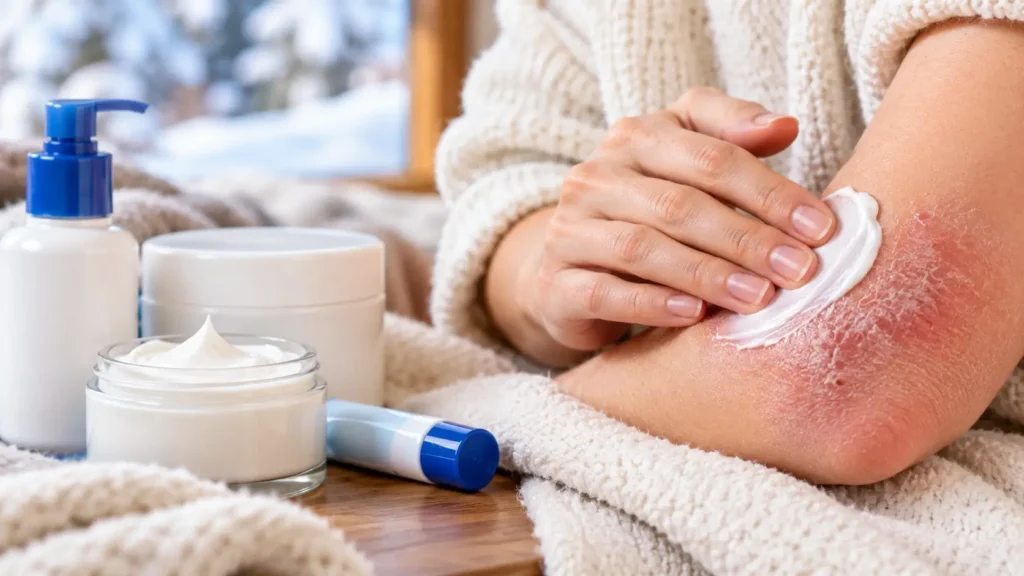
Best Moisturizer for Eczema in Winter
Every year, around the time the heating goes on and the temperature drops, a lot of people notice the same thing: their skin starts to feel tight, rough, and itchy. If you already live with eczema, winter can feel like a test of patience. Finding the best moisturizer for eczema in winter often becomes a trial-and-error project, with half-empty jars piling up in the bathroom cabinet.
Disclaimer: This post is for informational purposes only and does not replace professional medical advice, diagnosis, or treatment. Always consult a qualified healthcare provider with questions about a medical condition.
Read More: Sauna Benefits for Heart Health: A Beginner’s Guide to Sauna and Cold Plunge
Why Winter Is So Hard on Your Skin
Your skin has a natural barrier made of oils and lipids that keeps water in and irritants out. Winter skincare routine for eczema-prone skin: that barrier is often already weaker than average. Winter adds pressure from two directions at once.
Outside, cold air holds very little moisture, and wind strips what little is left from the skin’s surface.
Inside, central heating, space heaters, and fireplaces dry out the air even further. Many homes drop to very low humidity levels in the colder months.
Add long hot showers, scratchy wool sweaters, and less time in sunlight, and it’s easy to see why skin struggles. The result is often:
- Tightness after washing
- Rough, flaky patches
- Red or darker areas, depending on skin tone
- Itching that gets worse in the evening
- Cracks on the hands, knuckles, and heels
None of this means you’re doing something wrong. It’s simply a season that demands a little extra care.
Dry Skin vs Eczema: How to Tell
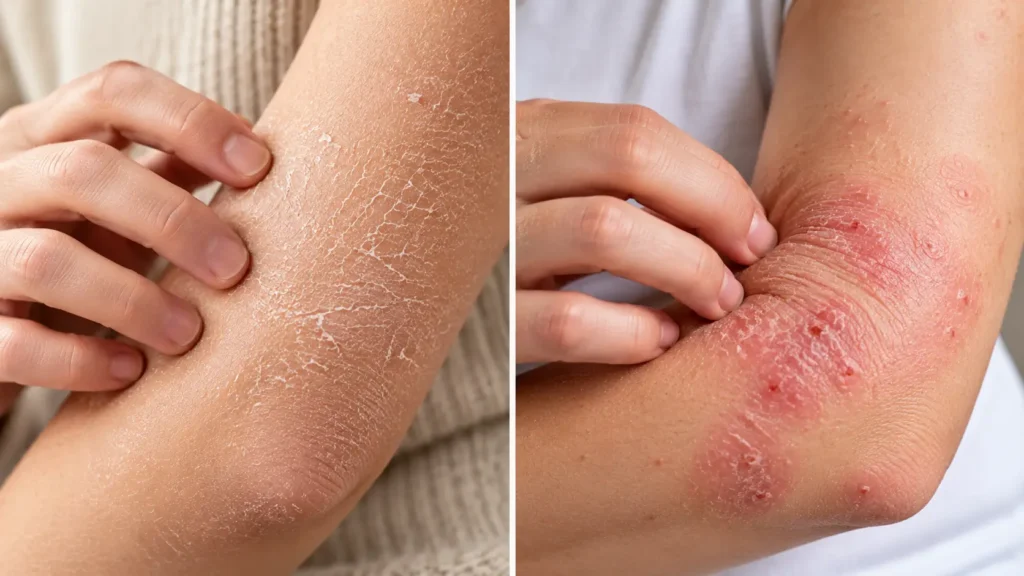
This is one of the most common questions people ask, and it’s a fair one, because the two can look and feel very similar. Here’s a general way to think about dry skin vs eczema and how to tell the difference.
Signs that it’s probably just dry skin
- It feels tight or rough but isn’t intensely itchy
- It improves within a few days of regular moisturizing
- It shows up mostly in winter and clears in warmer months
- It’s usually spread fairly evenly, such as on the shins, arms, or hands
Signs that it might be eczema
- The itch is strong and persistent, sometimes keeping you awake
- Patches look red, brown, purple, or grey depending on your skin tone, and may look thickened or leathery from scratching
- There may be small bumps, oozing, or crusting
- It tends to appear in certain spots, like the inner elbows, behind the knees, neck, wrists, and eyelids
- It keeps coming back in the same areas
- There’s a personal or family history of eczema, asthma, or hay fever
A word of caution
Looking at a rash online will never replace a proper exam. Other conditions, including contact dermatitis, psoriasis, and fungal infections, can look similar. If you can’t tell what’s going on, or if over-the-counter care isn’t helping after a couple of weeks, it’s worth booking an appointment. A correct diagnosis saves a lot of guesswork.
Eczema Flare-Up Triggers in Cold Weather
Understanding eczema flare-up triggers in cold weather helps you spot patterns. Triggers differ from person to person, so it can help to keep a simple note on your phone about when your skin gets worse. Here are the most common culprits.
1. Low humidity
Dry indoor air pulls moisture out of the skin. This is probably the single biggest winter factor for many people.
2. Hot showers and baths
A steaming shower feels wonderful on a freezing day, but hot water can strip natural oils from the skin. Lukewarm water is gentler.
3. Harsh soaps and cleansers
Fragranced body washes, bar soaps, and anything that foams heavily may leave skin feeling squeaky clean, which usually means too clean for a winter skincare routine for eczema-prone skin.
4. Fabrics
Wool and some synthetic materials can irritate sensitive skin. Many people find soft, breathable cotton layers more comfortable underneath heavier knits.
5. Sudden temperature changes
Moving from freezing outdoors to a heated room can leave skin red and itchy.
6. Stress and poor sleep
The holidays, busy schedules, and shorter days can affect how you feel, and many people report that their skin reacts when they’re stressed.
7. Fragrances and detergents
Scented laundry products, candles, and seasonal sprays are easy to overlook. If you notice flares around the holidays, it may be worth checking what’s new in your home.
8. Illness and colds
Getting sick can disrupt routines like sleep, hydration, and skincare, which sometimes shows up on the skin.
Keeping a short trigger diary for two to three weeks can reveal surprising links. Write down what you wore, what soap you used, how long you showered, and how your skin felt the next day.
How to Choose the Best Moisturizer for Eczema in Winter
Now to the main question. When people search for the best moisturizer for eczema in winter, they often expect a single product name. The honest answer is that the best option depends on your skin, your budget, and what you can tolerate. What helps is knowing what to look for.
Ointment, cream, or lotion?
The type of moisturizer matters as much as the brand.
| Type | Texture | Good for | Things to know |
|---|---|---|---|
| Ointment | Thick, greasy | Very dry, cracked skin | Most protective, but can feel heavy |
| Cream | Thick but spreadable | Daily use on body and face | A good middle ground for many people |
| Lotion | Light, runny | Mild dryness | Contains more water, so it can be less effective in winter |
In cold, dry weather, many dermatology organizations suggest leaning toward thicker creams and ointments instead of thin lotions. A pump bottle of lotion may be convenient, but it often doesn’t hold up against winter dryness.
Ingredients that are commonly recommended
Look at the ingredient list rather than the front of the jar. These are often found in products made for dry, sensitive skin:
- Ceramides: These are lipids already found in healthy skin. Replacing them can help support the skin barrier.
- Glycerin: A humectant that draws water into the skin.
- Petrolatum (petroleum jelly): A simple, inexpensive occlusive that seals in moisture. Many people with eczema use it.
- Colloidal oatmeal: Often used to soothe dry, itchy skin.
- Shea butter: A rich plant-based emollient.
- Hyaluronic acid: Another humectant, usually best layered under a heavier product.
Things to avoid
- Added fragrance or perfume, including “natural” scents
- Alcohol-heavy formulas that can feel drying
- Lots of essential oils, which can irritate some people
- Long ingredient lists with many botanical extracts, if your skin is reactive
“Natural” and “organic” labels aren’t regulated in a way that guarantees gentleness, so always check the actual ingredients.
Look for trusted markers
In the United States, some products carry the National Eczema Association Seal of Acceptance, which means they’ve been reviewed for suitability for a winter skincare routine for eczema-prone skin. It’s not the only way to choose, but it’s a helpful starting point if you feel overwhelmed.
Patch test first
Before using a new product all over, try a small amount on a small area, like the inner forearm, for a few days. If you notice redness, burning, or new itching, stop using it.
How to apply moisturizer for the best results
How you use it matters as much as what you use.
- Moisturize within a few minutes of bathing. Pat your skin gently with a towel so it’s still slightly damp, then apply right away. This is often called “soak and seal.”
- Use enough. A thin smear won’t do much. Many people need a generous layer, especially on arms and legs.
- Apply at least twice a day, and again after washing your hands.
- Keep a small tub in your bag, car, and desk so you’re not skipping it when your hands feel dry.
- Be consistent. Moisturizing only when the skin looks bad tends to be less effective than doing it daily.
How to Stop Itchy Skin at Night Naturally
Many people find the itch gets worse after dark. Body temperature changes, there are fewer distractions, and the skin loses more water overnight. If you’re searching for how to stop itchy skin at night naturally, these gentle, non-medicated habits may help.
Build a calming evening routine
- Take a lukewarm bath or shower, about 5 to 10 minutes.
- Use a fragrance-free, gentle cleanser only where needed.
- Pat dry and moisturize straight away while skin is still damp.
Keep the bedroom comfortable
- Cool, not hot: An overheated room can make itching worse. Many people sleep better in a cooler space.
- Add moisture to the air: A clean humidifier can help in very dry rooms. Clean it regularly, because a dirty one can cause its own problems.
- Choose soft bedding: Cotton sheets are usually gentler than rough or heavily synthetic fabrics. Wash bedding with a fragrance-free detergent.
Reduce the scratching damage
- Keep nails short and smooth.
- Some people wear soft cotton gloves to bed to limit scratching while asleep.
- Try a cool, clean, damp cloth on an itchy spot for a few minutes. Pressing or patting is gentler than scratching.
Wind down the mind
Stress and itching can feed each other. A few quiet habits may help:
- Gentle stretching or slow breathing before bed
- Dimming screens and lights an hour before sleep
- Writing down tomorrow’s to-do list so your mind isn’t racing
Know the limits of “natural”
Home remedies can be soothing, but they aren’t a replacement for medical care. If itching is severe, keeps you from sleeping for several nights, or comes with open sores, see a healthcare provider. They can discuss options that go beyond what moisturizers and habits can do.
A Simple Winter Skincare Routine for Eczema-Prone Skin
Here’s an easy routine to adapt. Adjust it based on what works for your skin and what your doctor recommends.
Morning
- Rinse with lukewarm water, or use a gentle cleanser only if needed
- Apply moisturizer to damp skin
- Use sunscreen on exposed areas, since UV exposure continues in winter, especially with snow glare
- Dress in soft layers
During the day
- Reapply moisturizer to your hands after washing
- Wear gloves outside, preferably with a soft cotton liner if wool bothers you
Evening
- Short, lukewarm shower or bath
- Pat dry, then moisturize within a few minutes
- Use a thicker layer on dry patches
Weekly
- Wash towels and bedding in fragrance-free detergent
- Check your product list and remove anything new that coincides with a flare
FAQs: Best Moisturizer for Eczema in Winter
What is the best moisturizer for eczema in winter?
There isn’t one product that works for everyone. In general, thick, fragrance-free creams or ointments with ingredients like ceramides, glycerin, or petrolatum are widely recommended for cold, dry weather. Patch test first, and talk with a dermatologist if you’re unsure.
How often should I moisturize Winter Skincare Routine for Eczema-Prone Skin?
Many people moisturize at least twice a day and again after washing their hands or bathing. Consistency matters more than any single product.
Is petroleum jelly good for eczema?
Many people with eczema use petroleum jelly because it forms a protective layer that helps lock in moisture. If you’re unsure, ask your healthcare provider.
Why does eczema itch more at night?
Skin loses more water at night, body temperature shifts, and there are fewer distractions. Stress and warm bedrooms can also make itching feel stronger.
How do I know if I have dry skin vs eczema?
Dry skin is usually mild and improves quickly with moisturizing. Eczema often causes intense itching, visible patches in typical areas, and tends to come back. Only a healthcare professional can diagnose it.
Final Thoughts: Best Moisturizer for Eczema in Winter
Winter doesn’t have to mean months of itching and frustration. Once you understand your triggers, choose a gentle and thick moisturizer, and build a few simple habits like lukewarm showers, a cooler bedroom, and moisturizing right after bathing, your skin often becomes much easier to manage.
Read More: Vitamin D Foods for Adults Who Stay Indoors: 12 Easy Picks