
Vitamin D Foods for Adults Who Stay Indoors: What to Eat When the Sun Isn’t Helping
Let me guess how your day looks. You wake up, make coffee, sit down at your desk, and the next time you step outside, it’s already dark. Sound familiar? You’re not alone. Millions of Americans work from home, commute in the dark during winter, or simply spend most of their hours inside offices, apartments, and cars.
Here’s the catch: your body makes vitamin D when sunlight hits your skin, and if you rarely get that sunlight, your levels can quietly slide. The good news is that food can help close the gap. In this guide, I’ll walk you through the best vitamin D foods for adults who stay indoors, how much you actually need, and how to build simple meals around them without turning your kitchen into a science lab.
Quick note: I’m a content writer, not a doctor. Everything here is general education. If you suspect a deficiency, a simple blood test and a chat with your doctor beat guessing every time.
Read More: Warm Foods to Eat During a Cold: 15 Easy, Comforting Ideas
Why Staying Indoors Affects Your Vitamin D Foods
Vitamin D is a bit unusual. Most vitamins come from food, but vitamin D is made in your skin when it’s exposed to UVB rays. When you spend nearly all day indoors, wear sunscreen or cover up outside, or live far from the equator, your skin simply makes less of it.
Window glass blocks most UVB rays too. So sitting beside a sunny window feels warm and bright, but it doesn’t do much for your vitamin D.
Several things can lower your levels even further:
- Living in northern states, where winter sun is too weak for months at a time
- Darker skin tones, which make vitamin D more slowly from the same sunlight
- Being over 65, as skin becomes less efficient at making it
- Excess body weight, since vitamin D foods can get stored in body fat
- Digestive conditions that affect fat absorption
That’s why food becomes such an important backup plan.
How Much Vitamin D Do You Actually Need?
The National Institutes of Health sets the daily recommended amount at 600 IU (15 mcg) for most adults aged 19 to 70, and 800 IU (20 mcg) for adults over 70. The generally accepted upper limit is 4,000 IU (100 mcg) per day for adults, so more isn’t always better.
Here’s the honest part: it’s tough to hit 600 IU from food alone, because very few foods are naturally rich in vitamin D. But with smart choices, you can get a good chunk of it, and that’s exactly what the list below is for.
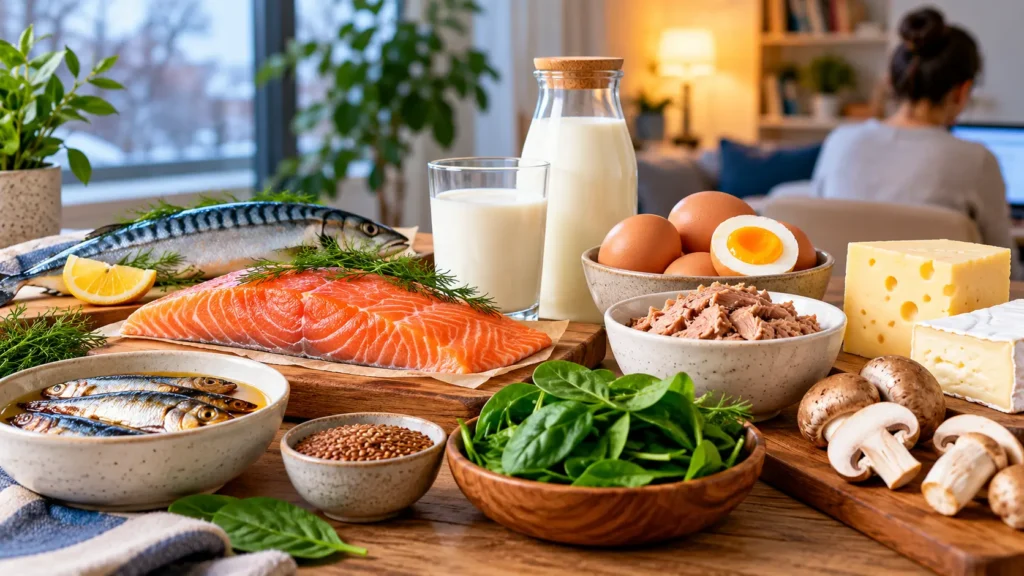
12 Best Vitamin D Foods for Adults Who Stay Indoors
The numbers below are approximate and based on NIH and USDA data. Brands and cooking methods vary, so always check the label.
1. Salmon (about 570 IU in 3 oz of cooked sockeye)
Salmon is the star of this list. A single serving of cooked sockeye gives you most of your daily target. Wild-caught salmon usually has more vitamin D than farmed, though both are good choices. Bake it with lemon and herbs, or flake canned salmon into a quick salad.
2. Rainbow Trout (about 645 IU in 3 oz, cooked)
Trout is a bit underrated. It has a mild flavor, cooks in minutes, and often beats salmon on vitamin D content. If you want a fish that doesn’t taste too “fishy,” start here.
3. Cod Liver Oil (about 1,360 IU per tablespoon)
Technically this is more of a supplement than a food, but it’s a traditional one. It’s very potent, so don’t take more than the label says. Cod liver oil also contains vitamin A, and too much of that over time can cause problems.
4. UV-Exposed Mushrooms (up to roughly 366 IU per half cup)
This one is a real hidden gem. Mushrooms make vitamin D foods when exposed to ultraviolet light, just like our skin does. Look for packages labeled “high in vitamin D” or “UV-exposed.” Regular mushrooms from the shelf have very little.
A tip many people don’t know: you can place sliced mushrooms in direct midday sunlight for about 15 to 30 minutes to boost their vitamin D content naturally.
5. Fortified Milk (about 115 to 125 IU per cup)
In the U.S., most cow’s milk is fortified with vitamin D. It’s an easy daily source, especially if you already drink it with cereal or in coffee.
6. Fortified Plant Milks (about 100 to 145 IU per cup)
Soy, almond, and oat milks are often fortified too, but not always. Flip the carton and check the nutrition label. This is a handy swap if you’re lactose intolerant or vegan.
7. Egg Yolks (about 44 IU per large egg)
The vitamin D foods lives in the yolk, so skip the egg-white-only omelet. Eggs from hens raised outdoors tend to have higher amounts. Not a huge number alone, but eggs add up when you eat them regularly.
8. Canned Sardines (about 46 IU for 2 sardines)
Sardines are cheap, shelf-stable, and packed with calcium (if you eat the soft bones), omega-3s, and protein. Mash them on toast with a squeeze of lemon and you’ve got a quick lunch.
9. Canned Light Tuna (about 40 IU per 3 oz)
Not as high as salmon, but convenient. Choose light tuna in moderation, since some tuna types contain more mercury.
10. Fortified Orange Juice (about 100 IU per cup)
Check that the label says “fortified with vitamin D.” It’s a decent option if you enjoy it, though watch the sugar and keep portions reasonable.
11. Fortified Cereal and Yogurt (about 80 IU per serving)
Many breakfast cereals and some yogurts add vitamin D. Pick ones with lower added sugar so you’re not trading one problem for another.
12. Beef Liver (about 42 IU per 3 oz)
Liver isn’t everyone’s favorite, but it’s rich in iron and B vitamins along with a small dose of vitamin D. Enjoy it occasionally rather than daily.
Foods With Vitamin D for Winter Nutrition
Winter is when this really matters. From roughly November through March, in much of the northern U.S., the sun sits too low for your skin to make meaningful vitamin D, even if you do step outside. So foods with vitamin D for winter nutrition deserve a regular spot on your grocery list.
Here are a few cozy ways to do that:
- Sheet-pan salmon with roasted vegetables for an easy weeknight dinner
- Mushroom soup made with UV-exposed mushrooms and fortified milk
- Sardine toast with avocado for a fast lunch
- Oatmeal made with fortified milk, topped with nuts and fruit
- Scrambled eggs with sautéed mushrooms for a warm breakfast
The trick isn’t perfection. It’s repetition. Three or four of these meals each week can make a noticeable difference in your intake.
How to Get Vitamin D Without Supplements
Many people prefer to rely on lifestyle and food first, and that’s a perfectly reasonable goal. If you’re wondering how to get vitamin D without supplements, here’s a realistic game plan:
Step 1: Eat fatty fish twice a week
Two servings of salmon, trout, or sardines weekly cover a big portion of your needs on their own.
Step 2: Build fortified foods into daily habits
Choose fortified milk or plant milk for your coffee and cereal. It’s a low-effort win because you’re already eating these foods.
Step 3: Use UV-exposed mushrooms as a regular side
Add them to pasta, omelets, stir-fries, and soups.
Step 4: Pair vitamin D foods with healthy fats
Vitamin D foods is fat-soluble, which means your body absorbs it better when you eat it with some fat. Olive oil, avocado, nuts, or the natural fat in fish all work well.
Step 5: Get some safe midday light
A short walk outside around midday, with your arms and face exposed when the weather and your skin allow, can help in warmer months. How much sun is safe varies with skin type, location, and skin cancer risk, so talk to your doctor or dermatologist before making sun a strategy.
Be honest with yourself, though. If you live in a cold climate, work nights, or have limited food choices, food alone may fall short. That’s not failure; it’s just biology.
Vitamin D Rich Foods for People With Limited Sun Exposure
Some people don’t have the choice to “just go outside more.” Maybe you work night shifts, care for a family member at home, have a mobility issue, or live in an apartment with little outdoor access. If that’s you, the best vitamin D rich foods for people with limited sun exposure are the ones that fit easily into a routine:
- Canned fish (salmon, sardines, tuna) because it keeps for months and needs no cooking
- Fortified milk or plant milk because it works in tea, coffee, and cereal
- Eggs because they’re cheap and quick
- Fortified yogurt or cereal because they need zero prep
Keeping a few of these in your pantry means a vitamin D food is never more than a few minutes away.
A Simple One-Day Vitamin D Foods Meal Plan
Wondering what this looks like on a real plate? Here’s an easy example:
- Breakfast: Fortified cereal or oatmeal with fortified milk and a boiled egg (about 120 to 250 IU)
- Lunch: Sardine or salmon salad on whole-grain bread with a glass of fortified orange juice (about 150 to 350 IU)
- Snack: Fortified yogurt (about 80 IU)
- Dinner: Baked salmon or trout with roasted UV-exposed mushrooms and olive oil (about 500 to 900 IU)
You’d land well above the 600 IU mark on fish days. On non-fish days, your total will be lower, which is why consistency across the week matters more than any single meal.
Vegetarian and Vegan Options
No fish? You can still make progress. Focus on:
- UV-exposed mushrooms
- Fortified plant milks, tofu, and cereals
- Fortified orange juice
- Eggs, if you eat them
Vegans should pay extra attention to labels, and many find food alone doesn’t quite reach the target. A doctor or registered dietitian can help you decide whether a supplement makes sense.
FAQs: Vitamin D Foods for Adults Who Stay Indoors
What are the best vitamin D foods for adults who stay indoors?
Fatty fish like salmon, trout, and sardines are the strongest natural sources. UV-exposed mushrooms, egg yolks, and fortified foods such as milk, plant milks, cereal, and orange juice make good everyday additions.
Can I get enough vitamin D from food alone?
It’s possible but not always easy, especially in winter or if you don’t eat fish. Many people combine food, safe sun exposure, and, when advised by a doctor, a supplement.
Do I need vitamin D more in winter?
Yes. In much of the U.S., winter sunlight is too weak for your skin to make much vitamin D, so food and fortified products matter more during the colder months.
Is window sunlight good enough for vitamin D?
Not really. Most UVB rays are blocked by glass, so sitting near a window won’t boost your vitamin D much.
Which fortified foods should I look for?
Check labels on milk, plant-based milks, breakfast cereals, yogurt, and orange juice. The label should list vitamin D in IU or mcg.
Can you get too much vitamin D from food?
It’s very unlikely from food alone. Excess usually comes from high-dose supplements, which is another reason to check with your doctor first.
Final Thoughts: Vitamin D Foods for Adults Who Stay Indoors
Spending your days indoors doesn’t mean your vitamin D has to suffer. Start small: add fatty fish to your weekly dinners, switch to fortified milk, toss UV-exposed mushrooms into your next stir-fry, and keep a few cans of sardines or salmon in the pantry. These tiny habits stack up fast.
If you’re not sure where your levels stand, ask your doctor about a simple blood test. Then use the vitamin D foods for adults who stay indoors on this list to build a plan that fits your life, your taste, and your budget.
Read More: PepsiCo Healthier Products 2026: Why Protein, Fiber and Zero Sugar Are Taking Over