
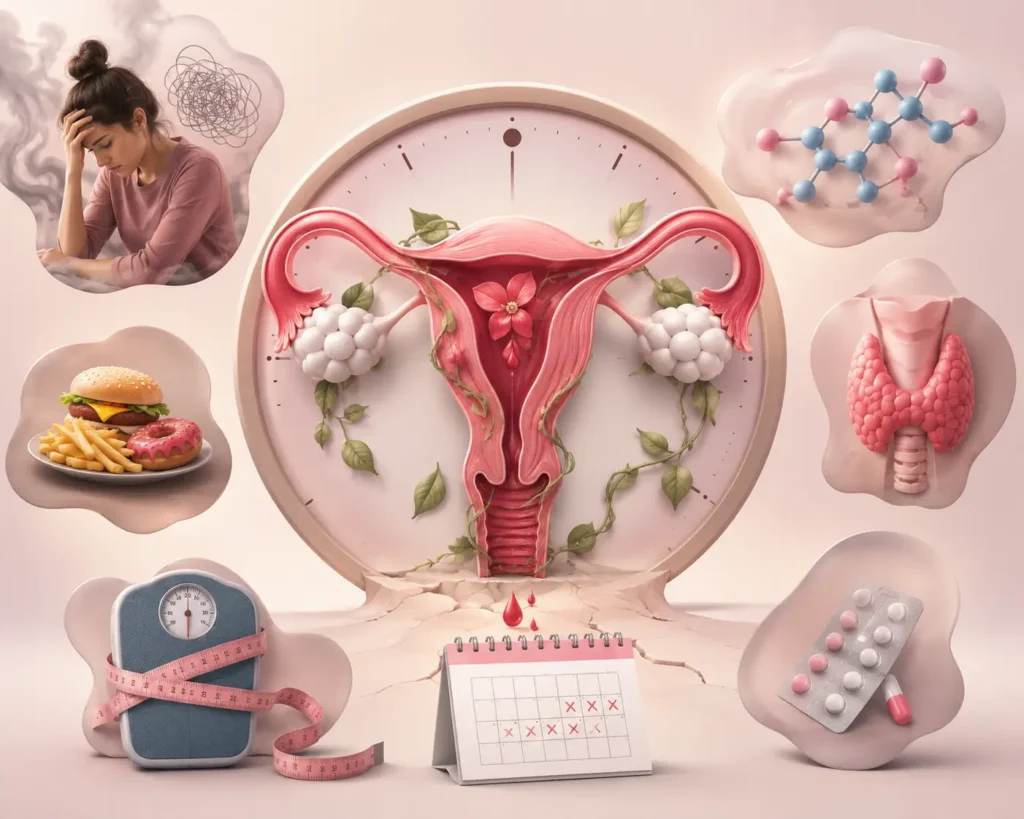
Are your periods suddenly coming late, too early, or skipping altogether? If you are a woman in your 30s, irregular periods can feel confusing and even scary. The good news is — you are not alone.
Irregular periods in women in their 30s are far more common than most people realize. Your body goes through significant hormonal shifts during this decade, and many lifestyle, medical, and nutritional factors can disrupt your menstrual cycle.
What Are Irregular Periods? (Quick Definition)
A normal menstrual cycle lasts between 21 to 35 days. Doctors consider your periods irregular if:
- Your cycle is longer than 38 days
- The length of each cycle varies by more than 7–9 days
- You are missing periods completely for several months in a row
- Your flow is extremely heavy or unusually light without explanation
Now, let’s look at why this happens specifically in your 30s.
1. Hormonal Imbalance — The Most Common Culprit
The most frequent cause of irregular periods in women in their 30s is a shift in estrogen and progesterone levels. These two hormones control your entire menstrual cycle, and even small fluctuations can delay or shorten your period.
In your 30s, your body starts producing slightly less of these hormones compared to your 20s. This natural hormonal transition often leads to:
- Shorter or longer cycles than usual
- Lighter or heavier bleeding
- Unpredictable spotting between periods
What you can do: Track your cycle with an app for 3 months and share the data with your gynecologist.
Read More: First Steps After Breast Cancer Diagnosis — A Survival Guide
2. Polycystic Ovary Syndrome (PCOS)
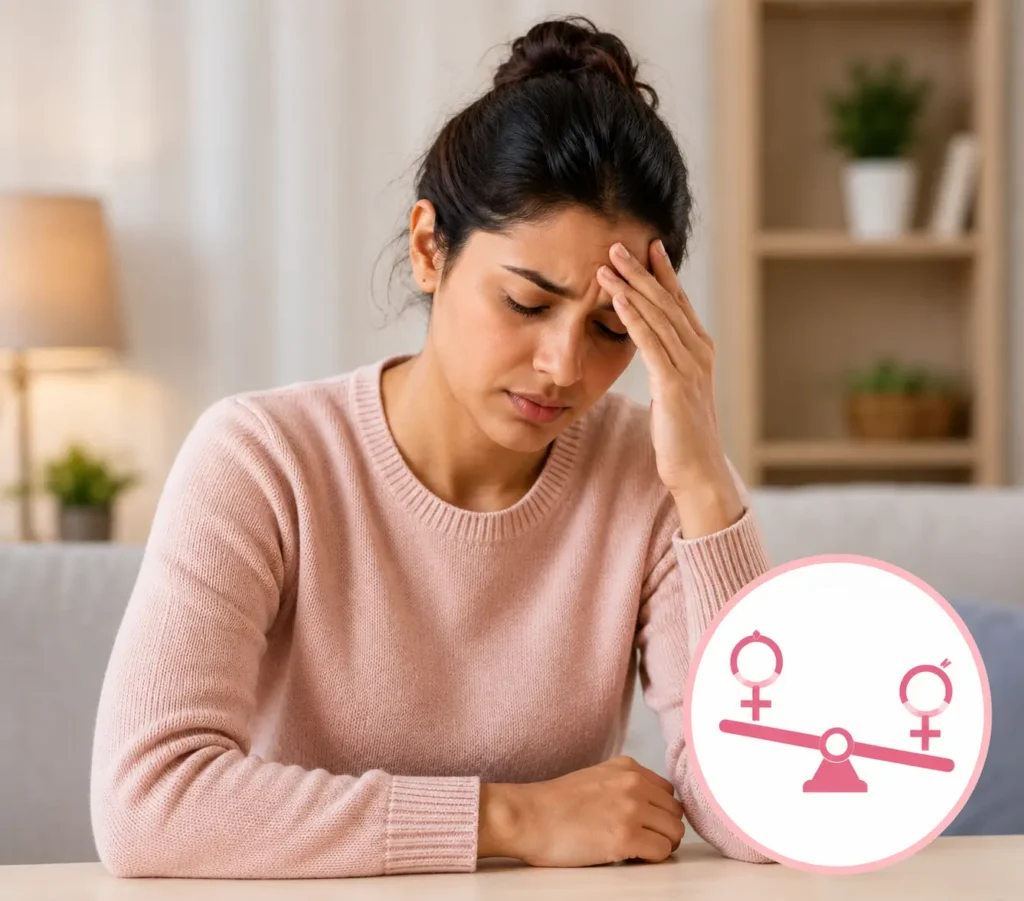
PCOS is one of the most widely undiagnosed conditions affecting women in their 30s. It occurs when your ovaries produce excess androgens (male hormones), disrupting ovulation and causing irregular or missed periods.
Key warning signs of PCOS include:
- Skipped periods or very infrequent cycles
- Unexplained weight gain, especially around the belly
- Excess facial or body hair
- Acne on the jaw or chin
- Difficulty getting pregnant
PCOS does not just affect your periods — it also increases the risk of type 2 diabetes and cardiovascular disease if left untreated. An ultrasound and blood test can confirm the diagnosis.
3. Thyroid Disorders — A Hidden Trigger
Your thyroid gland plays a powerful role in regulating your metabolism and reproductive hormones. Even a mild imbalance — whether hypothyroidism (underactive) or hyperthyroidism (overactive) — can directly affect your menstrual cycle.
Women in their 30s are at a higher risk for thyroid problems due to stress, hormonal changes, and nutritional gaps.
Symptoms to watch for:
- Rapid Weight Changes with no diet change
- Constant fatigue or feeling cold all the time
- Hair thinning or brittle nails
- Periods that are too heavy, too light, or absent
A simple TSH blood test can detect thyroid issues early.
4. Chronic Stress — Your Period Feels It Too
Modern life in your 30s often means juggling career, family, relationships, and finances all at once. This level of chronic stress directly interferes with your hormonal system.
When you are under persistent stress, your body releases high amounts of cortisol — the stress hormone. Elevated cortisol suppresses the release of GnRH (gonadotropin-releasing hormone), which is essential for triggering ovulation. No ovulation means no regular period.
Signs that stress is affecting your cycle:
- Periods disappearing during extremely stressful months
- Cycle length changing by more than 7 days regularly
- Period cramps getting significantly worse
Quick fixes: Yoga, daily walks, journaling, and 7–8 hours of sleep can meaningfully reduce cortisol levels.
5. Rapid Weight Changes
Whether you have lost or gained weight rapidly, your body’s fat cells directly influence estrogen production. Fat tissue (adipose tissue) stores and produces estrogen, so significant weight fluctuations — in either direction — can disrupt your cycle.
- Underweight women often have very light periods or stop menstruating altogether (a condition called amenorrhea)
- Overweight women may experience heavy, prolonged, or irregular periods due to excess estrogen
If you have changed your diet dramatically — through crash dieting, intermittent fasting, or a new fitness routine — your cycle may take 2–3 months to readjust.
6. Perimenopause Starting Early
Most women associate perimenopause with their late 40s. However, early perimenopause can begin in the mid-to-late 30s for some women, especially those with a family history.
During perimenopause, your ovaries gradually produce less estrogen, leading to:
- Increasingly irregular cycles
- Shorter or longer periods
- Hot flashes or night sweats
- Mood swings and disturbed sleep
Additionally, some women experience premature ovarian insufficiency (POI) — a condition where the ovaries stop functioning normally before age 40. If you suspect this, a blood test measuring your FSH (follicle-stimulating hormone) levels can provide clarity.
7. Endometriosis and Uterine Fibroids
Two serious but often overlooked conditions — endometriosis and uterine fibroids — commonly first show symptoms in a woman’s 30s.
Endometriosis occurs when tissue similar to the uterine lining grows outside the uterus. It causes:
- Extremely painful and irregular periods
- Heavy bleeding
- Pain during intercourse or bowel movements
- Difficulty conceiving
Uterine fibroids are non-cancerous growths in the uterus that can cause:
- Heavy, prolonged periods
- Pelvic pressure or pain
- Frequent urination
- Bloating
Both conditions require proper medical diagnosis through ultrasound or laparoscopy. Treatment options range from medication to surgical procedures depending on severity.
When Should You See a Doctor?
Do not ignore your periods if you notice any of these red flag signs:
- No period for 3 or more consecutive months (and you are not pregnant)
- Bleeding between periods that is heavy or persistent
- Periods that last longer than 7 days
- Severe pain that affects your daily life
- Sudden changes in flow after years of regularity
Early diagnosis is the key to preventing long-term complications with your reproductive and overall health.
5 Natural Ways to Support a Periods Regular Cycle
While medical treatment is sometimes necessary, these healthy habits can significantly support hormonal balance:
- Eat more iron-rich foods — spinach, lentils, and seeds help prevent deficiency-related cycle disruption
- Manage stress daily — even 10 minutes of deep breathing makes a difference
- Maintain a stable, healthy weight — extreme dieting worsens hormonal imbalance
- Limit caffeine and alcohol — both interfere with estrogen metabolism
- Sleep 7–8 hours consistently — your hormones reset during deep sleep
FAQ
Q: Is it normal for periods to become irregular in your 30s? Yes, occasional irregularity is normal due to hormonal shifts, stress, or lifestyle changes. However, persistent irregularity lasting more than 3 months warrants a medical check-up.
Q: Can stress alone cause missed periods in your 30s? Absolutely. Chronic stress raises cortisol levels, which can suppress ovulation and delay or skip your period entirely.
Q: What blood tests should I ask for if my periods are irregular? Ask your doctor for a hormonal panel including FSH, LH, estradiol, progesterone, testosterone, TSH (thyroid), and AMH (ovarian reserve) for a full picture.
Final Thoughts
Irregular periods in women in their 30s are a signal — not something to ignore or simply push through. From PCOS and thyroid issues to stress and early perimenopause, the causes are varied but most are highly treatable when caught early.
Read More: Measles Comeback in USA 2026: What Parents Should Know