
Alcohol Health Risks
For years, moderate drinking was seen as harmless — even heart-healthy in some cases. But newer research emerging in 2026 has reshaped that conversation significantly. From cravings to sleep quality, scientists are uncovering just how deeply alcohol affects the human body, even in small quantities.
Read More: Bemotrizinol Sunscreen: Benefits, Uses, and Safety Guide
Is Any Amount of Alcohol Safe? New Study 2026
This question has been at the center of public health debates for years, and 2026 research adds more clarity.
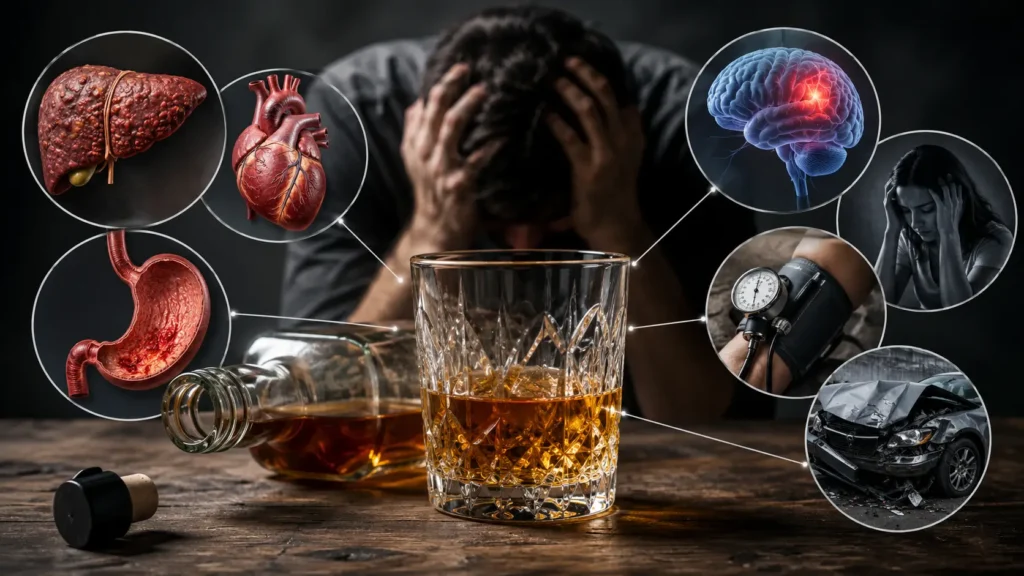
A major study published in June 2026 in the Journal of Studies on Alcohol and Drugs, commissioned during the Biden administration, examined the lifetime health risks associated with alcohol. The researchers concluded that even one drink a day raises the risk of early death and more than 200 diseases, including cancer and heart disease. Notably, the study also found that no amount of alcohol offers protection against premature death.
Around the same time, a large-scale June 2026 analysis published in Nature Health reviewed 843 individual studies covering 20 different health outcomes, using a conservative statistical framework. The findings reinforced that cancer risk rises with alcohol consumption at essentially any level, although some cardiometabolic outcomes showed more nuanced results.
Meanwhile, the World Health Organization has taken an even firmer stance. Its position, based on large-scale global data, states that no amount of alcohol consumption is considered safe, with the risk of mortality and cancer rising as consumption increases — a pattern that appeared especially strong among adults under the age of 40.
Key takeaways from 2026 alcohol research:
- Even light or “moderate” drinking is linked to increased disease risk.
- Cancer risk appears to rise with any level of alcohol intake.
- Younger adults may face proportionally higher risks than older adults.
- Global health bodies are shifting away from the idea of a “safe” drinking threshold.
Low-Level Drinking Health Risks Explained
Many people assume that having just one drink a day, or a glass of wine with dinner, is essentially risk-free. Recent findings suggest otherwise.
Here’s how low-level drinking may affect the body over time:
- Cancer risk – Multiple large reviews now associate even low alcohol intake with a higher likelihood of certain cancers, particularly breast and gastrointestinal cancers.
- Cardiovascular effects – While older studies suggested a possible heart benefit from light drinking, newer research indicates any such benefit is likely outweighed by other risks, including injury and disease.
- Liver strain – Even modest, regular drinking requires the liver to consistently metabolize alcohol, which can contribute to long-term strain.
- Mental health impact – Alcohol can interfere with mood regulation over time, even at low doses.
It’s worth noting that health guidance still varies. Some organizations, like the CDC, define moderate drinking as up to two drinks per day for men and one for women, while the WHO maintains that no level is entirely without risk. This gap between official guidelines has left many consumers confused about what “safe” really means.
Alcohol Cravings for Processed Food: What Research Shows
One of the more surprising 2026 findings connects alcohol to our food choices. Researchers at the University of Sydney’s Charles Perkins Centre discovered a biological link between drinking and craving salty, ultra-processed snacks.
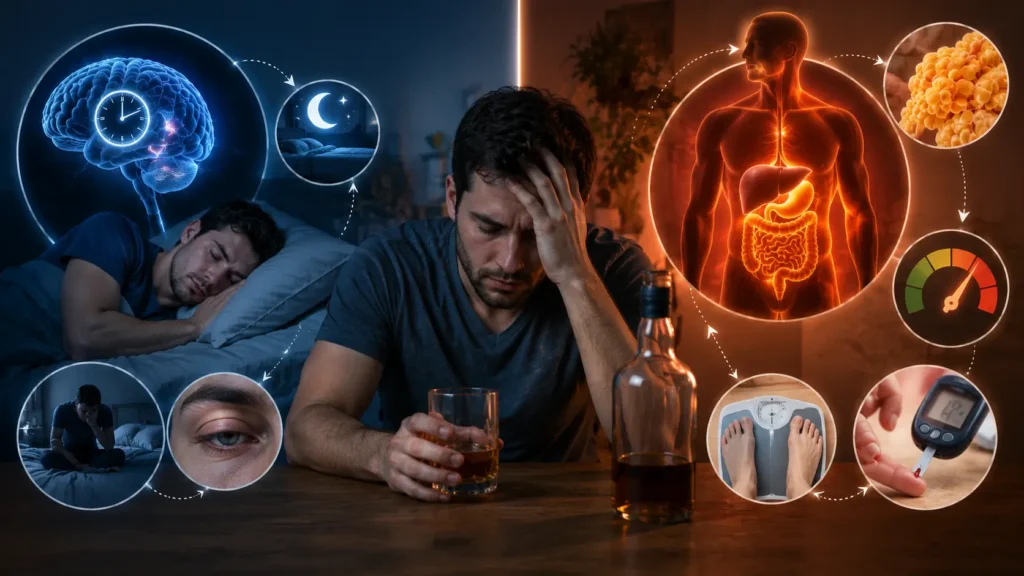
According to their study, alcohol triggers a hormone called FGF21, which boosts cravings for savory foods while reducing the desire for sweet foods. This may explain the very familiar pattern of reaching for chips, fries, or pizza during or after drinking.
The researchers explained that this hormonal response may have originally evolved to guide humans toward protein-rich foods. However, in today’s food environment, many salty, umami-flavored snacks contain very little actual protein. Scientists refer to these as “protein decoys” because they trigger a craving for protein that never actually gets satisfied, leading people to eat more overall.
Practical takeaway: Keeping protein-rich whole foods on hand — like nuts, grilled fish, or boiled eggs — during or after drinking may help prevent overeating driven by this hormonal response.
How Alcohol Affects Sleep and Metabolism
Alcohol’s impact on sleep is another area receiving fresh attention in recent research.
A narrative review published in early 2026 confirmed that while alcohol may help people fall asleep faster, it consistently disrupts sleep structure, continuity, and REM sleep later in the night. This means even though a nightcap might feel relaxing initially, it tends to backfire as the night progresses.
Here’s a simplified breakdown of what typically happens:
- First half of the night – Alcohol has a sedative effect, which can help you fall asleep faster.
- Second half of the night – As alcohol is metabolized and cleared from the body, sleep becomes more fragmented, with increased wakefulness and reduced REM sleep.
- Metabolic connection – The body’s process of breaking down alcohol overlaps directly with sleep cycles, meaning metabolism and sleep quality are closely linked.
Research also shows that women tend to experience greater sleep disruption at lower doses compared to men, likely due to differences in body composition and how alcohol is metabolized.
Simple tips based on current research:
- Avoid alcohol within a few hours of bedtime to reduce sleep disruption.
- Stay hydrated, since alcohol has a diuretic effect that can further disturb rest.
- Limit intake on nights before demanding days, since even moderate drinking can reduce sleep quality.
Final Thoughts: Is Any Amount of Alcohol Safe
The 2026 research landscape paints a clearer, more consistent picture: alcohol’s health effects extend far beyond just hangovers. From long-term disease risk to hormonal cravings and disrupted sleep, science increasingly suggests that less truly is more when it comes to alcohol.
Read More: Fibermaxxing Diet Plan: How to Boost Daily Fiber Intake Safely