
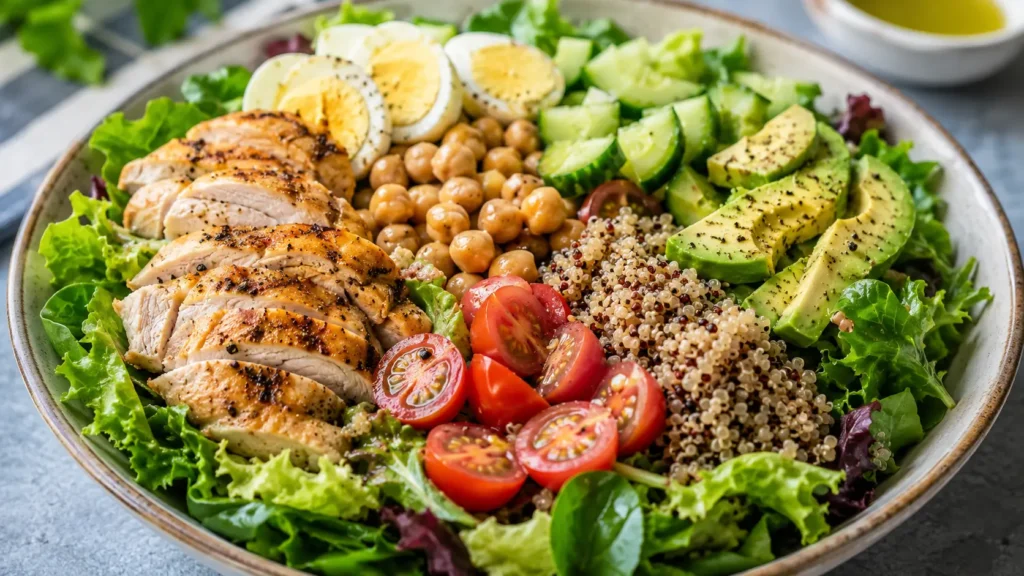
High-Protein Salads for Weight Loss
If you’ve been searching for high protein salad recipes for weight loss USA nutritionists actually recommend, you’re in the right place. Salads often get a bad reputation for being “rabbit food” — a sad bowl of lettuce that leaves you hungry an hour later. But that’s only true if you’re doing it wrong.
The secret to a salad that actually fills you up, supports muscle maintenance, and helps with sustainable weight loss is simple: protein. In this guide, we’ll break down exactly how to build a satisfying, high-protein salad, share 30g protein salad ideas no meat for plant-based eaters, explore the best protein salad for GLP-1 users, and give you practical high protein low calorie salad meal prep strategies you can start using today.
Disclaimer: I am not a doctor or registered dietitian. This article is for general informational purposes only and should not be taken as medical or nutritional advice. Please consult a qualified healthcare provider before making significant changes to your diet, especially if you have an existing medical condition or are taking medication.
Read More: Weight Loss Diet Tips at Home: Simple Changes That Actually Work
Why Protein Matters More Than Ever in 2026
Protein has quietly become the most talked-about macronutrient in the health and wellness world. With the rise of GLP-1 medications and a growing cultural shift toward “food as medicine,” more people are realizing that cutting calories alone isn’t enough — protein intake plays a huge role in preserving muscle, controlling hunger, and supporting long-term weight management.
Here’s why protein-rich salads are having a moment:
- They keep you fuller for longer compared to carb-heavy meals, reducing the urge to snack.
- They support lean muscle mass, which is especially important if you’re losing weight, since muscle helps keep your metabolism active.
- They’re easy to customize, making them ideal for different diets — whether you eat meat, are plant-based, or are managing appetite changes from GLP-1 medications.
What Makes a Salad “High-Protein”?
A basic garden salad — lettuce, tomato, cucumber — might only have 2–3 grams of protein. To turn it into a real meal that supports weight loss goals, you need to build it intentionally. A well-balanced high-protein salad usually includes:
- A protein base (20–30g) — this could be grilled chicken, tofu, chickpeas, lentils, cottage cheese, or eggs.
- Healthy fats — avocado, olive oil, nuts, or seeds to help with satiety and nutrient absorption.
- Fiber-rich vegetables — leafy greens, bell peppers, shredded carrots, or broccoli.
- A light, flavorful dressing — homemade vinaigrettes are usually lower in added sugar than store-bought options.
This combination is what separates a filling meal from a snack that leaves you reaching for chips an hour later.
High Protein Salad Recipes for Weight Loss
Below are a few salad combinations built around ingredients that are easy to find in any U.S. grocery store.
1. Grilled Chicken & Quinoa Power Salad
- Grilled chicken breast (4 oz)
- Cooked quinoa (½ cup)
- Baby spinach
- Cherry tomatoes
- Feta cheese
- Lemon-olive oil dressing
Approx. protein: 35g
2. Egg & Chickpea Protein Bowl
- 2 hard-boiled eggs
- ½ cup chickpeas
- Mixed greens
- Cucumber and red onion
- Greek yogurt-based dressing
Approx. protein: 28g
3. Salmon & Avocado Salad
- Grilled or canned salmon (4 oz)
- Avocado
- Arugula
- Cherry tomatoes
- Balsamic glaze
Approx. protein: 30g
These recipes are simple enough for beginners but flexible enough to adjust based on what’s already in your fridge.
30g Protein Salad Ideas No Meat
Plant-based eaters often assume high-protein salads require chicken or fish, but that’s not true. Here are a few 30g protein salad ideas no meat that are entirely vegetarian or vegan:
Lentil & Cottage Cheese Salad
- Cooked green or brown lentils (¾ cup)
- Cottage cheese (½ cup)
- Chopped cucumber and bell pepper
- Fresh herbs (parsley, mint)
- Olive oil and lemon juice dressing
Approx. protein: 30g
Tofu & Edamame Power Bowl
- Baked or pan-seared tofu (150g)
- Shelled edamame (½ cup)
- Shredded cabbage and carrots
- Sesame-ginger dressing
Approx. protein: 32g
Greek Yogurt Chickpea Salad
- Chickpeas (1 cup)
- Plain Greek yogurt (½ cup, mixed into dressing)
- Diced cucumber, tomato, red onion
- Fresh dill
Approx. protein: 29g
These options prove you don’t need animal protein to hit your daily targets — legumes, dairy, and soy-based foods can do the job just as effectively.
Best Protein Salad for GLP-1 Users
With more Americans using GLP-1 medications for weight management, appetite and portion sizes naturally shrink. This makes nutrient density more important than ever — every bite needs to count.
If you’re looking for the best protein salad for GLP-1 users, keep these tips in mind:
- Prioritize protein first. Since appetite is reduced, eating protein before vegetables can help you meet your daily protein needs without feeling overly full too quickly.
- Choose easily digestible proteins. Eggs, Greek yogurt, cottage cheese, and soft-cooked legumes tend to sit better than tougher cuts of meat.
- Keep portions smaller but nutrient-dense. A smaller salad packed with protein and healthy fats can be more effective than a large bowl of mostly greens.
- Stay hydrated. GLP-1 users are sometimes more prone to mild dehydration, so pairing meals with water is helpful.
A simple GLP-1-friendly option: a small bowl of Greek yogurt, chickpeas, cucumber, and olive oil — soft in texture, protein-rich, and easy on the stomach.
High Protein Low Calorie Salad Meal Prep Tips
Meal prepping is one of the easiest ways to stay consistent with high-protein eating, especially during busy work weeks. Here’s how to approach high protein low calorie salad meal prep the smart way:
- Prep proteins in bulk. Grill a batch of chicken breasts, boil a dozen eggs, or cook a big pot of lentils on Sunday.
- Store dressing separately. This keeps greens from getting soggy and lets you control portion sizes.
- Use mason jars or airtight containers. Layer dressing at the bottom, protein and hearty veggies in the middle, and leafy greens on top.
- Balance calories, not just protein. Use measuring cups for oils and cheese, since these are calorie-dense even in small amounts.
- Rotate flavors weekly. Switching between Mediterranean, Mexican-inspired, and Asian-style dressings keeps meals from feeling repetitive.
A well-prepped batch of 4–5 salads can easily last through the workweek, saving both time and money while keeping your weight loss goals on track.
Common Mistakes to Avoid
- Drowning your salad in dressing — even “healthy” dressings can add hundreds of hidden calories.
- Skipping protein altogether — a salad without a solid protein source won’t keep you full.
- Relying only on lettuce — mix in fiber-rich vegetables and whole grains for better nutrient balance.
- Not measuring portions — nuts, cheese, and oils are healthy but calorie-dense; portion control matters.
Final Thoughts
Building a high-protein salad isn’t complicated once you understand the basic formula: protein + healthy fat + fiber + flavor. Whether you’re following high protein salad recipes for weight loss USA readers are searching for, exploring 30g protein salad ideas no meat, looking for the best protein salad for GLP-1 users, or simply trying to nail down high protein low calorie salad meal prep, the key is consistency and balance.
Read More: Alcohol Health Risks: Is Any Amount of Alcohol Safe?