
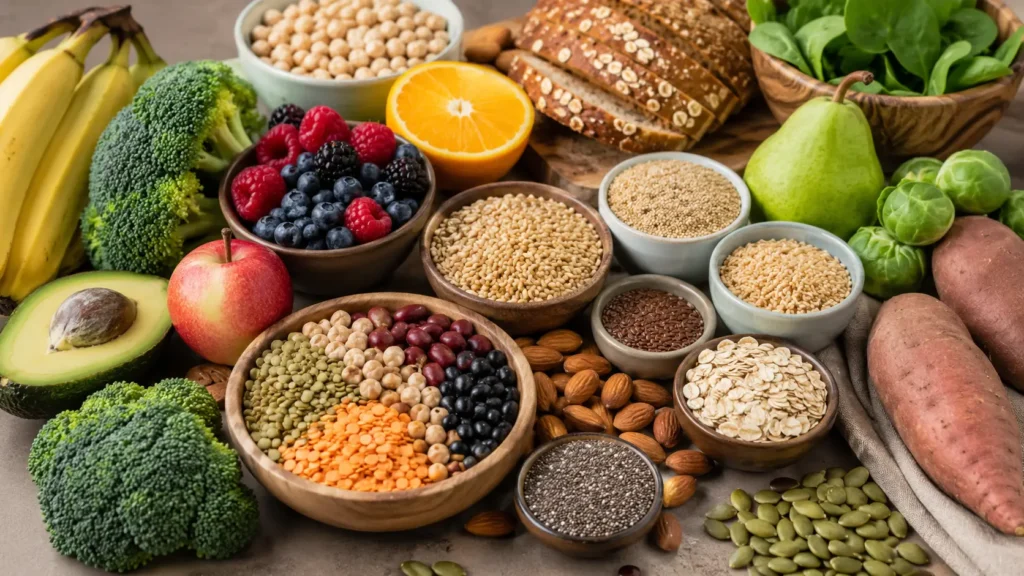
Fibermaxxing Diet Plan
If your social media feed has recently filled up with people proudly stacking beans, chia seeds, and oats onto every plate, you’ve already met “fibermaxxing.” It’s one of 2026’s biggest nutrition trends, and unlike most viral diet fads, dietitians are actually cheering it on.
But like any “maxxing” trend, going too far, too fast, can backfire. This guide breaks down a realistic fibermaxxing diet plan, how much fiber per day actually supports colon health, the fibermaxxing side effects nobody talks about, and a best high fiber foods list for 2026.
Disclaimer: I am not a doctor. This article is for general informational purposes only and should not replace advice from a qualified healthcare provider or registered dietitian.
Read More: Food as Medicine Diet Plan: Why Whole Foods Are Replacing Your Supplement Cabinet in 2026
What Is Fibermaxxing?
Fibermaxxing simply means intentionally loading your meals and snacks with fiber-rich foods instead of treating fiber as an afterthought. It grew out of the same social media culture that gave us “proteinmaxxing” in 2025, except this time the spotlight nutrient is fiber.
The trend caught on for a good reason. More than 19 out of 20 Americans routinely fall short of their recommended fiber intake, largely because ultra-processed foods strip fiber out during manufacturing. Nutrition experts have wanted people to eat more fiber for decades — fibermaxxing just made it trend on TikTok instead of getting ignored in a pamphlet.
How Much Fiber Per Day Actually Supports Colon Health?
This is the most searched part of the trend, and the answer is more nuanced than “more is better.”
- General daily target: Most health experts recommend aiming for roughly 25 to 38 grams of fiber per day, depending on age and gender.
- Colon and gut health sweet spot: Research reviews have found that the biggest reduction in chronic disease and early death risk happens when people raise their intake to around 25–29 grams a day — a realistic, achievable goal for most adults.
- Where it gets personalized: Some gastroenterologists note that healthy adults can safely reach 30–40 grams, and even 50–60 grams for those with a well-adjusted gut microbiome. Beyond that, tolerance becomes very individual.
- The colon cancer connection: Regular fiber intake has been linked to a lower risk of colorectal cancer, a disease that is unfortunately rising among younger adults even as other cancer rates in that age group decline.
Rather than obsessively counting grams, several dietitians suggest a simpler method: focus on filling half your plate with a variety of vegetables, fruits, legumes, and whole grains at each meal.
Building a Simple Fibermaxxing Diet Plan
A sustainable fibermaxxing diet plan isn’t about extreme overnight change. It’s about layering fiber into meals you already eat.
Breakfast
- Swap white toast for whole grain or sprouted bread
- Add chia seeds or ground flaxseed to oatmeal or yogurt
- Choose whole fruit over fruit juice
Lunch
- Add a scoop of lentils, chickpeas, or black beans to salads or bowls
- Choose brown rice or quinoa instead of white rice
- Keep the skin on potatoes and apples
Dinner
- Fill half the plate with non-starchy vegetables like broccoli, carrots, or Brussels sprouts
- Add a side of legumes such as black beans or edamame
- Try whole wheat or legume-based pasta
Snacks
- Raw vegetables with hummus
- A handful of almonds or pistachios
- Air-popped popcorn instead of chips
The common thread across all of these swaps is simple: choose the less processed version of a food whenever possible.
Fibermaxxing Side Effects to Watch For

This is where the trend gets tricky. Because fiber has such a strong “healthy halo,” people assume there’s no downside to piling it on fast. In reality, rapidly increasing fiber intake can cause real discomfort.
Common fibermaxxing side effects include:
- Bloating and gas, especially in the first one to two weeks
- Abdominal cramping
- Constipation if water intake doesn’t increase alongside fiber
- Reduced absorption of minerals like iron, calcium, and zinc when intake spikes too quickly
- Digestive distress for people with IBS, Crohn’s disease, or ulcerative colitis, who may need a more cautious, individualized approach
Some social media influencers promote extreme targets of 70–90 grams of fiber a day. Gastroenterologists caution that jumping to numbers that high, without a gradual buildup, can cause significant gastrointestinal distress — even though similar intake levels are normal in some traditionally plant-based diets where the body has adapted over a lifetime.
How to avoid the side effects:
- Increase fiber gradually over several weeks, not days
- Drink more water as your fiber intake rises
- Prioritize whole foods over fiber supplements when possible
- Pay attention to how your body responds and adjust accordingly
- Talk to a healthcare provider before making major changes if you have an existing digestive condition
Best High Fiber Foods List for 2026
Here’s a practical, up-to-date list of high fiber foods to build your meals around:
Legumes
- Lentils
- Chickpeas
- Black beans
- Edamame
Whole Grains
- Quinoa
- Oats
- Brown rice
- Whole wheat bread and pasta
Vegetables
- Broccoli
- Brussels sprouts
- Carrots
- Artichokes
Fruits
- Raspberries
- Pears (with skin)
- Apples (with skin)
- Avocados
Seeds and Nuts
- Chia seeds
- Ground flaxseed
- Almonds
- Pistachios
Rotating through this list naturally increases both fiber intake and micronutrient variety, since whole plant foods also deliver vitamins, minerals, and antioxidants that a fiber supplement alone cannot replicate.
Is Fibermaxxing Worth Trying?
For most healthy adults, yes; fibermaxxing is one of the rare social media nutrition trends that genuinely lines up with long-standing nutrition science. The key is treating it as a gradual lifestyle shift rather than a race to hit the highest number possible.
Start where you are, add fiber-rich foods a little at a time, drink enough water, and pay attention to how your body responds. If you have an underlying digestive condition or take medications that could interact with high fiber intake, check in with a doctor or registered dietitian before making major dietary changes.
Read More: Wearables for Nervous System Tracking: Does HRV Actually Help? (2026)