
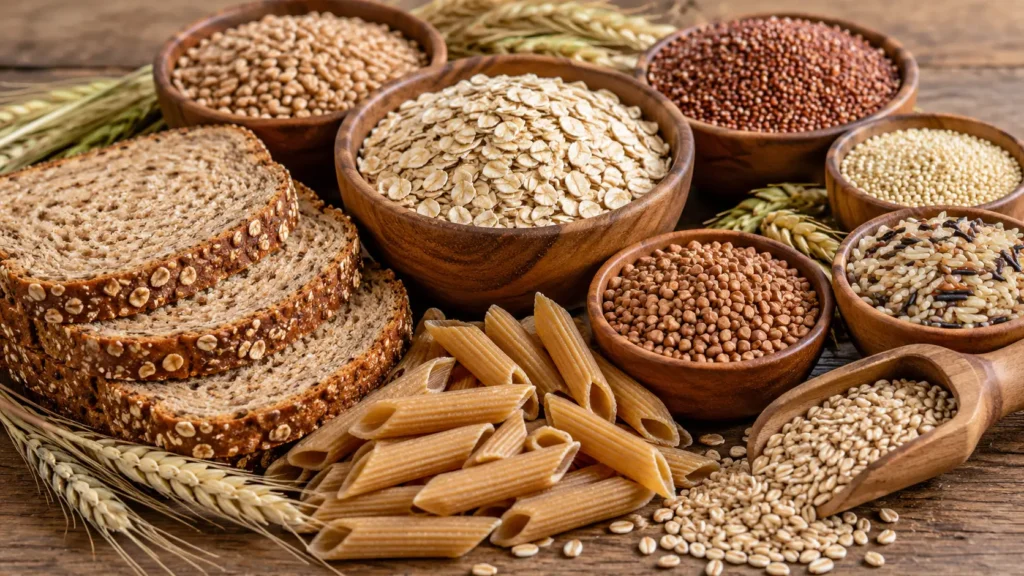
Whole Grains Daily Intake
If you’ve ever stood in the cereal aisle wondering whether “whole grain” on the label actually means anything, you’re not alone. For years, nutrition advice on grains has felt vague — “eat more fiber,” “choose whole over refined” — without much clarity on the actual numbers. That changed this month. A major new meta-analysis published in the European Heart Journal on September 15, 2026, combined data from 87 clinical trials involving more than 6,500 people, and it finally answers the question everyone’s been asking: how many servings of Whole Grains Daily Intake is healthy?
The short answer: somewhere between four and six servings a day appears to be the sweet spot. But the full picture — how much fiber you actually need, which grains work best if you’re dealing with insulin resistance, and how to fit this into a realistic weekly routine — is worth unpacking properly.
Disclaimer: I am not a doctor, and this article is for general informational purposes only. Please consult a registered dietitian or physician before making significant changes to your diet, especially if you have diabetes, insulin resistance, or another medical condition.
Read More: High Protein Breakfast Foods to Build Muscle: 9 Best Picks (2026)
How Many Servings of Whole Grains Per Day Is Healthy?
According to the 2026 meta-analysis led by researchers at Tabriz University of Medical Sciences, measurable health benefits began to appear at roughly 30 to 40 grams of Whole Grains Daily Intake — about two to three servings. But the greatest improvements in body weight, waist circumference, blood pressure, cholesterol, blood sugar, and inflammation markers showed up at 60 to 100 grams daily, which works out to about four to six servings.
To put that in real-world terms, four to six servings looks like:
- A bowl of oatmeal at breakfast
- A sandwich made with two slices of whole grain bread
- A serving of bQuinoa vs Oats vs Brown Rice Comparison with dinner
- A small handful of popcorn or whole grain crackers as a snack
This actually sits toward the higher end of current U.S. Dietary Guidelines, which recommend that at least half of your daily grain intake — roughly 3 to 5 ounce-equivalents — come from whole grains. Most Americans fall well short of this; national survey data consistently shows the average adult eats less than one full serving of Whole Grains Daily Intake.
Daily Fiber From Whole Grains: How Much Do You Really Need?
Whole grains are one of the easiest ways to hit your daily fiber target, but most people underestimate how much fiber they should be getting from grains specifically. Adult women generally need around 25 grams of fiber per day, while men need closer to 38 grams. Whole grains alone won’t get you all the way there, but they can reasonably supply 8 to 12 grams if you’re eating four to six servings a day.
A quick reference for daily fiber from whole grains Daily Intake:
- 1 cup cooked oatmeal: ~4 grams fiber
- 1 slice whole grain bread: ~2 grams fiber
- 1 cup cooked quinoa: ~5 grams fiber
- 1 cup cooked brown rice: ~3.5 grams fiber
- 1 cup air-popped popcorn: ~1 gram fiber
The gap between what people eat and what they need is exactly why fiber deficiency symptoms — bloating, irregularity, and fluctuating blood sugar — are so common.
Signs You’re Not Eating Enough Whole Grains Daily Intake
Because whole grain deficiency isn’t as dramatic as a vitamin deficiency, it often goes unnoticed. A few common signs worth paying attention to:
- Frequent constipation or irregular digestion
- Energy crashes a few hours after meals
- Feeling hungry again soon after eating refined carbs
- Difficulty managing blood sugar or frequent sugar cravings
- Consistently low Daily Fiber From Whole Grains intake (most refined-grain-heavy diets fall under 15 grams of fiber a day)
If several of these sound familiar, it may be worth auditing how much of your grain intake is actually “whole” versus refined.
Healthiest Whole Grains Ranked by Fiber
Not all whole grains are created equal when it comes to fiber content. Here’s a general ranking, per cooked cup:
- Barley — around 6 grams of fiber, plus beta-glucan for heart health
- Quinoa — around 5 grams of fiber, and a complete protein
- Bulgur wheat — around 8 grams of fiber, often overlooked but excellent
- Oats — around 4 grams of fiber, with cholesterol-lowering beta-glucan
- Brown rice — around 3.5 grams of fiber
- Farro — around 5 grams of fiber, with a chewy texture that works well in salads
- Millet — around 2 grams of fiber, naturally gluten-free
Rotating between a few of these, rather than relying on one grain all week, helps you get a broader range of nutrients.
Best Whole Grains for Insulin Resistance
If blood sugar management is a priority, some whole grains perform better than others because of how they affect post-meal glucose response. The best whole grains for insulin resistance tend to have a lower glycemic index and higher resistant starch or fiber content:
- Barley — one of the lowest glycemic-index grains available, shown to improve insulin sensitivity even at the next meal
- Steel-cut oats — digest more slowly than instant oats, leading to a gentler blood sugar rise
- Quinoa — combines fiber and protein, which slows glucose absorption
- Bulgur wheat — high fiber content blunts blood sugar spikes
- Farro — chewy texture and fiber content make it filling and glucose-friendly
The new 2026 meta-analysis specifically noted that higher whole grain intake was linked to measurable improvements in insulin resistance, not just weight and cholesterol — which is a meaningful finding for anyone managing prediabetes or type 2 diabetes.
Quinoa vs Oats vs Brown Rice Comparison
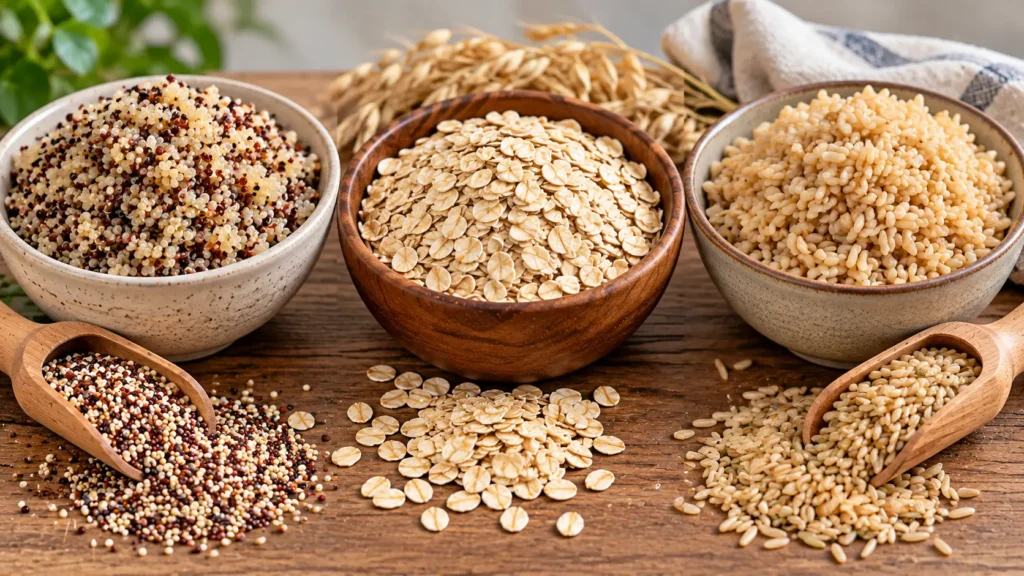
These three are the most commonly compared Whole Grains Daily Intake, and each has a slightly different strength:
Quinoa is technically a seed, not a true cereal grain, but it’s cooked and eaten the same way. It’s the only one of the three that’s a complete protein, containing all nine essential amino acids — making it a strong choice for vegetarians and vegans.
Oats are the best-studied grain for heart health, thanks to a specific type of soluble fiber called beta-glucan, which has been shown to lower LDL cholesterol.
Brown rice is the most neutral and versatile of the three, with a mild flavor that works in almost any cuisine, though it has slightly less fiber and protein than quinoa or oats.
If you had to pick just one, quinoa edges out on overall nutrition density, but rotating all three throughout the week gives you the broadest benefit.
Whole Grain vs Refined Grain: What Does the Weight Loss Study Say?
This is where the science gets interesting. A separate two-year dietary study found that a Mediterranean-style diet — which emphasizes whole grains over refined ones — produced weight loss results comparable to strict calorie counting, without requiring people to track every calorie. In other words, simply swapping Whole Grain vs Refined Grains (white bread, white rice, regular pasta) for whole grain versions appears to support sustainable weight management, likely because whole grains are more filling and slower to digest.
The broader research on whole grain vs refined grain and weight loss consistently shows the same pattern: people who eat more whole grains tend to have lower body weight and smaller waist circumference over time, even without deliberately restricting calories. The fiber and slower digestion appear to naturally support portion control and reduce snacking between meals.
Whole Grain vs Regular Pasta: Nutrition Comparison
Pasta is one of the easiest places to make a whole grain swap without changing your favorite meals. Per 1-cup cooked serving:
| Nutrient | Regular Pasta | Whole Grain Pasta |
|---|---|---|
| Fiber | ~2.5g | ~6g |
| Protein | ~7g | ~7.5g |
| Glycemic Index | Higher | Lower |
| Iron | Lower | Higher |
The taste difference has also narrowed significantly in recent years, as most major brands have improved their whole grain pasta recipes to be less dense and more similar to regular pasta.
Gluten-Free Whole Grains List
Whole Grains Daily Intake and gluten-free eating aren’t mutually exclusive. If you’re avoiding gluten, these whole grains are naturally safe (always check for cross-contamination labeling):
- Quinoa
- Brown rice
- Millet
- Buckwheat
- Certified gluten-free oats
- Sorghum
- Amaranth
- Teff
This list makes it easy to still hit the recommended four to six daily servings even with dietary restrictions.
Easy Whole Grain Breakfast Ideas for Beginners
Breakfast is the simplest meal to upgrade. A few low-effort ideas:
- Overnight oats with berries and a spoonful of nut butter
- Whole grain toast topped with mashed avocado and eggs
- A quick quinoa breakfast bowl with cinnamon and fruit
- Whole grain cereal with milk and sliced banana
- Buckwheat pancakes made from a simple two-ingredient batter
None of these require special skills — just swapping the base ingredient for a whole grain version.
7-Day Whole Grain Meal Plan for Weight Loss
A simple week to build the habit without overhauling your entire diet:
- Day 1: Oatmeal breakfast, quinoa salad lunch, brown rice stir-fry dinner
- Day 2: Whole grain toast breakfast, barley soup lunch, whole grain pasta dinner
- Day 3: Buckwheat pancakes breakfast, farro salad lunch, brown rice bowl dinner
- Day 4: Overnight oats breakfast, whole grain wrap lunch, bulgur pilaf dinner
- Day 5: Whole grain cereal breakfast, quinoa bowl lunch, whole grain pasta dinner
- Day 6: Millet porridge breakfast, barley salad lunch, brown rice curry dinner
- Day 7: Whole grain pancakes breakfast, leftovers lunch, quinoa stuffed vegetables dinner
Whole Grains Diabetes Meal Plan
For those managing blood sugar specifically, pairing whole grains with protein and healthy fat at every meal helps slow glucose absorption further. A general approach:
- Choose lower-glycemic grains like barley, steel-cut oats, and bulgur most often
- Keep portions to about half a cup cooked grain per meal
- Always pair grains with a protein source (eggs, beans, chicken, tofu)
- Add non-starchy vegetables to bulk up meals without spiking blood sugar
- Avoid pairing whole grains with sugary sauces or dressings that offset the benefit
Whole Grain Recipes for Picky Kids
Getting kids on board with whole grains often comes down to texture and presentation rather than flavor:
- Whole grain mac and cheese (most kids can’t tell the difference once it’s coated in cheese sauce)
- Mini whole grain pancakes shaped with cookie cutters
- Brown rice “sushi” rolls with familiar fillings
- Whole grain muffins with hidden shredded zucchini or carrot
- Popcorn as a whole grain snack instead of chips
Starting with a 50/50 blend of white and whole grain rice or pasta, then gradually shifting the ratio, tends to work better than switching all at once.
Best Whole Grain Snacks for Insulin Resistance
Snacking is often where blood sugar control breaks down. These whole grain snacks are higher in fiber and lower on the glycemic index:
- Air-popped popcorn with a light sprinkle of nutritional yeast
- Whole grain crackers with hummus
- Roasted chickpeas mixed with a small handful of whole grain cereal
- A small bowl of overnight oats with cinnamon (no added sugar)
- Whole grain rice cakes topped with nut butter
Pairing any of these with a source of protein or healthy fat further slows the blood sugar response.
Final Thoughts: Whole Grains Daily Intake
The latest research makes one thing clear: whole grains daily intake isn’t just a vague wellness suggestion — there’s now a fairly specific target, four to six servings a day, backed by one of the largest clinical trial reviews on the topic to date. Whether your goal is weight management, better blood sugar control, or simply eating a more balanced diet, small consistent swaps — a different bread, a different pasta, a different breakfast — add up faster than most people expect.
Read More: Strep Throat Symptoms September 2026: Early Signs Every Parent Should Know

