
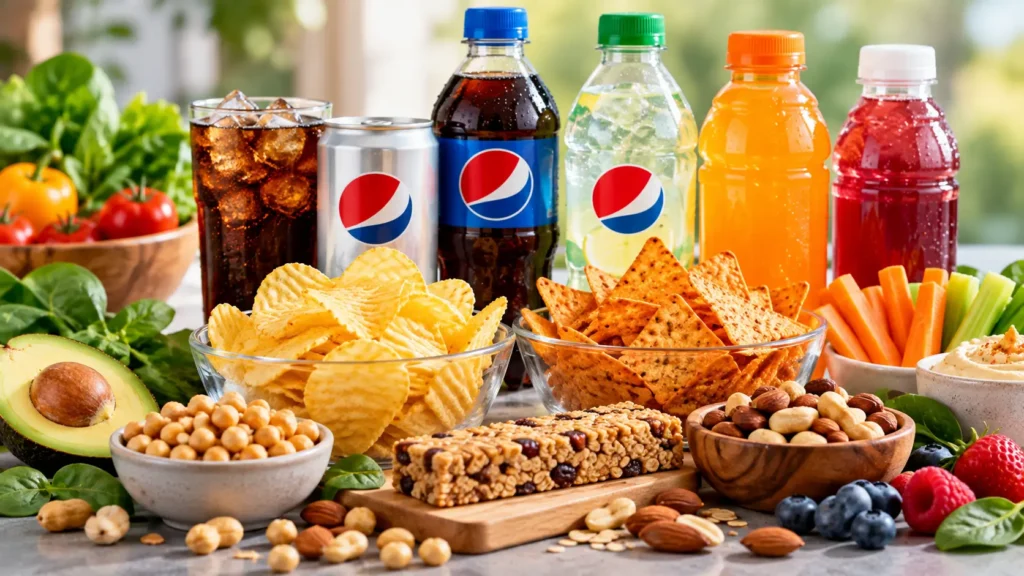
PepsiCo Healthier Products 2026
Walk down any snack or soda aisle in 2026 and you’ll notice something odd. The bags and cans are still colorful and familiar, but the labels now shout about grams of protein, grams of fiber, and “zero sugar.” Even a bag of Doritos has joined the conversation.
That shift isn’t random. One of the biggest food and beverage companies in the world is deliberately rebuilding its lineup around what shoppers say they want. In this guide, we’ll look at PepsiCo healthier products 2026: what’s new, why the company is making these moves, what the numbers on the labels actually say, and how you can read all of it with a clear head.
Disclaimer: I am not a doctor or a registered dietitian. This article is for general information only and is not medical or nutrition advice. Please talk to a qualified healthcare professional about your own diet and health needs.
The Big Picture: PepsiCo’s Pivot to “Functional” Food
For decades, big snack and soda brands sold taste, fun, and nostalgia. Now the pitch is changing. PepsiCo’s CEO Ramon Laguarta has described a plan to cut sugar and sodium, add protein and fiber, and “restage” brands like Lay’s and Gatorade for growth.
He also described protein and fiber as the two trends the company plans to capture at scale. In other words, this is not a side project. It’s a core business strategy.
A few themes sit behind that strategy:
- Reduction: Lower sugar and sodium in existing products.
- Addition: More of the “nutrients of desire,” meaning protein and fiber.
- Functional options: Hydration, energy, whole grains, and gut-health ingredients in familiar formats.
- Affordability: Trade press has reported that PepsiCo is leaning into affordability, simpler ingredients and functional innovation to win back value-conscious and health-focused shoppers.
If you’re searching for PepsiCo healthier products 2026, the short answer is this: the company is trying to make its best-known brands fit a more health-aware lifestyle, without losing the flavors people already love.
Read More: Costco Lemon Cream Croissant Calories: What One Pastry Really Adds Up To
Why Is PepsiCo Doing This Now?
There isn’t one single reason. Several forces are pushing in the same direction.
1. Shoppers want more from every bite
People are paying closer attention to labels than they used to. Protein has become the “hero nutrient” of the moment, and fiber is quickly catching up. Many shoppers now ask a simple question when they pick up a snack: what is this giving me?
2. Fiber is a real gap in many diets
PepsiCo has pointed out in its own announcements that only about 5% of Americans meet daily fiber recommendations. That’s a company statement, but it lines up with a widely discussed nutrition gap, and it explains why fiber is suddenly showing up in places like popcorn, chips, and even soda.
3. Sugar worries haven’t gone away
Many shoppers are cutting back on sugar. PepsiCo’s own financial commentary has noted that Pepsi Zero Sugar Drinks delivered net revenue growth, which suggests real demand for lower-sugar options.
4. Competition is fierce
Newer brands built on gut health, protein, and “better-for-you” positioning have grown quickly. PepsiCo’s answer was both to buy and to build. It purchased the prebiotic soda brand Poppi for nearly $2 billion, and it launched its own prebiotic cola.
The Protein Snack Trend in the USA
Let’s start with protein, because it’s the loudest trend on shelves.
The protein snack trend USA shoppers are seeing right now is not limited to bars and shakes. Protein is moving into chips, crisps, coffee, and beef sticks. That’s a meaningful change, because it puts protein into everyday snacking occasions, not just post-workout moments.
Doritos Protein
This is probably the most talked-about example. PepsiCo’s own newsroom notes that Doritos Protein tortilla chips come with 10 grams of protein per one-ounce serving, with a larger-format version planned that offers 17 grams of protein per 1.75-ounce serving.
For many readers, this is the headline product: a familiar chip with a protein claim on the bag.
Muscle Milk, reformulated
Protein shakes are getting a refresh too. A reformulated Muscle Milk uses ultra-filtered milk for a smoother, more shake-like experience, according to a trade report. Muscle Milk Base is described with 26 grams of protein and Muscle Milk Pro with 42 grams.
Starbucks Coffee & Protein
Protein is also showing up in a ready-to-drink coffee. PepsiCo has described a Starbucks Coffee & Protein Classic Caffe that has 22 grams of protein.
Good Warrior beef sticks and protein crisps
Trade coverage also lists products such as Good Warrior beef sticks among the new higher-protein launches. On the breakfast side, PepsiCo’s newsroom highlights Quaker items that add protein to familiar morning foods. end means for you
The protein snack trend USA is real, but a label claim is not a free pass. A few quick thoughts:
- Protein can help a snack feel more filling, but calories, sodium, and ingredients still matter.
- A protein chip is still a chip. It may be a better option than a regular chip, but it isn’t the same as a balanced meal.
- Your own protein needs depend on age, activity, and health conditions, so a doctor or registered dietitian is the right person to ask.
The Zero Sugar Drinks Trend
Next, let’s look at the sipping side of the aisle.
The zero sugar drinks trend has been building for years, and PepsiCo has leaned into it across several brands.
Pepsi Zero Sugar
This is the flagship example. Trade reports note that Pepsi Zero Sugar has been a bright spot, with analysts describing it as evidence of consumer demand for no- or low-sugar offerings.
Gatorade Zero Sugar and Gatorade Lower Sugar
Sports drinks are part of the same shift. PepsiCo’s earnings commentary lists Gatorade Zero Sugar and Gatorlyte among the products that drove strong performance, and it also plans to expand Gatorade Lower Sugar, described as having no artificial flavors or sweeteners and no colors from artificial sources.
Propel and functional hydration
Propel is another interesting example. The brand launched Propel Clear Protein on May 6, 2026, a ready-to-mix powder that offers protein (20g), fiber (3g) and hydration in one flavorful sip, with zero sugar and 90 calories per packet, according to the company.
Pepsi Prebiotic Cola: not zero sugar, but lower sugar
This one is worth explaining clearly, because it’s easy to confuse. Pepsi Prebiotic Cola is not a zero-sugar drink. According to the company, it has just 30 calories, only 5g of sugar, and 3g of prebiotic fiber, with no artificial sweeteners. It became available nationwide on February 17, 2026, in Original Cola and Cherry Vanilla.
So the zero sugar drinks trend really sits alongside a wider “less sugar, more function” trend, which includes low-sugar and prebiotic options.
A balanced view of zero sugar
Zero sugar doesn’t automatically mean “healthy.” Many zero-sugar drinks use non-sugar sweeteners, and people have different views and sensitivities on those. If you have questions about sweeteners, especially during pregnancy, with diabetes, or for children, please ask a healthcare professional.
Fiber Snacks for Healthy Eating
Now for the quiet star of this story: fiber.
Fiber doesn’t get as much hype as protein, but it’s the nutrient many people are missing. That’s why fiber snacks for healthy eating are becoming a bigger part of the conversation.
Smartfood FiberPop
PepsiCo has said it’s launching fiber-focused products under Sun Chips and Smartfood, including Fiber Pop popcorn with 6 grams of fiber per serving. Popcorn is a natural fit, since it’s already a whole-grain snack for many people.
SunChips Fiber
SunChips has been a “better-for-you” chip for years, and a higher-fiber version extends that idea. Trade coverage lists SunChips Fiber among the recent protein-and-fiber launches.
Quaker high-fiber oatmeal
Quaker already has a strong breakfast reputation. PepsiCo has noted a High-Fiber Oatmeal under Quaker.
Fiber in drinks, too
Fiber isn’t limited to the snack aisle. Propel Clear Protein includes 3 grams of fiber per packet, and Pepsi Prebiotic Cola adds 3 grams of prebiotic fiber per can.
How to think about fiber
If you’re exploring fiber snacks for healthy eating, here are some simple, general ideas:
- Whole foods like beans, fruit, vegetables, nuts, and whole grains are classic fiber sources.
- Packaged fiber snacks can be a convenient addition, but they work best alongside whole foods rather than in place of them.
- Increasing fiber very quickly can cause bloating or gas for some people. Many health sources suggest going gradually and drinking enough water.
- Anyone with digestive conditions should check with their doctor before changing their fiber intake in a big way.
A Quick Look at the 2026 Lineup
Here’s a simple summary of some of the products mentioned above, based on company statements and trade reports. Always check the label on the package you buy, since formulas and flavors can vary.
| Product | Main angle | Key number (per company info) |
|---|---|---|
| Doritos Protein | Protein snack | 10 g protein per 1 oz serving |
| Muscle Milk (reformulated) | Protein shake | 26 g (Base) or 42 g (Pro) protein |
| Starbucks Coffee & Protein | Protein coffee | 22 g protein |
| Smartfood FiberPop | Fiber snack | 6 g fiber per serving |
| Propel Clear Protein | Protein + fiber + hydration | 20 g protein, 3 g fiber, 0 sugar, 90 calories |
| Pepsi Prebiotic Cola | Lower sugar + prebiotic fiber | 30 calories, 5 g sugar, 3 g fiber |
| Gatorade Zero Sugar / Lower Sugar | Hydration | Reduced or zero sugar |
Is the “Healthier” Label Always Healthier?
Let’s be honest and balanced here. These products can be a helpful step for some shoppers, but a few cautions are worth keeping in mind.
- “Better for you” is relative. A protein chip may be better than a regular chip for some goals, but it’s still a processed snack.
- Whole foods still win for most nutrition basics. Eggs, yogurt, nuts, fruit, beans, and vegetables remain simple, reliable choices.
- Marketing is strong. Words like “protein,” “fiber,” and “zero sugar” can create a health halo. A halo doesn’t replace reading the label.
- Needs differ. An athlete, an older adult, a child, and a person with diabetes may all need very different things.
None of that means the new products are bad. It means they work best when you treat them as options, not as magic.
FAQs: PepsiCo healthier products 2026
What are the PepsiCo healthier products 2026 shoppers are talking about most?
The most discussed include Doritos Protein, Pepsi Prebiotic Cola, Propel Clear Protein, SunChips Fiber, Smartfood FiberPop, and a reformulated Muscle Milk, along with expanded zero-sugar and lower-sugar drinks.
Is Doritos Protein really high in protein?
According to PepsiCo, the original version offers 10 grams of protein per one-ounce serving. Whether that’s “high” depends on your needs and how you compare it to other snacks.
Is Pepsi Prebiotic Cola a zero-sugar drink?
No. It has about 5 grams of sugar per can, according to the company, along with 30 calories and 3 grams of prebiotic fiber.
Are zero sugar drinks healthy?
They remove sugar, which many people want to reduce, but they aren’t automatically “healthy.” If you have specific health conditions, ask your doctor about what’s right for you.
Do fiber snacks replace fruits and vegetables?
No. Packaged fiber snacks can be a convenient extra, but whole foods offer a wider range of nutrients.
Final Thoughts: PepsiCo healthier products 2026
The story behind PepsiCo healthier products 2026 is simple at its core. A huge company is listening to a shift in shopper habits and rebuilding its lineup around protein, fiber, and lower sugar, while keeping the flavors people recognize.
Read More: High Protein Low Calorie Foods for Weight Loss: 21 Picks

