Summer Solstice Sleep Schedule
Every year around June 20-21, the Northern Hemisphere experiences its longest day of sunlight, known as the summer solstice. While most people associate this day with longer evenings and outdoor fun, few realize how strongly the summer solstice effect on sleep schedule can disrupt the body’s natural rhythm. With nearly fifteen to sixteen hours of daylight in many parts of the United States, your internal clock has to work overtime to figure out when it’s actually time to rest.
This extra sunlight isn’t just a seasonal inconvenience. It directly interacts with the hormones and biological signals that control when you feel alert and when you feel sleepy. If you’ve noticed yourself lying awake longer, waking up earlier, or feeling oddly restless during the summer months, the solstice itself may be playing a bigger role than you think.
What Happens to Your Body Clock During the Summer Solstice
Your body relies on a master internal clock located in a part of the brain called the suprachiasmatic nucleus. This clock uses light as its primary cue to regulate the sleep-wake cycle, also known as the circadian rhythm. Around the solstice, sunrise comes earlier and sunset comes later, which means your eyes are exposed to bright light for a much longer stretch of the day.
This extended exposure suppresses melatonin, the hormone responsible for making you feel drowsy, for a longer period than usual. As a result, many people experience:
- Difficulty falling asleep at their normal bedtime
- Waking up earlier than intended because of early sunrise
- A feeling of restlessness in the early evening hours
- Shorter total sleep duration during peak summer weeks
None of this means something is wrong with you. It simply reflects how sensitive the human body is to light, even in an age of artificial lighting and screens.
Read More: Emotional Fitness Exercises Daily Routine: A Guide to a Calmer Mind
The Summer Solstice Effect on Sleep Schedule Explained
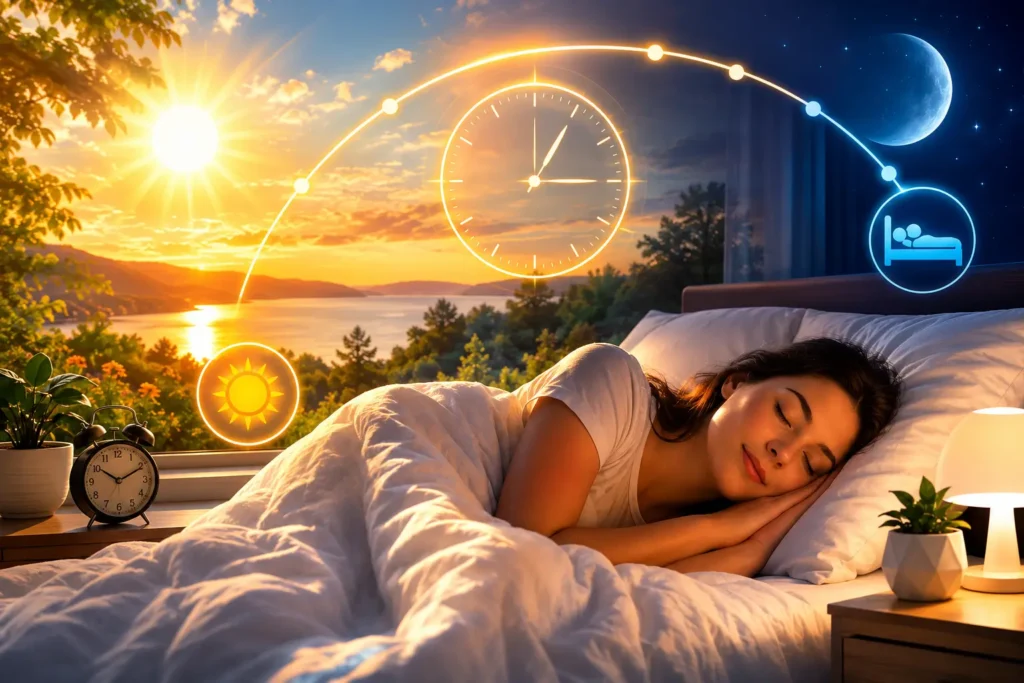
The core issue behind the summer solstice effect on sleep schedule comes down to one thing: light exposure timing. Under natural conditions, our ancestors slept less in summer and more in winter, following the rise and fall of daylight hours. Modern life, with fixed work schedules and alarm clocks, doesn’t allow for that kind of flexibility.
When daylight extends into the late evening, the brain receives a strong signal to stay alert, even if the clock says it’s bedtime. This mismatch between biological signals and social schedules is sometimes called “social jet lag,” and it tends to peak around the solstice. Office workers, students, and especially children often struggle the most, since their schedules are the least flexible.
Interestingly, research on circadian biology suggests that this disruption is temporary for most healthy adults. The body recalibrates within a few days to a couple of weeks, especially if good sleep habits are maintained. However, people who already have irregular sleep patterns, shift workers, or those with diagnosed sleep disorders may feel the effects more intensely and for longer.
Too Much Sunlight Exposure Health Effects You Should Know
While sunlight is essential for vitamin D production and mood regulation, too much sunlight exposure health effects can become a real concern during the longest days of the year. Beyond sleep disruption, excessive and unprotected sun exposure has been linked to several other health considerations:
- Skin damage: Extended UV exposure increases the risk of sunburn and long-term skin aging.
- Eye strain and fatigue: Bright light late into the evening can overstimulate the visual system, making it harder to wind down.
- Increased dehydration risk: Longer outdoor activity in Summer Solstice Sleep Schedule heat often means more fluid loss without people noticing.
- Heightened evening alertness: Bright light close to bedtime delays the release of melatonin, pushing sleep onset later.
Doctors generally recommend wearing sunglasses and using sunscreen during peak daylight hours, while also being mindful of how much bright light you’re exposed to in the hour or two before bed. Balance, rather than avoidance, is the goal here.
How to Sleep Better During the Longest Day of the Year
If you’re wondering how to sleep better during the longest day of the year, the good news is that small, consistent adjustments can make a noticeable difference. Sleep experts often suggest the following strategies during the solstice period:
- Use blackout curtains: Since sunrise happens earlier, blocking outside light helps prevent premature waking.
- Stick to a consistent bedtime: Even if it’s still light outside, going to bed at your usual time helps anchor your circadian rhythm.
- Dim indoor lights in the evening: Lowering household lighting an hour or two before bed signals to your brain that night is approaching.
- Limit screen brightness after sunset: Phones, tablets, and televisions emit light that can mimic daylight, confusing your internal clock further.
- Get morning sunlight exposure: Spending time outside shortly after waking helps reinforce a stable wake-up time, even with the longer days.
- Avoid heavy meals or caffeine late in the evening: Long daylight hours can shift eating and social schedules later, which may interfere with sleep onset.
These small habits work together to counteract the natural pull toward staying awake longer that the solstice creates.
Circadian Rhythm Tips for Summer Solstice 2026
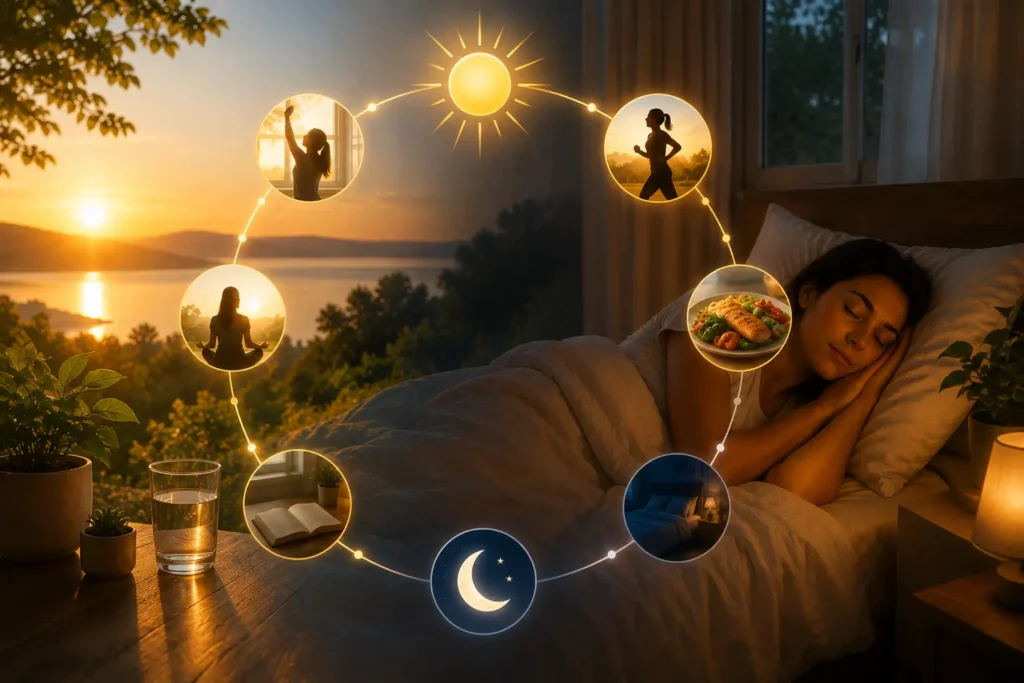
As the Summer Solstice Sleep Schedule 2026 approaches, a few targeted circadian rhythm tips can help you transition smoothly through the seasonal shift without sacrificing rest quality:
- Gradually adjust your schedule: If you know your sleep tends to shift in summer, start adjusting bedtime by 10-15 minutes a few days before the solstice rather than all at once.
- Keep your bedroom cool: Longer daylight often comes with warmer temperatures, and a cooler room supports deeper sleep regardless of how light it is outside.
- Maintain weekend consistency: Sleeping in significantly on weekends can worsen the mismatch between your body clock and the long daylight hours.
- Consider a sleep mask: For those sensitive to early morning light, a comfortable sleep mask is a simple, low-cost solution.
- Track your energy patterns: Take note of when you naturally feel tired versus alert during this period, and use that information to fine-tune your routine rather than fighting against it.
These adjustments are especially useful for parents managing children’s bedtimes, since kids are often even more sensitive to light-driven sleep delays than adults.
FAQs: Summer Solstice Sleep Schedule
Does the summer solstice actually affect sleep for everyone? Most people notice at least a mild shift, though the intensity varies. Light-sensitive sleepers, children, and shift workers tend to feel the summer solstice effect on sleep schedule more strongly than others.
How long does it take for sleep to normalize after the solstice? For most healthy adults, the body adjusts within one to two weeks as daylight hours gradually shorten again after late June.
Final Thoughts
The Summer Solstice Sleep Schedule is a beautiful marker of the changing seasons, but it also brings a real, measurable shift in how our bodies regulate sleep. Understanding the summer solstice effect on sleep schedule, recognizing the health effects of too much sunlight exposure, and applying simple circadian rhythm tips can help you enjoy the longest day of the year without paying for it with restless nights. With a few mindful adjustments, your body can adapt smoothly, letting you make the most of summer’s extra daylight while still protecting the quality of your rest.
Read More: Japanese Walking Method Benefits: What the Research Says About Weight Loss