

Japanese Walking Benefits Weight Loss
If you have spent the last few months scrolling through fitness content, you have probably noticed one phrase popping up everywhere: the Japanese walking method. Unlike fad workouts that disappear after a few weeks, this one has stuck around because it is backed by real research and does not require a gym membership, fancy shoes, or hours of free time. In this guide, we will break down the japanese walking method benefits, explain why interval walking training for weight loss works better than ordinary walking, and give you a beginner-friendly routine you can start this week.
What Is the Japanese Walking Method?
The Japanese walking method, also known as Interval Walking Training (IWT), was developed by researchers in Japan as a way to make walking more effective without making it harder to stick with. Instead of walking at one steady pace for thirty minutes, you alternate between three minutes of fast-paced walking and three minutes of slow, relaxed walking. This cycle is repeated for the length of your workout.
What makes this approach so popular is its simplicity. There is no equipment, no subscription, and no steep learning curve. You only need a pair of comfortable shoes, a flat path, and a way to track time. That accessibility is a big reason interest in this technique has grown so quickly worldwide over the past year.
Read More:- Food as Medicine Diet Plan: Why Whole Foods Are Replacing Your Supplement Cabinet in 2026
Japanese Walking Method Benefits You Should Know

The biggest reason people are switching from regular walking to this interval-based version comes down to results. Some of the most noticeable japanese walking method benefits include:
- Improved cardiovascular endurance compared to walking at a single, steady pace
- Better blood pressure and blood sugar regulation over time
- Stronger leg muscles from the repeated bursts of faster movement
- More noticeable fat loss without needing to increase total workout time
- Lower joint stress than running, making it suitable for almost any age or fitness level
- No need for a gym, equipment, or special training
Because the intensity constantly shifts, your body has to keep adjusting, which is part of why this method tends to produce better results than walking at the same speed for the entire session.
Why Interval Walking Training for Weight Loss Works So Well
Most weight loss advice focuses on long, steady cardio sessions, but interval walking training for weight loss takes a different approach, and the science behind it explains why it is so effective.
When you alternate between fast and slow walking, your body experiences small spikes in effort followed by recovery periods. This pattern keeps your heart rate moving between zones instead of settling into one comfortable level. Over time, this leads to:
- A higher overall calorie burn during the same amount of time spent walking
- Continued calorie burn for a short period after you finish, sometimes called the afterburn effect
- Improved insulin sensitivity, which helps your body manage blood sugar more efficiently
- Gradual increases in stamina, since the fast intervals slowly become easier to sustain
Unlike high-intensity interval training on a treadmill or bike, this version is low-impact, which means less wear on your knees and hips while still giving your metabolism a meaningful boost.
Japanese Walking Technique for Beginners: Step-by-Step
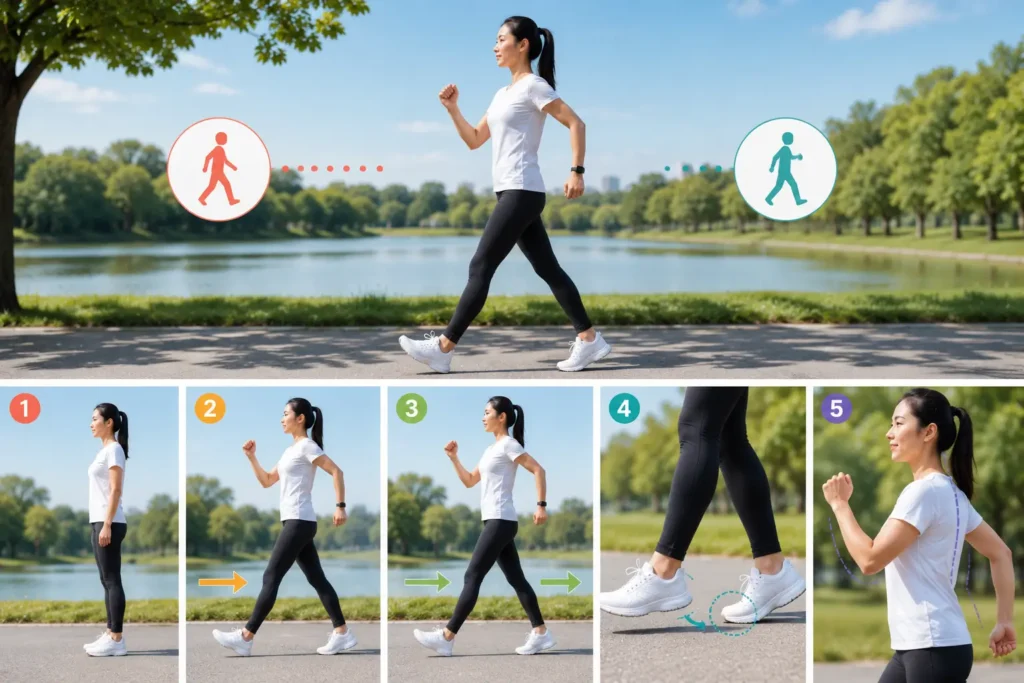
If you are trying this for the first time, the japanese walking technique for beginners is straightforward. Follow these steps:
- Warm up with three to five minutes of easy, relaxed walking.
- Walk fast for three minutes at a pace where talking feels slightly difficult. Keep your posture upright and let your arms swing naturally.
- Walk slow for the next three minutes at a relaxed, recovery pace.
- Repeat the fast-slow cycle four to five times depending on your fitness level.
- Cool down with two to three minutes of slow walking and light stretching.
A few quick tips for beginners: keep your shoulders relaxed instead of hunched, take slightly longer strides during the fast intervals, and breathe through your nose as much as possible to keep a steady rhythm. If three minutes of fast walking feels too challenging at first, start with one or two minutes and build up gradually.
You Can Start Today
Here is a simple 30 minute japanese walking workout plan you can follow without needing to plan anything in advance:
| Time | Activity |
|---|---|
| 0:00–5:00 | Warm-up walk (easy pace) |
| 5:00–8:00 | Fast-paced walking |
| 8:00–11:00 | Slow-paced walking |
| 11:00–14:00 | Fast-paced walking |
| 14:00–17:00 | Slow-paced walking |
| 17:00–20:00 | Fast-paced walking |
| 20:00–23:00 | Slow-paced walking |
| 23:00–26:00 | Fast-paced walking |
| 26:00–30:00 | Cool-down walk |
For best results, aim to do this routine four to five times a week. On rest days, a relaxed, steady-pace walk is enough to keep your body moving without overdoing it.
Tips to Get Faster Results
- Track your sessions with a phone app or fitness watch to stay consistent
- Focus on posture: chest up, shoulders back, eyes forward
- Stay hydrated before and after each session
- Pair your walks with a balanced, protein-rich diet for better fat loss results
- Slowly increase the length of your fast intervals as your fitness improves
Common Mistakes to Avoid
- Walking too fast during the “slow” intervals, which defeats the purpose of recovery
- Skipping the warm-up and cool-down, which increases injury risk
- Expecting overnight results instead of giving the method two to three weeks to show changes
- Wearing unsupportive shoes, which can cause discomfort during faster intervals
FAQs
How long before I see results with the Japanese walking method? Most people notice improved stamina within one to two weeks, while visible weight loss changes typically take three to four weeks of consistent practice.
Can beginners do interval walking training for weight loss every day? Yes, but it is best to include at least one or two rest or easy-walk days per week to allow your muscles to recover.
Final Thoughts
The Japanese walking method proves that effective fitness does not have to be complicated or expensive. By simply changing your pace at set intervals, you can turn an everyday walk into a workout that supports weight loss, heart health, and long-term consistency. Start with the 30-minute plan above, stay patient through the first couple of weeks, and adjust the intensity as your fitness improves.
Read More: Internal Shower Drink Chia Seeds: What It Actually Does to Your Gut