
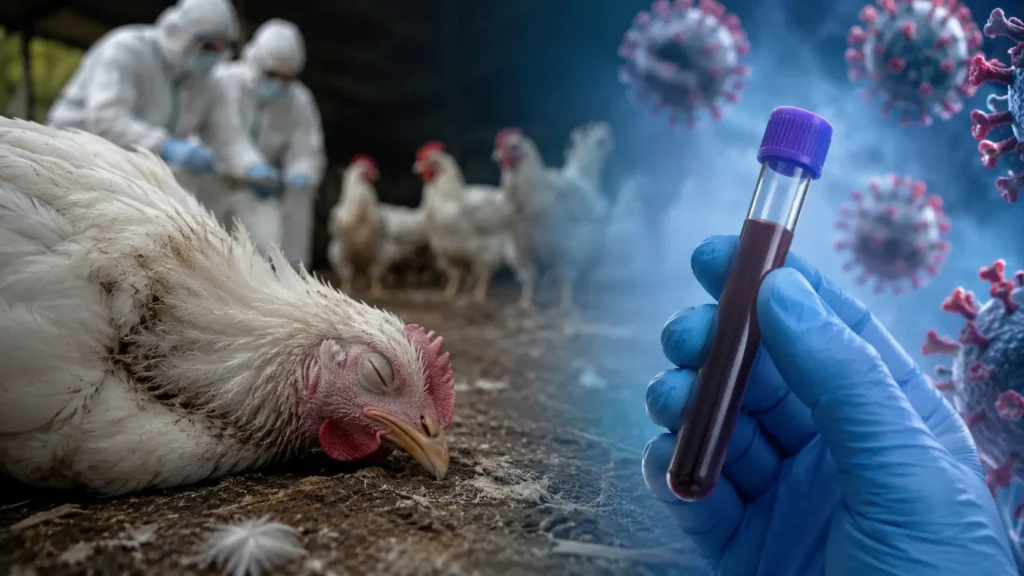
H5N1 bird flu third positive result
Disclaimer: I am not a doctor or medical professional. This blog post is written for informational purposes only based on publicly available health information from sources like the CDC and WHO. Please consult a qualified healthcare provider for any medical concerns.
What Is H5N1 Bird Flu, Anyway?
Before we get into the news, let’s quickly understand what we’re dealing with.
H5N1 is a type of avian influenza — a flu virus that primarily lives in birds. The “H” and “N” refer to proteins on the surface of the virus (hemagglutinin and neuraminidase), and the numbers tell scientists which specific type it is.
This particular strain — H5N1 — is called “highly pathogenic avian influenza” (HPAI), which means it spreads quickly among birds and can cause serious illness. It has been circulating in wild birds and poultry around the world since the early 2000s.
The reason health experts pay close attention to H5N1 is simple: it has occasionally jumped from animals to humans, and when it does, it can be severe.
Read More: Weight Loss Diet Tips at Home: Simple Changes That Actually Work
The Third Positive Result: What Happened?
The latest H5N1 bird flu third positive result recorded in 2026 has been reported in India and globally through the SBS Morning News bulletin (June 25, 2026). This follows a pattern that health agencies like the CDC and WHO have been closely watching.
To give you some global context:
- In the first quarter of 2026, the World Health Organization tracked 13 avian and swine influenza cases in people globally, including an H5N1 death in Bangladesh.
- In the United States, there have been over 71 confirmed human cases and two deaths since tracking began, mostly among farm workers in close contact with infected dairy cows and poultry.
- Scientists recently discovered why H5N1 attacks cows’ udders — the virus’s preferred receptors are concentrated in mammary tissue, which has helped explain how it spreads through dairy farms.
Each new positive result is taken seriously, studied, and added to a growing database that helps scientists understand how this virus is evolving.
Bird Flu Symptoms in Humans 2026: What Should You Watch For?
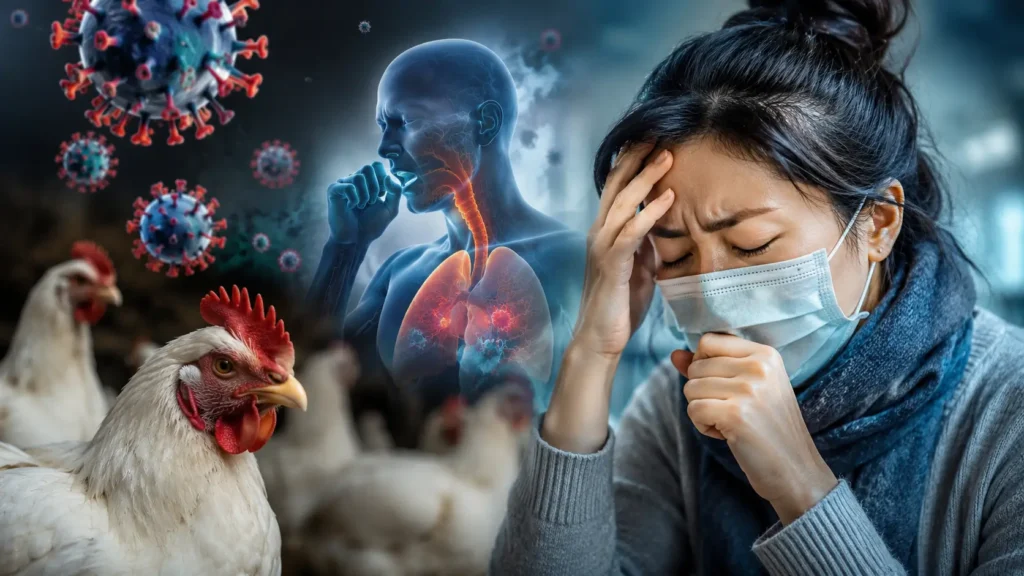
This is one of the most searched questions right now: what are bird flu symptoms in humans 2026?
The tricky part is that early bird flu symptoms in people look a lot like regular seasonal flu. Here’s what to watch for:
Common Symptoms:
- High fever (often 38°C / 100°F and above)
- Cough and sore throat
- Body aches and muscle pain
- Headache
- Fatigue and tiredness
Serious Warning Signs (Seek Help Immediately):
- Difficulty breathing or shortness of breath
- Chest pain
- Severe pneumonia
- Confusion or altered consciousness
The key difference is exposure history. Bird flu in humans is almost always linked to direct contact with infected birds, poultry, dairy cows, or contaminated farm environments. If you haven’t been in contact with animals and you have regular flu symptoms, it’s most likely seasonal flu.
Is Bird Flu Dangerous for the General Public?
This is perhaps the biggest question: is bird flu dangerous for the general public in 2026?
The short, honest answer is: for most people right now, the risk remains low.
Both the CDC and WHO have clearly stated that sustained human-to-human transmission of H5N1 has NOT been reported in connection with any of the 2026 cases. The virus is still primarily spreading from animals to people — not from person to person.
However, it’s worth knowing a few sobering facts:
- Since 1997, H5N1 has infected people in 25 countries, and approximately 48% of those cases have been fatal — a significantly higher fatality rate than seasonal flu.
- H5N1 has been detected in an increasingly wide range of mammals, including dairy cows, pigs, cats, dolphins, and even wild birds across every continent.
- Scientists are monitoring the virus closely because any mutation that allows easy human-to-human spread would be a serious global concern.
So while you don’t need to panic today, this is exactly the kind of situation that deserves attention — not ignorance.
Who Is Most at Risk?
Not everyone faces the same level of risk. According to current health data, the people most likely to be exposed to H5N1 are:
- Poultry farm workers who handle infected chickens, turkeys, or eggs
- Dairy farm workers who work with infected cows (especially milking equipment)
- Veterinarians and wildlife handlers who work with sick or dead birds
- People in regions with active bird flu outbreaks — especially in parts of Asia, Africa, and Eastern Europe
- Older adults and people with weakened immune systems, who may develop more severe illness if infected
For the average person who is not in regular contact with animals, the current risk is considered very low.
How to Protect Yourself From Bird Flu
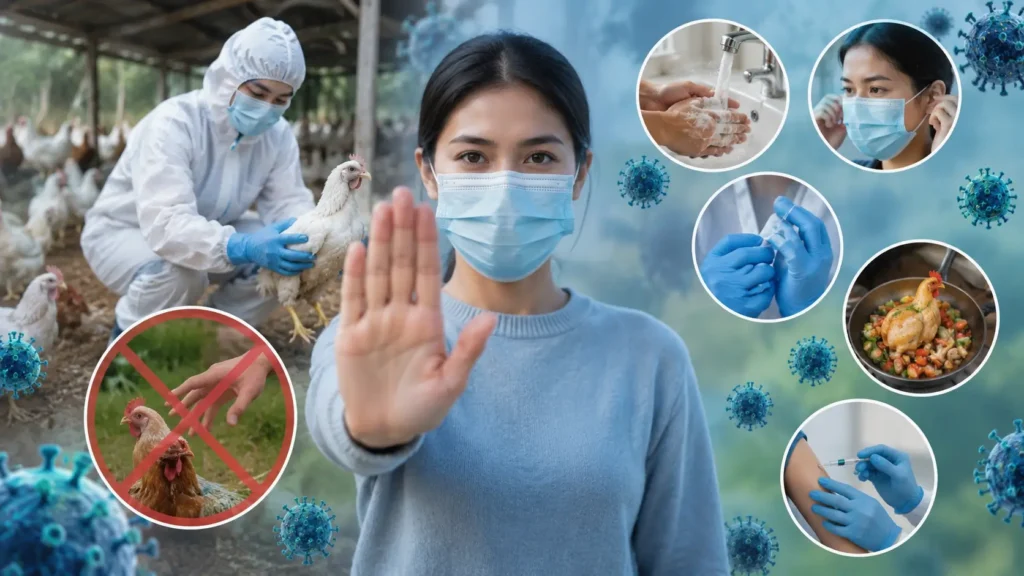
Now for the practical part: how to protect yourself from bird flu — because awareness without action isn’t very helpful.
Here are some sensible precautions that health experts recommend:
If You Live or Work Around Animals:
- Always wear personal protective equipment (PPE) — gloves, masks, and eye protection — when handling birds or farm animals
- Wash your hands thoroughly with soap and water after any animal contact
- Avoid touching your face (eyes, nose, mouth) after handling animals or their environments
- Report any unusual deaths in poultry or wild birds to local animal health authorities immediately
For Everyone:
- Avoid contact with wild birds, especially if they appear sick or have died
- Do not handle dead birds with bare hands
- Avoid visiting live poultry markets in areas with known outbreaks
- Make sure all poultry and eggs are thoroughly cooked before eating — the virus is killed by heat
- Stay updated on news from official health sources like the CDC and WHO
One thing to note: Regular seasonal flu vaccines do NOT protect against H5N1. There are H5N1 vaccines being developed and tested, but they are not widely available to the public as of 2026.
What Are Health Authorities Doing About It?
It’s reassuring to know that health agencies around the world are not sitting idle. Here’s what’s being done:
- The CDC is actively monitoring farm workers and others exposed to infected animals for 10 days after potential exposure.
- WHO is tracking global cases and updating risk assessments as new information becomes available.
- India launched the AIR SUVIDHA 2.0 Portal specifically for Ebola screening of international travelers — a sign that authorities are taking infectious disease monitoring seriously.
- Scientists recently made a breakthrough in understanding how H5N1 infects dairy cows, which could help predict future animal-to-human jumps.
- Research into antiviral treatments like oseltamivir (Tamiflu) and baloxavir continues, with evidence they can help if given early.
The global health community has been preparing for the possibility of a pandemic-level outbreak, and the systems put in place after COVID-19 mean there is more surveillance and faster response capability than ever before.
Should You Worry?
H5N1 bird flu third positive result Let me be honest with you: worry rarely helps, but awareness always does.
You don’t need to stockpile supplies or avoid eating chicken. What you should do is:
- Stay informed — follow updates from the CDC, WHO, or your national health authority
- Know the symptoms — especially if you have any animal exposure in your daily life
- Practice good hygiene — this protects against H5N1 and dozens of other infections
- See a doctor if you’re concerned — especially if you’ve had animal contact AND develop flu symptoms
The H5N1 bird flu third positive result recorded in 2026 is a reminder that nature is always evolving, and so must our awareness. But right now, for the vast majority of people reading this, there is no immediate threat to your health.
Read More: Heat Stroke vs Heat Exhaustion: Symptoms, Differences & What to Do (2026)