Disclaimer: I am not a doctor or medical professional. This blog post is for informational purposes only and should not be taken as medical advice. If you or someone else is experiencing symptoms of heat stroke or heat exhaustion, call 911 or seek immediate medical care.
Heat Stroke vs Heat Exhaustion
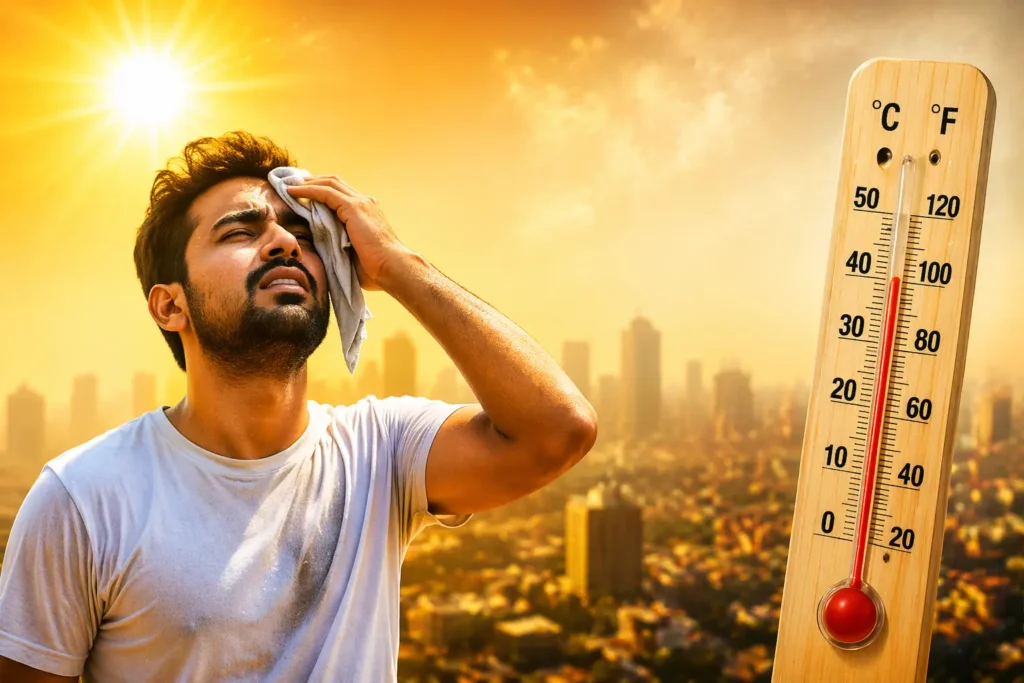
It’s the middle of summer, and temperatures across the US are hitting record highs. According to AccuWeather, a dangerous heat wave in mid-June 2026 affected roughly 170 million Americans — with heat index values topping 110°F in parts of Texas. In weather like this, knowing the difference between heat stroke vs heat exhaustion symptoms can genuinely save a life.
These two conditions sound similar. They both happen in hot weather. But they are very different in terms of severity — and one of them is a medical emergency that requires calling 911 immediately.
Read More: Morning Sunlight Benefits for Weight Loss and Sleep | Natural Health Tips
What Is Heat Exhaustion?
Heat exhaustion happens when your body loses too much water and salt — usually through heavy sweating during prolonged exposure to heat or strenuous activity. Your body is overheating, but it hasn’t completely lost control yet.
Think of it as your body’s loud warning signal: “I’m struggling — cool me down NOW.”
Heat Exhaustion Symptoms
- Heavy, excessive sweating
- Cool, pale, or clammy skin
- Fast but weak pulse
- Nausea or vomiting
- Muscle cramps or weakness
- Dizziness or lightheadedness
- Headache
- Tiredness and fatigue
- Body temperature elevated but below 104°F (40°C)
- Mental status stays normal — person can talk and answer questions clearly
That last point is important. In heat exhaustion, the person may feel awful, but their mind is still clear. They know where they are. They can hold a conversation. This is one of the biggest differences between heat exhaustion and heat stroke in adults — and one you should memorize.
What Is Heat Stroke?
Heat stroke is what happens when heat exhaustion is not treated — or when the body overheats so fast (like during intense outdoor exercise) that it skips straight to a crisis. At this point, your body can no longer regulate its own temperature.
Heat stroke is a life-threatening emergency. Call 911 immediately if you suspect it.
Body temperature rises above 104°F (40°C). The brain begins to shut down. Organs are at risk. Every minute without cooling increases the danger of permanent disability or death.
Heat Stroke Symptoms
- Body temperature above 104°F (40°C)
- Confusion, slurred speech, or strange behavior
- Aggression, agitation, or seeming “not themselves”
- Seizures or loss of consciousness
- Skin may be hot and DRY (classic heat stroke — common in elderly)
- OR skin may still be moist (exertional heat stroke — common in athletes)
- Very fast, strong heartbeat
- Nausea and vomiting
- Person does NOT know where they are or what is happening
The change in mental status is the defining sign. If someone is confused, disoriented, or unconscious — that tells you how to tell if someone has heat stroke or heat exhaustion: if the mind is affected, it’s heat stroke.
Heat Stroke vs Heat Exhaustion: Side-by-Side Comparison
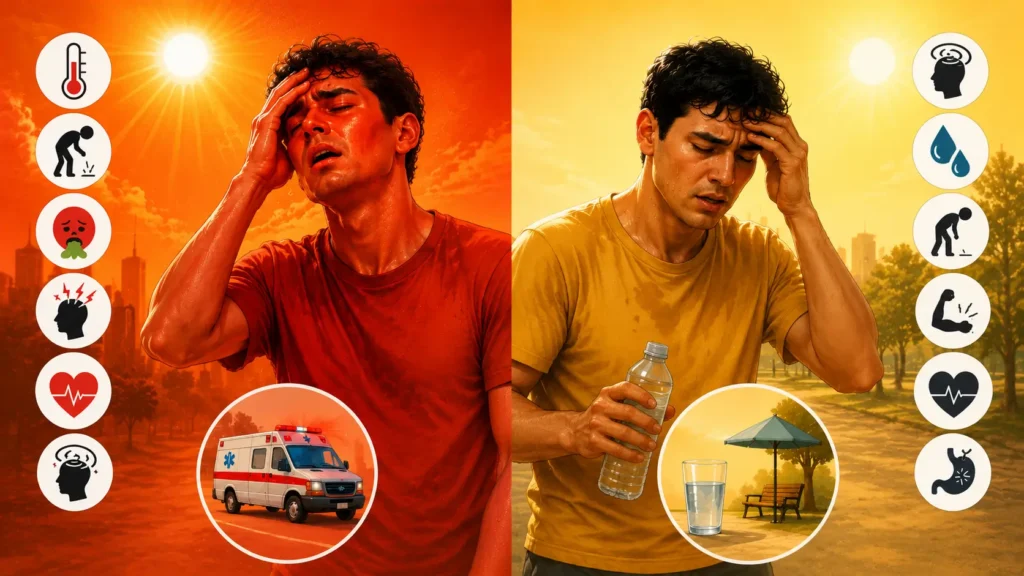
Here’s a quick-reference summary of the key differences:
| Feature | Heat Exhaustion | Heat Stroke |
| Body Temp | High but below 104°F (40°C) | Above 104°F (40°C) |
| Skin | Cool, pale, and clammy | Hot and dry (classic) OR damp (exertional) |
| Sweating | Heavy, excessive sweating | May stop sweating completely (classic type) |
| Mental State | Normal — alert and clear, can answer questions | Confused, disoriented, slurred speech, or unconscious |
| Pulse | Fast but weak | Very fast and strong |
| Severity | Serious but manageable if treated quickly | LIFE-THREATENING EMERGENCY |
| Action | Cool down, hydrate, rest — ER if no improvement in 30 min | Call 911 immediately |
What to Do: Step-by-Step Guide
If You Think It’s Heat Exhaustion
- Move the person to shade or indoors immediately
- Have them lie down and elevate their legs slightly
- Remove extra layers of clothing
- Give cool water or a sports drink (if they are conscious and can swallow)
- Apply cool, damp cloths to the skin — forehead, neck, armpits
- Use a fan to increase airflow
- Most people recover within 30 minutes with prompt treatment
- If symptoms do NOT improve within 30 minutes — go to the ER
Who Is Most at Risk?
According to the CDC, certain groups face a higher risk of both conditions:
- Adults over 65 years old
- Children under 4 years old
- People with chronic conditions (heart disease, diabetes, obesity)
- Outdoor workers (construction, farming, landscaping)
- Athletes exercising in high heat
- People taking certain medications — antihistamines, diuretics, beta-blockers, ADHD medication — these can impair sweating or increase heat sensitivity
- People in urban areas with no AC (heat island effect can raise temps 7°F higher)
Hospital admissions for heat stroke and heat exhaustion are disproportionately higher among people over 65 and children under 5, according to the CDC. Emergency visits due to heat illness have increased by more than 20% in the US over the last five years.
How to Prevent Heat-Related Illness This Summer

The good news: both conditions are largely preventable. Here’s what health experts recommend:
- Drink water regularly — don’t wait until you’re thirsty
- Avoid alcohol and sugary drinks, which cause the body to lose more fluid
- Limit outdoor activity between 10 AM and 4 PM when heat peaks
- Wear lightweight, light-colored, loose-fitting clothing
- Wear sunscreen (SPF 30+) — sunburn reduces your ability to cool down
- Take breaks in shade or air-conditioned spaces
- Never leave children or pets in a parked car, even briefly
- Check on elderly neighbors during heat waves
- Pay attention to the heat index — if it’s over 90°F, risk is high
A June 2026 article from PolitiFact also reminds us that common medications can make you more vulnerable to heat stroke — if you or someone you care for takes antihistamines, antidepressants, ADHD medications, or blood pressure drugs, talk to your pharmacist about heat precautions before going outdoors.
When to Go to the ER vs Urgent Care vs Call 911
- Call 911: confusion, unconsciousness, seizures, body temp above 104°F — heat stroke
- Go to ER: heat exhaustion that doesn’t improve within 30 minutes
- Urgent care: mild heat exhaustion with quick recovery, but you want a check-up
- Stay home and rest: mild symptoms, cooling worked, feel better within 20–30 mins
Final Thoughts
The difference between heat stroke vs heat exhaustion symptoms comes down to one thing: the brain. If someone is confused, acting strangely, or unconscious — that’s heat stroke, and it’s a 911 emergency. If they’re sweating, dizzy, and feel sick but are still mentally clear — that’s heat exhaustion, and rapid cooling can help.
Read More: Natural Home Remedies for Cold and Cough – Fast Relief Tips