
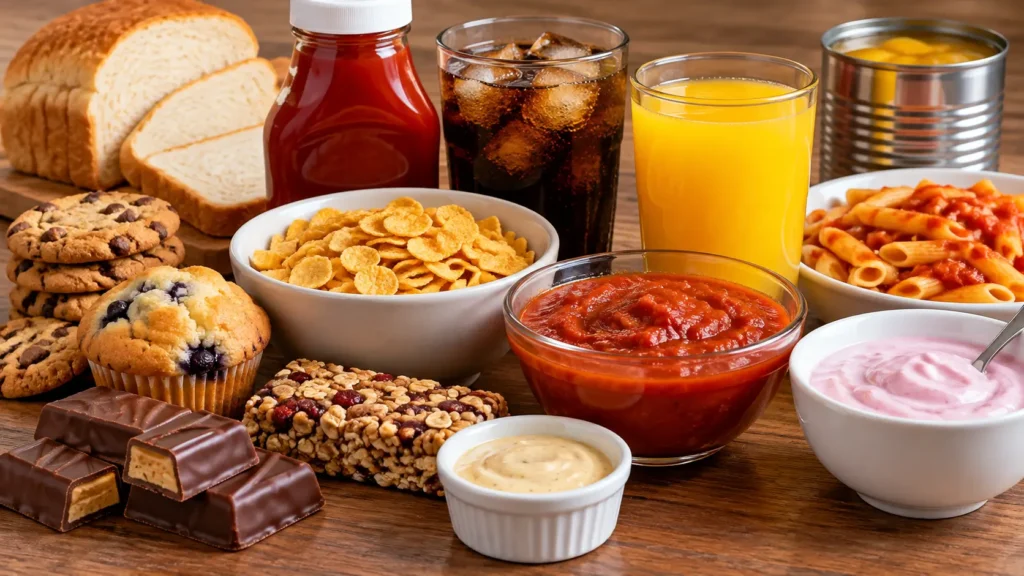
Hidden Sugar in Everyday Foods
Most people picture soda, candy, and desserts when they think about sugar. But the real problem is quieter than that. Hidden sugar in everyday foods is one of the biggest reasons Americans consistently blow past recommended daily sugar limits — without ever touching a cookie.
The American Heart Association recommends no more than 25 grams of added sugar a day for women and 36 grams for men. Yet the average American consumes roughly 77 grams a day, according to USDA data — nearly triple the recommended amount for women. The gap doesn’t come from dessert. It comes from foods that don’t taste sweet at all: bread, pasta sauce, salad dressing, and “healthy” snacks lining grocery store shelves.
Disclaimer: I am not a doctor. This post is for general informational purposes only and is not a substitute for professional medical or nutritional advice. Please talk to a registered dietitian or your healthcare provider before making significant changes to your diet.
Read More: Water Retention: Foods That Cause Puffiness vs Foods That Help
Why Hidden Sugar Is a Bigger Problem Than You Think
Food companies have gotten very good at making sugar invisible. Added sugar improves shelf life, texture, and flavor — so it ends up in savory foods, “diet” foods, and even foods marketed as heart-healthy or high-protein.
A few reasons this matters right now:
- Updated federal dietary guidance is pushing Americans to cut added sugar intake closer to 10% of daily calories, with growing attention on ultra-processed foods.
- Sugar goes by more than 60 different names on ingredient labels, so “no sugar added” claims can still mean high sugar content from other sources.
- Small amounts add up fast. A teaspoon of Hidden Sugar in everyday foods like your bread, another in your coffee creamer, and another in your salad dressing can quietly push you over your daily limit before lunch.
This is exactly why understanding hidden added sugar in the American diet matters more than counting sugar in the foods you already know are sweet.
How to Spot Foods That Secretly Contain Sugar
Before getting into the list, it helps to know what you’re actually looking for on a nutrition label. Manufacturers rarely write “sugar” plainly when they can use a less obvious term instead.
Watch for these common aliases on ingredient lists:
- Cane juice or evaporated cane juice
- Corn syrup or high-fructose corn syrup
- Dextrose, maltose, or sucrose
- Rice syrup or malt syrup
- Fruit juice concentrate
- Honey, agave nectar, or molasses (still added sugars, even though they sound “natural”)
A simple rule of thumb: if any of these appear in the first five ingredients, the product likely contains meaningful hidden sugar in everyday foods — even if the front label says “healthy,” “natural,” or “low-fat.”
7 Foods That Secretly Contain Sugar (Americans Often Overlook)
1. Sandwich Bread
Bread doesn’t taste sweet, so most people assume it’s sugar-free. In reality, many popular sandwich breads contain 1–3 grams of added sugar per slice — meaning a simple sandwich can quietly add 4–6 grams before you’ve touched a condiment.
Why it’s overlooked: Bread is filed mentally under “savory,” so shoppers rarely check the nutrition panel.
What to check: Look for “sugar,” “high-fructose corn syrup,” or “honey” within the first few ingredients. Whole-grain breads with short ingredient lists tend to have the least added sugar.
2. Pasta and Marinara Sauce
A half-cup serving of jarred marinara sauce can contain anywhere from 6 to 12 grams of sugar — more than a serving of chocolate chip cookies in some brands. Tomatoes are naturally a little sweet, and manufacturers often add extra sugar to balance acidity.
Why it’s overlooked: Pasta sauce is a savory dinner staple, not something people associate with dessert-level sugar content.
What to check: Compare brands side by side — sugar content varies widely for the exact same product category. “No sugar added” tomato sauces do exist and taste nearly identical.
3. Flavored Yogurt
Plain yogurt is genuinely healthy. Flavored yogurt is a different story. A single 6-ounce cup of flavored yogurt can contain 15–20 grams of added sugar — close to what’s in a can of soda.
Why it’s overlooked: Yogurt carries a health halo. Shoppers assume “protein-rich” automatically means “low sugar,” which isn’t always true.
What to check: Buy plain or unsweetened yogurt and add your own fresh fruit, or choose Greek yogurt labeled with less than 6 grams of sugar per serving.
4. Granola Bars and “Healthy” Cereal
Granola bars and breakfast cereals marketed with words like “fiber,” “protein,” or “whole grain” are some of the most common sources of foods with unexpected added sugar. Many granola bars contain 8–12 grams of sugar per bar, and some cereals exceed 10 grams per cup — closer to a candy bar than a health food.
Why it’s overlooked: Packaging design leans heavily on health buzzwords, distracting from the actual nutrition facts panel.
What to check: Flip the box over. If sugar is listed within the first three ingredients, it’s not the light snack it appears to be.
5. Salad Dressings
Salad is the definition of “healthy eating” for most Americans — until the dressing enters the picture. Many bottled dressings, especially low-fat or “lite” versions, contain 4–7 grams of added sugar per two-tablespoon serving. Removing fat often means adding sugar to preserve flavor.
Why it’s overlooked: People trust the salad, not the bottle sitting next to it.
What to check: Choose oil-and-vinegar-based dressings, or check for added sugars specifically listed under “low-fat” and “fat-free” labels, which tend to be the biggest offenders.
6. Flavored Coffee Creamer
A splash of flavored creamer feels harmless, but many popular flavors pack 4–6 grams of added sugar per tablespoon — and most people pour more than one tablespoon. Two “splashes” a day can quietly add up to 10+ grams of sugar before breakfast is even finished.
Why it’s overlooked: It’s measured in “splashes,” not servings, so people rarely check the label at all.
What to check: Unsweetened creamers, or plain milk with a small amount of cinnamon or vanilla extract, cut this hidden sugar source significantly.
7. Ketchup and BBQ Sauce
Condiments are an easy blind spot. A single tablespoon of ketchup contains about 4 grams of sugar — roughly the same as a tablespoon of chocolate syrup. BBQ sauce is often worse, with some brands containing 8–9 grams of sugar per tablespoon.
Why it’s overlooked: Condiments are used in small amounts, so people assume they don’t matter — but frequent, daily use adds up over weeks and months.
What to check: Look for “no sugar added” ketchup and BBQ sauce options, which now exist in most major grocery chains.
Hidden Added Sugar in the American Diet: By the Numbers
To put this in perspective, here’s how quickly hidden sugar can accumulate in a single day without eating anything that “tastes like dessert”:
- Sandwich bread (2 slices): ~4g
- Flavored yogurt (1 cup): ~18g
- Granola bar (1 bar): ~10g
- Pasta sauce (½ cup): ~8g
- Salad dressing (2 tbsp): ~6g
- Coffee creamer (2 tbsp): ~8g
Total: ~54 grams of added sugar — more than double the recommended daily limit for women, and all from foods that never once tasted sweet.
This is the core issue behind rising national attention on hidden added sugar in the American diet: it’s not the obvious sugary treats causing the problem, it’s the foods hiding in plain sight.
Simple Tips to Cut Back on Hidden Sugar
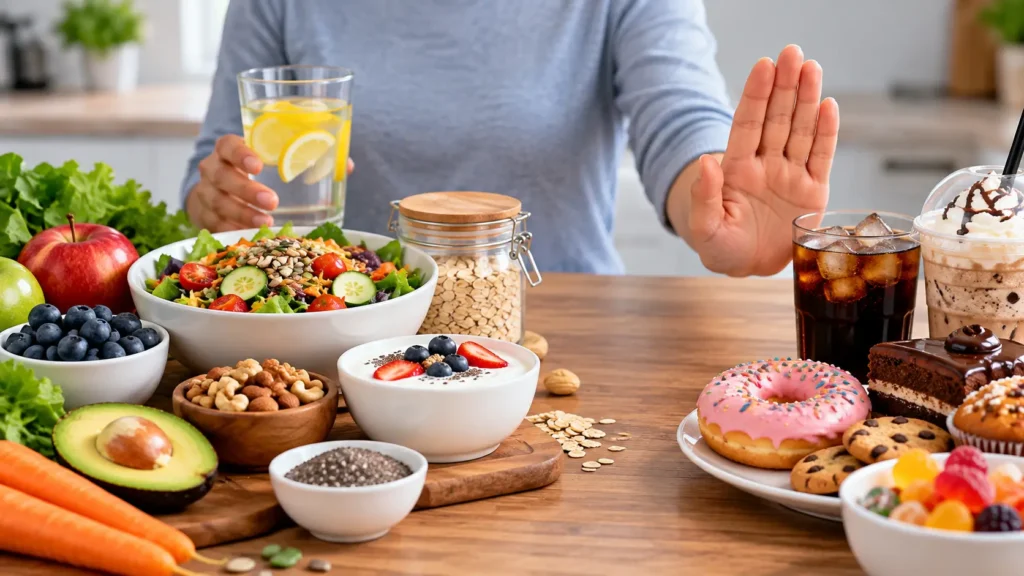
You don’t need to overhaul your entire diet overnight. A few small swaps go a long way:
- Read the ingredient list, not just the front-of-package claims
- Choose plain or unsweetened versions of yogurt, creamer, and oatmeal
- Compare two or three brands of the same product — sugar content varies more than most people expect
- Make your own salad dressing with olive oil, vinegar, and lemon juice
- Watch for the word “healthy,” “lite,” or “low-fat,” which often signals added sugar elsewhere
FAQs: Hidden Sugar in Everyday Foods
What foods have the most hidden sugar?
Flavored yogurt, granola bars, pasta sauce, and salad dressings are among the biggest sources of Hidden Sugar in Everyday Foods a typical American diet, often containing more sugar per serving than people expect from a savory or “healthy” product.
How do I know if a food has hidden sugar?
Check the ingredient list for sugar aliases like corn syrup, dextrose, cane juice, or fruit juice concentrate. If any appear in the first five ingredients, the product likely contains a meaningful amount of added sugar.
Are natural sweeteners like honey or agave better than sugar?
Nutritionally, they’re still classified as added sugar and affect blood sugar similarly to table sugar, even though they’re marketed as “natural” alternatives.
Does eating hidden sugar affect weight loss efforts?
Yes — hidden sugar adds calories you’re not accounting for, which can stall weight loss even when your “visible” food choices look healthy. Since these sugars hide in savory and “diet” foods, they’re easy to miss when tracking intake, making it harder to stay in a calorie deficit without realizing why.
Final Thoughts: Hidden Sugar in Everyday Foods
Hidden sugar in everyday foods isn’t a mystery once you know where to look — it’s simply hiding behind labels that were never designed to be obvious. By checking ingredient lists on the handful of foods above, you can cut a surprising amount of added sugar from your week without giving up a single meal you actually enjoy.
Read More: Meningitis vs Flu Symptoms: How to Tell the Difference

