
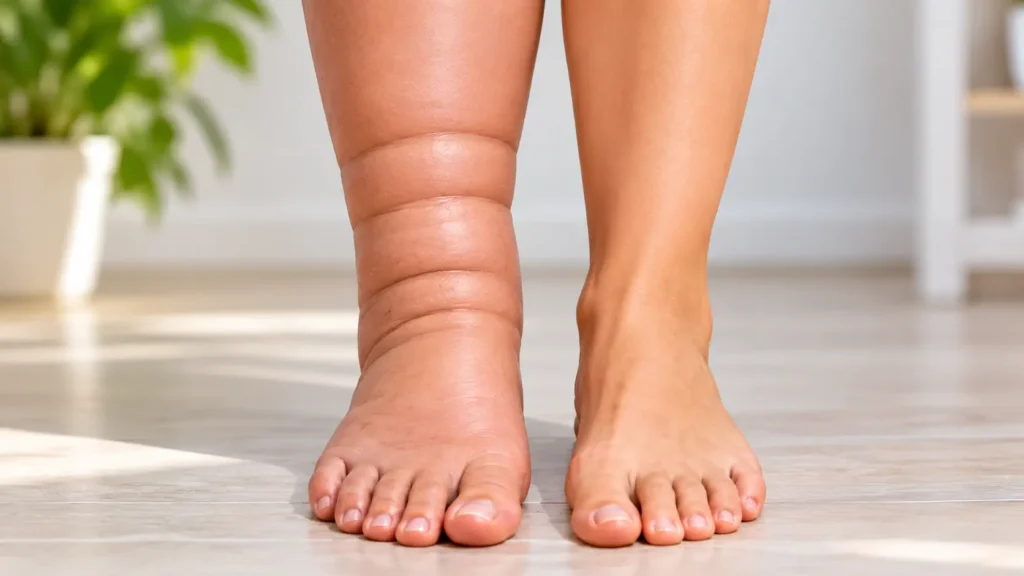
What Is Water Retention, Really?
Water retention (sometimes called fluid retention or, medically, edema) happens when excess fluid builds up in your body’s tissues instead of being processed and released normally. It shows up as:
- Puffiness in the face, hands, or fingers
- Swelling in the ankles, feet, or lower legs
- A bloated or “tight” feeling in the stomach
- Clothes, shoes, or rings fitting tighter than usual, especially later in the day
- Skin that holds a dent for a few seconds after you press on it
Mild water retention is usually harmless and tied to everyday habits — a salty meal, a long flight, hormonal shifts before a period, or sitting at a desk all day. Persistent or severe swelling, on the other hand, can sometimes point to something that needs medical attention, which is why the “when to see a doctor” section further down is worth reading too.
Disclaimer: I am not a doctor, and this article is for general informational purposes only. It is not medical advice. If you have ongoing or severe swelling, please talk to a licensed healthcare provider.
Read More: Meningitis vs Flu Symptoms: How to Tell the Difference
Who Is Most Likely to Experience Water Retention?
Almost everyone deals with mild puffiness from time to time, but a few groups tend to notice it more often:
- Women in the days before their period, due to shifting estrogen and progesterone levels
- People who travel frequently, especially on long flights where cabin pressure and sitting still both contribute
- Anyone with a desk job or standing job, since limited movement slows circulation in the legs and feet
- People eating a diet high in processed or restaurant food, simply because of the sodium load
- Pregnant women, due to hormonal changes and increased blood volume
- Older adults, since circulation and kidney function naturally become less efficient with age
None of this means water retention is unavoidable for these groups — it just means diet and daily habits matter a bit more.
Foods That Cause Water Retention and Bloating
Before looking at what helps, it’s worth understanding what’s working against you. These are the most common foods that cause water retention and bloating, according to nutrition experts and dietitians.
1. High-Sodium and Processed Foods
Sodium is the single biggest dietary driver of fluid retention. When you eat too much salt, your body holds on to extra water to keep sodium levels balanced in your bloodstream. The tricky part is that sodium hides in foods that don’t even taste salty:
- Canned soups and broths
- Frozen ready meals
- Deli meats, bacon, and sausages
- Packaged snacks like chips and crackers
- Restaurant and fast-food meals
Most health authorities recommend keeping sodium under roughly 2,300 mg a day, and a single restaurant meal or can of soup can eat up most of that in one sitting.
2. Refined Carbs and Sugary Foods
White bread, pastries, sugary cereals, and other refined carbohydrates cause a fast spike in blood sugar and insulin. Higher insulin levels signal the kidneys to hold on to more sodium, which drags water along with it. This is one of the lesser-known foods that cause water retention and bloating, since people often blame salt alone and overlook sugar and refined starches.
3. Alcohol
A night of drinking can leave you looking and feeling puffier the next day. Alcohol disrupts the hormone that regulates fluid balance, and many alcoholic drinks are paired with salty snacks, which compounds the effect.
4. Certain Dairy Products
For people who are sensitive to lactose, dairy can trigger gas and bloating that feels similar to water retention, even though the mechanism is different (digestive rather than fluid-based). If dairy consistently leaves you feeling puffy or gassy, it’s worth tracking.
5. Fried and Fatty Foods
Fried foods are typically high in both sodium and unhealthy fats, and heavy, greasy meals can slow digestion, which adds to that overall bloated feeling on top of any true fluid retention.
6. Canned and Pickled Vegetables
Vegetables are usually a smart choice, but canned or pickled versions are often preserved in salty brine to extend shelf life. A single serving of canned green beans or pickles can contain a surprising amount of sodium compared to the fresh version of the same food. Rinsing canned vegetables under water before eating them can cut down on some, though not all, of the added salt.
7. Sugary Drinks and Sports Drinks
Sodas, sweetened teas, and many sports drinks combine sugar with sodium, which hits both of the major triggers for fluid retention at once. Even drinks marketed for “hydration” can work against you if they’re loaded with sodium and sugar rather than electrolytes in balanced amounts.
What to Eat for Water Retention and Swollen Feet
Swollen ankles and feet are one of the most common complaints, especially after long flights, hot weather, standing jobs, or pregnancy. If you’re wondering what to eat for water retention and swollen feet specifically, the focus shifts to potassium, magnesium, and hydration rather than just “avoiding salt.”
Potassium-rich foods help because potassium works opposite to sodium — it helps your kidneys flush out excess sodium and fluid through urine. Good sources include:
- Bananas
- Sweet potatoes and regular potatoes (skin on)
- Spinach and leafy greens
- Avocados
- Tomatoes
- Beans and lentils
Magnesium-rich foods also support healthy fluid balance and have been linked to less swelling, particularly for women dealing with PMS-related bloating:
- Almonds, walnuts, and other nuts
- Whole grains like oats and brown rice
- Dark chocolate (70% cacao or higher)
- Leafy greens
For swollen feet specifically, pairing these foods with simple habits — elevating your feet, moving around every hour, and wearing compression socks on long flights — tends to work better than diet changes alone.
Foods That May Help Reduce Water Retention
Once you’ve cut back on the obvious culprits, adding in the right foods can speed things along. These are some of the most commonly recommended foods that may help reduce water retention:
- Watermelon – high water content plus a natural compound called citrulline that supports circulation and urine output
- Cucumber – hydrating and mildly diuretic
- Celery – rich in water and potassium, with natural compounds that support fluid balance
- Asparagus – contains an amino acid that acts as a gentle, natural diuretic
- Bananas – potassium and vitamin B6, both linked to reduced fluid buildup
- Berries – high in fiber, which supports regular digestion and reduces bloating-related discomfort
- Plain yogurt – probiotics support gut health, which can ease digestive bloating
- Leafy greens (spinach, kale, Swiss chard) – potassium and magnesium in one package
- Oats – fiber-rich and naturally low in sodium
- Herbal teas (dandelion, ginger, peppermint) – traditionally used as gentle, natural diuretics
A simple rule of thumb: foods that are naturally high in water, potassium, or magnesium — and low in added salt — tend to show up again and again on lists of foods that may help reduce water retention.
Best Foods for Water Retention in the Body: A Quick Comparison
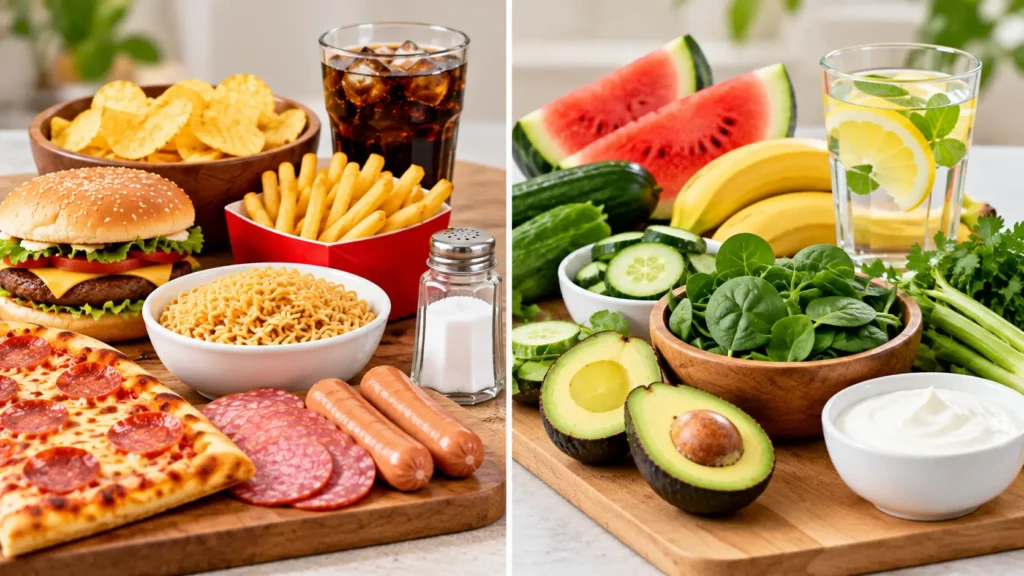
If you only remember one section, make it this one. Here’s a side-by-side look to help you plan meals around the best foods for water retention in the body.
| Foods That Cause Water Retention | Foods That May Help Reduce It |
|---|---|
| Canned soups, deli meats | Watermelon, cucumber |
| Chips and packaged snacks | Bananas, sweet potatoes |
| White bread, pastries | Oats, whole grains |
| Alcohol | Herbal tea, plain water |
| Fried, greasy fast food | Leafy greens, avocado |
| Sugary drinks | Berries, plain yogurt |
Keeping a version of this table on your fridge or phone can make grocery shopping a lot easier when you’re trying to reduce puffiness without overhauling your entire diet overnight.
Sample One-Day Eating Plan to Ease Puffiness
Not sure how to put all of this together? Here’s a simple, low-sodium, potassium-rich day of eating that leans on the foods that may help reduce water retention:
- Breakfast: Plain yogurt with berries, a drizzle of honey, and a small handful of walnuts
- Mid-morning snack: A banana and a glass of water
- Lunch: Grilled chicken or tofu over spinach and leafy greens, with cucumber, tomato, and an olive oil dressing (skip the bottled dressing, which often hides sodium)
- Afternoon snack: Celery sticks with a small amount of unsalted nut butter
- Dinner: Baked sweet potato, roasted asparagus, and a lean protein, seasoned with herbs and lemon instead of salt
- Evening: A cup of dandelion or ginger tea instead of a sugary or alcoholic drink
This kind of day naturally keeps sodium low while stacking up potassium, magnesium, and hydration — the three things that matter most when you’re trying to eat your way to less puffiness.
Lifestyle Habits That Support These Foods
Diet does a lot of the heavy lifting, but a few daily habits make the foods above work even better:
- Stay hydrated. It sounds backward, but drinking too little water can make your body hold on to fluid even more. Aim for steady water intake throughout the day rather than large amounts all at once.
- Move regularly. Sitting or standing in one position for hours slows circulation, especially in the legs and feet. A short walk every hour helps fluid move rather than pool.
- Watch your salt-to-potassium ratio, not just total salt. Most people don’t just eat too much sodium — they also don’t eat enough potassium to balance it out.
- Limit late-night salty or alcoholic meals, since puffiness is often most noticeable the morning after.
- Get enough sleep. Poor sleep affects the hormones that regulate fluid balance, including cortisol and aldosterone.
When to See a Doctor
Occasional puffiness after a salty meal or a long flight is normal. But it’s worth checking in with a healthcare provider if you notice:
- Swelling that doesn’t improve after a day or two of rest and diet changes
- Swelling in only one leg or foot (this can signal a blood clot and needs prompt attention)
- Swelling paired with shortness of breath, chest pain, or a rapid heartbeat
- Swelling alongside unexplained weight gain
- A history of kidney, liver, heart, or thyroid conditions
Again — I am not a doctor, and none of this is a substitute for a real diagnosis. Persistent or unusual swelling deserves a proper medical evaluation rather than diet changes alone.
Common Myths About Water Retention
A few myths tend to circulate around this topic, so it’s worth clearing them up:
- “Drinking less water stops water retention.” In reality, the opposite is usually true — under-hydration can make your body hold on to fluid more, not less.
- “All carbs cause water retention.” It’s specifically refined, low-fiber carbs that spike insulin the most. Whole grains, sweet potatoes, and oats are generally fine and even help, since they come packaged with potassium and fiber.
- “Water retention always means you’re gaining fat.” Fluid weight can shift by a few pounds in a single day, which has nothing to do with fat gain or loss. Stepping on the scale during a puffy day isn’t an accurate fat-loss measurement.
- “Cutting salt completely will fix it overnight.” Sodium is only part of the picture. Potassium intake, hydration, movement, sleep, and hormones all play a role too, which is why a single change rarely solves it on its own.
FAQs
Does drinking more water actually help with water retention? In most cases, yes. Dehydration can trigger your body to hold on to the water it does have, so consistent hydration throughout the day often helps rather than hurts.
How fast can diet changes reduce bloating and puffiness? Many people notice a difference within 24 to 48 hours of cutting back on sodium and adding potassium-rich foods, though results vary based on the underlying cause.
Are bananas really one of the best foods for water retention in the body? Bananas are frequently recommended because they’re rich in both potassium and vitamin B6, two nutrients tied to healthier fluid balance, and they’re an easy, low-sodium snack.
Can water retention be a sign of something more serious? Occasionally, yes. Ongoing or severe swelling can be linked to kidney, liver, heart, or thyroid issues, which is why persistent symptoms should be checked by a doctor rather than managed with diet alone.
What to eat for water retention and swollen feet while traveling? Pack potassium-rich snacks like bananas or dried fruit (unsalted), drink water regularly, avoid salty airline snacks and alcohol, and get up to walk when possible.
Is sodium always the main cause of water retention? It’s the most common cause, but not the only one. Refined carbs, alcohol, hormonal changes, certain medications, and low potassium intake can all contribute even when sodium isn’t the main issue.
Do diuretic pills work better than diuretic foods? Over-the-counter or prescription diuretics work faster, but they aren’t meant for everyday use without medical guidance. Diuretic foods like asparagus, cucumber, and celery offer a gentler, food-based approach that’s generally safer for regular use.
Final Thoughts
Water retention is usually manageable once you know which foods to watch and which ones to reach for. Cutting back on the common foods that cause water retention and bloating — think processed, salty, and sugary staples — while leaning into potassium- and magnesium-rich options can make a noticeable difference in how you look and feel within just a few days. Pair that with simple habits like hydration and movement, and most everyday puffiness starts to settle down on its own.
Read More: Signs Your Estrogen Is High: Symptoms, Causes and What to Know

