
Best Berries for Blood Sugar
If you love fruit but worry about how it affects your blood sugar, berries are one of the few exceptions worth knowing about. Unlike many other fruits, berries are naturally low in sugar, high in fiber, and packed with plant compounds that research increasingly links to better blood sugar control. In fact, several U.S. adults managing prediabetes or insulin resistance are turning to berries specifically because they satisfy a sweet craving without the same glucose spike as other desserts or high-sugar fruits.
In this guide, we’ll cover the best berries for blood sugar, break down the science behind berries and insulin response, and highlight the top low sugar berries for adults who want a smarter approach to snacking in 2026.
Disclaimer: I am not a doctor. This article is for general informational purposes only and should not be used as a substitute for professional medical advice. If you have diabetes, prediabetes, or another condition affecting blood sugar, please talk to a doctor or registered dietitian before making changes to your diet.
Read More: Low Omega-3 Intake Symptoms: Signs Your Diet May Need More Omega-3 Foods
Why Berries Are Different From Other Fruits
Most fruits contain a mix of natural sugar and fiber, but the ratio matters more than people realize. A fruit with a high sugar-to-fiber ratio tends to raise blood sugar faster, while a fruit with more fiber relative to its sugar content causes a slower, gentler rise. Berries consistently sit on the favorable end of that scale.
A few reasons berries stand out:
- They have one of the lowest glycemic loads among common fruits
- Their fiber content slows down how quickly sugar enters the bloodstream
- They’re rich in polyphenols called anthocyanins, which give berries their deep red, blue, and purple colors
- They’re relatively low in calories compared to their nutrient density
This combination is why berries for blood sugar control has become such a popular topic among nutritionists, especially for people trying to manage cravings without triggering large glucose swings.
Best Berries for Blood Sugar: Top Picks
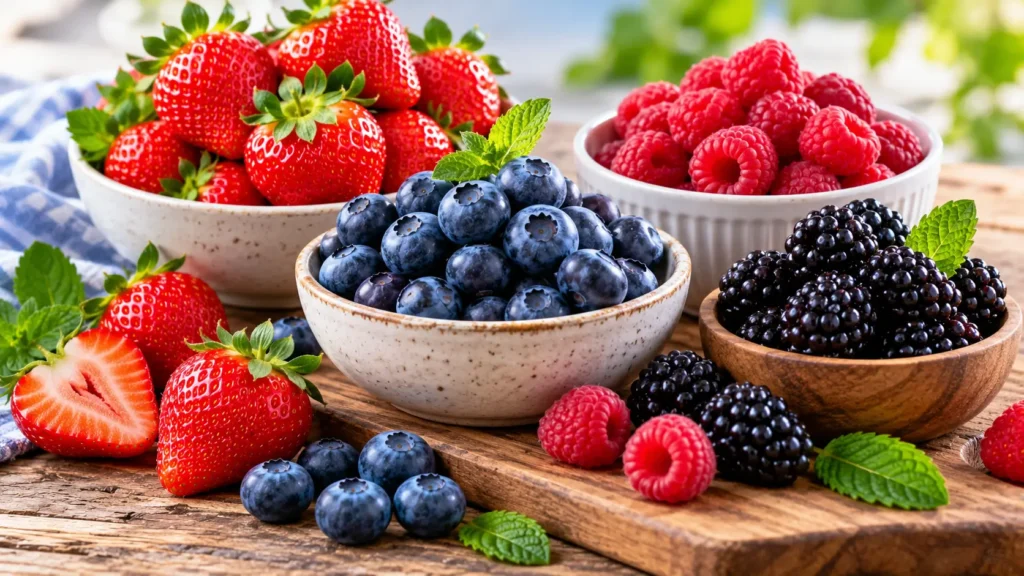
Not all berries offer the exact same benefits, but these four are consistently highlighted as the best berries for blood sugar management.
1. Blueberries
Blueberries are among the most studied fruits for metabolic health. Their anthocyanin content has been linked in research to improved insulin sensitivity and better post-meal glucose response, particularly when eaten as whole fruit rather than juice.
2. Blackberries
Blackberries are lower in sugar than many other berries while still offering a generous amount of fiber per serving. Some research has also connected blackberry intake to improved fat oxidation, which may indirectly support healthier blood sugar regulation over time.
3. Raspberries
Raspberries have one of the highest fiber-to-sugar ratios of any common fruit, making them one of the most blood-sugar-friendly options available. A single cup provides a substantial fiber boost without much sugar.
4. Strawberries
Strawberries are naturally lower in sugar than many fruits and contain polyphenols that have shown promise in clinical research for improving insulin sensitivity, particularly in adults with existing insulin resistance.
How Berries and Insulin Response Are Connected
The link between berries and insulin response comes down to a few key mechanisms that researchers have been studying for years:
- Anthocyanins and cell signaling. These pigments appear to activate a cellular pathway called AMPK, which plays a role in how cells absorb glucose from the blood.
- GLUT4 translocation. Some studies suggest anthocyanins help increase the activity of GLUT4, a transporter that moves glucose into muscle cells, potentially improving how efficiently the body clears sugar after a meal.
- Enzyme inhibition. Compounds in berries may slow the activity of enzymes like alpha-glucosidase and alpha-amylase, which are involved in breaking down carbohydrates into sugar. Slowing this process can blunt post-meal blood sugar spikes.
- Reduced inflammation. Chronic low-grade inflammation is closely tied to insulin resistance, and the antioxidant compounds in berries may help reduce inflammatory markers over time.
It’s worth noting that most of this research comes from controlled studies using specific amounts of berries or berry extracts, not casual snacking. That doesn’t make the effects irrelevant — it just means berries are best viewed as one supportive piece of a broader blood-sugar-friendly diet, not a stand-alone fix.
Low Sugar Berries for Adults: A Quick Comparison
If you’re comparing options at the grocery store, here’s a general breakdown of how common berries stack up (values are approximate per one-cup serving):
- Raspberries: ~5g sugar, ~8g fiber
- Blackberries: ~7g sugar, ~7.6g fiber
- Strawberries: ~7g sugar, ~3g fiber
- Blueberries: ~15g sugar, ~3.6g fiber
Raspberries and blackberries tend to be the most favorable choices for low sugar berries for adults, thanks to their high fiber content relative to sugar. Blueberries are slightly higher in natural sugar but still offer strong antioxidant benefits, so portion size is worth paying attention to if blood sugar is a specific concern.
Berries Glycemic Index Chart: Raspberries vs. Blueberries and More
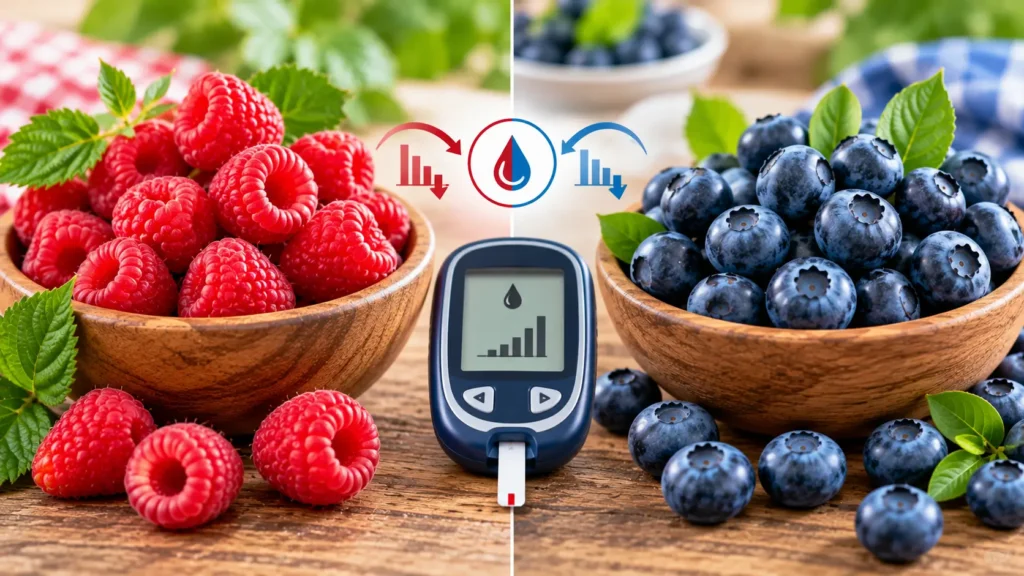
Glycemic index (GI) measures how quickly a food raises blood sugar compared to pure glucose. Here’s a general berries glycemic index chart to give you a rough sense of where each type falls (lower numbers mean a gentler effect on blood sugar):
- Raspberries: GI ~25–32 (low)
- Blackberries: GI ~25 (low)
- Strawberries: GI ~40 (low)
- Blueberries: GI ~40–53 (low to moderate)
In a head-to-head raspberries vs blueberries blood sugar comparison, raspberries generally come out slightly ahead thanks to their lower sugar content and higher fiber-to-sugar ratio. That said, blueberries still fall within the “low GI” range for most varieties and bring a strong antioxidant profile of their own, so both remain solid choices — the right pick often comes down to your personal carbohydrate goals and taste preference.
Berries for Blood Sugar Control: Simple Ways to Add Them to Your Diet
You don’t need a complicated meal plan to benefit from berries. Here are practical ways to work them into your routine:
- Pair berries with protein or healthy fat. Adding berries to Greek yogurt, cottage cheese, or a handful of nuts slows sugar absorption even further.
- Use berries instead of sugary toppings. Swap syrup or granola clusters for fresh or frozen berries on oatmeal or pancakes.
- Blend into smoothies with fiber-rich add-ins. Combine berries with spinach, chia seeds, or flax for an extra fiber boost.
- Keep frozen berries on hand. Frozen berries retain most of their nutritional value and are often more affordable than fresh.
- Watch portion size with juices and dried versions. Berry juice lacks the fiber of whole fruit and can spike blood sugar much faster; dried berries are also more concentrated in sugar.
- Add them to salads. Berries pair well with leafy greens, nuts, and a light vinaigrette for a blood-sugar-friendly lunch option.
How Many Berries Should You Eat Per Day?
Most general dietary guidance suggests around 1 cup of berries per day fits comfortably within a balanced diet for most adults, though individual needs vary based on overall carbohydrate intake, activity level, and any existing health conditions. People managing diabetes or insulin resistance may need a more personalized amount, which is best determined with a doctor or dietitian rather than a blanket recommendation.
Mistakes to Avoid When Eating Berries for Blood Sugar
- Relying on berry-flavored products instead of real berries. Many “berry” snacks, cereals, and drinks contain little actual fruit and a lot of added sugar.
- Eating berries alone on an empty stomach in large amounts. Pairing with protein or fat helps moderate the blood sugar response.
- Assuming all berries are equally low in sugar. As shown above, sugar content varies meaningfully between types.
- Overlooking portion size. Even low-sugar fruits can affect blood sugar if eaten in very large quantities at once.
FAQs: Best Berries for Blood Sugar
Are berries safe for people with diabetes? Many people with diabetes can include berries in their diet in moderation, since they’re lower in sugar and higher in fiber than most fruits. That said, individual carbohydrate tolerance varies, so it’s best to check with a healthcare provider about portion sizes.
Which berry has the lowest sugar content? Raspberries and blackberries tend to have the lowest natural sugar content among commonly eaten berries, along with a high fiber content that further supports blood sugar control.
Can frozen berries offer the same blood sugar benefits as fresh? Yes, frozen berries are typically flash-frozen shortly after harvest and retain most of their fiber and antioxidant content, making them a practical and often more affordable option.
Do berries raise blood sugar at all? All carbohydrate-containing foods have some effect on blood sugar, including berries. However, their fiber and polyphenol content generally leads to a slower, smaller rise compared to many other sweet foods.
Final Thoughts
Best Berries for Blood Sugar offer a rare combination in the fruit world: natural sweetness with a relatively gentle effect on blood sugar. Whether you lean toward raspberries and blackberries for their higher fiber content, or blueberries and strawberries for their antioxidant profile, adding a consistent serving of berries to your diet is a simple, evidence-supported habit worth considering. As with any dietary change related to blood sugar, pair this information with guidance from a healthcare professional who understands your specific health picture.
Read More: Tomato Health Benefits: Are Tomatoes Healthy? Benefits of Eating Them Daily

