
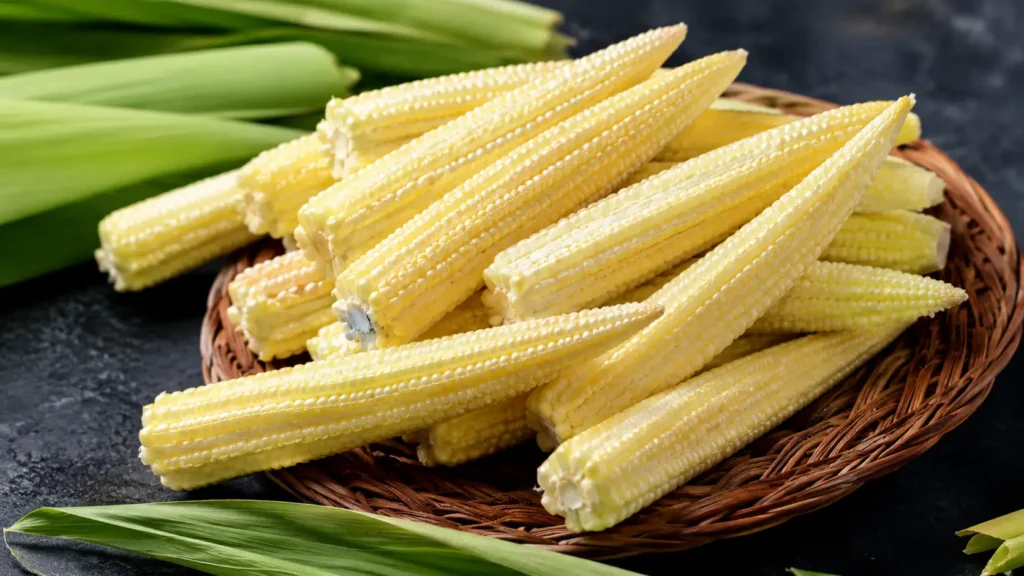
What Is Baby Corn Benefits?
Baby corn is exactly what it sounds like — corn that’s harvested very early, before the kernels have had a chance to fully mature. Unlike regular corn, the entire baby corn cob is edible, kernels and all, giving it a soft, crisp texture and a mild, slightly sweet flavor.
It’s a staple in many Asian cuisines, especially in stir-fries and soups, but it’s increasingly showing up in salads, pickles, and snack trays around the world thanks to its versatility and appealing crunch.
Disclaimer: This article is for general informational purposes only and is not a substitute for professional medical advice. I am not a doctor. Please consult a qualified healthcare provider for guidance specific to your health needs.
Read More: H1N2 Swine Flu Case in Michigan 2026: Symptoms, Transmission and What to Know
Baby Corn Nutrition and Calories
Understanding baby corn nutrition and calories helps explain why this vegetable fits so easily into a variety of diets. Here’s an approximate breakdown for 100 grams of raw baby corn:
- Calories: ~26 kcal
- Water content: ~91%
- Carbohydrates: ~5 g
- Fiber: ~2 g
- Protein: ~2 g
- Fat: ~0.2 g
- Vitamin C: a modest but useful amount
- Folate: contributes to daily folate needs
- Potassium: supports fluid balance and muscle function
- Magnesium: small but meaningful amount
- Iron: a modest source, especially useful in plant-based diets
Compared to mature corn, baby corn is notably lower in starch and natural sugars, which is one reason it’s often considered a lighter, more diet-friendly vegetable option.
7 Baby Corn Health Benefits
Here are seven baby corn health benefits that make this vegetable worth adding to your regular rotation.
1. Low in Calories, High in Nutrients
With only about 26 calories per 100 grams, baby corn offers a good nutrient return for very little calorie cost, making it easy to eat generously without derailing calorie goals.
2. Supports Digestive Health
Baby corn contains a useful amount of dietary fiber, which supports regular digestion and helps maintain a healthy gut environment.
3. Rich in Antioxidants
Baby corn contains plant compounds and vitamin C that contribute antioxidant activity, helping the body manage everyday oxidative stress.
4. Supports Heart Health
The fiber, potassium, and low sodium content in baby corn work together to support healthy blood pressure and cardiovascular function.
5. Good Source of Folate
Folate plays an important role in cell growth and is particularly important during pregnancy, making baby corn a useful addition to a folate-conscious diet.
6. Supports Healthy Vision
Baby corn contains small amounts of carotenoids, plant pigments associated with eye health and protection against age-related vision decline.
7. Helps with Hydration
With a water content of around 91%, baby corn contributes to overall daily fluid intake, especially when eaten raw or lightly cooked in salads and stir-fries.
Is Baby Corn Good for Weight Loss?
This is one of the most common questions people ask, so let’s address it directly: is baby corn good for weight loss?
The short answer is yes, baby corn can be a helpful addition to a weight-conscious diet, though it isn’t a magic solution on its own. Here’s why it works well for weight management:
- Low calorie density: You can eat a generous portion of baby corn without consuming many calories, which helps with overall calorie control.
- Decent fiber content: Fiber slows digestion and promotes a feeling of fullness, which may help reduce overeating.
- Low in fat and sugar: Baby corn’s naturally low fat and sugar content make it a smart substitute for higher-calorie side dishes or snacks.
- Versatile as a filler vegetable: Adding baby corn to soups, stir-fries, and salads increases food volume without significantly increasing calorie intake, which can help you feel satisfied on fewer calories overall.
- Works well in balanced meals: Pairing baby corn with lean protein and other vegetables creates filling, nutrient-dense meals that support sustainable weight management.
That said, weight loss depends on overall calorie balance, activity levels, and total diet quality — baby corn can support the process, but it isn’t a standalone weight-loss food.
Baby Corn Benefits for Digestion and Heart Health
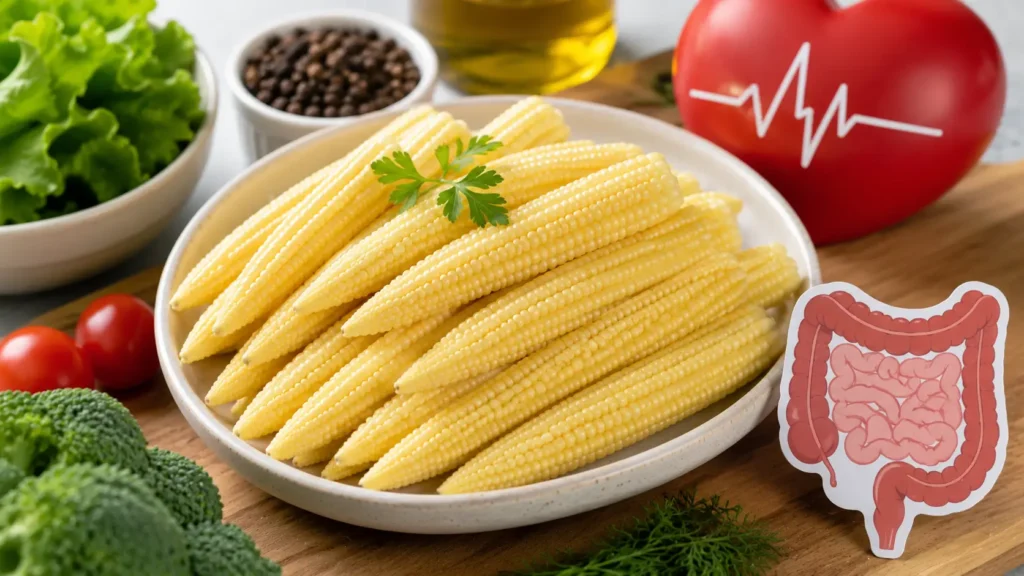
Let’s take a closer look at baby corn benefits for digestion and heart health, two areas where this vegetable tends to shine.
Digestive Benefits
- Fiber for gut health: The fiber in baby corn helps add bulk to stool and supports regular bowel movements.
- Gentle on the stomach: Baby corn is generally easy to digest, especially when lightly cooked, making it a good option for those with sensitive digestion.
- Supports a healthy gut environment: Fiber-rich vegetables like baby corn can help support the beneficial bacteria in your gut microbiome.
Heart Health Benefits
- Potassium for blood pressure support: Potassium helps balance sodium levels in the body, supporting healthy blood pressure.
- Low sodium, naturally: Baby corn is naturally low in sodium, which is beneficial for cardiovascular health, especially compared to heavily processed, salty snacks.
- Fiber for cholesterol support: Regular fiber intake, including from vegetables like baby corn, is associated with healthier cholesterol levels over time.
- Antioxidant support: The antioxidants in baby corn may help reduce oxidative stress, a factor linked to long-term cardiovascular health.
While baby corn alone isn’t a treatment for digestive or heart conditions, it fits naturally into balanced eating patterns that support both systems over time.
Easy Ways to Eat Baby Corn
Baby corn is easy to prepare and works well in a wide range of dishes. Here are some simple ideas:
- Add it to vegetable or chicken stir-fries for crunch
- Toss it raw or blanched into salads
- Pickle baby corn for a tangy, crunchy snack
- Add it to soups, especially Asian-style hot and sour or noodle soups
- Grill or roast whole baby corn with a light drizzle of oil and seasoning
- Include it in vegetable skewers for barbecues
- Use it as a crunchy topping for rice bowls or noodle dishes
Because its flavor is mild, baby corn easily absorbs the seasonings and sauces around it, making it a flexible addition to almost any cuisine.
Who Should Be Careful with Baby Corn?
Baby corn is generally safe and well tolerated by most people, but a few points are worth keeping in mind:
- People with corn allergies: Though uncommon, those with a known corn allergy should avoid baby corn as well.
- People with digestive sensitivities: While generally gentle, very large servings of any fiber-rich vegetable can cause bloating or gas in sensitive individuals.
- People monitoring sodium intake from prepared or canned versions: Fresh baby corn is naturally low in sodium, but canned or pickled varieties can contain added salt, so it’s worth checking labels.
As always, if you notice discomfort after eating baby corn regularly, consider speaking with a doctor or registered dietitian.
FAQs: Baby Corn Benefits
What are the main baby corn benefits? Baby corn offers low-calorie nutrition, fiber for digestion, antioxidants, and support for heart health, making it a well-rounded addition to most diets.
Is baby corn good for weight loss? Yes, its low calorie density and fiber content make baby corn a helpful addition to a weight-conscious diet, especially when used to bulk up meals without adding many calories.
How many calories are in baby corn? Raw baby corn contains approximately 26 calories per 100 grams, making it one of the lighter vegetable options available.
Is baby corn good for digestion? Yes, its fiber content supports regular digestion and a healthy gut environment when eaten as part of a balanced diet.
Can baby corn support heart health? Yes, thanks to its potassium, low sodium content, and fiber, baby corn can be a heart-friendly addition to your regular diet.
Final Thoughts: Baby Corn Benefits
So, what are the real baby corn benefits? Between its low calorie count, fiber content, and supportive role in digestion and heart health, baby corn earns its place as more than just a crunchy stir-fry filler. Whether you’re focused on weight management, digestive comfort, or simply eating more nutrient-dense vegetables, baby corn is an easy, versatile addition to your plate.
Read More: Micro Workouts: The 10-Minute Fitness Solution for Busy People