
Moringa Drumstick Benefits
If you grew up in an Indian household, chances are you’ve eaten moringa drumsticks in sambar, dal, or a simple curry without ever thinking twice about them. But this humble green pod, often overlooked next to trendier “superfoods,” is quietly one of the most nutrient-dense vegetables you can put on your plate. In this guide, we’ll break down everything worth knowing about moringa drumsticks — from their nutrition profile to their real-world health benefits, cooking uses, and the side effects you should be aware of before adding them to your daily diet.
What Is a Moringa Drumstick?
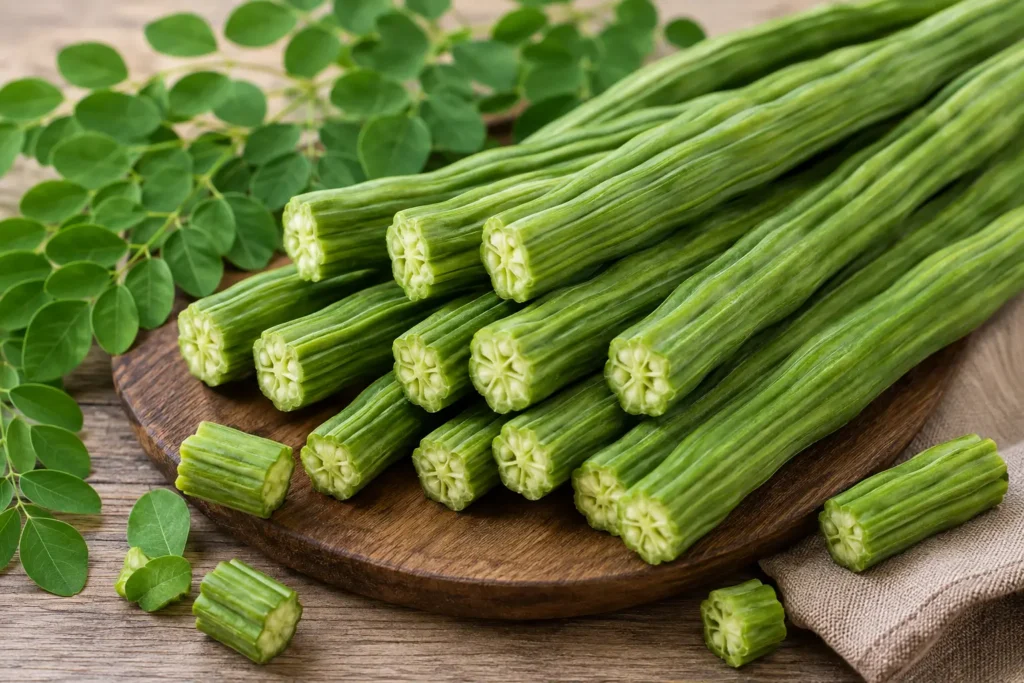
The moringa drumstick is the long, slender seed pod of the Moringa oleifera tree, sometimes called the “drumstick tree” or “miracle tree.” While moringa leaves get most of the spotlight in supplement powders, the pods themselves have been a staple vegetable across South Asian, Southeast Asian, and African cuisines for generations — valued both as food and as a traditional home remedy.
Disclaimer: I am not a doctor, and this article is for general informational purposes only. It is not a substitute for professional medical advice, diagnosis, or treatment. Always consult a qualified healthcare provider before making significant changes to your diet, especially if you are pregnant, breastfeeding, or managing a health condition.
Read More: Why Salmonella Cases Spike Every Summer — And What the 2026 Egg & Jalapeño Outbreaks Reveal
Moringa Drumstick Nutrition Facts Per 100g
Understanding moringa drumstick nutrition facts per 100g helps put its reputation into perspective. A 100-gram serving of raw moringa drumstick pods typically contains:
- Calories: roughly 37 kcal
- Carbohydrates: around 8.5g
- Dietary fiber: about 3.2g
- Protein: approximately 2.1g
- Fat: less than 1g
- Water content: over 86%
It’s a low-calorie, high-fiber vegetable, which already makes it a smart addition for anyone watching their weight or looking to improve digestion.
Vitamins and Minerals in Moringa Drumstick
The real story is in the micronutrients. The vitamins and minerals in moringa drumstick include:
- Vitamin C – supports immune function and collagen production
- Vitamin A (as beta-carotene) – important for eye and skin health
- Calcium – contributes to bone strength
- Potassium – helps regulate blood pressure and fluid balance
- Magnesium – supports muscle and nerve function
- Iron – aids in oxygen transport and helps prevent fatigue
- B-complex vitamins, including folate
This combination of antioxidants and minerals is a big reason why moringa drumsticks have been used traditionally to support overall immunity and energy levels.
Moringa Drumstick vs Moringa Leaves Nutrition Comparison
A common question is how the pod stacks up against the more popular leaf. In a moringa drumstick vs moringa leaves nutrition comparison, the leaves generally win on concentrated nutrient density — they contain significantly higher amounts of protein, iron, calcium, and vitamin A per gram, since leaves are often dried and powdered, concentrating their nutrients.
However, drumsticks have their own advantages:
- Higher water and fiber content, which supports digestion and hydration
- A milder, more versatile flavor that’s easier to cook into everyday meals
- Lower calorie density, making it easier to eat larger portions
In short, moringa leaves are more “concentrated” nutritionally, while drumsticks are a gentler, food-first way to get similar benefits as part of a regular diet.
Moringa Drumstick Protein Content
While moringa drumsticks aren’t a major protein source compared to legumes or dairy, the moringa drumstick protein content of roughly 2g per 100g still contributes meaningfully when eaten regularly as part of a varied, plant-forward diet. It’s a helpful complement rather than a primary protein source — think of it as a nutritional bonus layered on top of its vitamin and mineral profile.
Health Benefits of Moringa Drumstick
Health Benefits of Moringa Drumstick for Diabetes
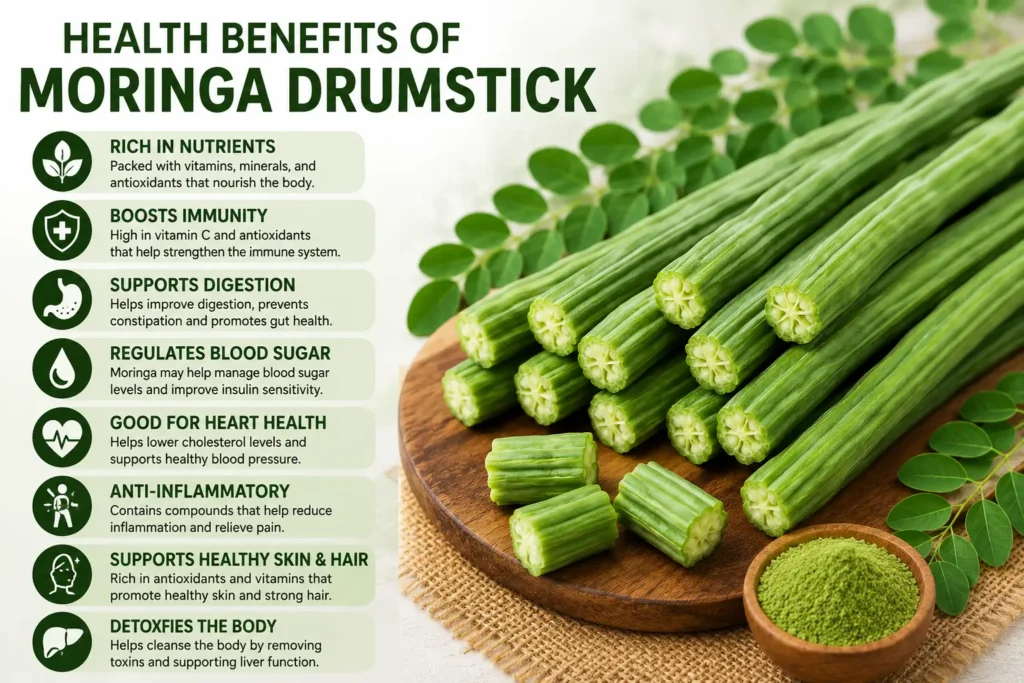
One of the most researched areas involves health benefits of moringa drumstick for diabetes. Some studies suggest compounds in moringa may help support healthier blood sugar regulation and improve insulin sensitivity, likely due to its fiber content and plant compounds like isothiocyanates. That said, this should be viewed as a supportive dietary habit, not a replacement for prescribed diabetes management. Anyone managing diabetes should track how their body responds and loop in their healthcare provider before making it a core part of their routine.
Moringa Drumstick Benefits for Weight Loss
Thanks to its low calorie count and high fiber content, moringa drumstick benefits for weight loss come down to simple, practical mechanics: fiber slows digestion and promotes fullness, which can help reduce overall calorie intake throughout the day. Swapping calorie-dense sides for a Moringa Drumstick Benefits curry or soup is an easy, sustainable way to add volume to meals without adding excess calories.
Moringa Drumstick Soup Recipe Benefits
Across South and Southeast Asia, moringa drumstick soup is practically a home remedy in a bowl. The moringa drumstick soup recipe benefits come from slow-cooking the pods with garlic, ginger, and light spices, which is believed to support digestion and provide gentle warmth during cold or flu season. The soft, cooked pulp inside the pods is also easier to digest than the fibrous outer shell, making soup one of the most nutrient-friendly ways to prepare them.
How to Cook Moringa Drumsticks for Health Benefits
If you’re new to cooking with them, here’s a simple breakdown of how to cook moringa drumsticks for health benefits:
- Wash the pods thoroughly and trim the ends.
- Cut into 2–3 inch pieces (peeling is optional but makes eating easier).
- Boil or steam until tender, usually 10–15 minutes.
- Add to soups, dals, curries, or sambar for the best flavor absorption.
- Scoop out and eat the soft inner pulp; the fibrous outer skin can be discarded if too tough.
Boiling and steaming are gentler cooking methods that help preserve more of the water-soluble vitamins compared to deep frying.
Moringa Drumstick Benefits for Skin and Hair
Rich in vitamin C and antioxidants, the moringa drumstick benefits for skin and hair are largely tied to its role in collagen production and cell protection against oxidative stress. Regularly including antioxidant-rich foods like moringa in your diet may support a healthier-looking complexion over time, though topical moringa oil (from the seeds) is more commonly used for direct hair and skin application than the cooked pods themselves.
Moringa Drumstick Benefits for Men
Traditionally, moringa drumstick benefits for men are associated with its iron, magnesium, and antioxidant content, which may support energy levels, muscle function, and overall vitality. Some traditional systems of medicine also link moringa consumption to reproductive health support, though robust clinical evidence in this specific area is still limited — so it’s best treated as a general wellness food rather than a targeted remedy.
Moringa Drumstick Powder vs Raw Drumstick Benefits
If you’re deciding between forms, the moringa drumstick powder vs raw drumstick benefits comparison mostly comes down to convenience versus whole-food nutrition:
| Factor | Moringa Powder | Raw/Cooked Drumstick |
|---|---|---|
| Nutrient concentration | Higher per gram | Lower per gram, but more volume |
| Convenience | Easy to add to smoothies, water | Requires cooking |
| Fiber content | Lower (processed) | Higher (whole food) |
| Taste | Earthy, strong | Mild, savory |
Powder is a convenient supplement, but whole cooked drumsticks offer more fiber and a more filling, meal-based way to get similar benefits.
Moringa Drumstick Side Effects and Safety
Like any food, moderation and awareness matter. Let’s go through the safety side clearly.
Side Effects of Eating Moringa Drumstick Daily
Most people can enjoy moringa drumsticks in moderate amounts without issue, but possible side effects of eating moringa drumstick daily in large quantities include:
- Mild digestive discomfort, bloating, or diarrhea due to high fiber intake
- Potential interaction with blood pressure or blood sugar medications, since moringa may amplify their effects
- Rare allergic reactions in sensitive individuals
Eating it a few times a week as part of a balanced diet is generally considered reasonable for most healthy adults.
Is Moringa Drumstick Safe During Pregnancy?
This is one of the most searched safety questions, and for good reason. When people ask, is moringa drumstick safe during pregnancy, it’s important to separate the pods from other parts of the plant. The bark and root of the moringa tree contain compounds that have traditionally been avoided during pregnancy due to concerns about uterine stimulation, and this caution is often extended broadly to moringa products as a precaution. Given the sensitivity of this topic, pregnant or breastfeeding individuals should speak with their doctor or OB-GYN before adding moringa drumsticks or any moringa product to their diet in more than very occasional, small amounts.
Moringa Drumstick Side Effects on Kidney
For most healthy people, moderate consumption isn’t associated with kidney problems. However, questions about moringa drumstick side effects on kidney function usually come up because of its relatively high potassium and oxalate content. This matters most for people with existing kidney disease or those on a restricted-potassium diet, as excess potassium can be harder for compromised kidneys to filter out. If you have any kidney condition, it’s worth discussing moringa consumption with your nephrologist or doctor before making it a regular part of your meals.
How Much Moringa Drumstick Is Safe to Eat Per Day?
There’s no single official daily limit, but when people ask how much moringa drumstick is safe to eat per day, a reasonable, commonly cited guideline is 1–2 servings (roughly 100–150g of cooked drumstick) a few times per week, rather than large amounts every single day. This allows you to enjoy the nutritional benefits while minimizing the risk of digestive discomfort or nutrient interactions.
FAQs: Moringa Drumstick Benefits
Can I eat moringa drumsticks every day? In small to moderate amounts, yes, for most healthy adults — but daily large portions aren’t necessary or well-studied, so variety in your diet is still the better approach.
Do moringa drumsticks taste bitter? Not typically. Cooked drumsticks have a mild, slightly sweet, and savory flavor, quite different from the more bitter taste of moringa leaf powder.
Are moringa drumsticks good for cholesterol? Some early research suggests moringa’s fiber and plant compounds may support healthier cholesterol levels, but more human studies are needed before drawing firm conclusions.
Final Thoughts: Moringa Drumstick Benefits
Moringa drumsticks are a genuinely nutrient-rich, low-calorie vegetable with a long history in traditional cooking and wellness practices. From supporting digestion and weight management to offering a solid dose of vitamins, minerals, and antioxidants, there’s real substance behind the buzz. That said, like most nutrient-dense foods, moderation is key — and if you’re pregnant, managing kidney disease, diabetes, or taking medication, it’s always worth a quick conversation with your doctor before making moringa a regular part of your diet.
Read More: Sugar and Brain Health in Adults: 7 Steps to Prevent Cognitive Decline