Raw Milk Food Poisoning Risk in 2026
Raw milk has quietly become one of the most debated items in the American grocery cart. Some people swear by it for taste, tradition, or a belief that it’s closer to nature. Others treat it like a loaded question at the farmers market. Somewhere in between is a simple fact that doesn’t get enough attention: the raw milk food poisoning risk is real, well-documented, and hasn’t gone away just because raw milk has gotten trendier again in 2026.
This isn’t about scaring anyone off unpasteurized dairy or lecturing raw milk drinkers. It’s about giving you the same information a well-informed friend in public health would share over coffee — plainly, without the marketing spin on either side.
Disclaimer: This article is for general informational purposes only and is not medical advice. If you suspect food poisoning or foodborne illness, contact a doctor or healthcare provider.
What Makes Raw Milk Different — and Riskier
Raw milk is milk straight from the cow, goat, or sheep that hasn’t gone through pasteurization, the heat process developed in the 1800s that kills disease-causing organisms without meaningfully changing the milk’s nutrition. Pasteurization doesn’t add anything to milk — it just removes the germs that can make you sick.
Without that step, raw milk can carry a range of harmful organisms, including:
- Salmonella
- E. coli, including the dangerous O157:H7 strain
- Listeria monocytogenes
- Campylobacter
- Brucella
- Cryptosporidium
These bacteria don’t come from the milk itself — they get in from the cow’s environment: manure, soil, contaminated water, unclean milking equipment, or even an infected udder. A farm can follow excellent hygiene practices and still not fully eliminate the risk, because contamination is often sporadic rather than constant. That’s part of why health agencies consistently flag raw milk as one of the riskiest foods in the average grocery store, even when it comes from a well-run, licensed dairy.
Read More: Moringa Drumstick Benefits: Nutrition, Uses & Side Effects (Complete Guide)
Raw Milk Bacteria Symptoms: The Main Culprits, One by One
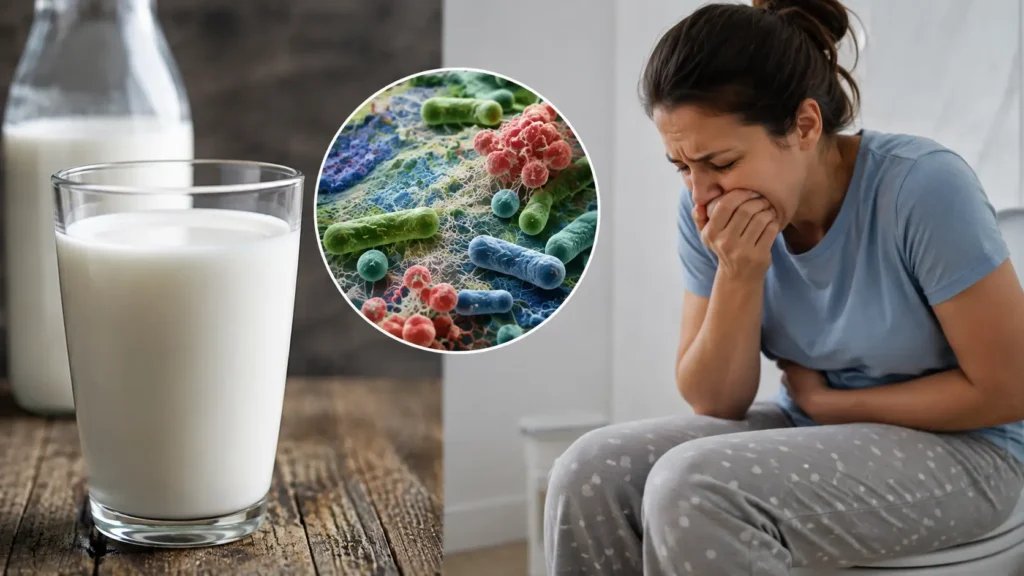
Not all raw milk illnesses look the same. Here’s a breakdown of what each major pathogen tends to do once it’s in your system.
Salmonella
Salmonella infections typically show up within 6 hours to 6 days after exposure. Expect diarrhea, fever, and stomach cramps that usually resolve in about a week, though some people need hospitalization, especially if dehydration sets in.
E. coli (including O157:H7)
This is one of the more concerning raw milk bacteria because it takes only a small amount to cause illness. Symptoms often include severe, sometimes bloody diarrhea and stomach cramps. In children especially, E. coli O157:H7 can trigger hemolytic uremic syndrome (HUS), a serious condition that can lead to kidney failure. A 2026 multistate outbreak tied to raw milk and raw cheese products showed exactly this pattern — most of the illnesses were in children under five, and several people were hospitalized.
Listeria
Listeria is particularly dangerous for pregnant women, since it can cross the placenta and cause miscarriage, stillbirth, or severe illness in a newborn — sometimes without the mother feeling seriously ill herself. Listeria can also have an unusually long incubation period, occasionally taking weeks to cause symptoms, which makes it hard for people to connect their illness back to something they drank a month earlier.
Campylobacter
Campylobacter is one of the most commonly reported raw-milk-linked infections. It usually causes diarrhea, fever, and cramping starting two to five days after exposure. In rare cases, it’s linked to Guillain-Barré syndrome, a neurological condition that can cause temporary paralysis.
Raw Milk Illness Symptoms in Adults: What to Actually Expect
For a generally healthy adult, a raw-milk-related infection often looks like a rough stomach bug:
- Watery or bloody diarrhea
- Nausea and vomiting
- Abdominal cramping
- Fever and chills
- Headache and body aches
- Fatigue and dehydration
Most healthy adults recover within a few days to about a week with rest and fluids. But “most people recover fine” is doing a lot of work in that sentence — a meaningful share of raw milk drinkers each year end up in urgent care or the ER, and the CDC has tracked hundreds of hospitalizations tied to raw milk outbreaks over the past two decades. Symptoms that are severe, don’t improve after a few days, or come with blood in the stool, high fever, or signs of dehydration deserve medical attention rather than a wait-and-see approach.
Is raw milk safety in summer? Why the Season Matters
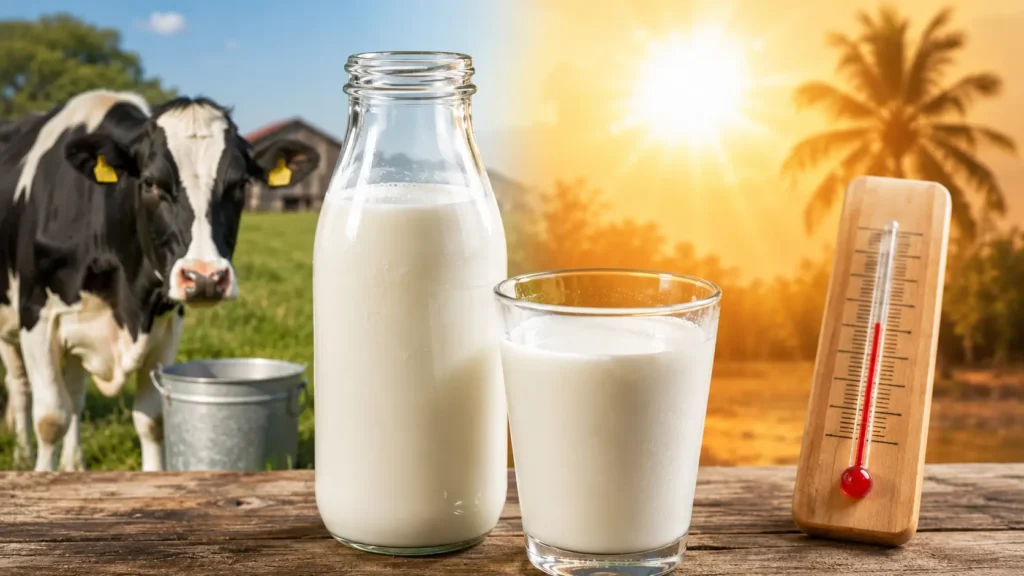
This is a fair question, and the honest answer is: raw milk carries risk year-round, but summer tends to raise the stakes.
Here’s why heat matters so much for raw milk safety in summer:
- Bacteria multiply faster in warm temperatures. Any contamination present in the milk grows more quickly once temperatures climb, especially if the milk isn’t kept consistently cold.
- The cold chain is easier to break. A cooler in a hot car, a farmers market table without proper refrigeration, or a slow drive home can all let raw milk sit in the temperature “danger zone” longer than it should.
- Cows themselves are more stressed in heat, which can affect udder health and, in turn, milk contamination risk.
- Foodborne illness cases in general spike in summer months, and raw dairy is no exception — outdoor markets, picnics, and warm-weather gatherings all add opportunities for temperature abuse.
If you do choose raw milk in the summer, treat cold-chain discipline as non-negotiable: keep it refrigerated at or below 40°F (4°C) the entire way from farm to fridge, and don’t let it sit out at a market stall or in a warm car longer than absolutely necessary.
Recent Raw Milk Outbreaks: A 2025–2026 Reality Check
Raw milk outbreaks aren’t a hypothetical, decades-old concern — they’re ongoing. A few recent examples illustrate the pattern:
- A multistate E. coli O157:H7 outbreak linked to a raw dairy brand’s raw milk and raw cheddar cheese resulted in illnesses across several states between late 2025 and early 2026, with multiple hospitalizations and at least one case of hemolytic uremic syndrome. More than half of those sickened were children under five.
- A Salmonella Typhimurium outbreak tied to commercially distributed raw milk sickened over 170 people across several states in a single dairy-linked event.
- State health departments, including in Washington and Idaho, have flagged ongoing raw milk-associated illness reports and outbreak investigations tied to licensed raw dairies, showing that even regulated, tested operations aren’t risk-free.
Add to this the newer concern of H5N1 avian influenza, which has been detected in raw milk from infected dairy cattle in parts of the U.S. Federal food safety agencies have been monitoring this closely, and while pasteurization is understood to inactivate the virus, raw milk offers no such safeguard.
Who’s Most at Risk?
Anyone can get sick from contaminated raw milk, but the consequences are far more serious for certain groups:
- Children under 5, who are disproportionately represented in raw milk outbreak illnesses and complications like HUS
- Adults over 65
- Pregnant women, due to Listeria’s specific risk to the pregnancy
- People with weakened immune systems, including those with cancer, HIV/AIDS, diabetes, or organ transplants
Public health guidance is consistent on this point: these groups are generally advised to avoid raw milk and raw milk products entirely, regardless of how the milk was produced or how “clean” the farm appears.
If You Still Choose to Drink Raw Milk: Practical Risk Reduction
Public health agencies don’t consider any amount of raw milk fully “safe,” but if you’re going to drink it anyway, a few habits meaningfully lower the odds of a bad outcome:
- Buy only from a licensed, regularly tested raw dairy in states where raw milk sales are legal
- Ask the farm about their testing frequency and most recent results
- Keep it refrigerated at all times, especially during transport in warm weather
- Never give raw milk to infants, young children, pregnant women, older adults, or anyone immunocompromised
- Avoid raw milk cheese aged less than 60 days, which carries similar risks
- Watch for recalls — the FDA and CDC post raw dairy recall notices when contamination is detected
None of these steps eliminate the risk. They just reduce the odds compared to buying from an untested or informal source.
When to See a Doctor
Contact a healthcare provider if, after drinking raw milk, you or someone in your household experiences:
- Diarrhea lasting more than a few days, or diarrhea with blood
- A fever above 102°F (39°C)
- Signs of dehydration — dizziness, dry mouth, little to no urination
- Severe abdominal pain
- Any symptoms in a pregnant woman, infant, young child, or immunocompromised person
Mention the raw milk exposure specifically, since it helps guide testing and treatment.
FAQs: Raw Milk Food Poisoning Risk in 2026
Can raw milk make you sick even if it looks and smells fine? Yes. Harmful bacteria don’t reliably change the taste, smell, or appearance of milk, so you can’t “sniff test” your way to safety.
Does boiling raw milk make it safe? Boiling raw milk at home kills most harmful bacteria, similar to pasteurization, though it will also change the taste and texture somewhat.
Is raw milk more nutritious than pasteurized milk? Nutritionally, the two are very similar. Pasteurization does not meaningfully reduce milk’s protein, calcium, or vitamin content.
Is it legal to buy raw milk in the U.S.? Laws vary significantly by state — some allow retail sales, others only permit farm pickup or herd-share arrangements, and a few restrict raw milk entirely. Check your state’s current regulations before buying.
The Bottom Line
The Raw Milk Food Poisoning Risk in 2026 isn’t a fringe concern or outdated warning — it’s an active, tracked public health issue with fresh outbreak data every year, including in 2025 and 2026. Understanding raw milk bacteria symptoms, knowing what raw milk illness symptoms in adults actually look like, and being extra cautious about raw milk safety in summer can help you make a more informed decision, whether that decision is to avoid raw milk entirely or to drink it with your eyes open.
Read More: Why Salmonella Cases Spike Every Summer — And What the 2026 Egg & Jalapeño Outbreaks Reveal