
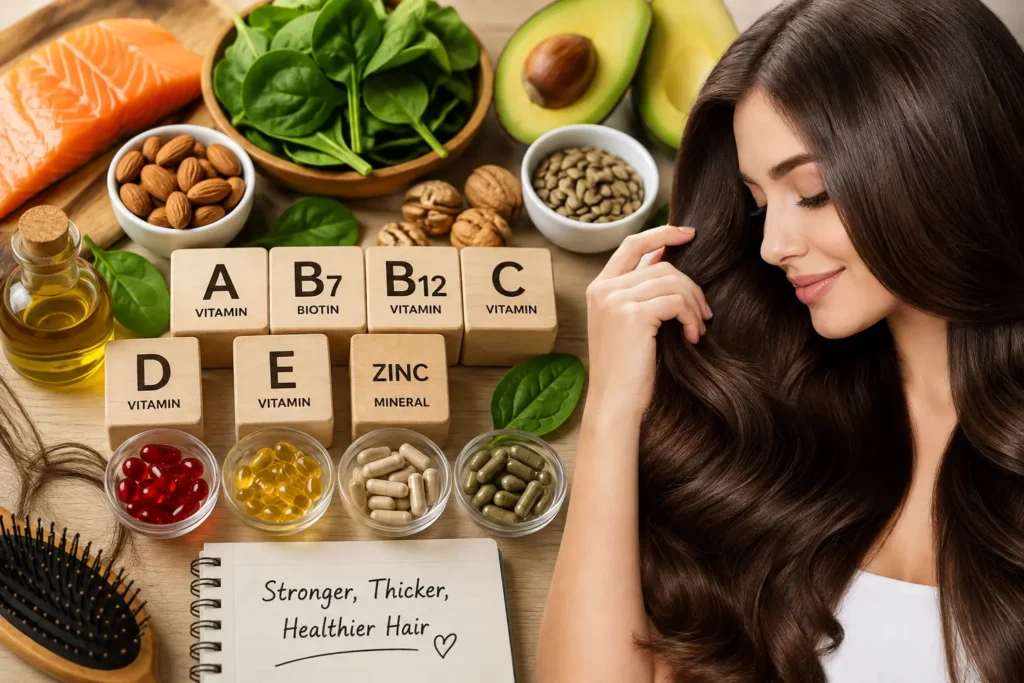
Best Vitamins for Hair Growth and Thickness
If your hair has been feeling thinner, shedding more than usual, or just not growing the way it used to, your first instinct might be to reach for a hair growth supplement. But before you spend money on a bottle of gummies, it helps to understand what’s actually going on beneath the surface. Hair follicles are some of the most metabolically active cells in your body, which means they’re often among the first to show signs when your nutrient levels dip — long before other symptoms appear.
This guide walks through the best vitamins for hair growth and thickness, one by one: Vitamin D, Biotin, Iron, B12, Vitamin C, Vitamin E, Omega-3, and protein. For each one, we’ll cover what it actually does for your hair, the deficiency signs to watch for, and where to get it — through food first, supplements second.
A quick, important note: hair shedding has many causes — stress, hormones, thyroid issues, genetics, and nutrient deficiencies among them. This article is for general educational purposes and isn’t a substitute for medical advice. If you’re experiencing noticeable hair loss, a simple blood panel from your doctor (checking ferritin, vitamin D, B12, and thyroid function) is the most reliable way to know what your body actually needs — guessing with supplements can waste money or, in the case of iron, even cause harm if you don’t actually need it.
Read More: 21 Day Ginger Turmeric Drink Challenge: Benefits, Recipe & Side Effects
Why Vitamins and Nutrients Matter for Hair Growth
Each hair follicle goes through cycles: a growth phase that can last years, a short transition phase, and a resting phase before the hair sheds and a new one begins. Because hair isn’t essential for survival, your body deprioritizes it when nutrients are scarce — redirecting resources to organs that matter more. This is exactly why nutrient deficiencies so often show up as hair thinning or shedding before anything else.
The vitamins and minerals below all play a role somewhere in that cycle — some support the follicle directly, others support oxygen delivery, collagen production, or the raw protein building blocks hair is made from.
Best Vitamins for Hair Growth and Thickness: Quick Overview
Here’s a snapshot before we go deeper into each one:
- Vitamin D — activates hair follicle stem cells and creates new follicles
- Biotin — supports keratin production, the core protein in hair
- Iron — carries oxygen to the scalp and follicles
- Vitamin B12 — supports red blood cell production and follicle metabolism
- Vitamin C — boosts collagen production and helps you absorb iron
- Vitamin E — an antioxidant that supports scalp circulation
- Omega-3 fatty acids — nourish the scalp and reduce inflammation
- Protein — the literal building block hair is made from (keratin)
Vitamin D and Hair Loss
Vitamin D receptors are found directly in hair follicles, and research has linked low vitamin D levels to several types of hair shedding, including telogen effluvium (stress-related shedding) and alopecia areata.
Vitamin D deficiency hair loss symptoms often overlap with general low-vitamin-D symptoms and can include:
- Increased daily hair shedding
- Slower regrowth after shedding
- Fatigue and low energy
- Bone or joint aches
- Low mood, especially in winter months
Food sources: fatty fish like salmon and mackerel, egg yolks, fortified milk and cereals, and mushrooms exposed to UV light.
Worth knowing: Vitamin D deficiency is extremely common in the U.S., especially for people who spend most of their time indoors or live in northern states with less annual sunlight. A simple blood test is the only reliable way to know if you’re actually deficient — supplementing blindly with high doses isn’t necessary for most people and can occasionally cause issues at very high levels.
Biotin for Hair Growth
Biotin (vitamin B7) gets more marketing attention than almost any other hair vitamin, largely because it plays a role in producing keratin, the protein that makes up your hair strands.
If you’re wondering biotin for hair growth how long to see results, most sources point to a realistic timeline of 3 to 6 months of consistent use, since hair growth itself is a slow process — even a “working” supplement won’t show visible results overnight.
Important context: true biotin deficiency is actually rare in people eating a varied diet, since it’s found in many common foods and your gut bacteria produce some of it too. Biotin supplements tend to help most in the specific cases where someone is genuinely deficient — for example, due to certain medications, pregnancy, or restrictive diets — rather than being a universal fix for hair loss.
Food sources: eggs, almonds, sweet potatoes, spinach, and salmon.
Iron Deficiency and Hair Loss in Women
Of all the nutrients on this list, iron deficiency is one of the most well-documented causes of hair thinning — and it disproportionately affects women, largely due to menstrual blood loss.
Iron Deficiency and Hair Loss in Women often develops gradually and can include:
- Diffuse thinning across the scalp, rather than in one specific spot
- Fatigue and unusual tiredness
- Pale skin
- Shortness of breath during normal activity
- Brittle nails
Doctors typically look at ferritin (your iron storage levels) rather than just standard iron levels, since low ferritin can cause hair shedding even before full-blown anemia develops.
Food sources: red meat, spinach, lentils, tofu, and fortified cereals. Pairing iron-rich plant foods with a source of vitamin C (see below) significantly improves absorption.
A caution worth repeating: iron supplements should generally be taken under medical guidance. Taking iron when you don’t actually need it doesn’t help your hair and can cause real side effects, including digestive issues and, over time, iron overload.
Vitamin B12 Deficiency and Hair Thinning
B12 plays a central role in red blood cell production, which affects how efficiently oxygen and nutrients reach your hair follicles.
Vitamin B12 deficiency hair thinning tends to show up alongside other classic deficiency signs:
- Fatigue and low energy
- Pale or slightly yellow-tinged skin
- Numbness or tingling in the hands and feet
- Difficulty concentrating
- In more advanced cases, premature graying
People following vegan or vegetarian diets are at higher risk, since B12 is found almost exclusively in animal products. Older adults are also at higher risk due to reduced stomach acid, which is needed to absorb B12 properly.
Food sources: meat, fish, eggs, dairy, and fortified plant milks or nutritional yeast for those avoiding animal products.
Vitamin C Benefits for Hair Growth
Vitamin C plays two distinct roles that make it valuable for hair health.
The main vitamin C benefits for hair growth come from:
- Collagen production — collagen is a structural protein that supports the hair follicle
- Iron absorption — Vitamin C Benefits for Hair Growth significantly boosts how much iron your body absorbs from plant-based foods, making it a useful pairing if you’re also addressing an iron deficiency
- Antioxidant protection — helps protect hair follicles from oxidative stress caused by pollution and UV exposure
Food sources: citrus fruits, bell peppers, strawberries, broccoli, and kiwi.
Vitamin E Oil for Hair Growth Before and After
Vitamin E is an antioxidant that helps reduce oxidative stress on the scalp, which some research suggests may support a healthier environment for hair growth.
People often search for vitamin E oil for hair growth before and after results, hoping to see dramatic transformations from topical application. Realistically, the honest answer is more modest: vitamin E oil may help improve scalp condition and reduce breakage over 2 to 3 months of consistent use, but it works best as one supportive piece of a broader routine rather than a standalone solution. Massaging vitamin E oil into the scalp may also offer a secondary benefit — the physical act of massage itself has been shown to support blood flow to hair follicles.
Food sources: almonds, sunflower seeds, spinach, and avocado.
Omega-3 for Hair Growth and Shine
Omega-3 for Hair Growth and Shine fatty acids, found in fish and certain plant oils, support the scalp in ways that show up visibly in hair — specifically shine and reduced dryness.
The case for omega-3 for hair growth and shine comes down to a few mechanisms:
- Reducing scalp inflammation, which can otherwise interfere with healthy follicle function
- Supporting the oil-producing glands around hair follicles, which affects shine and hydration
- Providing structural fatty acids that contribute to the cell membranes surrounding hair follicles
Food sources: salmon, sardines, walnuts, chia seeds, and flaxseed.
Protein Deficiency and Hair Loss Symptoms
Hair is almost entirely made of a protein called keratin, so it makes sense that inadequate protein intake affects hair directly.
Protein Deficiency and Hair Loss Symptoms typically include:
- Diffuse thinning, often noticed a few months after a period of very low protein intake
- Hair that feels weaker or more brittle than usual
- Slower nail growth alongside the hair changes
- General fatigue, since protein deficiency rarely affects hair alone
This type of hair loss is most commonly seen in people on very restrictive diets, recovering from illness, or dealing with an eating disorder — in the latter case, addressing the underlying pattern with proper support matters far more than any supplement.
Food sources: eggs, poultry, fish, beans, lentils, tofu, and dairy.
Best Hair Growth Vitamins for Women Over 40
Hormonal shifts during perimenopause and menopause can meaningfully affect hair density, which is why searches for the best hair growth vitamins for women over 40 have grown alongside broader interest in women’s midlife health.
At this life stage, a few nutrients tend to matter most:
- Iron and ferritin — still relevant, especially for women with heavy periods during perimenopause
- Vitamin D — deficiency becomes more common with age and less sun exposure
- B12 — absorption naturally declines with age
- Omega-3s — support the scalp as estrogen-related oil production changes
- Protein — needs often increase slightly with age to help preserve muscle and support overall tissue repair, hair included
Rather than adding every supplement at once, the most efficient approach is a simple blood panel to see which of these you’re actually low in, then addressing that specific gap through food first.
Sample One-Day Meal Plan for Hair Growth
A practical way to cover most of these nutrients through food:
- Breakfast: Scrambled eggs with spinach and a side of orange slices
- Mid-morning snack: A small handful of almonds and sunflower seeds
- Lunch: Grilled salmon with a lentil and bell pepper salad
- Afternoon snack: Greek yogurt with berries
- Dinner: Tofu or lean beef stir-fry with broccoli and brown rice
- Evening: A small handful of walnuts, if you’d like a bedtime snack
FAQs: Best Vitamins for Hair Growth and Thickness
What are the best vitamins for hair growth and thickness? Vitamin D, biotin, iron, B12, vitamin C, vitamin E, Omega-3 for Hair Growth and Shine, and protein all play distinct roles — from building keratin to delivering oxygen to hair follicles — making them the most commonly recommended nutrients for hair growth and thickness.
What are the signs of vitamin D deficiency hair loss? Increased shedding, slower regrowth, fatigue, and joint aches are common signs, though a blood test is the only way to confirm an actual deficiency.
How long does biotin take to show hair growth results? Most people need 3 to 6 months of consistent use to notice a difference, since hair growth itself is a slow, gradual process.
How does Iron Deficiency and Hair Loss in Women? Low iron, specifically low ferritin, reduces oxygen delivery to hair follicles and is one of the most common correctable causes of diffuse hair thinning in women.
What are the best hair growth vitamins for women over 40? Iron, vitamin D, B12, Omega-3 for Hair Growth and Shine, and adequate protein tend to matter most at this stage, especially as hormonal changes during perimenopause and menopause affect hair density.
Final Thoughts: Best Vitamins for Hair Growth and Thickness
Best Vitamins for Hair Growth and Thickness aren’t a quick fix, but understanding which nutrients actually matter — and why — puts you in a much better position to make real progress. For most people, the smartest first step isn’t a supplement at all: it’s a simple blood panel to see exactly where your levels stand, followed by targeted changes to your diet, and supplements only where they’re genuinely needed. Hair responds slowly to any change, so give whatever approach you choose at least a few months before expecting to see a real difference.
Read More: Oats for Nicotine Cravings: Benefits, Science & Best Ways to Eat Them