
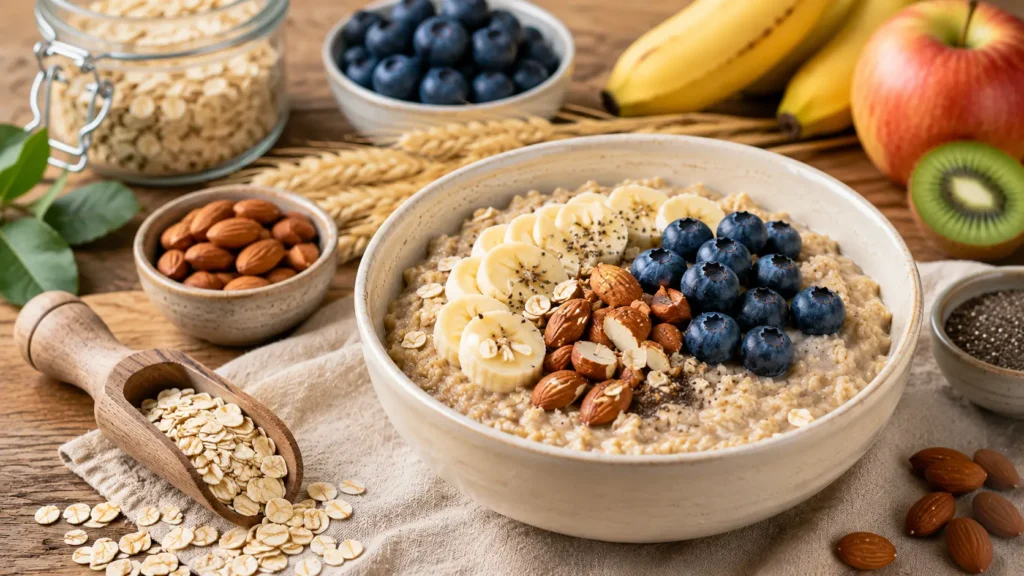
Oats for Nicotine Cravings
If you’ve ever tried to quit smoking or vaping, you already know the cravings don’t play fair. They show up during your morning coffee, after meals, on stressful commutes — sometimes for no reason at all. While no single food is a magic fix, a growing body of research and real-world experience points to one surprisingly simple ally: a warm bowl of oats.
In this guide, we’ll break down the actual oats for nicotine cravings benefits, look at how oats help reduce nicotine cravings on a biological level, explore the science behind oats and smoking withdrawal, and give you practical recipes and portions so you can put this into practice starting tomorrow morning.
A quick note: this article shares nutrition and lifestyle information, not medical advice. Nicotine withdrawal affects everyone differently, so if you’re quitting, please loop in your doctor or a certified cessation program alongside anything you read here.
Read More: Food as Medicine Diet Plan: Why Whole Foods Are Replacing Your Supplement Cabinet in 2026
Why Nicotine Cravings Feel So Intense
Nicotine reaches the brain within about ten seconds of inhaling, triggering a quick release of dopamine. Your brain learns to expect that hit — often tied to specific triggers like your morning coffee, a work break, or a stressful phone call. When you quit, that expected dopamine spike simply doesn’t come, and your body reacts with restlessness, irritability, and an intense pull toward “just one more.”
What makes cravings feel even worse is blood sugar instability. Nicotine actually helps regulate blood sugar and suppress appetite, so when you quit, blood sugar swings become more noticeable — and they’re often mistaken for cravings themselves. This is exactly where oats step in.
Oats for Nicotine Cravings Benefits
So, what are the actual oats for nicotine cravings benefits that make this humble breakfast food worth talking about?
1. Steadier Blood Sugar, Fewer Mood Swings
Oats are a low-glycemic, slow-digesting carbohydrate. Instead of the sharp spike-and-crash pattern you get from sugary cereal or pastries, oats release glucose gradually into your bloodstream. That steadier curve directly reduces the irritability and shakiness that often gets mistaken for a nicotine craving.
2. Long-Lasting Fullness
A single serving of oats delivers several grams of soluble fiber, which slows digestion and keeps hunger at bay for hours. Many smokers reach for a cigarette simply because they feel restless or “empty” between meals — a filling bowl of oats closes that gap.
3. Nervous System Support
Oats are a solid source of magnesium and B vitamins, both of which play a role in calming an overstimulated nervous system. During withdrawal, when your stress response is running high, these nutrients offer quiet, steady support.
4. A New Ritual to Replace the Old One
Smoking is as much about habit as it is about chemistry — the pause, the routine, the “me time.” Preparing and slowly eating a warm bowl of oats can become a new ritual, something to look forward to instead of a cigarette break.
5. A Genuinely Satisfying Start to the Day
Unlike a quick sugary snack, oats keep you satisfied for a much longer stretch of the morning, which matters most in the early days of quitting when cravings are strongest.
The Science Behind Oats and Smoking Withdrawal
It’s worth understanding why does oatmeal reduce cigarette cravings from a research standpoint, not just anecdotally.
A well-known study from Duke University examined how different foods changed the way cigarettes tasted for people trying to quit. Researchers found that foods like dairy, fruits, and vegetables tended to make cigarettes taste noticeably worse, while foods like meat, alcohol, and coffee made them taste better. While oats weren’t the direct focus, they fit the same “fresh, whole food” category that the study associated with reduced smoking satisfaction.
On the nutrition science side, oats are classified as a low-glycemic-index food, meaning they raise blood sugar slowly and steadily rather than causing spikes. Stable blood sugar is directly linked to more stable mood and fewer intense cravings — a connection well documented in nutrition research on appetite regulation and science behind oats and smoking withdrawal-related irritability.
Oats also contain a unique group of antioxidants called avenanthramides, found almost exclusively in oats. These compounds help reduce oxidative stress, which tends to be elevated in smokers due to the toxins in cigarette smoke. So while oats won’t reverse smoking-related damage overnight, they support the body’s natural repair processes during recovery.
Oats vs Other Foods for Quitting Smoking
Not all foods are created equal when it comes to managing cravings. Here’s how oats stack up:
- Oats vs. sugary cereal or pastries: Oats provide slow, steady energy; sugary breakfasts cause a crash within an hour, often triggering a craving.
- Oats vs. coffee alone: Coffee is one of the most common smoking triggers due to habit association. Pairing it with oats — or replacing it with herbal tea and oats — removes a major trigger.
- Oats vs. meat and alcohol: As the Duke study suggests, meat and alcohol tend to make cigarettes taste better, working against your quit goals. Oats do the opposite.
- Oats vs. nicotine gum or lozenges: These products manage nicotine levels directly, while oats address the surrounding physical triggers — hunger, blood sugar, and restlessness. They work best together, not as substitutes for each other.
Best Ways to Eat Oats While Quitting Smoking
Knowing the Oats for Nicotine Cravings Benefits is one thing — actually building oats into a hectic, craving-filled day is another. Here are the best ways to eat oats while quitting smoking, from quick options to make-ahead solutions.
Oatmeal Recipes for Nicotine Withdrawal
- Banana cinnamon oatmeal — naturally sweet, comforting, and easy to make in under five minutes
- Berry and chia oatmeal — added antioxidants and omega-3s for extra support
- Savory oats with egg and spinach — a heartier option if you crave something filling and less sweet
- Oat smoothie — blend oats, banana, milk, and a spoon of peanut butter for a portable, craving-crushing breakfast on busy mornings
- Apple cinnamon baked oats — a batch-cooked option you can prep on Sunday and reheat all week
Overnight Oats for Smoking Cessation
One of the most practical tricks for quitting is removing decision fatigue during vulnerable moments. Overnight oats for smoking cessation solve exactly this problem — prep a jar the night before, and it’s ready the moment a morning craving hits, no cooking required.
A simple base: combine half a cup of rolled oats, half a cup of milk (or a plant-based alternative), a spoonful of yogurt, and your choice of fruit and a dash of cinnamon. Leave it in the fridge overnight. In the morning, it’s cold, filling, and ready in seconds — perfect for the sluggish, craving-heavy first days of quitting.
How Much Oatmeal to Eat for Nicotine Withdrawal
There’s no strict clinical formula here, but a reasonable, filling portion is around three-quarters to one cup of cooked oats per serving — roughly a half cup of dry oats before cooking. Most people find one serving at breakfast, and a smaller half-portion as an afternoon snack, is enough to keep blood sugar steady through the most craving-prone parts of the day.
If you find yourself hungry again within an hour of eating oats, try adding a source of protein — like Greek yogurt, a spoon of nut butter, or a boiled egg — which slows digestion even further and extends fullness.
Oats Nutrients That Fight Nicotine Cravings
A quick breakdown of the oats nutrients that fight nicotine cravings, and what each one does:
- Soluble fiber (beta-glucan): Slows digestion, extends fullness, and stabilizes blood sugar
- Magnesium: Supports a calmer nervous system during high-stress withdrawal days
- B vitamins (especially B1 and B6): Play a role in energy metabolism and mood regulation
- Complex carbohydrates: Provide steady, slow-release energy instead of sharp spikes and crashes
- Avenanthramides (antioxidants): Help reduce oxidative stress linked to smoking-related damage
A Sample Oats-Based Day Plan
Here’s a simple structure to reduce cravings throughout a full day:
- Breakfast: Banana cinnamon oatmeal with a handful of walnuts
- Mid-morning: Herbal tea, no coffee, to avoid a major smoking trigger
- Lunch: Grilled chicken or lentil salad with vegetables
- Afternoon: A small bowl of Overnight Oats for Smoking Cessation or a handful of oat-based granola
- Dinner: Baked fish or beans with steamed vegetables
- Evening: Chamomile tea instead of alcohol
Other Tips to Support Your Quit Journey
Food works best alongside a few complementary habits:
- Move your body. A short walk can reduce craving intensity within minutes.
- Keep your hands busy. Sunflower seeds in the shell or a stress ball can replace the physical habit of smoking.
- Practice slow breathing. Most cravings peak and fade within three to five minutes.
- Stay hydrated. Thirst is often mistaken for a craving.
When to Seek Professional Help
If cravings feel overwhelming, you don’t have to manage them alone. In the U.S., you can call 1-800-QUIT-NOW, a free national quitline connecting you with trained coaches, or speak with your doctor about nicotine replacement therapy or other prescription support. Oats and nutrition are a helpful support system — not a replacement for professional guidance.
FAQs: Oats for Nicotine Cravings
What are the main oats for nicotine cravings benefits? Oats stabilize blood sugar, keep you full for longer, support the nervous system with magnesium and B vitamins, and provide a comforting new ritual to replace smoking breaks.
How do Oats for Nicotine Cravings exactly? By slowing digestion and preventing blood sugar crashes, oats reduce the irritability and restlessness that often triggers a craving in the first place.
Is there real science behind oats and smoking withdrawal? Yes. Research links low-glycemic foods like oats to more stable mood and fewer intense cravings, and oats’ unique antioxidants may help counter oxidative stress caused by smoking.
How much oatmeal should I eat for nicotine withdrawal? About three-quarters to one cup of cooked oats per serving is a filling, practical portion — once at breakfast and optionally again as an afternoon snack.
Are Overnight Oats for Smoking Cessation? Yes. They remove decision fatigue during craving-heavy moments since they’re ready to eat immediately, with no cooking required.
Final Thoughts: Oats for Nicotine Cravings
Quitting nicotine is a long game, and oats aren’t a cure — but they’re a genuinely useful tool. By steadying your blood sugar, keeping you full, and giving you a new morning ritual, a simple bowl of oats can take the edge off some of the toughest physical triggers behind cravings. Pair it with movement, hydration, and professional support where needed, and you’ll be building a routine that actually works for the long haul.
Read More: Carrot Lemon Honey Recipe: Health Benefits, Uses, and Side Effects