
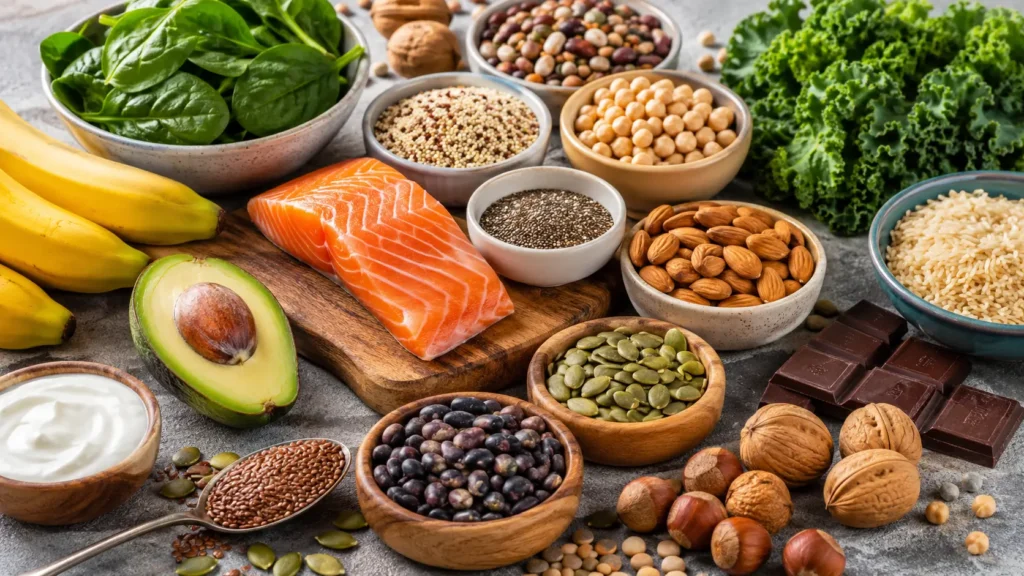
Magnesium Rich Foods for Daily Diet
What Exactly Is Magnesium?
Magnesium is a naturally occurring element, listed on the periodic table under the symbol Mg. In its pure form, it’s a lightweight, silvery-gray metal. But the magnesium your body actually uses doesn’t show up as a chunk of metal — it exists as part of natural compounds found in food, water, and body tissue.
It belongs to a category of nutrients called essential minerals. “Essential” here has a specific meaning: your body has no way to manufacture it internally, so every bit of magnesium you have comes from what you eat or, occasionally, from a supplement. The amounts required are modest, but the payoff is outsized — this one mineral touches hundreds of biological processes that keep you running day to day.
When magnesium levels dip too low for too long, the effects ripple outward. Muscles, nerves, the heart, and even bone structure all depend on it to function the way they should. That’s the core reason keeping magnesium intake steady matters for long-term health.
Read More: Benefits of Curd for Skin and Hair: Does Eating It Help Naturally?
Disclaimer: I am not a doctor, and this article is written for general informational purposes only. Please talk to a qualified healthcare provider before making changes to your diet or starting any supplement.
What Is Magnesium and Why Does It Matter?
Magnesium is a mineral your body needs but cannot produce on its own. That means every bit of magnesium in your system has to come from the food you eat, or occasionally from a supplement. It’s classified as an “essential mineral” for exactly this reason — your body depends entirely on outside sources to get it.
Even though you only need a small amount each day, magnesium is involved in over 300 biochemical reactions in the body. It plays a role in:
- Muscle contraction and relaxation
- Nerve signaling
- Heart rhythm regulation
- Bone strength and structure
- Energy production at the cellular level
- Blood sugar regulation
- Protein synthesis and DNA maintenance
Because it touches so many systems, a diet that’s consistently low in magnesium can quietly affect how you feel, even if you don’t immediately connect the dots.
Natural Sources of Magnesium in Food
The good news is that magnesium is widely available in everyday foods, which means most people can meet their needs without any special supplements — as long as their diet includes enough variety. Here are some of the best natural sources of magnesium in food:
- Leafy greens – spinach, kale, and Swiss chard
- Nuts – almonds, cashews, and Brazil nuts
- Seeds – pumpkin seeds, chia seeds, and flaxseeds
- Whole grains – brown rice, oats, and quinoa
- Legumes – black beans, chickpeas, and lentils
- Soy foods – tofu and edamame
- Fruits – bananas and avocados
- Dark chocolate – especially varieties with 70% cocoa or higher
- Fatty fish – salmon and mackerel
- Dairy – yogurt and milk in moderate amounts
A simple way to boost your intake is to build meals around a mix of these foods rather than relying on just one or two. For example, a breakfast bowl of oats topped with pumpkin seeds and banana slices alone touches three different magnesium-rich ingredients.
Magnesium Rich Foods for Daily Diet Planning
If you’re trying to plan meals around magnesium rich foods for daily diet needs, it helps to think in terms of your three main meals plus snacks, rather than trying to eat one “magnesium superfood.” Here’s a simple way to structure a day:
Breakfast:
- Oatmeal with chia seeds and a sliced banana
- A handful of almonds on the side
Lunch:
- A spinach salad with chickpeas and avocado
- Whole grain bread
Dinner:
- Grilled salmon with brown rice
- Steamed kale or Swiss chard
Snacks:
- A square or two of dark chocolate
- Pumpkin seeds or a small handful of cashews
Spreading magnesium-rich ingredients across the day, rather than trying to load up in one sitting, tends to be a more realistic and sustainable approach for most people.
Common Signs of Low Magnesium Levels
Because magnesium is involved in so many body functions, low levels can show up in different ways depending on the person. Some commonly reported signs of low magnesium levels include:
- Frequent muscle cramps or twitches
- Persistent fatigue or low energy
- Trouble sleeping or restless nights
- Irregular heartbeat sensations
- Increased sensitivity to stress
- Headaches that seem to happen more often than usual
It’s worth noting that these signs can also be caused by many other factors unrelated to magnesium, so they shouldn’t be used to self-diagnose. If you notice a pattern of these symptoms, the most reliable next step is speaking with a healthcare provider, who can check your levels and rule out other causes.
How Much Magnesium Do You Need Daily?
Magnesium requirements vary based on age, sex, and life stage. While exact numbers can differ slightly depending on the source, general daily guidelines for adults typically fall in this range:
- Adult men: around 400–420 mg per day
- Adult women: around 310–320 mg per day
- Pregnant women: slightly higher than the general adult range
- Older adults: requirements stay similar to general adult guidelines, but absorption may decrease with age
These numbers are general reference points rather than personalized medical advice. Your own needs can vary based on activity level, health conditions, and medications, so it’s always best to confirm with a healthcare professional rather than relying solely on general figures found online.
Simple Tips to Get More Magnesium Naturally
If you’re looking for practical, low-effort ways to increase your intake of magnesium rich foods for daily diet purposes, consider these tips:
- Add seeds to your meals. A spoonful of chia or pumpkin seeds can be sprinkled onto yogurt, oatmeal, or salads without changing the flavor much.
- Swap white rice for brown rice or quinoa. This small change adds both magnesium and fiber.
- Keep a jar of nuts nearby. Almonds and cashews make an easy on-the-go snack.
- Cook with leafy greens regularly. Spinach and kale can be added to soups, stir-fries, or smoothies.
- Choose dark chocolate over milk chocolate. It’s a simple swap that adds a modest magnesium boost along with a treat.
- Stay consistent rather than perfect. Small, regular changes to your meals matter more than one “perfect” magnesium-rich day.
FAQs: Magnesium Rich Foods for Daily Diet
Can I get enough magnesium from food alone?
For most healthy adults eating a varied diet, yes — food is usually enough. Supplements are typically only needed if a healthcare provider identifies a specific deficiency.
What foods are highest in magnesium?
Pumpkin seeds, spinach, almonds, and dark chocolate are among the most concentrated natural sources of magnesium in food.
Does cooking reduce magnesium content in vegetables?
Boiling vegetables in water can cause some mineral loss, including magnesium. Steaming or roasting tends to preserve more of the nutrient content.
Is it possible to get too much magnesium from food?
Getting too much magnesium from food alone is rare, since the body regulates absorption naturally. Excess intake is more commonly associated with high-dose supplements.
Final Thoughts: Magnesium Rich Foods for Daily Diet
Magnesium may not be the most talked-about nutrient, but its impact on everyday energy, muscle function, and overall wellbeing is significant. The encouraging part is that boosting your intake doesn’t require anything complicated — simply building your meals around a wider variety of magnesium rich foods for daily diet needs, like leafy greens, seeds, whole grains, and legumes, is usually enough for most people.
Read More: LDL Cholesterol Explained: What Your Numbers Actually Mean