

If you are a woman over 30 who regularly suffers from debilitating head pain, you are not alone. What foods trigger migraine headaches in women over 30 is one of the most searched health questions worldwide — and for good reason. Diet plays a far bigger role in migraine frequency than most people realize.
This guide covers the top trigger foods, how to stop a migraine attack fast without medication at home, natural remedies for chronic migraine with aura symptoms, and the key difference between a tension headache and a migraine — so you can finally take control.
What Exactly Is a Migraine?
Before diving into triggers, it is important to understand what you are actually dealing with. A migraine is a neurological condition — not simply “a bad headache.” The pain is typically throbbing, often on one side of the head, and can last anywhere from 4 to 72 hours.
Migraines affect around 15% of the global population, and women are nearly three times more likely than men to experience them — particularly after age 30, when hormonal fluctuations increase significantly.
Read More: Which Food Preservatives Are Linked to Heart Disease? A 2026 Study of 112,000 People
Difference Between Tension Headache and Migraine — How to Tell
This is a question millions of people get wrong every day, and misidentifying your headache type leads to the wrong treatment.
| Feature | Tension Headache | Migraine |
|---|---|---|
| Pain type | Dull, pressing, tight band | Throbbing, pulsating |
| Location | Both sides of head | Usually one side |
| Nausea/vomiting | Rare | Very common |
| Light/sound sensitivity | Mild or none | Severe |
| Physical activity | Does not worsen pain | Worsens pain |
| Duration | 30 minutes – 7 days | 4 – 72 hours |
| Aura | Never | In ~25% of cases |
Key takeaway: If bright light makes your head pain unbearable, you are almost certainly dealing with a migraine — not a tension headache.
7 Worst Foods That Trigger Migraine Headaches in Women Over 30
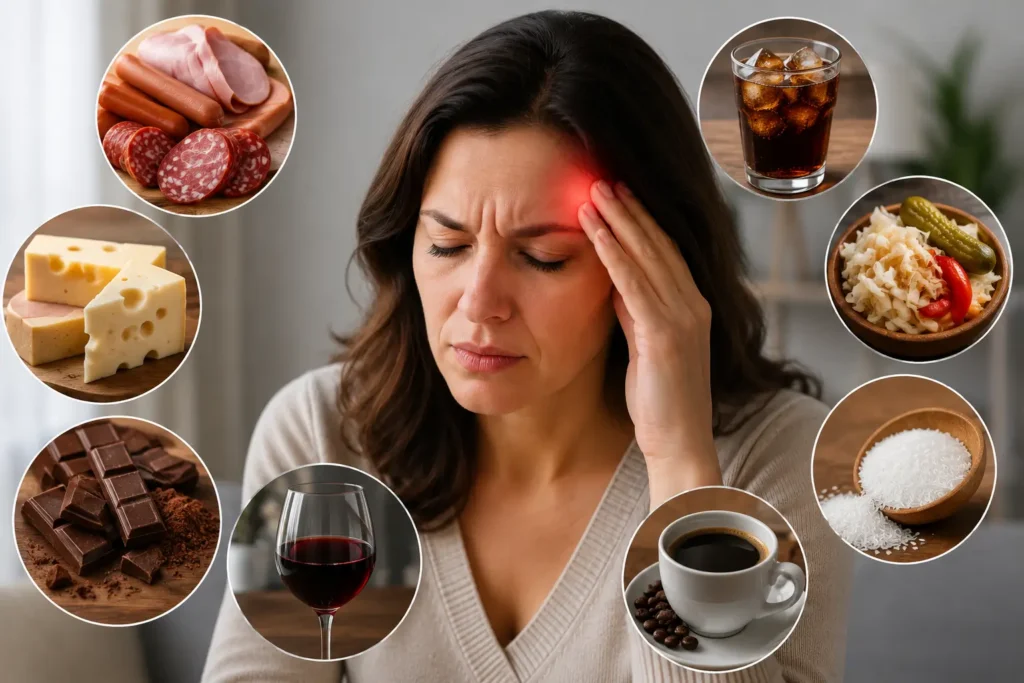
Research consistently shows that 20–30% of migraine sufferers have at least one consistent food trigger they have never identified. Here are the biggest dietary culprits:
1. Aged Cheese (Tyramine Overload)
Aged cheeses — cheddar, blue cheese, brie, parmesan, feta, and camembert — are among the most well-documented migraine triggers. The longer cheese ages, the more tyramine it accumulates. Tyramine causes blood vessels in the brain to dilate, which is a primary trigger for a migraine cascade in sensitive individuals.
Safe alternatives: Fresh mozzarella, ricotta, and cottage cheese are low in tyramine and generally safe to eat.
2. Processed and Cured Meats (Nitrates)
Hot dogs, salami, pepperoni, bacon, deli meats — these contain sodium nitrites and nitrates, preservatives that are well-known migraine triggers. If you regularly eat a sandwich with deli meat and wake up with head pain the next morning, your lunch may be the culprit.
3. Red Wine and Alcohol
Red wine is one of the most powerful dietary migraine triggers for women. It contains a triple threat: tyramine, tannins, and histamines — all of which have been linked to migraine onset. Even small amounts can trigger an attack within hours in susceptible individuals.
4. Chocolate
Chocolate contains both tyramine and caffeine, making it a complicated trigger. While small amounts of caffeine can occasionally help stop a migraine, the tyramine in chocolate often outweighs any benefit. Dark chocolate is a more frequent trigger than milk chocolate.
5. MSG-Containing Foods (Processed Snacks)
Monosodium glutamate (MSG) is found in many fast foods, packaged snacks, instant noodles, and Chinese restaurant food. MSG activates pain receptors and may directly provoke a migraine within 20 minutes to 2 hours of consumption.
6. Foods with Artificial Sweeteners (Aspartame)
Diet sodas, sugar-free gum, and many low-calorie packaged foods contain aspartame. Studies show aspartame can alter the brain’s pain threshold and trigger migraine attacks — particularly in women who already have a hormonal sensitivity to migraines.
7. Skipping Meals and Dehydration
This one surprises many people — it is not a food you eat, but a food you skip. Dehydration triggers migraines in approximately one-third of all sufferers. Dropping blood sugar from skipped meals is equally dangerous. Aim for at least 2 litres of water daily and never skip breakfast.
How to Stop a Migraine Attack Fast Without Medication at Home
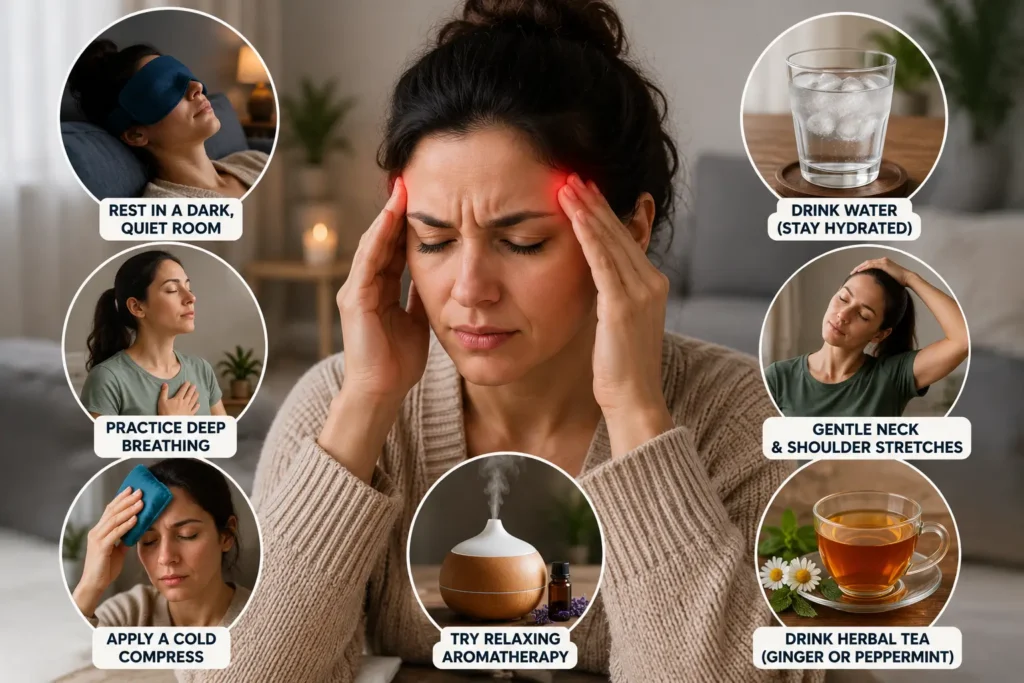
Once a migraine starts, every minute counts. Here are the most effective, evidence-backed natural approaches to stop a migraine attack fast without medication:
Cold Pack on the Temples or Back of the Neck
Applying a cold pack to your temples or the back of your neck provides immediate numbing relief. Cold constricts blood vessels and reduces the throbbing sensation within 10–15 minutes for many people. Wrap ice in a cloth — never apply directly to skin.
Dark, Quiet Room — Immediately
The fastest free remedy. Light and sound sensitivity is a defining feature of a migraine attack. Retreating to a dark, quiet room and lying down still — without screens — gives your overstimulated nervous system a chance to reset.
Ginger Tea or Ginger Powder
Ginger is one of the most powerful natural remedies for migraine-related nausea and can also reduce attack severity. A 2013 study found that ginger powder was nearly as effective as sumatriptan (a prescription migraine drug) in reducing migraine pain — without the side effects. Drink warm ginger tea at the first sign of an attack.
Peppermint Oil on the Temples
Peppermint oil applied to the temples and back of the neck improves blood flow and has a cooling, analgesic effect. Several studies confirm that peppermint oil application reduces migraine headache intensity within 15 minutes of application.
Natural Remedies for Chronic Migraine With Aura Symptoms
If you experience a migraine with aura, your attacks come with neurological warning signs before the headache hits. These include:
- Flashing lights, zigzag patterns, or blind spots in your vision
- Tingling or numbness in one hand or side of the face
- Difficulty speaking or finding words
- Muscle weakness on one side
Aura typically appears 10–60 minutes before the headache and lasts no longer than an hour. Importantly, those who experience aura may have a slightly higher cardiovascular risk — so lifestyle management is especially important.
Long-Term Natural Remedies for Chronic Migraine With Aura
Magnesium supplementation is the most evidence-supported natural preventive treatment available. A 2021 study found that 500mg of magnesium oxide taken twice daily was as effective as a prescription preventive medication for reducing migraine frequency. Foods high in magnesium include pumpkin seeds, dark leafy greens, almonds, and black beans.
Vitamin B2 (Riboflavin) at 400mg daily has been shown in multiple studies to significantly reduce migraine frequency over 3 months of consistent use.
Anti-Migraine Headaches Recipe Ideas: Easy Meals That Help Prevent Attacks
Magnesium Power Breakfast Bowl
- ½ cup oats cooked with almond milk
- 1 tablespoon pumpkin seeds (high in magnesium)
- ½ banana (potassium + B6)
- 1 teaspoon flaxseed (omega-3)
- Drizzle of raw honey
Why it works: Magnesium deficiency is one of the most common nutritional causes of migraines. This breakfast hits three key anti-Migraine Headaches nutrients in one bowl.
Final Thoughts
Managing Migraine Headaches naturally starts with understanding what foods trigger migraine headaches in women over 30 and systematically removing the most common culprits from your diet. Combine that with proven home remedies like ginger tea, cold packs, magnesium supplementation, and the SEEDS lifestyle framework, and many women see a dramatic reduction in both frequency and severity of attacks — without a single pill.
Read More: AI Heart Test ECG to Track Puberty Development in Children: What Parents Should Know