
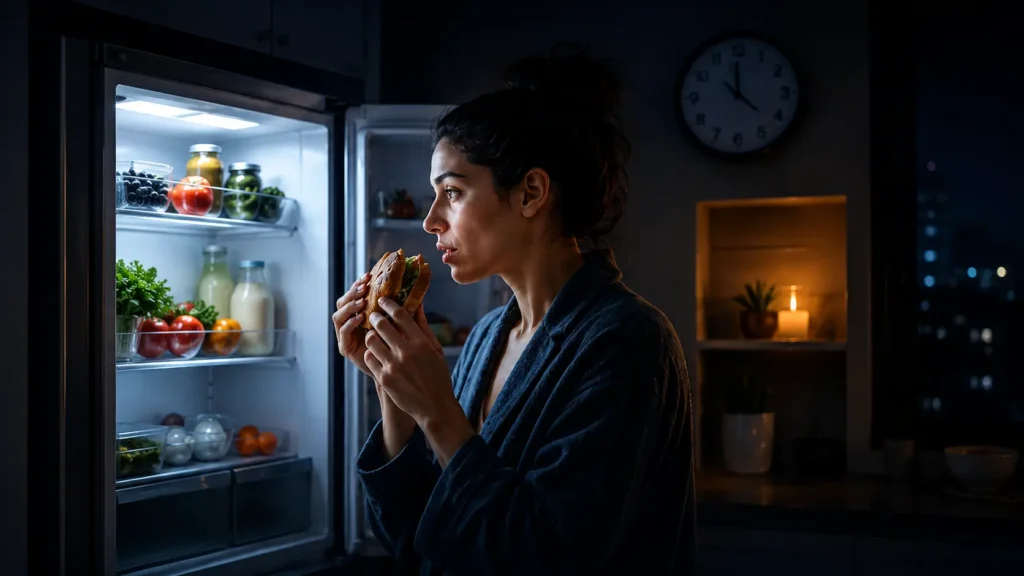
Gut Health & Late-Night Eating
Your Gut Has Its Own Internal Clock
The human gut isn’t just a passive tube that digests food. It operates on a sophisticated circadian rhythm — a biological 24-hour clock that governs when it’s primed to digest, absorb nutrients, and repair itself.
During daylight hours, your gut lining is more permeable and your digestive enzymes are actively secreted. As the sun sets, your gut literally begins to “wind down.” Stomach acid production slows, intestinal motility (the movement of food through the digestive tract) decreases, and your microbiome shifts into repair mode.
What Late-Night Eating Does to Your Gut Microbiome
Your gut is home to trillions of bacteria, fungi, and other microorganisms collectively known as the gut microbiome. This ecosystem is central to immunity, mood regulation, metabolism, and even cognitive function. Late-night eating disrupts it in several significant ways.
1. It Feeds the Wrong Bacteria
Processed snacks, refined carbohydrates, and sugary foods — the typical go-to choices at midnight — are fuel for harmful bacterial strains like Clostridium and Fusobacterium. These bacteria thrive on sugar and produce inflammatory compounds that can irritate the gut lining.
2. It Reduces Microbial Diversity
Research consistently shows that eating at biologically inappropriate times reduces the diversity of gut bacteria. A less diverse microbiome is strongly linked to conditions such as irritable bowel syndrome (IBS), obesity, type 2 diabetes, and even depression.
3. It Disrupts the “Cleansing Wave”
Between meals — and especially overnight — your gut undergoes a process called the migrating motor complex (MMC). This sweeping action clears undigested debris and harmful bacteria from the small intestine. Eating late interrupts the MMC, leading to bacterial overgrowth (a key cause of bloating and gas).
73% of late-night eaters report chronic bloating
2× higher acid reflux risk after 10 PM meals
38% reduction in GHRELIN regulation with late eating
Read More: AI-Powered Personalized Yoga: Benefits for Your Health in 2026
The Gut-Sleep-Digestion Triangle
Digestion and sleep are deeply interconnected through the gut-brain axis — a bidirectional communication network linking the enteric nervous system (your “second brain” in the gut) to the central nervous system.
- Poor sleep → Poor gut health: Sleep deprivation reduces levels of Lactobacillus and other beneficial bacteria.
- Late eating → Poor sleep: A full stomach elevates core body temperature, interfering with the sleep-onset process.
- Disrupted gut → More cravings: An imbalanced microbiome increases cravings for high-sugar, high-fat foods — especially at night.
This creates a vicious loop: you eat late, sleep poorly, your gut bacteria suffer, which increases nighttime hunger the next evening. Breaking this cycle starts with understanding it.
Signs Your Late-Night Eating Is Hurting Your Gut
Your body communicates gut distress in subtle — and not so subtle — ways. Watch for:
- Persistent morning bloating or a “food baby” belly upon waking
- Acid reflux or heartburn shortly after lying down
- Loose stools or constipation without clear dietary cause
- Fatigue and brain fog in the mornings despite adequate sleep
- Unexplained skin breakouts (gut-skin axis inflammation)
- Strong sugar cravings before bed, night after night
6 Science-Backed Tips to Stop Late-Night Eating (and Heal Your Gut)
01. Set a Kitchen Curfew
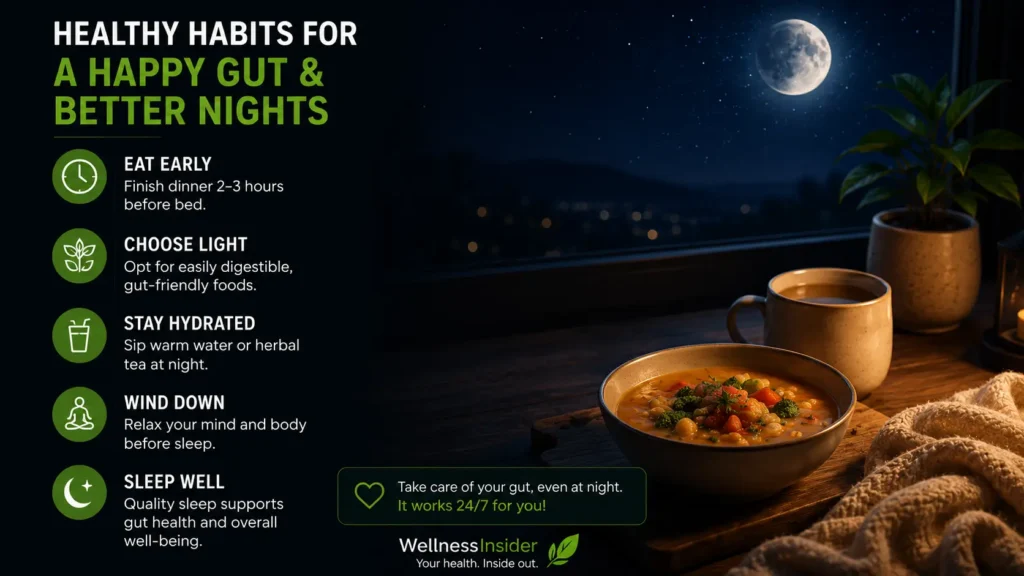
Close the kitchen 2–3 hours before bed. Pair this with a “shutdown ritual” like herbal tea to signal your brain that eating is done.
02. Eat a Protein-Rich Dinner
Protein and fibre slow gastric emptying, keeping you satiated longer. Include lentils, eggs, or Greek yoghurt in your evening meal.
03. Hydrate Strategically
Nighttime hunger is often thirst in disguise. Drink a glass of water or warm broth before assuming you’re hungry.
04. Feed Your Microbiome Daily
Fermented foods (kefir, kimchi, miso) and prebiotic fibres (garlic, oats, bananas) support healthy bacteria that regulate appetite.
05. Try Time-Restricted Eating
A 12–14 hour overnight fast (e.g., 7 PM to 7 AM) aligns eating with your circadian rhythm and allows the MMC to do its job.
06. Address Stress — Not Hunger
Most late-night eating is emotional. A 5-minute breathing exercise or journaling session can break the cortisol-craving loop.
Final Thoughts
Your gut is one of the most hardworking organs in your body — and one of the most time-sensitive. Late-night eating isn’t just a calorie problem; it’s a biological timing problem that disrupts your microbiome, your sleep, and your metabolic health in deeply interconnected ways.
The good news? Small, consistent shifts — closing the kitchen earlier, eating more fibre-rich meals, and managing stress — can meaningfully restore gut rhythm within weeks. Your gut health doesn’t require perfection. It requires consistency, respect for its natural clock, and the willingness to listen to what your body is actually telling you.
Start tonight. Your gut will thank you by morning.
Read More: Women’s Burnout in 2026: 5 Symptoms Every Working Woman Should Know