
Health Benefits of Guava Fruit
Walk through any fruit market and you will see oranges, apples and bananas stacked high. Guava often sits quietly in the corner. That is a shame, because the health benefits of guava fruit are impressive for something so affordable and easy to find.
Read More: 12-3-30 Walking Workout Benefits: Beginner’s Winter Guide
What Is Guava?
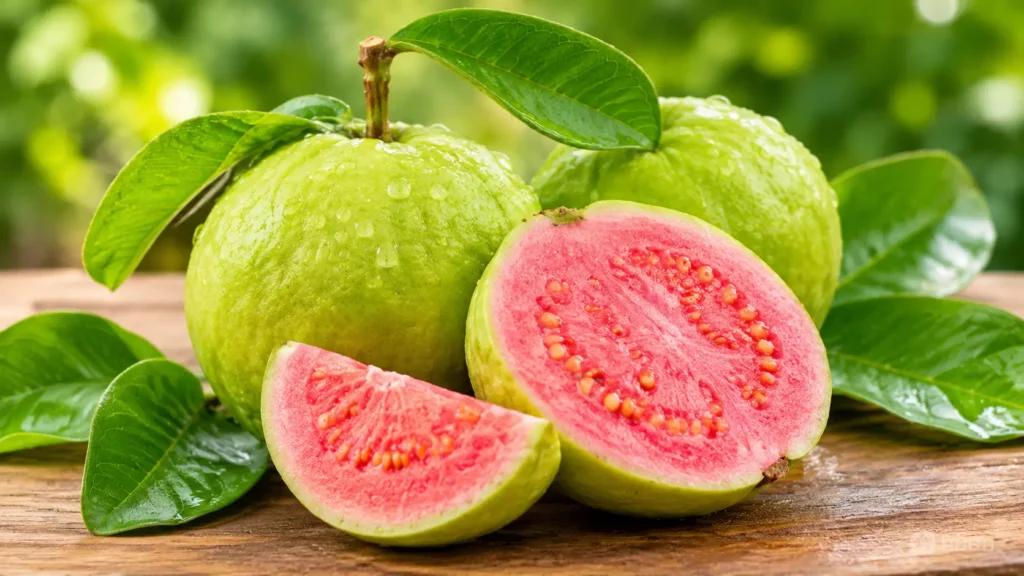
Guava (Psidium guajava) is a small tree native to Central America and parts of South America, now grown widely in India, Southeast Asia, Africa and the southern United States. The fruit is round or oval, with thin skin that ranges from green to yellow when ripe.
Inside, the flesh can be white, pink or deep red, depending on the variety. The center holds many small, hard, edible seeds. Pink guava gets its color from lycopene, the same pigment found in tomatoes and watermelon.
People eat guava fresh, blended into juice, cooked into jam or sliced into salads. The skin, flesh and seeds are all edible, and Guava Nutrition Facts and Fiber Content.
Disclaimer: This article is for educational purposes only and is not a substitute for professional medical advice, diagnosis or treatment. Always consult a qualified healthcare provider about your health.
Guava Nutrition Facts and Fiber Content
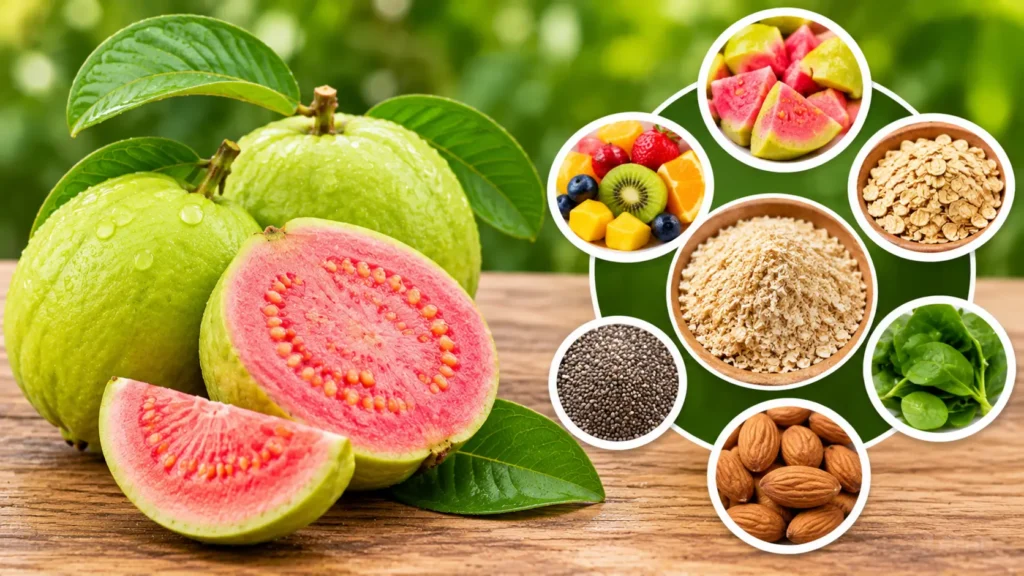
To understand why guava is considered a nutrient-dense fruit, let us look at the numbers. According to USDA FoodData Central, raw common guava provides roughly the following per 100 grams (about one medium fruit, or slightly less):
| Nutrient | Approx. amount per 100 g |
|---|---|
| Calories | 68 kcal |
| Carbohydrates | 14 g |
| Dietary fiber | 5.4 g |
| Sugar | 9 g |
| Protein | 2.6 g |
| Fat | 1 g |
| Vitamin C | 228 mg |
| Potassium | 417 mg |
| Folate (vitamin B9) | 49 mcg |
Values are approximate and vary by variety, ripeness and size.
How Much Fiber Does Guava Have?
The fiber story is where guava really stands out. A single cup of chopped guava (about 165 grams) contains roughly 9 grams of fiber. Many adults fall short of daily fiber goals, which are commonly cited as about 25 grams for women and 38 grams for men. One cup of guava could cover more than a third of that target.
Guava contains both types of fiber:
- Soluble fiber dissolves in water and forms a gel-like substance. It is associated with slower digestion and a steadier feeling of fullness.
- Insoluble fiber adds bulk to stool and helps food move through the digestive tract.
This mix is one reason guava is so often linked with digestive health, which we will cover next.
Other Nutrients Worth Noting
Beyond fiber and vitamin C, guava offers potassium, folate, small amounts of vitamin A and vitamin E, and minerals like magnesium and copper. Pink and red guavas also provide lycopene, an antioxidant studied for its role in protecting cells from oxidative stress.
Is Guava Good for Digestion?
This is one of the most common questions people ask, and the short answer is: for most people, yes, guava good for digestion, mainly thanks to its fiber.
Fiber and Regular Bowel Movements
Insoluble fiber helps add bulk and softness to stool, which can make bowel movements easier and more regular. The Mayo Clinic and other health organizations note that adequate fiber intake helps prevent constipation. Because guava is so fiber-rich for its size, eating it regularly may help people who struggle to meet their daily fiber needs.
Water matters too. Guava Nutrition Facts and Fiber Content works best when you drink enough fluids, so increase your water intake as you eat more fiber-rich foods like guava.
Feeding Your Gut Bacteria
Your gut is home to trillions of bacteria. Some of the fiber in fruits like guava is fermented by these microbes, and this process produces short-chain fatty acids that help nourish the cells lining the colon. While research on guava specifically is still developing, a fiber-rich diet in general is linked with a healthier gut environment.
Fullness and Weight Management
Guava is low in calories but high in fiber, which can help you feel full for longer. Replacing a high-calorie, low-fiber snack with a guava is a simple swap that may support healthy weight goals as part of an overall balanced diet.
A Word of Caution for Sensitive Stomachs
Guava is not perfect for everyone. The seeds and high fiber can cause gas, bloating or discomfort in some people, especially if you suddenly eat a lot. People with irritable bowel syndrome or other digestive conditions may react differently. Start with half a fruit, see how your body responds, and increase slowly. Also avoid eating very unripe guava in large amounts, as it can be harder to digest.
One more common mention is guava leaf tea for diarrhea. Some small studies have explored this, but the evidence is limited, and persistent diarrhea should always be checked by a doctor.
Guava Vitamin C Benefits for Adults
If there is one nutrient that made guava famous, it is vitamin C. With about 228 mg per 100 grams, guava provides several times more vitamin C than an orange, which has roughly 50 mg per 100 grams. That is where the popular claim of guava having nearly four times the vitamin C of an orange comes from.
For context, the recommended daily intake for adults is about 90 mg for men and 75 mg for women, according to the NIH Office of Dietary Supplements. Smokers need an extra 35 mg a day. A single guava can easily meet or exceed these amounts.
Immune System Support
Vitamin C is an essential nutrient that helps the immune system work normally. It supports the function of several types of immune cells and acts as an antioxidant. It is important to be realistic here: getting enough vitamin C helps your body function well, but there is no solid evidence that eating extra vitamin C prevents colds. Some research suggests it may slightly shorten the length of a cold in some people, but it is not a cure or a shield.
Collagen and Skin Health
Your body needs vitamin C to make collagen, the protein that gives structure to skin, blood vessels, tendons and bones. Vitamin C also helps with wound healing. Eating vitamin C-rich foods as part of a balanced diet supports these normal processes.
Better Iron Absorption
Vitamin C helps your body absorb non-heme iron, the type found in plant foods like beans, lentils and spinach. Pairing a guava with an iron-rich plant meal is a smart habit, especially for vegetarians and people with low iron intake.
Antioxidant Protection
Antioxidants help neutralize unstable molecules called free radicals. Vitamin C, together with lycopene and polyphenols in guava, contributes to your body’s defenses against oxidative stress. Food sources are generally considered a better choice than high-dose supplements for most healthy adults.
Guava and Heart Health
Heart disease is a leading cause of death worldwide, and diet is one of the factors within our control. Guava contains several nutrients linked to cardiovascular health.
Potassium and Blood Pressure
Potassium helps balance the effects of sodium and supports normal blood pressure. Many people do not get enough of it. One cup of guava offers around 680 mg of potassium, which is a meaningful contribution toward daily needs.
Fiber and Cholesterol
Soluble fiber can bind to cholesterol in the digestive tract and help carry it out of the body. Diets high in fiber are consistently linked with better cholesterol levels. Some small human studies have looked at guava specifically and found modest improvements in cholesterol and blood pressure, but the research is limited and results are not guaranteed.
Antioxidants and Blood Vessels
Lycopene and vitamin C may help protect blood vessels from oxidative damage. This is an area of ongoing research, so guava should be viewed as one helpful part of a heart-healthy lifestyle and not a treatment on its own.
Low in Fat and Sodium
Fresh guava is naturally low in fat and almost free of sodium. This makes it a better snack than many processed foods that raise salt and saturated fat intake.
Other Possible Benefits of Guava
Blood Sugar Friendliness
Guava has a relatively low glycemic index compared with many fruits, and its fiber slows sugar absorption. Some studies suggest guava may help blunt blood sugar spikes. However, people with diabetes should still watch portions and talk to their healthcare provider, especially if they take glucose-lowering medication.
Eye and Skin Support
Guava provides small amounts of vitamin A and antioxidants that support normal vision and skin. The vitamin C content also helps the skin maintain its structure, as mentioned earlier.
FAQs: Health Benefits of Guava Fruit
What are the main health benefits of guava fruit?
Guava is a good source of vitamin C, fiber, potassium and antioxidants. These nutrients support normal immune function, digestion and a heart-healthy diet.
Is guava good for digestion every day?
For most people, eating one guava a day is fine and may help meet fiber needs. If you notice gas or bloating, reduce the portion and drink more water.
Does guava have more vitamin C than an orange?
Yes. Per 100 grams, guava has roughly four times the vitamin C of an orange, based on USDA data.
Final Thoughts: Health Benefits of Guava Fruit
The health benefits of guava fruit come down to a simple, nutrient-rich package: lots of vitamin C, plenty of fiber, helpful potassium and protective antioxidants, all for very few calories. Whether you want to support digestion, meet your daily vitamin C needs or add more heart-friendly foods to your plate, guava good for digestion an easy and affordable choice.
Read More: Why Do My Eyes Feel Dry in Winter? 9 Causes & Fixes