
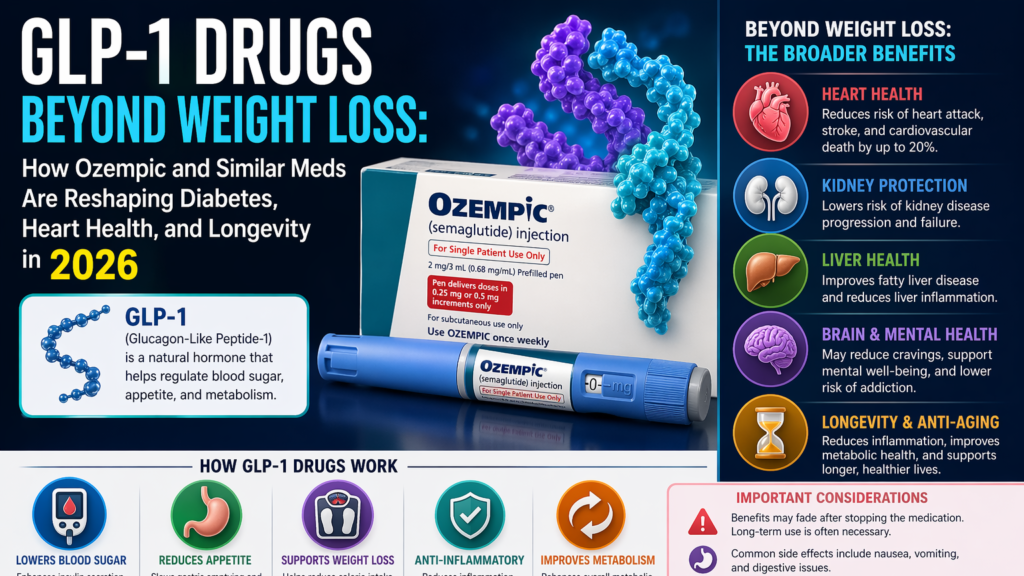
Introduction: GLP-1 Drugs Beyond Weight Loss
Over the past few years, GLP-1 receptor agonists like Ozempic (semaglutide) have exploded in popularity—initially as breakthrough treatments for type 2 diabetes and later as powerful weight-loss solutions. But in 2026, science is revealing something far more transformative: these drugs may be reshaping how we treat heart disease, kidney failure, metabolic disorders, and even aging itself.
What started as a glucose-control therapy is now evolving into a multi-system longevity intervention. From reducing cardiovascular risk to improving inflammation and organ health, GLP-1 drugs are redefining modern medicine.
What Are GLP-1 Drugs?
GLP-1 (glucagon-like peptide-1) receptor agonists mimic a natural hormone that regulates:
- Blood sugar levels
- Appetite and satiety
- Insulin secretion
Popular GLP-1 medications include:
- Ozempic (semaglutide)
- Wegovy (Weight Loss version of semaglutide)
- Mounjaro (tirzepatide)
These drugs were originally designed for diabetes—but their system-wide metabolic effects have unlocked far broader uses.
Beyond Weight Loss: A New Medical Revolution
1. Cardiovascular Protection: A Game-Changer
One of the most important discoveries is the direct heart-protective effect of GLP-1 drugs.
- Clinical trials show semaglutide reduces major cardiovascular events (heart attack, stroke, death) by 14–20%
- In high-risk patients, reductions can reach ~20% even without diabetes
- Real-world data suggests up to 15% lower risk of heart events and 19% lower kidney failure risk
Crucially, these benefits are not just due to weight loss—they appear to come from:
- Anti-inflammatory effects
- Improved blood vessel function
- Direct action on heart tissue
This is why cardiologists now view GLP-1 drugs as cardiometabolic therapies, not just diabetes medications.
2. Heart Failure and Post-Heart Attack Recovery
Emerging research shows GLP-1 drugs may:
- Reduce heart failure hospitalizations
- Improve outcomes after heart attacks
- Potentially prevent complications like “no-reflow” (blocked microvessels)
This opens the door to using GLP-1 drugs in emergency and acute cardiac care, not just chronic disease.
3. Kidney and Liver Protection
GLP-1 medications are now being studied as organ-protective therapies:
- Lower risk of chronic kidney disease progression
- Improve fatty liver disease (MASH/NASH)
- Reduce metabolic stress on organs
Some trials were even stopped early because of overwhelming positive results in kidney outcomes
4. Longevity and Anti-Aging Potential
The biggest shift in 2026 is the idea that GLP-1 drugs may support longer, healthier lives.
Research suggests they can:
- Reduce systemic inflammation (a key aging driver)
- Improve metabolic flexibility
- Lower risk of multiple chronic diseases simultaneously
Scientists are beginning to frame these drugs as “multi-disease modifiers” rather than single-purpose treatments.
5. Brain, Addiction, and Mental Health Effects
GLP-1 receptors are also present in the brain—leading to surprising findings:
- Reduced cravings for alcohol and drugs
- Lower risk of substance-use disorders
- Possible cognitive and neurological benefits
This suggests GLP-1 drugs may influence dopamine and reward pathways, opening new fields in psychiatry.
The Catch: Benefits Depend on Continuous Use
While the benefits are impressive, there’s a major limitation:
- Stopping GLP-1 drugs can reverse cardiovascular benefits quickly
- Risk of heart attack, stroke, and death increases after discontinuation
- Benefits may fade within months to 18 months
This means GLP-1 therapy is likely a long-term or lifelong treatment, similar to blood pressure or cholesterol medication.
Risks and Side Effects in 2026
Despite the hype, GLP-1 drugs are not risk-free:
Common Side Effects:
- Nausea and vomiting
- Digestive issues
- Appetite suppression leading to nutrient imbalance
Emerging Concerns:
- Loss of lean muscle mass (in some drugs)
- Possible bone density issues
- High cost and accessibility barriers
Experts emphasize these drugs should be used under medical supervision, especially for long-term therapy.
GLP-1 vs Traditional Treatments
GLP-1 drugs are not replacing existing treatments—but enhancing them.
Doctors still recommend:
- Blood pressure control
- Cholesterol management
- Lifestyle changes (diet + exercise)
GLP-1 drugs work best as part of a holistic health strategy, not a standalone miracle solution
The Future of GLP-1 Drugs in 2026 and Beyond
The pipeline is rapidly expanding, with research exploring:
- Oral GLP-1 pills (more accessible than injections)
- Combination therapies (GLP-1 + GIP + glucagon)
- Personalized medicine based on genetics
We may soon see GLP-1 drugs used for:
- Preventive medicine
- Anti-aging therapies
- Multi-disease management programs
Conclusion
GLP-1 drugs like Ozempic are no longer just about weight loss—they are transforming how we approach chronic disease, cardiovascular health, and longevity.
In 2026, they represent one of the most important breakthroughs in modern medicine because they:
- Treat multiple diseases at once
- Reduce major causes of death
- Offer a pathway toward longer, healthier lives
However, they are not a shortcut. The real power of GLP-1 drugs lies in combining them with lifestyle changes and long-term care.
Read More:- GLP-1 Medication Side Effects Long Term — 7 Shocking Truths and How to Manage Them Naturally