

FDA Approved Peptide Medications 2026
FDA approved peptide medications 2026 have quietly become one of the biggest stories in medicine this year. What used to be a niche corner of pharmacology — short chains of amino acids acting as chemical messengers in the body — is now behind some of the most talked-about weight-loss drugs on the market, plus a growing list of therapies for diabetes, bone health, and rare hormonal conditions.
But “peptide” has also become a buzzword. Wellness clinics and online sellers now market dozens of compounds as “peptide therapy,” even though most of them have never been reviewed or approved by the FDA. That gap between what’s actually approved and what’s simply trending is where a lot of confusion — and risk — comes from.
This guide breaks down what’s actually real. We’ll walk through FDA approved peptide medications 2026, what the research says about peptide therapy for weight loss benefits, how a semaglutide vs peptide therapy comparison actually shakes out, and what’s currently known about the best peptides for anti-aging results.
A quick note before we start: I’m not a doctor, and this article isn’t medical advice. Peptide therapy involves prescription medications and, in many cases, substances that aren’t FDA-regulated at all — so please talk to a licensed healthcare provider before starting anything you read here.
Read More: Easy Diabetic-Friendly Breakfast Recipes Under 10 Minutes (No Sugar Added)
What Exactly Is a Peptide?
Peptides are short chains of amino acids — the same building blocks that make up proteins, just smaller. Your body already makes hundreds of them naturally. They act like chemical messengers, telling cells to do things like regulate blood sugar, control appetite, repair tissue, or release hormones.
Because peptides are so good at “talking” to specific receptors in the body, drug companies have spent decades turning them into medications. Insulin was one of the first. Today, some of the best-selling drugs in the world — including weight-loss injections — are peptide-based.
But here’s the part that trips people up: not every peptide sold as a “peptide therapy” today is actually a drug. Some are approved medications with your doctor’s signature required. Others are sold online as “research chemicals” with no FDA oversight at all. Knowing the difference matters for your safety and your wallet.
FDA Approved Peptide Medications 2026: The Real List
Let’s clear up the confusion first. As of 2026, there are dozens of peptide-based drugs with genuine FDA approved peptide medications 2026, but only a handful are relevant to weight loss and body composition. Here’s what’s actually approved:
- Semaglutide (Ozempic, Wegovy, Rybelsus) — approved for type 2 diabetes and chronic weight management
- Tirzepatide (Mounjaro, Zepbound) — approved for type 2 diabetes, weight management, and obstructive sleep apnea
- Liraglutide (Saxenda, Victoza) — an earlier GLP-1 peptide approved for diabetes and weight loss
- Dulaglutide (Trulicity) — approved for type 2 diabetes management
- Tesamorelin (Egrifta) — approved specifically to reduce visceral fat in people with HIV-associated lipodystrophy, not for general weight loss
- Teriparatide — approved for osteoporosis, not weight or anti-aging use
- Afamelanotide (Scenesse) — approved for a rare light-sensitivity disorder
Notice what’s missing? Nothing here is FDA-approved specifically as an “anti-aging” treatment. That’s an important distinction we’ll come back to.
It’s also worth knowing that 2026 has been an active year for peptide regulation. The FDA’s Pharmacy Compounding Advisory Committee met in late July 2026 to review several additional peptides for compounding eligibility, following an earlier decision to remove a dozen peptides from a restricted substances list. Removal from a restricted list is not the same thing as FDA drug approval — it simply changes what a compounding pharmacy is allowed to prepare under a doctor’s prescription. If you’re evaluating any peptide clinic or product, it’s worth double-checking current status directly with the FDA rather than trusting a seller’s claims.
Peptide Therapy for Weight Loss Benefits
This is where the real, well-documented evidence lives. GLP-1 receptor agonists like semaglutide and tirzepatide are technically peptide drugs, and they’ve produced results that genuinely surprised researchers.
Here’s what clinical trials have generally shown for the FDA-approved options:
- Significant body weight reduction — clinical trial participants have lost anywhere from roughly 15% to over 20% of their starting body weight on the higher-dose formulations
- Appetite and craving control — these medications slow digestion and act on brain signals that regulate hunger, which is why many users describe feeling full faster
- Blood sugar improvements — most of these peptides were originally developed for type 2 diabetes, so improved glucose control is a core benefit
- Cardiovascular support — semaglutide, in particular, has been associated with reduced cardiovascular risk in people with existing heart disease who are also overweight or living with obesity
- Sustained, gradual weight loss — unlike crash diets, the weight loss tends to happen steadily over months rather than all at once
That said, Peptide Therapy for Weight Loss Benefits isn’t magic and it isn’t risk-free. Common side effects include nausea, constipation, and digestive discomfort, especially when starting or increasing a dose. There are also less common but more serious risks that a prescribing doctor needs to screen for, which is exactly why these medications require a prescription rather than being sold over the counter.
How Do Weight-Loss Peptides Actually Work in the Body?
It helps to understand the mechanism, because it explains both why these medications work so well and why they need medical supervision.
GLP-1 receptor agonists like semaglutide and tirzepatide mimic a natural gut hormone called glucagon-like peptide-1. Normally, this hormone is released after you eat, and it does three main jobs:
- Signals the pancreas to release insulin when blood sugar rises
- Slows down how quickly food moves through the stomach, so you feel full longer
- Acts on appetite centers in the brain to reduce hunger signals
By binding to the same receptors your body’s natural GLP-1 uses, these peptide drugs amplify that effect for an entire week per injection. Tirzepatide goes a step further by also activating a second hormone receptor (GIP), which appears to add extra metabolic benefit — part of why it has shown slightly larger average weight loss in trials compared to semaglutide alone.
This is also why the side effects tend to cluster around digestion — nausea, bloating, or constipation happen because the medication is deliberately slowing gut motility. It’s not a flaw in the drug; it’s the mechanism doing its job, which is exactly why dose increases are usually gradual and supervised.
Semaglutide vs Peptide Therapy Comparison
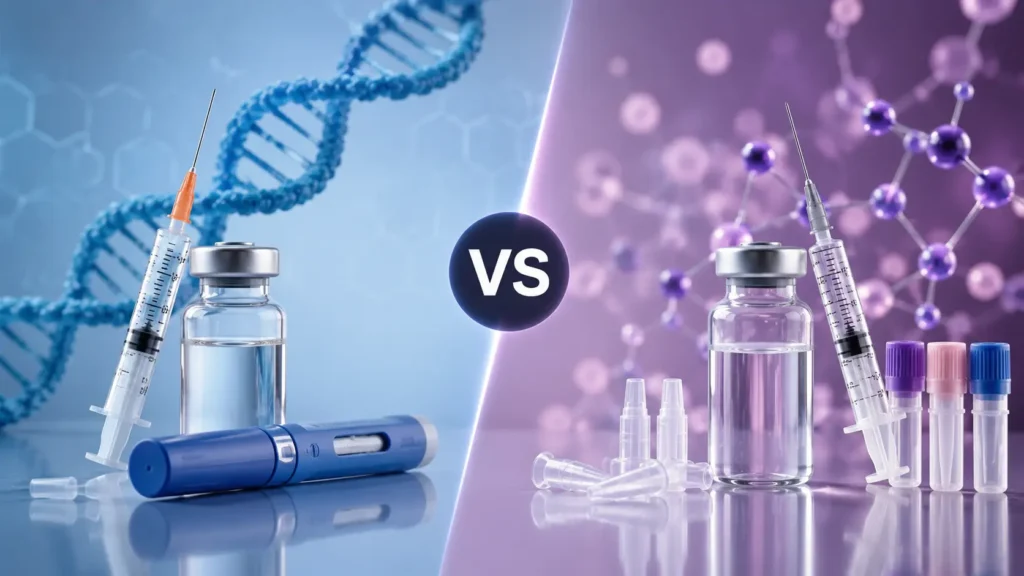
People often use “peptide therapy” as a catch-all term, which causes a lot of mix-ups. A fair semaglutide vs peptide therapy comparison really depends on what you mean by “peptide therapy” — an FDA-approved GLP-1 drug, or the broader wellness-clinic category that includes unregulated compounds.
| Factor | Semaglutide (FDA-Approved GLP-1) | Broader “Peptide Therapy” (e.g., BPC-157, GHK-Cu, growth hormone secretagogues) |
|---|---|---|
| Regulatory status | FDA-approved for diabetes and chronic weight management | Mostly not FDA-approved; often sold as compounded or “research use only” |
| Clinical evidence | Backed by large, multi-year randomized trials | Ranges from limited human trials to animal studies only |
| Access | Requires a prescription from a licensed provider | Varies — sometimes prescribed off-label by a clinic, sometimes sold online with no oversight |
| Primary use case | Weight management, type 2 diabetes, cardiovascular risk reduction | Marketed for muscle recovery, gut healing, skin, longevity, and more |
| Quality control | Manufactured under strict pharmaceutical standards | Can vary widely in purity and dosing accuracy, especially from online sellers |
The bottom line: semaglutide has the strongest evidence base of any peptide currently marketed for weight loss. Many other “peptide therapy” products borrow credibility from that success without having anywhere near the same level of research behind them.
Best Peptides for Anti-Aging Results: What the Evidence Actually Shows
This is the category that needs the most caution, so let’s be direct: there is currently no peptide that the FDA has approved specifically as an anti-aging treatment. None. What you’ll find instead is a mix of approved drugs being used off-label, and unapproved compounds sold through wellness clinics or online.
Some of the peptides most commonly discussed for anti-aging and longevity purposes include:
- BPC-157 — widely discussed for tissue repair and inflammation; evidence is mostly limited to animal studies, and it’s classified as an unapproved substance by anti-doping authorities
- GHK-Cu — a copper-binding peptide found in some topical skincare products; not approved for injectable or systemic anti-aging use
- Sermorelin and ipamorelin — growth-hormone-releasing peptides sometimes used off-label in longevity clinics; not FDA-approved for anti-aging
- MOTS-c — a mitochondrial-derived peptide studied for metabolic health; human evidence is still early
- Tesamorelin — the one exception with a genuine FDA approval, but only for visceral fat reduction in a specific medical population, not general anti-aging
If a provider tells you a peptide will “reverse aging,” that’s a claim regulators would flag, not a fact backed by strong clinical evidence. Some of these compounds may eventually earn approval as more research comes in — but “eventually” and “right now” are very different things, and 2026’s regulatory landscape has been shifting month to month.
Because so much of this category is unregulated, sourcing matters enormously. Reports of contamination, incorrect dosing, and adverse reactions are disproportionately linked to peptides purchased from unverified online sellers rather than licensed pharmacies.
Safety Questions Worth Asking Before You Start
Whether you’re considering an FDA approved peptide medications 2026 or exploring the broader peptide space, a few questions can help protect you:
- Is this specific peptide FDA-approved for the use I’m considering, or is it being prescribed off-label?
- Where is it being sourced, and is that pharmacy or supplier licensed and verifiable?
- What side effects or interactions should I watch for given my current health conditions and medications?
- What monitoring (bloodwork, follow-up visits) will be part of my treatment plan?
- Is there peer-reviewed human research behind this peptide, or mostly animal studies and anecdotes?
A provider who welcomes these questions and answers them clearly is generally a good sign. One who brushes past them, or leans heavily on testimonials instead of data, is a red flag.
FAQs: FDA approved peptide medications 2026
Are peptides for weight loss safe? FDA-approved options like semaglutide and tirzepatide have well-documented safety profiles from large clinical trials, though they can cause side effects like nausea and digestive upset. Unregulated peptides sold outside licensed pharmacies carry considerably more risk, since purity and dosing aren’t guaranteed.
Is BPC-157 FDA approved? No. BPC-157 remains an unapproved compound in the United States. Its regulatory status for pharmacy compounding has been under active review in 2026, but that’s separate from full FDA drug approval.
What’s the real difference between Semaglutide vs Peptide Therapy Comparison? Semaglutide is one specific, rigorously tested peptide drug with FDA approval. “Peptide therapy” is a broader marketing term that can include anything from approved medications to unregulated research compounds, so it’s worth asking exactly which peptide is being discussed.
Do any peptides have FDA approval for Best Peptides for Anti-Aging Results? Not currently. Some peptides are approved for narrow medical uses that overlap with body composition, like tesamorelin for visceral fat in a specific condition, but there is no peptide approved by the FDA as a general anti-aging treatment.
Final Thoughts: FDA approved peptide medications 2026
Peptide therapy sits at an interesting crossroads in 2026 — part genuine medical breakthrough, part unregulated wellness trend. The FDA-approved side of this story, led by semaglutide and tirzepatide, has real clinical trial data behind it and has changed how weight management is approached. The anti-aging side of the peptide world is moving fast, but the evidence hasn’t caught up to the marketing yet.
Read More: How to Lower Blood Sugar Naturally Without Medication: Complete Prediabetes Diet Plan (2026)