
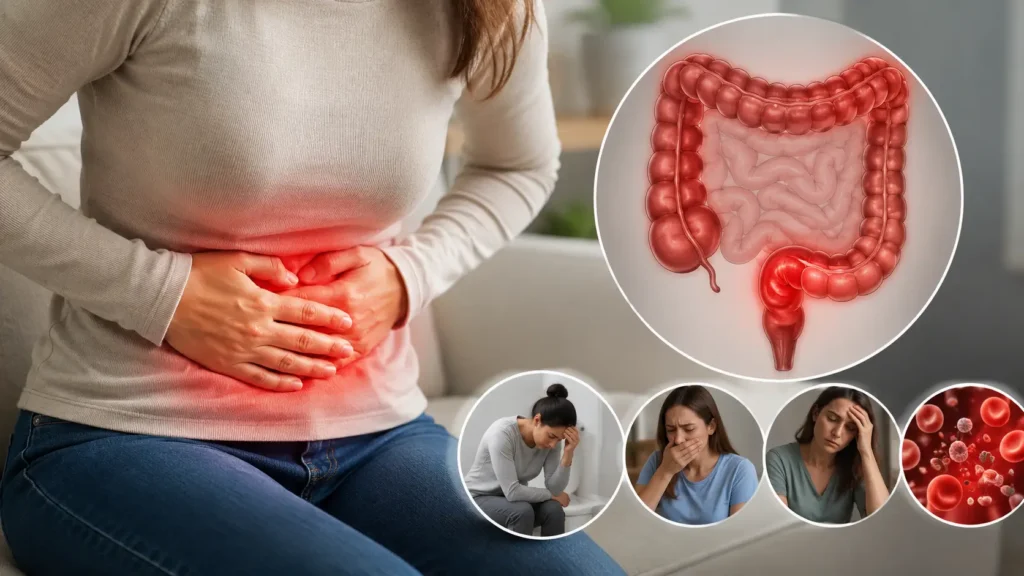
Introduction: What You Need to Know About Ulcerative Colitis
Digestive issues are more common than people realize, but when persistent symptoms appear, they deserve attention. One condition that affects millions worldwide is ulcerative colitis – a form of inflammatory bowel disease that impacts daily life significantly.
I’ve researched this topic extensively to help you understand what’s happening in your body and how to navigate it. Whether you’re experiencing concerning symptoms or simply want to educate yourself, this guide covers the essentials.
The truth is, early signs and symptoms of ulcerative colitis to watch for can be subtle at first. Many people dismiss initial warning signs as routine digestive problems. That’s exactly why this information matters – catching things early allows for better management and improved quality of life.
Disclaimer: This article is informational and educational. I am not a doctor. If you suspect you have ulcerative colitis or any medical condition, please consult with a qualified healthcare professional. This content should not replace professional medical advice.
Read More: Best Supplements for Joint Pain and Arthritis Relief | Natural Vitamins for Joint Health 2026
Understanding Ulcerative Colitis – The Basics
Before diving into symptoms, let’s establish what ulcerative colitis actually is.
Ulcerative colitis is an inflammatory bowel disease (IBD) that affects your colon and rectum. Unlike some digestive conditions, this one involves your immune system attacking the lining of your digestive tract, causing inflammation and ulcers.
Think of it this way: your immune system is supposed to protect you, but in UC cases, it mistakenly targets your gut lining as a threat. This ongoing inflammation creates problems that extend far beyond occasional discomfort.
Who Gets Ulcerative Colitis?
Ulcerative colitis can develop at any age, but it typically appears in people aged 15-40. That said, diagnosis at older ages is also common. Certain factors increase your risk:
- Family history of IBD
- Genetics
- Environmental factors
- Possibly diet and stress (though research continues)
How Common Is It?
Millions of people worldwide live with ulcerative colitis. In the United States alone, hundreds of thousands have received diagnoses. You’re definitely not alone if you’re dealing with this.
Early Signs and Symptoms of Ulcerative Colitis to Watch For
This is the critical section. Early signs and symptoms of ulcerative colitis to watch for are often dismissed as normal digestive issues. Here’s what actually matters:
Persistent Diarrhea – The Most Common Warning Sign
Diarrhea is the hallmark symptom that brings most people to seek medical attention.
With ulcerative colitis, diarrhea isn’t occasional – it’s persistent and frequent. You might experience 5-30 bowel movements daily in severe cases, though mild cases might involve 2-4 daily movements.
What makes UC-related diarrhea different:
- It occurs repeatedly, not just occasionally
- It happens even at night
- It’s accompanied by urgency (sudden, can’t-wait-need-to-go-now feeling)
- It often contains blood or mucus
This ongoing diarrhea can lead to dehydration and nutrient loss, which is why it matters.
Abdominal Pain and Cramping
Cramping and pain in your abdomen is another telltale sign. This isn’t mild discomfort – it can be significant and varies in severity.
The pain typically occurs in the lower left abdomen and lower abdomen generally. It often improves after bowel movements, then returns as stool accumulates again.
Blood in Stool – Take This Seriously
Seeing blood in your stool can be alarming, and rightfully so – it deserves investigation.
With ulcerative colitis, the inflammation and ulcers in your colon lining cause bleeding. This visible blood is a clear sign something needs professional attention.
Urgency and Straining
The urgent need to have bowel movements, sometimes several times within minutes, is characteristic of UC.
This urgency disrupts daily life. People with UC often find themselves unable to be far from a bathroom, which affects work, social activities, and overall quality of life.
Fatigue and Weakness
Beyond bathroom issues, many people report feeling unusually tired and weak.
This happens because:
- Frequent diarrhea causes dehydration
- Nutrient absorption is compromised
- Chronic inflammation drains your energy
- Sleep disruption (bathroom trips at night)
Weight Loss and Loss of Appetite
Some people notice unintentional weight loss accompanying their symptoms.
This occurs because:
- Digestive issues make eating uncomfortable
- Nutrients aren’t absorbed properly
- Inflammation suppresses appetite
- Your body is using extra energy to manage inflammation
Other Symptoms to Note
Additional symptoms sometimes appear:
- Rectal pain and bleeding
- Urgency accompanying cramping
- Fever (in moderate to severe cases)
- Joint pain
- Skin rashes
- Eye inflammation
How to Manage Ulcerative Colitis Symptoms Naturally – A Lifestyle Approach
Once you understand early signs and symptoms of ulcerative colitis to watch for, the next question becomes: what can you actually do?
Here’s the truth: while professional medical care is essential, lifestyle changes significantly impact how you feel daily. Let’s explore evidence-based strategies.
Stress Management Matters More Than You Think
Stress doesn’t cause ulcerative colitis, but it absolutely triggers flare-ups.
When you’re stressed, your gut responds. Your immune system becomes hyperactive, inflammation increases, and symptoms worsen. Managing stress is therefore critical.
Practical stress reduction:
- Daily meditation (even 10 minutes helps)
- Deep breathing exercises (4-7-8 technique works well)
- Regular physical activity (gentle yoga, walking)
- Time in nature
- Limiting caffeine and alcohol
- Adequate sleep
- Journaling or talking with someone you trust
Hydration Is Non-Negotiable
With constant diarrhea, dehydration becomes a serious problem.
You need to drink consistently throughout the day. Water is best, but electrolyte drinks help too, especially during flare-ups when fluid losses are significant.
Hydration tips:
- Drink water consistently, not all at once
- Warm liquids are sometimes easier to tolerate than cold
- Electrolyte drinks during flare-ups
- Limit caffeine and alcohol (they worsen diarrhea)
- Avoid high-sugar drinks
Gentle Physical Activity
Exercise supports both physical and mental health, but it needs to be gentle during flare-ups.
Walking is ideal. It’s low-impact, manageable even during difficult periods, and provides exercise benefits. Yoga (especially gentle flows) also helps.
During severe flare-ups, rest is fine. Listen to your body.
Track Your Triggers
Everyone’s triggers differ. Some foods that bother one person don’t affect another.
Keep a symptom and food diary. Note what you eat, your stress level, sleep quality, and symptom severity. After a few weeks, patterns emerge.
Common triggers include:
- Dairy (especially for lactose-sensitive people)
- High-fiber foods during flare-ups
- Spicy foods
- Alcohol
- Caffeine
- High-fat foods
- Processed foods with artificial additives
Your triggers might be different. That’s why tracking matters.
Diet Changes That Help Reduce Ulcerative Colitis Flare-ups
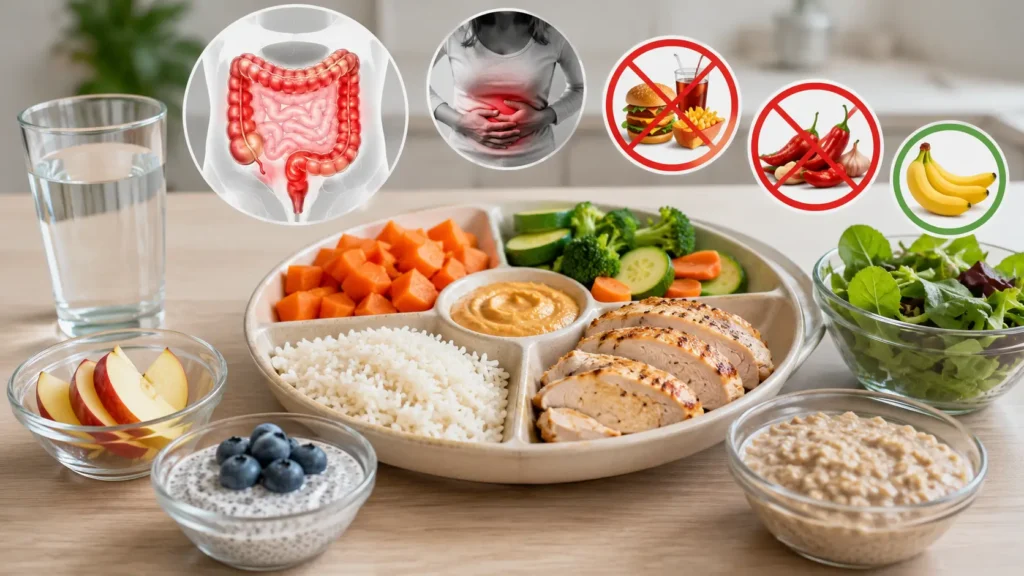
Diet changes that help reduce ulcerative colitis flare-ups deserve their own section because nutrition profoundly impacts symptoms.
During Flare-ups – The Gentle Approach
When you’re experiencing symptoms, eat foods that don’t aggravate your system:
Best foods during flare-ups:
- White rice and rice pasta
- Skinless chicken breast
- Fish (especially white fish)
- Bone broth
- Sweet potatoes (peeled)
- Bananas
- Applesauce
- White bread (without seeds)
- Eggs
- Smooth nut butters
Foods to avoid during flare-ups:
- Whole grains
- Raw vegetables
- Corn
- Nuts and seeds
- Dairy (unless you tolerate it)
- Spicy foods
- Fried foods
- Processed meats
- Caffeine
- Alcohol
During Remission – Building Nutrition
When symptoms are under control, you can gradually expand your diet:
Foods to emphasize:
- Omega-3 fish (salmon, sardines)
- Lean meats
- Cooked vegetables (carrots, zucchini, spinach)
- Fruits without skins
- Sweet potatoes
- Brown rice
- Beans (start slowly)
- Greek yogurt (if tolerated)
- Bone broth
- Ginger (natural anti-inflammatory)
Specific Nutrients That Help
Certain nutrients particularly support gut health:
Omega-3 Fatty Acids: Found in fish, walnuts, and flaxseed. These have anti-inflammatory properties.
Vitamin D: Often deficient in people with UC. Consider supplementation after consulting your healthcare provider.
Probiotics: Beneficial bacteria support gut health. Fermented foods (kefir, sauerkraut) or supplements may help (consult your doctor first).
Soluble Fiber: During remission, this supports digestive health. During flare-ups, limit it.
Small, Frequent Meals
Instead of three large meals, eat smaller portions more frequently.
This approach:
- Reduces digestive load
- Prevents overwhelming your system
- Maintains more stable energy
- Often feels more comfortable
Elimination Diet Under Professional Guidance
Some people benefit from elimination diets where you remove suspected trigger foods, then reintroduce them one at a time.
Important: Do this with professional guidance. A dietitian experienced with IBD can help you maintain nutrition while identifying triggers.
Understanding Ulcerative Colitis and Lifestyle Management – The Complete Picture
Beyond symptoms and diet, understanding ulcerative colitis and lifestyle management means looking at the bigger picture of how you live.
Sleep and Symptom Control
Poor sleep worsens UC symptoms, and UC symptoms disrupt sleep. Breaking this cycle matters.
Sleep optimization:
- Maintain consistent sleep schedule
- Keep your bedroom cool and dark
- Avoid screens 1-2 hours before bed
- Limit fluids before bedtime (helps with nighttime urgency)
- Consider if stress is keeping you awake
Work and Social Considerations
UC affects more than just your body. It impacts your work life and social activities.
Practical strategies:
- Inform your employer (they’re often more accommodating than you’d expect)
- Know where bathrooms are in spaces you frequent
- Plan social activities with bathroom access in mind
- Don’t isolate – connection helps mental health
- Join UC support groups (online or local)
- Talk with friends and family about your needs
Mental Health Matters
Depression and anxiety are common with chronic conditions. This isn’t weakness – it’s a real impact of dealing with ongoing symptoms.
Consider:
- Therapy or counseling
- Support groups
- Meditation or mindfulness
- Talking with others who understand
- Medical evaluation if depression/anxiety develops
Medication Compliance
If your doctor prescribes medication, taking it consistently matters more than you might think.
Many people improve significantly with appropriate medical treatment. The lifestyle strategies here complement medication, not replace it.
FAQs About Ulcerative Colitis
Q: Is ulcerative colitis the same as Crohn’s disease? A: No. Both are inflammatory bowel diseases, but UC affects the colon and rectum, while Crohn’s can affect any part of the digestive tract.
Q: Can stress cause ulcerative colitis? A: Stress doesn’t cause UC, but it triggers flare-ups in people who already have it.
Q: Is ulcerative colitis permanent? A: There’s no cure, but periods of remission (no symptoms) are possible with proper management.
Q: Can I eat normally with ulcerative colitis? A: During remission, most people eat relatively normally. During flare-ups, dietary modifications help significantly.
Q: Does ulcerative colitis affect life expectancy? A: With modern treatment and management, life expectancy is normal. However, quality of life can be significantly impacted without proper care.
Q: Is ulcerative colitis hereditary? A: There’s a genetic component. Having a family member with UC increases your risk, but it’s not guaranteed you’ll develop it.
Q: Can children get ulcerative colitis? A: Yes, though it’s less common than in adults.
Q: What’s the difference between ulcerative colitis and IBS? A: IBS (Irritable Bowel Syndrome) is a functional disorder. UC involves actual inflammation. The distinction matters for treatment.
Living Well With Ulcerative Colitis
The reality of living with ulcerative colitis involves challenges, but people manage it successfully every day.
Understanding early signs and symptoms of ulcerative colitis to watch for empowers you. Learning how to manage ulcerative colitis symptoms naturally through lifestyle changes improves your daily experience. Making diet changes that help reduce ulcerative colitis flare-ups gives you practical control. And truly understanding ulcerative colitis and lifestyle management means approaching this as a whole-person issue.
None of this happens overnight. Recovery and management are gradual processes. Be patient with yourself.
Connect with others who understand. Share your experiences. Learn from people who’ve walked this path. You’re not alone in this journey.
Conclusion: Your Ulcerative Colitis Action Plan
Start here:
- Recognize the symptoms. If you’re experiencing persistent diarrhea, abdominal pain, or blood in stool, don’t wait. Consult a healthcare professional.
- Get professional diagnosis. A doctor can confirm UC and discuss treatment options appropriate for you.
- Implement lifestyle changes. Start with stress management and hydration. Add gentle exercise. Keep a food diary.
- Modify your diet gradually. Work with a dietitian if possible. Identify your triggers. Adjust your eating during flare-ups and remission.
- Support your mental health. UC affects your mind, not just your body. Therapy, support groups, and connection matter.
- Be consistent. Small, consistent changes compound over time. You’ll find what works for your unique situation.
Remember: I am not a doctor. This content is educational. Your healthcare team should guide your medical decisions.
Read More: Best Exercises for Back Pain Relief: A Simple At-Home Guide