
Blue Light Face Aging
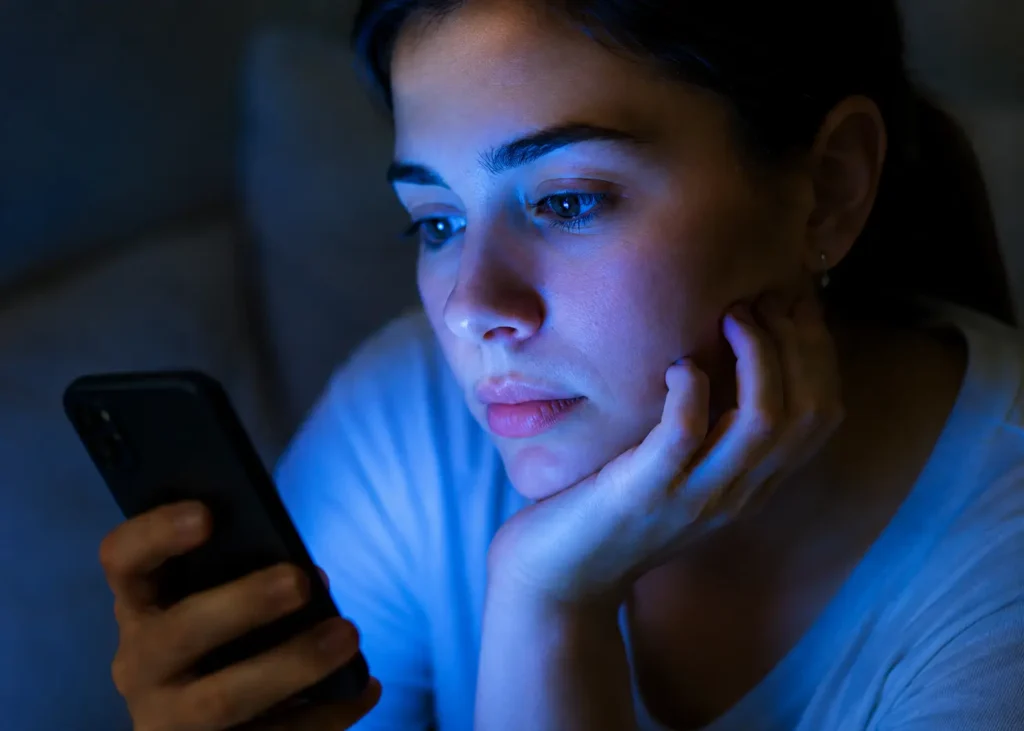
You moisturize every night, never skip SPF, and religiously follow your skincare routine — yet your skin still looks tired, dull, and older than it should. The culprit might be sitting right in your hand. Blue light emitted from mobile screens is increasingly linked to accelerated skin aging, and most of us are exposed to it for 7 to 10 hours every single day.
What Is Blue Light and Where Does It Come From?
Blue light, also called High-Energy Visible (HEV) light, sits at the 400–490 nm range of the visible light spectrum. It carries more energy per photon than most other visible wavelengths.
Sources of blue light include:
- Smartphone and tablet screens (your biggest daily exposure)
- Laptop and desktop monitors
- LED televisions
- Fluorescent and LED indoor lighting
- The sun (the most powerful natural source)
Here’s the uncomfortable truth: while the sun emits far more blue light overall, you are inches away from your phone screen for hours every day, which makes cumulative exposure surprisingly significant — especially in low-light environments like your bedroom at night.
How Does Blue Light Damage Your Skin?
1. It Triggers Oxidative Stress
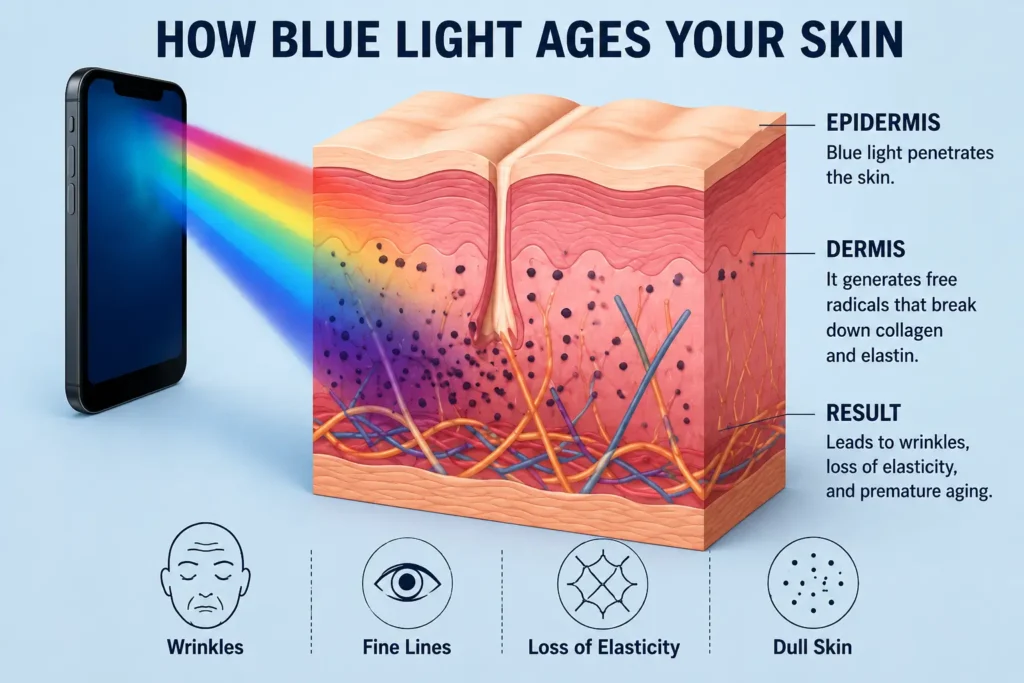
Blue light penetrates deep into the skin — deeper than UVB rays — reaching the dermis where collagen and elastin live. When blue light energy is absorbed, it generates free radicals, unstable molecules that attack healthy skin cells through a process called oxidative stress.
Free radical damage breaks down collagen fibers over time, leading to:
- Fine lines and wrinkles
- Loss of skin firmness and elasticity
- Uneven skin texture
2. It Disrupts Melanin Production
Research published in Journal of Investigative Dermatology found that blue light stimulates melanocytes (pigment-producing cells) even more aggressively than UVA rays. This means prolonged screen exposure can worsen hyperpigmentation, dark spots, and melasma — particularly for medium to darker skin tones.
Read More: Vitamin C Benefits in 2026: Why Your Body Needs It Daily
3. It Wrecks Your Sleep (Which Wrecks Your Skin)
This one is indirect but perhaps the most powerful mechanism. Blue light suppresses melatonin production, disrupting your circadian rhythm and degrading sleep quality. Poor sleep is catastrophically bad for your skin:
- Cortisol (stress hormone) spikes, breaking down collagen
- Skin cellular repair slows dramatically
- Puffy eyes, dullness, and dark circles intensify
- The skin barrier becomes compromised, increasing dryness and sensitivity
A single night of bad sleep shows on your face. Imagine months or years of it.
4. It Causes “Tech Neck” Lines
Beyond cellular damage, the repetitive downward gaze at your phone creates mechanical skin folding on the neck and chin area. Dermatologists have coined the term “tech neck” — the formation of horizontal neck lines and sagging jawline skin from sustained downward neck positioning. This is a structural aging issue caused purely by device habits.
Who Is Most at Risk?
While everyone is affected, certain groups face higher risk from blue light skin aging:
- People with darker skin tones — more melanin means more reactivity to blue light-induced pigmentation
- Night-time screen users — low ambient light means your eyes (and skin) absorb more relative blue light
- Remote workers and gamers — 8–12 hours of daily screen time is not unusual
- Teenagers and young adults — more daily screen hours but often the least sun protection mindset
7 Proven Ways to Protect Your Skin from Blue Light Aging
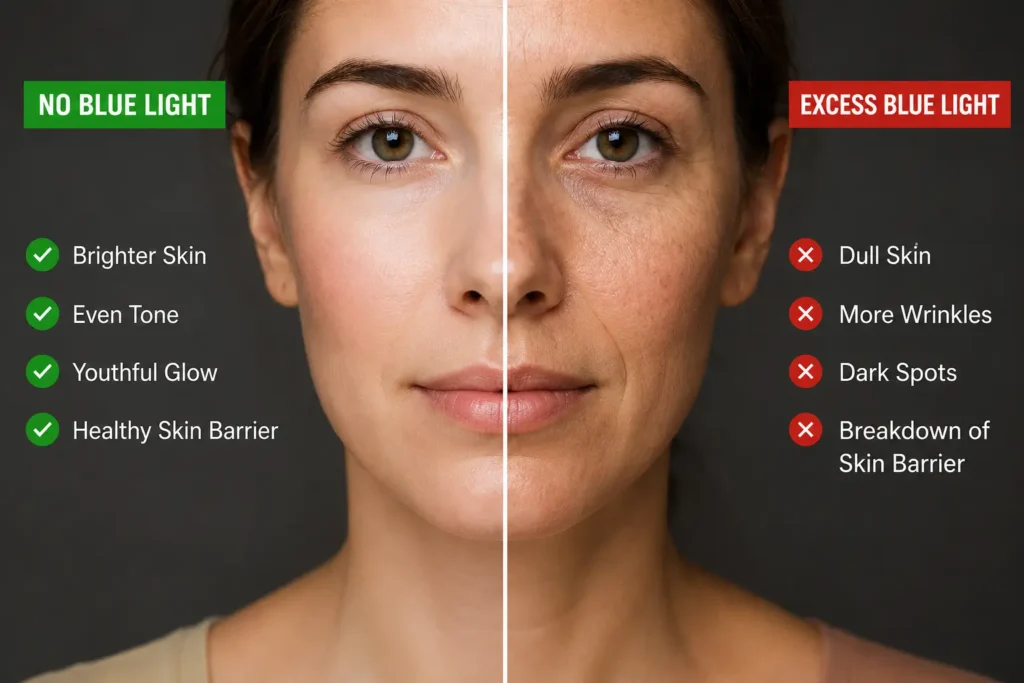
The good news: blue light skin damage is highly preventable with the right habits and products.
1. Use a Broad-Spectrum SPF That Covers HEV Light
Traditional SPF only blocks UV rays. Look for sunscreens that explicitly mention HEV or blue light protection, often containing iron oxides or tinted formulas. Apply even on days you stay indoors.
2. Enable Night Mode and Lower Screen Brightness
Most smartphones and laptops offer a Night Mode or Warm Display setting that shifts the screen tone toward warmer yellows, reducing blue light output. Use it, especially after sunset.
3. Apply Antioxidant Serums Every Morning
Antioxidants neutralize free radicals before they cause damage. The most effective choices:
- Vitamin C (L-ascorbic acid) — brightens and protects
- Niacinamide — reduces pigmentation and strengthens skin barrier
- Vitamin E — works synergistically with Vitamin C
- Resveratrol — powerful HEV light defender
4. Follow the 20-20-20 Rule
Every 20 minutes, look at something 20 feet away for at least 20 seconds. This isn’t just for eye strain — it also reduces screen proximity, cutting the intensity of blue light hitting your face.
5. Prioritize Sleep Hygiene
Set a screen curfew 60–90 minutes before bed. Better sleep means better skin repair — cortisol drops, melatonin rises, and cellular regeneration kicks into full gear. This may be the single highest-ROI skin habit you have.
6. Hold Your Phone at Eye Level
Retrain yourself to hold your device at eye level rather than looking down. It significantly reduces tech neck formation and keeps your jawline and neck skin from folding repeatedly.
7. Consider Blue Light Blocking Screen Protectors
Tempered glass screen protectors with blue light filtering coatings exist for most smartphones and tablets. They reduce blue light output without significantly distorting color.
The Bottom Line
Yes — your mobile screen is contributing to how fast your skin ages. It’s not the only factor, but the combination of free radical damage, melanin disruption, sleep interference, and mechanical strain makes daily screen exposure a genuine dermatological concern — one that mainstream skincare is only beginning to address seriously.
The solution isn’t to throw your phone away. It’s to be intentional: protect your skin, improve your screen habits, and invest in antioxidant-rich skincare designed for the digital age we actually live in.
Your future self’s face will thank you.
Read More:- Hantavirus vs COVID-19: How Dangerous Is This Virus Really?