
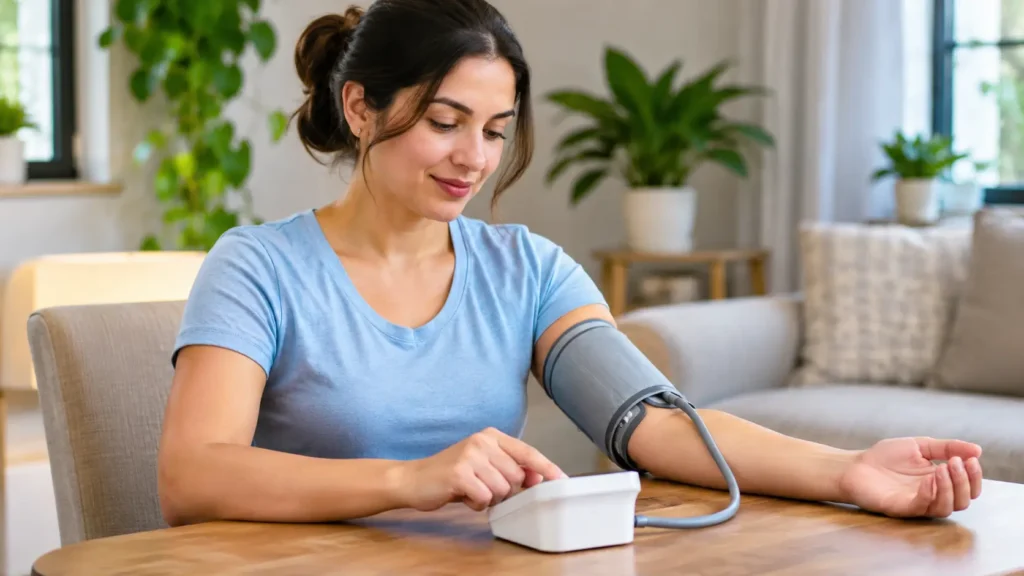
How to Take Blood Pressure at Home Correctly?
High blood pressure, also called hypertension, often has no obvious symptoms. Many people have it without knowing. According to the Centers for Disease Control and Prevention (CDC), nearly half of US adults have hypertension, and many do not have it under control. Over time, high blood pressure is linked with a higher risk of heart disease and stroke.
Checking at home has several benefits:
- It gives a fuller picture. Several readings over a week show more than a single clinic visit.
- It can help spot “white coat” effect. Some people only have high readings at the doctor’s office.
- It can help spot “masked” high blood pressure. Some people look fine at the clinic but run high at home.
- It helps you and your doctor see what is working. A log can show whether lifestyle changes or treatment plans are helping.
- It builds awareness and a sense of control.
Disclaimer: This article is for informational and educational purposes only and is not a substitute for professional medical advice, diagnosis, or treatment. Always consult a qualified healthcare provider about your blood pressure, medications, and diet. In an emergency, call 911.
Read More: Health Benefits of Guava Fruit: Digestion, Immunity and Heart Health Guide
What the Numbers Mean
A blood pressure reading has two numbers, such as 118/76 mmHg.
- Systolic (top number): the pressure in your arteries when your heart beats
- Diastolic (bottom number): the pressure when your heart rests between beats
Normal Blood Pressure by Age (and What the Categories Mean)
People often search for normal blood pressure by age, expecting a chart with a different Normal Blood Pressure by Age number for every decade. Here is the truth: for adults, the main US guidelines use the same categories regardless of age. Your doctor may set a personal target for you based on your age, health conditions, and medications, but the standard categories look like this, based on the American Heart Association (AHA) and American College of Cardiology guidelines:
| Category | Systolic (top) | Diastolic (bottom) |
|---|---|---|
| Normal | Less than 120 | and less than 80 |
| Elevated | 120 to 129 | and less than 80 |
| High blood pressure, Stage 1 | 130 to 139 | or 80 to 89 |
| High blood pressure, Stage 2 | 140 or higher | or 90 or higher |
| Hypertensive crisis | Higher than 180 | and/or higher than 120 |
Does blood pressure change with age?
Yes, on average. Arteries tend to stiffen as we get older, so the top number often rises over the years. That is why high blood pressure becomes more common in older adults. However, “common” does not mean “healthy.” The goal for most adults is still to stay in a healthy range, and your doctor may adjust that goal based on your situation. For example, an older adult with several health conditions may have a different plan than a healthy 35-year-old.
What about children and teens?
For kids and teenagers, use normal blood pressure by age, sex, and height percentiles, not the adult chart. A pediatrician should interpret those readings.
What if I see a very high number?
If your reading is above 180/120, rest for a few minutes and check again. If it stays that high, contact a healthcare provider right away. If you also have chest pain, shortness of breath, back pain, numbness, weakness, vision changes, or difficulty speaking, call 911 or your local emergency number.
Choosing the Right Home Blood Pressure Monitor
Your results are only as good as your device. Here is what to look for.
- Choose an upper arm cuff. The AHA generally recommends upper arm monitors over wrist or finger devices, since they tend to be more reliable.
- Get the right cuff size. A cuff that is too small can give falsely high numbers, and one that is too large can give falsely low numbers. Measure your upper arm and check the size chart on the box.
- Look for a validated device. Independent groups keep lists of monitors that have been tested for accuracy. You can search for “validated Home Blood Pressure Monitors” to see them.
- Bring it to your appointment. Ask your doctor or pharmacist to compare your Home Blood Pressure Monitor with the office device to check that it is accurate.
- Keep it simple. Features like memory storage and averaging can help, but you do not need anything fancy.
How to Take Blood Pressure at Home Correctly: Step-by-Step
This is the part that matters most. Small mistakes, like crossing your legs or talking, can change your reading. Follow these steps.
Before you measure
- Avoid caffeine, exercise, and smoking for at least 30 minutes. All of them can temporarily raise your blood pressure.
- Use the bathroom first. A full bladder can affect your reading.
- Sit quietly for 5 minutes. Do not scroll through stressful news or have a heated conversation.
- Take your readings at about the same time every day. Consistency makes patterns easier to see.
Position yourself
- Sit in a chair with your back straight and supported. Do not sit on the couch slouching or lie in bed.
- Keep your feet flat on the floor and your legs uncrossed.
- Rest your arm on a table so your upper arm is at about heart level.
- Place the cuff on bare skin. Do not put it over a sleeve. Roll up your sleeve if needed, and make sure it is not tight.
- Position the cuff correctly. The bottom edge usually sits about an inch above the bend of your elbow. Check the manual Home Blood Pressure Monitor.
Take the reading
- Stay still and quiet. Do not talk, move, or look at your phone during the reading.
- Press the start button and wait for the result.
- Take two or three readings, about one minute apart. Write down each one.
- Record the date, time, and numbers. Use a notebook, a spreadsheet, or an app. Many people also note anything unusual, like stress, a poor night’s sleep, or a new medication.
Common mistakes to avoid
- Measuring right after coffee, a workout, or a stressful phone call
- Using a cuff that does not fit
- Crossing your legs or letting your arm hang down
- Talking during the reading
- Checking too many times in a row out of worry
- Taking only one reading and treating it as the full story
Best Time to Check Blood Pressure
A very common question is the best time to check blood pressure. Blood pressure naturally changes through the day, so a regular schedule matters more than one perfect hour.
The AHA suggests a simple approach if your doctor has asked you to monitor at home:
- Check in the morning before eating, before taking medications (unless your doctor says otherwise), and before caffeine.
- Check again in the evening, around the same time each day, before dinner or at least a few hours after exercise.
- Take at least two readings each time, one minute apart.
- Do this for about seven days in a row before a doctor’s visit, then bring your log with you.
Then, the readings are usually averaged. Many guidelines treat a home average of about 130/80 or higher as a sign that blood pressure may be high, but only your healthcare provider can interpret your results.
How often should you check long term?
This depends on your health. Some people check daily for a short period, then a few times a week. Others check only before appointments. Ask your doctor what is best for you. Checking too often can cause anxiety, and that anxiety can raise your numbers.
Foods That Lower Blood Pressure Fast? What to Know
People often search for foods that lower blood pressure fast. Let us be honest here. No single food will reliably bring down your blood pressure within minutes, and you should never treat a food as a substitute for medical care. But your overall eating pattern can make a real difference over weeks and months, and some foods have been studied for short-term effects.
The DASH eating pattern
The DASH diet (Dietary Approaches to Stop Hypertension) is one of the most researched eating patterns for blood pressure. It focuses on fruits, vegetables, whole grains, low-fat dairy, beans, nuts, and lean proteins, while limiting salt, sugary drinks, and red or processed meats. The National Heart, Lung, and Blood Institute (NHLBI) provides free guides.
Foods and nutrients often linked with healthier blood pressure
- Potassium-rich foods: bananas, potatoes with the skin, sweet potatoes, beans, lentils, spinach, avocado, and plain yogurt. Potassium helps your body balance sodium.
- Leafy greens: spinach, kale, and arugula are rich in potassium and nitrates.
- Beets and beet juice: Some small studies have found that nitrates from beets may modestly Foods That Lower Blood Pressure Fast within a few hours. The effect is usually small and temporary.
- Berries: blueberries and strawberries contain plant compounds called flavonoids that have been linked with heart health.
- Oats and whole grains: a fiber-rich breakfast supports overall heart health.
- Unsalted nuts and seeds: a handful of unsalted almonds, walnuts, or pumpkin seeds adds magnesium and healthy fats.
- Fatty fish: salmon, sardines, and trout provide omega-3 fats, and the AHA recommends fish twice a week.
- Low-fat dairy: milk, yogurt, and cheese provide calcium, which is part of the DASH pattern.
- Garlic, herbs, and spices: these help you add flavor without salt.
What to cut back on
- Sodium (salt). The AHA recommends no more than 2,300 mg of sodium a day, with an ideal limit of 1,500 mg for most adults. Most sodium comes from packaged and restaurant foods, not the salt shaker. Check labels for canned soups, deli meats, frozen meals, sauces, and snacks.
- Alcohol. Heavy drinking can raise blood pressure.
- Sugary drinks and heavily processed foods.
- Too much caffeine, if you notice it spikes your readings.
A simple one-day sample menu
- Breakfast: oatmeal with blueberries, unsalted walnuts, and a cup of plain yogurt
- Lunch: spinach salad with chickpeas, tomato, cucumber, olive oil, and lemon
- Snack: a banana and unsalted almonds
- Dinner: baked salmon, roasted sweet potato, and steamed broccoli, seasoned with garlic and herbs
An important caution about potassium
Potassium is helpful for many people, but it is not right for everyone. If you have kidney disease or take certain medications, such as some blood pressure drugs (ACE inhibitors, ARBs, or potassium-sparing diuretics), too much potassium can be harmful. Always ask your doctor or a registered dietitian before increasing potassium or using salt substitutes, since many salt substitutes contain potassium chloride.
Other Lifestyle Habits That Support Healthy Blood Pressure
Food is only one piece. The AHA and CDC point to several habits that can help:
- Move regularly. Aim for about 150 minutes a week of moderate activity, such as brisk walking.
- Maintain a healthy weight. Even modest weight loss can help some people.
- Sleep well. Poor sleep is linked with higher blood pressure.
- Manage stress. Try deep breathing, walking, stretching, or journaling.
- Limit alcohol and avoid tobacco.
- Take medications as prescribed. Never stop or change them on your own.
FAQs: How to Take Blood Pressure at Home Correctly
Which arm should I use to check blood pressure?
It is a good idea to check both arms at your first visit with a doctor. If there is a difference, use the arm with the higher reading each time, as your provider advises.
Is a wrist Home Blood Pressure Monitor accurate?
Wrist monitors can be useful for people who cannot use an arm cuff, but they are more sensitive to body position. Home Blood Pressure Monitors are generally preferred.
How long should I rest before taking a reading?
About five minutes of quiet sitting is the common recommendation.
Final Thoughts: How to Take Blood Pressure at Home Correctly
Knowing how to take blood pressure at home correctly is a simple skill that can give you and your doctor valuable information. Use a validated upper arm monitor, sit quietly for five minutes, keep your arm at heart level, and take two readings at consistent times of day. Understand the standard categories for normal blood pressure by age, and remember that your doctor may set a personal target. Build your meals around fruits, vegetables, whole grains, beans, and low-sodium choices, and treat food as a long-term helper rather than a fast fix.
Read More: 12-3-30 Walking Workout Benefits: Beginner’s Winter Guide