
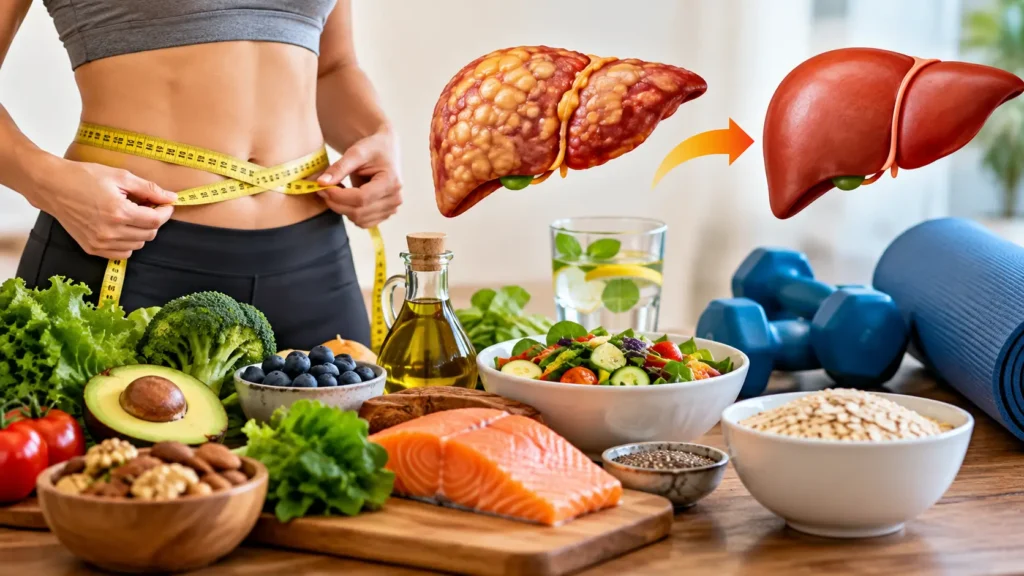
How to Lose Weight With Fatty Live
A lot of people find out about fatty liver by accident. A routine ultrasound or blood test shows “How to Lose Weight With Fatty Liver,” and the doctor says, “Lose some weight and come back in six months.” Then you go home with a hundred questions and no clear plan.
In this guide, I will explain how to lose weight with fatty liver in practical, realistic steps. We will also look at which exercise helps most, what happens to your liver when belly fat goes down, and what newer medicines like GLP-1 drugs mean for people with this condition.
Important note: I am not a doctor, and this article is for general education only. It is not medical advice. How to Lose Weight With Fatty Liver can sometimes progress to serious liver disease, so please confirm your diagnosis, medicines and diet changes with a qualified doctor or a registered dietitian.
Read More: Drinking Lemon Water Every Day for 30 Days: What Happens?
What Is Fatty Liver Disease?
Fatty liver means extra fat has built up inside liver cells. A small amount of fat is normal. When fat makes up more than about 5% of the liver’s weight, it is called steatotic liver disease.
You may see several names for it:
- NAFLD (non-alcoholic fatty liver disease): the older, widely known term.
- MASLD (metabolic dysfunction-associated steatotic liver disease): the newer term, which links the condition to weight, blood sugar, blood pressure and cholesterol.
- MASH/NASH: the more serious form, where fat is joined by inflammation and liver cell damage.
- Alcohol-related fatty liver: caused mainly by heavy drinking.
Why you often feel nothing
Early fatty liver rarely causes symptoms. Some people feel tired or notice mild discomfort in the upper right abdomen, but many feel completely normal. That is why it is often called a silent condition, and why lifestyle changes work best when started early.
Why Weight Loss Is the Foundation of Treatment
For most people with metabolic fatty liver, weight loss is the single most effective step. Large reviews and liver-disease guidelines point to a consistent pattern:
| Weight loss (from starting weight) | What may happen in the liver |
|---|---|
| About 3–5% | Liver fat starts to fall |
| About 7–10% | Inflammation and cell damage may improve |
| 10% or more | Early scarring (fibrosis) may improve in some people |
For a person weighing 85 kg, a 5% loss is only about 4 kg. That is a very achievable first goal, and it is already meaningful for the liver.
Weight loss also tends to improve blood sugar, blood pressure and cholesterol together, which matters because these conditions feed each other.
How to Lose Weight With Fatty Liver: A Step-by-Step Plan
There is no magic food or detox drink. What works is a steady pattern you can follow for years. Here is a practical framework.
Step 1: Set a realistic pace
Aim for roughly 0.5 to 1 kg per week, or about 5–10% of your body weight over 6–12 months. Crash diets and extreme fasting can backfire. Very rapid weight loss has been linked to worsening liver inflammation in some people, so slow and steady is safer for your liver.
Step 2: Build your plate around liver-friendly foods
A Mediterranean-style eating pattern has some of the strongest evidence for fatty liver. You do not need olive oil and avocados to follow the idea. It translates well to Indian kitchens:
- Vegetables: at least half your plate, such as lauki, palak, bhindi, cabbage, tomatoes and salads
- Whole grains and millets: jowar, bajra, ragi, oats, brown rice or whole wheat roti instead of maida
- Protein: dal, chana, rajma, sprouts, paneer in moderation, eggs, fish and lean chicken
- Healthy fats: nuts, seeds, mustard or olive oil in small measured amounts
- Fruit: whole fruit rather than juice
Step 3: Cut the worst offenders
Some foods and drinks are especially tough on a fatty liver:
- Sugary drinks, packaged juices and energy drinks
- Sweets, bakery items and biscuits
- Deep-fried snacks and heavily processed foods
- White bread, maida products and excess white rice portions
- Alcohol, which is best avoided or strictly limited if you have fatty liver. Ask your doctor what is safe for you.
Fructose from sweetened drinks deserves special attention, because the liver turns excess sugar into fat very efficiently.
Step 4: Pay attention to portions and timing
You do not need to count every calorie forever, but a modest daily calorie deficit is what drives weight loss. Simple habits help:
- Use a smaller plate and serve once
- Eat slowly and stop when about 80% full
- Keep dinner lighter and finish it a couple of hours before bed
- Avoid mindless snacking in front of the TV or phone
Step 5: Do not ignore sleep and stress
Poor sleep and constant stress raise hunger hormones and push people toward high-sugar foods. Aim for 7–8 hours of sleep and build a small daily stress outlet, such as a walk, prayer, music or breathing exercises.
Step 6: Coffee may help
Several studies suggest that regular black coffee, without added sugar, is linked to a lower risk of liver scarring. If coffee suits you and your doctor agrees, one or two cups a day is a reasonable habit.
The Best Exercise for Fatty Liver
Many people ask about the best exercise for fatty liver, hoping for one perfect workout. The honest answer is that several types work, and the right choice is the one you will actually do consistently.
One encouraging finding from research is that regular exercise can reduce liver fat even when the number on the scale barely moves. So if your weight is stuck, keep exercising. Your liver may still be benefiting.
Aerobic (cardio) exercise
Aerobic activity is the most studied option. It includes:
- Brisk walking
- Cycling
- Swimming
- Jogging
- Dancing or Zumba
- Climbing stairs
Target: about 150 minutes per week of moderate effort, which is roughly 30 minutes on 5 days. A simple test for moderate effort is that you can talk but not sing.
Resistance (strength) training
Lifting weights, using resistance bands or doing bodyweight exercises such as squats, push-ups and lunges also lowers liver fat. Strength training builds muscle, and more muscle improves how your body handles blood sugar.
Target: 2 to 3 sessions per week, working all the major muscle groups.
High-intensity interval training (HIIT)
Short bursts of hard effort followed by rest can reduce liver fat in less total time. This style is not for everyone. If you have heart problems, high blood pressure, joint pain or you are new to exercise, check with your doctor first.
A sample weekly plan for beginners
- Monday: 30-minute brisk walk
- Tuesday: 25-minute bodyweight strength routine
- Wednesday: 30-minute cycling or swimming
- Thursday: Rest or gentle stretching
- Friday: 30-minute brisk walk
- Saturday: 30-minute strength session
- Sunday: Active rest, such as a family walk or yoga
Practical tips to stay consistent
- Start with 10 minutes a day if 30 feels like too much, then build up
- Take a 5–10 minute walk after meals, which also helps blood sugar
- Break up long sitting hours with a stand-up break every 30–60 minutes
- Track steps and aim to move toward 7,000–10,000 a day if your health allows
In the end, the best exercise for fatty liver is the one that fits your body, your schedule and your health condition, and that you can repeat week after week.
Does Losing Belly Fat Reduce Fatty Liver?
This is one of the most common questions, and the answer is encouraging. So, does losing belly fat reduce fatty liver? In most people, yes.
Why belly fat matters
There are two main types of body fat:
- Subcutaneous fat: the soft fat under your skin that you can pinch.
- Visceral fat: the deeper fat packed around your organs, including your liver and intestines.
Visceral fat is metabolically active. It releases fatty acids and inflammatory substances that travel straight to the liver through the portal vein. The more visceral fat you carry, the more fat tends to build up in the liver. That is why a larger waistline is such a strong warning sign.
Waist size can be a useful clue
You do not need a special scan to get a rough idea. As a general guide, many health organizations flag risk when waist size crosses roughly:
- South Asian men: about 90 cm (35.5 inches)
- South Asian women: about 80 cm (31.5 inches)
South Asians tend to develop liver and metabolic problems at lower body weights than many other populations, so these cut-offs are lower than the Western ones.
Can you “spot reduce” belly fat?
Not really. Doing hundreds of crunches will not burn fat from the stomach alone. Fat comes off the whole body, and visceral fat is often among the first to respond when you eat fewer calories and exercise regularly. This is good news for the liver, because visceral fat is exactly the type that matters most.
A caution about thin people
Some people with a normal weight still have fatty liver, sometimes called “lean” fatty liver. If that is you, focus on diet quality, strength training and cutting sugar rather than chasing a lower weight alone. Your doctor can guide you further.
GLP-1 and Fatty Liver Disease: What Do We Know?
You have probably heard of GLP-1 and Fatty Liver Disease medicines through the news about diabetes and weight-loss injections. Interest is now growing around GLP-1 and fatty liver disease, since both conditions are closely connected to insulin resistance and excess weight.
What are GLP-1 drugs?
GLP-1 and Fatty Liver Disease stands for glucagon-like peptide-1, a natural gut hormone that helps regulate blood sugar and appetite. GLP-1 receptor agonists copy this hormone. Examples include semaglutide and liraglutide, and related newer drugs such as tirzepatide, which acts on GLP-1 and Fatty Liver Disease a second hormone pathway.
How might they help the liver?
- They reduce appetite, which leads to weight loss
- They improve blood sugar control
- They may directly lower liver fat and inflammation
- They can improve cholesterol and blood pressure markers
Clinical trials have reported meaningful reductions in liver fat and improvements in liver inflammation in people with GLP-1 and Fatty Liver Disease. Some medicines in this class have also received regulatory approval in certain countries for the more advanced form, MASH with moderate to advanced scarring. Approvals and guidelines keep changing, so your doctor is the right person to tell you what is currently available and appropriate in India.
Important cautions
- These are prescription-only medicines and not a shortcut for everyone.
- Side effects can include nausea, vomiting, diarrhea, constipation and reduced appetite. Rarely, more serious problems like pancreatitis or gallbladder issues can occur.
- They are not suitable for everyone, such as people with certain thyroid cancer histories or pregnancy.
- Weight often returns if the medicine is stopped without lifestyle changes in place.
- Never buy or inject these medicines without a doctor’s prescription and supervision.
The sensible way to see GLP-1 drugs is as a tool that works alongside food and exercise, not instead of them.
Common Mistakes People Make With Fatty Liver
- Trying a crash diet. Very low-calorie plans can cause rapid weight loss that stresses the liver and often leads to weight regain.
- Relying on detox teas and supplements. There is no proven “liver cleanse.” Some herbal products can actually harm the liver, so always check with your doctor first.
- Only cutting oil but not sugar. GLP-1 and Fatty Liver Disease, sugar and refined carbs often matter as much as fat.
- Skipping strength training. Muscle supports your metabolism and blood sugar.
- Stopping after one normal report. Fatty liver can return if old habits come back.
- Ignoring other conditions. Diabetes, high cholesterol and high blood pressure need treatment along with the liver.
FAQs: How to Lose Weight With Fatty Liver
How to Lose Weight With Fatty Liver?
In the early stages, yes, in many people. Weight loss, better food choices, regular exercise and good control of blood sugar can reduce liver fat significantly. More advanced scarring is harder to reverse, which is why early action matters.
How long does it take to improve fatty liver?
Some people see improvement in liver fat within a few months of consistent changes. Doctors usually recheck after about 3 to 6 months or longer, depending on the case.
Is fatty liver only a problem for overweight people?
No. People with a normal weight can also have fatty liver, especially if they carry GLP-1 and Fatty Liver Disease, eat lots of sugar or have insulin resistance.
Can I eat rice and roti with fatty liver?
Yes, in sensible portions. Choose whole grains and millets more often, pair carbs with vegetables and protein, and avoid large servings of refined flour and white rice.
Is fruit safe for fatty liver?
Whole fruit is generally fine and healthy in moderate amounts. Fruit juice and sweetened drinks are the bigger concern.
Final Thoughts: How to Lose Weight With Fatty Liver
How to Lose Weight With Fatty Liver can sound frightening, but it is also one of the most improvable conditions in medicine when it is caught early. Understanding how to lose weight with fatty liver comes down to a handful of steady habits: eat whole, simple foods, cut sugary drinks, move your body most days, sleep well and be patient with the process.
Read More: How to Prevent Heat Rash From Sweating: Simple Skin Care Tips

