
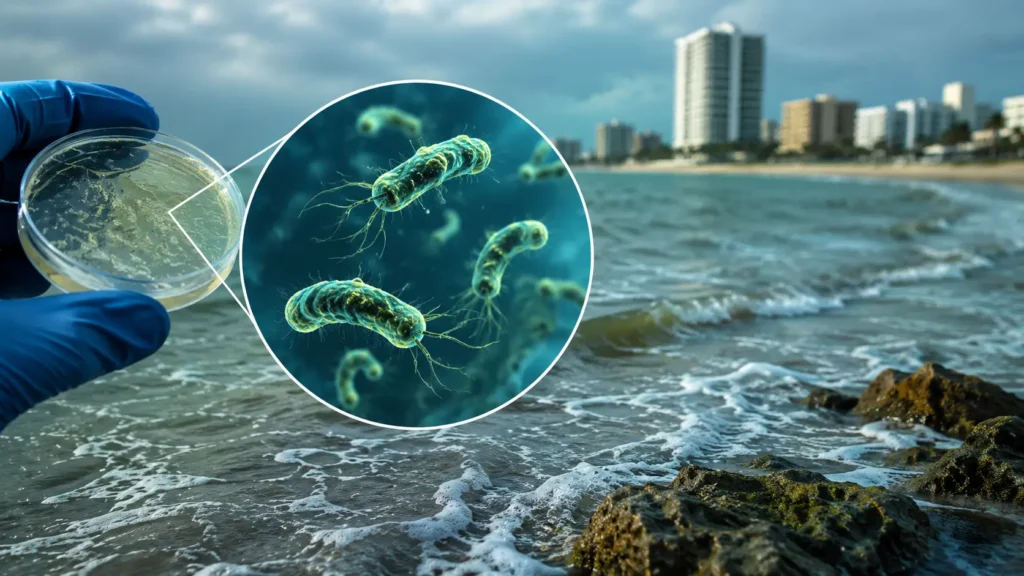
Vibrio bacteria warning gulf coast 2026
If you’re planning a trip to the beach this summer, there’s a Vibrio bacteria warning gulf coast 2026 that you genuinely need to pay attention to. Health departments in Louisiana and Florida have flagged a noticeable rise in infections from Vibrio vulnificus, a naturally occurring bacteria that thrives in warm coastal waters and can turn deadly within days if left untreated.
This isn’t meant to scare you away from the beach. Millions of people swim in the Gulf every summer without any problem. But a handful of simple precautions can make the difference between a normal beach day and a medical emergency. Below, we’ll break down the latest numbers, the flesh-eating bacteria symptoms beach visitors should watch for, whether it’s actually safe to swim in the Gulf of Mexico in 2026, and exactly how doctors say you can lower your risk.
Quick note: I am not a doctor, and this article is not medical advice. It’s meant to help you understand the current outbreak and know when to seek professional care — always talk to a licensed healthcare provider for diagnosis or treatment.
Read More: West Nile Virus Symptoms 2026 USA: Risk, Signs & Prevention
What Is Vibrio Vulnificus, Exactly?
Vibrio vulnificus is a bacterium that lives naturally in seawater and in brackish water — the mix of salt and fresh water found in estuaries, bays, and lagoons. It isn’t pollution or a man-made contaminant; it’s simply part of the natural marine environment, and it becomes more active as water temperatures rise.
A few basics worth knowing:
- It’s most active from May through October, when Gulf waters are at their warmest.
- Most U.S. infections are reported in states along the Gulf Coast, particularly Louisiana, Florida, Texas, Mississippi, and Alabama.
- Warmer, saltier water combined with high heat creates close to ideal breeding conditions, which is part of why the Gulf sees more cases than other U.S. coastlines.
- It’s sometimes nicknamed “Gulf Coast Flesh-Eating Bacteria Warning 2026” because in severe cases it can cause a rare but fast-moving skin and tissue infection called necrotizing fasciitis.
Vibrio vulnificus is only one of several Vibrio species found in coastal waters, but it’s the one health officials are watching most closely this year because of how severe — and how fatal — it can be compared to other strains.
Vibrio Bacteria Warning Gulf Coast 2026: The Latest Numbers
This summer’s Vibrio bacteria warning gulf coast 2026 isn’t coming out of nowhere — it’s backed by real case data from state health departments.
Louisiana:
- The state has confirmed nine Vibrio vulnificus infections so far this year.
- All nine patients were hospitalized, and five died.
- For comparison, Louisiana’s average over the previous decade was about seven cases and one death per year during the same stretch.
Florida:
- Florida, which typically records more Vibrio cases than any other state, has reported 14 cases and two deaths so far in 2026.
- That’s compared to 33 cases and five deaths for all of last year — meaning this year’s pace could end up higher once the full season is counted.
- Health officials have noted that case counts tend to climb in years affected by tropical storms and hurricanes, since storm surge and flooding push more brackish water inland and disturb coastal sediment.
Public health officials stress that even with this increase, Vibrio vulnificus infections remain rare overall. But the fatality rate is what makes this outbreak worth taking seriously — roughly 1 in 5 infections is fatal, a much higher rate than other types of Vibrio bacteria.
Flesh-Eating Bacteria Symptoms Beach: What to Watch For
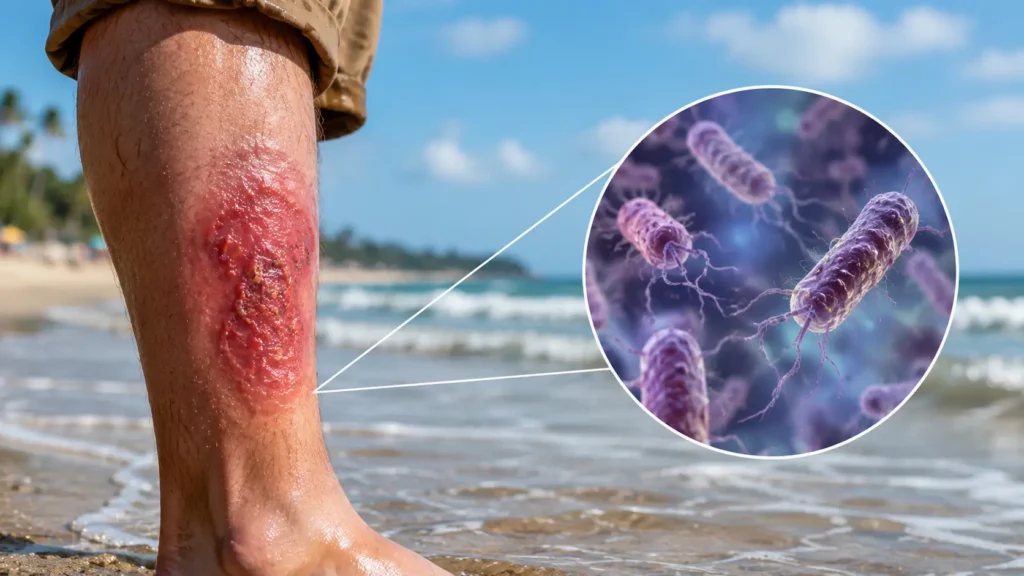
Knowing the early flesh-eating bacteria symptoms beach visitors should look out for can genuinely save a life, since Vibrio vulnificus can move from mild irritation to a medical emergency in a matter of hours.
There are two main ways people get infected, and the symptoms differ slightly depending on the route:
1. Wound Infections (Skin Contact With Water)
Watch for these signs after any cut, scrape, or open wound has been in contact with seawater or brackish water:
- Redness, swelling, or pain around the wound that gets worse instead of better
- Skin that feels warm or hot to the touch
- Discoloration — areas that turn dark, purple, or blistered
- Fever or chills
- Rapidly spreading redness beyond the original wound site
2. Infections From Eating Raw or Undercooked Shellfish
Symptoms after eating contaminated seafood (especially raw oysters) can include:
- Watery diarrhea
- Stomach cramping
- Nausea and vomiting
- Fever and chills
- In severe cases, bloodstream infection (sepsis) with dangerously low blood pressure and blistering skin lesions
The key takeaway: if a wound that’s been exposed to coastal water starts changing — getting redder, more swollen, warmer, or darker — that’s not a “wait and see” situation. Health officials are clear that this warrants seeking medical care immediately, and you should tell the provider specifically about your water exposure so they can consider Vibrio in their diagnosis.
Is It Safe to Swim in the Gulf of Mexico in 2026?
This is probably the question on most people’s minds, and the honest answer is: for most healthy people, yes — with reasonable precautions.
Vibrio vulnificus infections are still statistically rare compared to the millions of people who swim in Gulf waters every year. The people at real risk are a specific group (more on that below), and the infection route is well understood, which means it’s largely preventable.
That said, if you’re asking is it safe to swim in the gulf of mexico 2026 because you have an open wound, a weakened immune system, or a chronic illness, the more cautious answer is to wait until the wound has healed or to avoid water contact with it entirely this season.
A few practical ways to lower your risk before you even get in the water:
- Check for any recent local health advisories at your specific beach before visiting.
- Avoid entering the water if you have any open cuts, scrapes, recent piercings, tattoos, or surgical incisions that haven’t fully healed.
- Be extra cautious after storms — heavy rain and storm surge can stir up bacteria-rich sediment.
- If you’re in a higher-risk health category, consider swimming pools or freshwater lakes instead during peak Vibrio season (May–October).
Who Is Most at Risk for Vibrio Vulnificus?
Not everyone faces the same level of danger from Vibrio vulnificus, and understanding who is most at risk vibrio vulnificus poses the biggest threat to is one of the clearest ways to know how cautious you personally need to be. Severe, life-threatening cases are seen far more often in:
- Older adults
- People with weakened immune systems
- Individuals with liver disease
- People with diabetes
- Those with other chronic illnesses that affect immune response
If you fall into one of these categories, doctors generally recommend being significantly more cautious around raw shellfish and open water with unhealed skin injuries during the warmer months.
Vibrio Vulnificus How to Avoid Infection
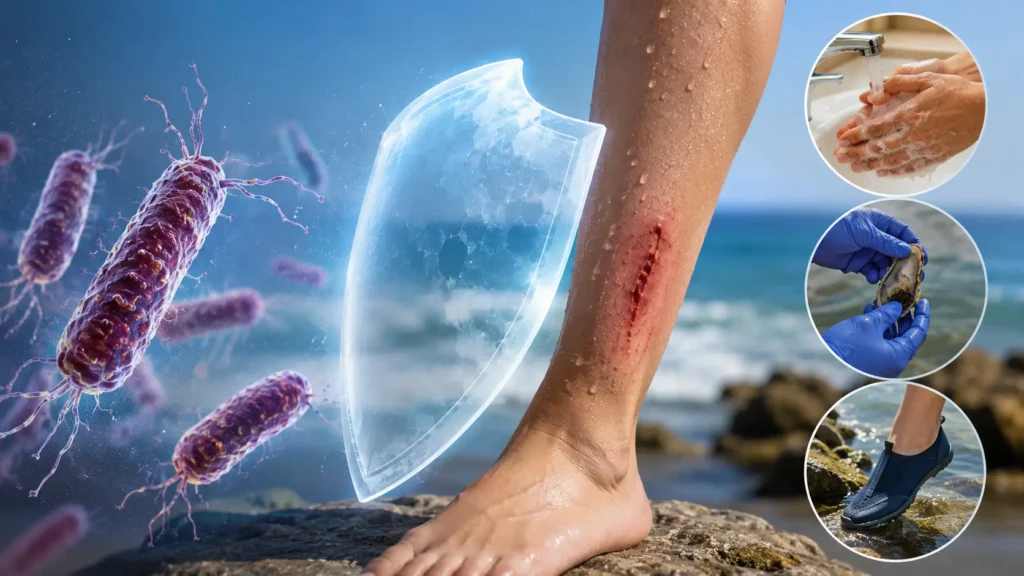
The good news is that vibrio vulnificus how to avoid infection comes down to a short list of manageable habits — nothing complicated, just consistent.
At the Beach
- Don’t swim or wade in seawater or brackish water if you have an open wound, recent piercing, tattoo, or surgical incision.
- If you do get a cut or scrape while in the water, get out and clean it as soon as possible.
- Consider waterproof bandages for minor healed scrapes if you’re unsure.
Handling and Eating Seafood
- Avoid raw or undercooked shellfish, especially oysters, if you’re in a higher-risk group.
- There’s no way to tell if an oyster is contaminated just by looking at it, so “it looks fine” isn’t a safe test.
- Cook clams, mussels, and other shellfish thoroughly before eating.
- Wash your hands with soap and water after handling raw shellfish.
- Wear protective gloves when handling raw seafood if you have a weakened immune system.
Wound Care After Water Exposure
- Wash any cuts or scrapes thoroughly with soap and clean running water immediately after contact with coastal water or raw seafood.
- Keep an eye on the wound for the next 24–48 hours for any redness, swelling, warmth, or discoloration.
- Don’t ignore a wound that seems to be getting worse rather than better — this is the single biggest red flag doctors point to.
What to Do If You Think You’re Infected
If you notice any of the warning signs above after water exposure or eating shellfish, don’t wait it out at home. Seek medical care immediately and be specific with your provider — mention the water exposure or the raw seafood so Vibrio vulnificus is on their radar early. Early treatment with the right antibiotics dramatically improves outcomes, while delayed treatment is one of the biggest factors in severe cases.
How to Treat Vibrio Vulnificus Wound Infection
Doctors typically decide how to treat vibrio vulnificus wound infection cases based on how far the infection has progressed by the time it’s caught:
- Early-stage infections are usually treated with targeted antibiotics, often started immediately even before lab results confirm Vibrio, because speed matters more than certainty in the first few hours.
- Advanced or fast-spreading infections that involve significant tissue damage may require surgery to remove infected tissue, in addition to antibiotics — this is more common when theVibrio Vulnificus How to Avoid Infection has progressed toward necrotizing fasciitis.
- Severe bloodstream infections (sepsis) may require hospitalization in an intensive care setting, with IV antibiotics and supportive care for blood pressure and organ function.
This is exactly why doctors emphasize speed: the sooner treatment starts, the less likely a wound infection is to progress to the more dangerous, tissue-destroying stage.
FAQs: Vibrio bacteria warning gulf coast 2026
Is Vibrio vulnificus contagious from person to person? No. It’s not spread between people. Infections come from water exposure through broken skin or from eating contaminated raw or undercooked shellfish.
How quickly can flesh-eating bacteria symptoms beach appear? Symptoms can appear within 24 hours of exposure and can worsen rapidly — sometimes within just a day or two — which is why quick action matters so much.
Are Gulf Coast beaches closed because of this outbreak? No widespread beach closures have been tied to this specific warning. Health officials are advising caution and awareness rather than avoidance for most beachgoers.
Does saltwater kill Vibrio bacteria? No — Vibrio vulnificus actually lives and thrives in saltwater and brackish water, so being in the ocean doesn’t protect against it.
What is the vibrio vulnificus incubation period? Symptoms typically show up within 12 to 24 hours of exposure, though in some cases it can take up to a few days. This short window is part of why doctors urge people to act fast rather than wait to see if things improve on their own.
What’s the vibrio vulnificus vs necrotizing fasciitis difference? Vibrio vulnificus is the bacterium itself, while necrotizing fasciitis is the name for the severe, fast-spreading tissue infection that can result if a Vibrio wound infection is left untreated. In short: Vibrio vulnificus is the cause, and necrotizing fasciitis is one possible — and most feared — outcome.
What is the vibrio vulnificus death rate? Roughly 1 in 5 Vibrio vulnificus infections is fatal, according to the CDC — a notably higher fatality rate than other types of Vibrio bacteria, which is why quick recognition of symptoms matters so much.
Final Thoughts: Vibrio bacteria warning gulf coast 2026
The Vibrio bacteria warning gulf coast 2026 is a reminder that natural marine bacteria can pose a real risk during peak summer months — but it’s a manageable one for most people. Knowing the flesh-eating bacteria symptoms beach visitors should watch for, understanding who’s most vulnerable, and following a few simple precautions around wounds and raw shellfish can keep your summer trip to the Gulf safe.
Read More: Raw Milk Food Poisoning Risk in 2026: Symptoms & Safety Guide