

Always Hungry While Losing Weight
If you’ve been eating “clean,” tracking your calories, and still find yourself standing in front of the fridge at 9 p.m. wondering why you’re starving — you are not broken, and you are not lacking willpower. This is one of the most common, most frustrating parts of Hungry While Losing Weight, and there’s a very real biological reason behind it.
Let’s break down why am I always hungry while losing weight, what’s actually happening inside your body, and — more importantly — what you can do to make it more manageable.
Why Am I Always Hungry While Losing Weight?
Here’s the part most diet plans conveniently leave out: when you lose weight, your body doesn’t just sit back and accept it. It actively fights to get that weight back, and it does this largely through hormones.
Two hormones are the main players here:
- Ghrelin — often nicknamed the “hunger hormone.” It’s produced mainly in your stomach and rises when your stomach is empty, sending a clear signal to your brain: go find food.
- Leptin — the “fullness hormone,” produced by your fat cells. Leptin tells your brain you’ve stored enough energy and don’t need to eat more.
Under normal circumstances, these two hormones work together to keep your appetite balanced. But once you start Always Hungry While Losing Weight— especially at a faster pace — something interesting happens. Ghrelin levels tend to climb, while leptin levels tend to drop. In some research on people following strict, extended calorie-restricted diets, ghrelin has been shown to rise dramatically, while leptin can fall by well over half after significant Hungry While Losing Weight.
In plain terms: the more weight you lose, the hungrier your body may make you feel, on a purely chemical level. This isn’t a personal failure. It’s your body’s ancient survival mechanism kicking in, treating weight loss like a threat rather than a goal.
A few other factors can make this hunger spike even worse:
- Cutting calories too aggressively. A steep, sudden deficit tends to trigger a stronger hunger-hormone response than a slow, steady one.
- Poor sleep. Even one or two nights of short sleep raises ghrelin and lowers leptin, which is part of why late nights so often lead to snack cravings.
- High stress. Chronic stress disrupts the communication between your gut and brain, and it commonly pushes cravings toward high-calorie, high-sugar foods.
- Low protein or low fiber meals. Meals built mostly around refined carbs digest quickly, leaving you hungry again within an hour or two.
Quick note before we start: I’m not a doctor or a registered dietitian. This post pulls together well-established nutrition science and general expert-backed advice to help you understand what’s happening in your body — it isn’t personalized medical or nutrition advice. If your hunger feels extreme, sudden, or is accompanied by other symptoms, please check in with a doctor or dietitian.
Read More: Chronic Venous Insufficiency Risk Factors: Who’s at Risk and How to Prevent It Naturally
How to Control Hunger During Weight Loss
If hunger were purely about willpower, everyone on a diet would simply “try harder.” But since so much of this is hormonal and behavioral, the smarter approach is working with your body instead of against it. Here’s what actually helps.
1. Don’t slash calories too fast
A dramatic, sudden calorie cut tends to spike ghrelin far more than a moderate, gradual one. A slower, sustainable deficit (think: a modest reduction rather than an extreme one) tends to be easier to stick with precisely because it doesn’t send your hunger hormones into overdrive.
2. Prioritize protein at every meal
Protein is, hands down, one of the most filling nutrients that exists. It slows digestion, blunts ghrelin release, and takes more energy for your body to break down compared to carbs or fat. Aim to include a solid protein source — eggs, chicken, fish, tofu, Greek yogurt, cottage cheese, or legumes — at every meal, not just dinner.
3. Load up on fiber
Fiber adds bulk and slows digestion, which keeps you feeling fuller for longer after a meal. Vegetables, fruits, beans, lentils, oats, and whole grains are all excellent sources. Many nutrition experts specifically recommend starting with fiber first when trying to manage hunger on a calorie-restricted diet, since it’s one of the simplest, most sustainable changes you can make.
4. Prioritize sleep like it’s part of your diet plan
Because poor sleep directly raises ghrelin and lowers leptin, skimping on rest can quietly sabotage even the most disciplined eating plan. Aiming for 7–9 hours a night isn’t just about energy — it’s genuinely one of the most underrated hunger-control tools available.
5. Manage stress instead of ignoring it
Chronic stress doesn’t just make you feel overwhelmed — it changes your gut-brain signaling in ways that increase cravings for high-calorie comfort foods. Simple daily habits like short walks, breathing exercises, or even a consistent wind-down routine before bed can take some of that pressure off your appetite.
6. Stay ahead of your hunger, not behind it
Waiting until you’re painfully hungry to eat almost always leads to overeating or reaching for the fastest, least nutritious option nearby. Eating on a fairly consistent schedule — rather than skipping meals and “saving up” calories — tends to keep hunger hormones more stable throughout the day.
7. Drink water before you assume it’s hunger
Thirst is frequently misread as hunger. A glass of water and a short pause before your next snack can help you figure out which one you’re actually dealing with.
Dietitian Tips for Hunger While Dieting
Beyond the basics, here are a few strategies that registered dietitians commonly recommend to clients who feel hungry all the time while trying to Hungry While Losing Weight:
- Build your plate around volume, not just calories. Foods with high water and fiber content (like vegetables and broth-based soups) fill your stomach without adding many calories, which helps trigger fullness signals faster.
- Don’t fear fat completely. A moderate amount of healthy fat — olive oil, avocado, nuts — slows digestion and helps you feel satisfied for longer between Low protein or low fiber meals.
- Rethink liquid calories. Sugary drinks and juices spike blood sugar quickly, followed by an equally quick crash — and that crash often shows up as sudden hunger.
- Plan for hunger dips. Most people have a predictable time of day (often mid-afternoon or late evening) when hunger spikes. Having a planned, protein-or-fiber-rich snack ready for that window prevents impulsive choices.
- Track patterns, not just numbers. Instead of only logging calories, dietitians often suggest noting when hunger feels manageable versus overwhelming — it can reveal whether the issue is meal timing, sleep, stress, or simply not eating enough of the right foods.
- Reframe intense hunger as data, not failure. Constant, gnawing hunger is frequently a sign that a diet is too restrictive for that person’s body, not a sign that they need more discipline.
Foods That Keep You Full During Weight Loss
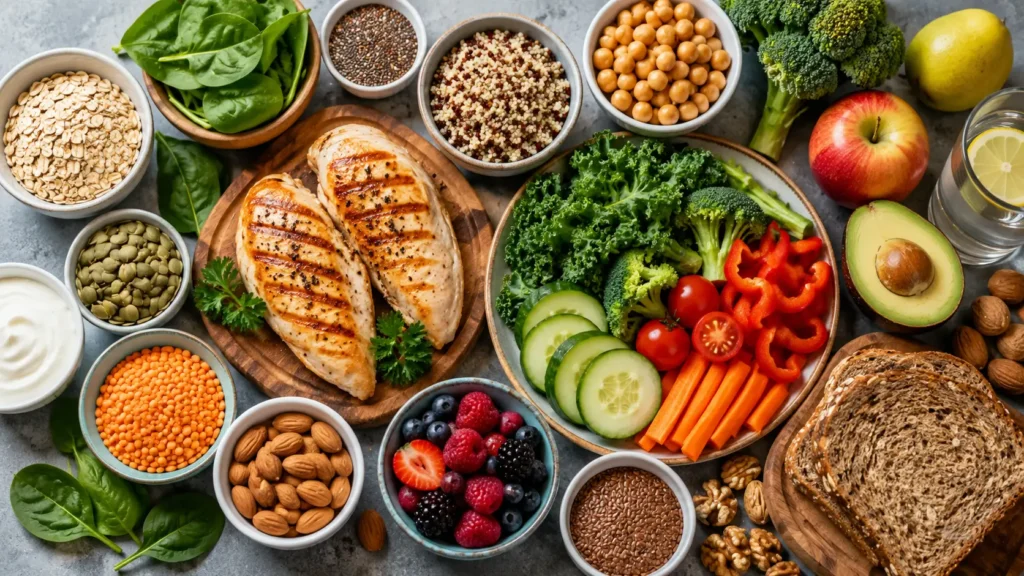
If you’re looking for practical, grocery-list-ready answers, here are some of the most reliably filling foods to build meals and snacks around:
Protein-rich options:
- Eggs
- Greek yogurt or cottage cheese
- Chicken breast, turkey, or lean beef
- Fish and seafood
- Tofu, tempeh, or edamame
- Lentils, chickpeas, and beans
Fiber-rich options:
- Oats and whole grains
- Leafy greens (spinach, kale, arugula)
- Cruciferous vegetables (broccoli, cauliflower, Brussels sprouts)
- Apples, pears, and berries
- Chia seeds and flaxseeds
- Popcorn (air-popped, lightly seasoned)
Combination foods that check multiple boxes:
- A baked potato with the skin on (surprisingly filling per calorie)
- Vegetable-and-bean soups or stews
- Overnight oats with Greek yogurt and berries
- A salad topped with grilled chicken, chickpeas, and olive oil dressing
- Nut butter on whole-grain toast with sliced banana
The common thread across almost every one of these foods is simple: protein, fiber, and water content are the three biggest levers you have for feeling full on fewer calories.
A Realistic Example: What a Fuller Day of Eating Looks Like
It’s easier to picture all of this in action than to just read about it in theory. Here’s a rough, non-prescriptive example of how someone might restructure a day of eating to work with their hunger instead of against it:
- Breakfast: Greek yogurt with berries, chia seeds, and a drizzle of honey — protein, fiber, and enough volume to actually feel like a meal.
- Mid-morning (if needed): A piece of fruit with a small handful of almonds.
- Lunch: A large salad with grilled chicken or chickpeas, plenty of vegetables, and an olive-oil-based dressing.
- Afternoon slump snack: Hummus with sliced vegetables, or cottage cheese with cucumber — timed right before the point in the day hunger usually spikes.
- Dinner: A protein source, a fiber-rich starch like a baked sweet potato or lentils, and a generous portion of vegetables.
Notice what’s missing: nothing here is exotic, expensive, or restrictive. The pattern is simply protein plus fiber plus volume, spaced out across the day instead of concentrated into Low protein or low fiber meals. That structure alone resolves a surprising amount of “Always Hungry While Losing Weight” complaints.
When Hunger Might Mean Something More
Occasional hunger while dieting is completely normal. But it’s worth checking in with a doctor if you notice:
- Hunger so intense it disrupts sleep or daily functioning
- Sudden, unexplained increases in appetite unrelated to dieting
- Hunger paired with symptoms like extreme fatigue, shakiness, or dizziness
- A pattern of restrict-then-binge eating that feels out of your control
These can sometimes point to blood sugar issues, an overly aggressive calorie deficit, or a relationship with food that would benefit from professional support — and there’s no shame in getting help sorting that out.
Final Thoughts: Always Hungry While Losing Weight
Always Hungry While Losing Weight isn’t a sign that you’re doing something wrong — in many cases, it’s a sign that your body is doing exactly what it evolved to do. The goal isn’t to muscle through relentless hunger through sheer willpower; it’s to build a plan around enough protein, enough fiber, enough sleep, and a calorie deficit your body can actually tolerate long-term.
Small, sustainable adjustments almost always beat aggressive, hunger-inducing ones — not just for your waistline, but for your sanity along the way.
FAQs: Always Hungry While Losing Weight
Is it normal to be always hungry while losing weight?Yes, to a degree. Hormonal shifts — particularly rising ghrelin and falling leptin — are a well-documented response to weight loss. That said, hunger that feels unbearable or extreme often means the calorie deficit is too aggressive for your body right now.
Why am I hungrier at night while dieting? Ghrelin naturally fluctuates throughout the day, and poor sleep or an under-fueled day can amplify evening hunger. Eating enough protein and fiber earlier in the day, rather than “saving calories” for later, often helps.
Does drinking more water reduce hunger? It can. Thirst is commonly mistaken for hunger, and starting meals with water or water-rich foods (like soups and salads) can help you feel fuller on fewer calories.
Will the constant hunger go away over time? For many people, hunger levels do partially adjust as the body adapts to a new, stable weight — though this can take weeks to months, and staying consistent with protein, fiber, and sleep habits makes the adjustment period more manageable.
Read More: FDA Approved Peptide Medications 2026: Weight Loss & Anti-Aging Guide