

Natural Ways to Improve Oxygen Saturation
Oxygen is the fuel your body runs on. Every cell, from your brain to your muscles, depends on a steady oxygen supply to function properly. When your blood oxygen level — medically known as oxygen saturation or SpO2 — drops even slightly below the normal range, you may notice fatigue, breathlessness, or trouble concentrating.
The good news is that there are several natural ways to improve oxygen saturation that you can start practicing today, right from the comfort of your home. In this guide, we’ll walk through the best natural methods to increase oxygen levels in the body, simple lifestyle tweaks, and dietary changes that support healthy breathing and circulation.
Disclaimer: This article is for general educational purposes only and is not a substitute for professional medical advice. The author is not a doctor. If your oxygen saturation is consistently below 94%, or if you experience shortness of breath, chest pain, bluish lips, or confusion, seek immediate medical attention.
Read More: Early Signs and Symptoms of Ulcerative Colitis to Watch For – Complete Management Guide
What Is Natural Ways to Improve Oxygen Saturation and Why Does It Matter?
Oxygen saturation (SpO2) measures the percentage of oxygen-carrying hemoglobin in your blood. A healthy adult typically has an SpO2 between 95% and 100%. This number can be measured easily at home using a small device called a pulse oximeter, which clips onto your fingertip.
When oxygen saturation drops, your organs don’t get the fuel they need to work efficiently. This can happen due to:
- Respiratory conditions like asthma or COPD
- High altitude living or travel
- Poor posture and shallow breathing habits
- Smoking or exposure to air pollution
- Anemia or poor circulation
- Sedentary lifestyle and lack of physical activity
Understanding the root cause is important, but many people look for how to improve oxygen saturation naturally at home as a way to support their lungs and circulation alongside any medical treatment they may already be receiving.
Best Natural Methods to Increase Oxygen Levels in the Body
Here are some of the most effective, doctor-recommended lifestyle habits that can support healthy oxygen levels over time.
1. Practice Deep Breathing Exercises
Shallow chest breathing is extremely common, especially for people who sit at a desk all day. Deep, diaphragmatic breathing helps your lungs expand fully, allowing more oxygen to enter your bloodstream.
Try this simple exercise:
- Sit or lie down comfortably
- Place one hand on your chest and one on your belly
- Inhale slowly through your nose, letting your belly rise (not your chest)
- Exhale slowly through pursed lips
- Repeat for 5–10 minutes, twice a day
2. Try Pursed-Lip Breathing
This technique is often used by people with breathing difficulties to slow down their breathing rate and keep airways open longer.
- Inhale through your nose for 2 counts
- Purse your lips as if blowing out a candle
- Exhale slowly through pursed lips for 4 counts
- Repeat for several minutes
3. Practice Alternate Nostril Breathing (Pranayama)
Alternate nostril breathing is a traditional yogic breathing technique believed to improve lung capacity and calm the nervous system. Many people include this as part of a daily routine focused on breathing exercises and diet for better oxygen absorption.
- Sit comfortably with your spine straight
- Close your right nostril with your thumb and inhale through the left nostril
- Close the left nostril, release the right, and exhale through the right
- Inhale through the right, then switch and exhale through the left
- Continue for 5–10 rounds
4. Get Regular Physical Activity
Exercise increases your heart rate and breathing rate, which trains your lungs to use oxygen more efficiently over time. You don’t need intense workouts — even brisk walking, light jogging, swimming, or cycling for 20–30 minutes most days can improve cardiovascular and respiratory efficiency.
5. Maintain Good Posture
Slouching compresses your lungs and restricts their ability to expand fully. Sitting and standing up straight allows your diaphragm and rib cage more room to move, which supports deeper, more effective breathing throughout the day.
6. Stay Well Hydrated
Blood is largely made up of water, and proper hydration helps blood flow more efficiently, carrying oxygen to tissues and organs. Aim to drink water consistently throughout the day rather than in large amounts at once.
7. Spend Time in Fresh, Well-Ventilated Air
Indoor air can be surprisingly low in oxygen and high in pollutants, especially in poorly ventilated spaces. Opening windows, spending time outdoors, and keeping indoor plants can help improve air quality around you.
8. Avoid Smoking and Secondhand Smoke
Smoking damages lung tissue and reduces the blood’s ability to carry oxygen efficiently. Quitting smoking — or avoiding secondhand smoke exposure — is one of the single most impactful steps for long-term lung health.
Natural Remedies to Boost Blood Oxygen Levels Through Diet
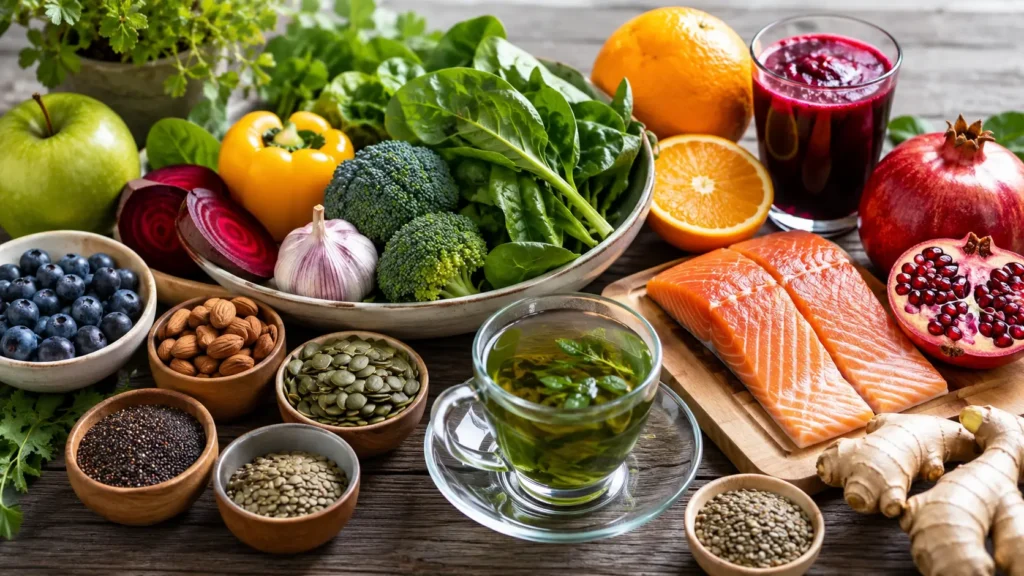
What you eat plays a bigger role in oxygen transport than most people realize. Below are foods that support healthy blood and circulation, which in turn helps your body use oxygen more effectively.
Iron-Rich Foods
Iron is essential for producing hemoglobin, the protein in red blood cells that carries oxygen. Include foods like:
- Spinach and other leafy greens
- Lentils and beans
- Pumpkin seeds
- Lean red meat or poultry (if non-vegetarian)
- Dried fruits like raisins and apricots
Foods Rich in Antioxidants
Antioxidants help protect your cells from oxidative stress and support overall circulatory health.
- Berries (blueberries, strawberries)
- Citrus fruits
- Nuts and seeds
- Green tea
Foods High in Nitrates
Nitrates can help relax and widen blood vessels, potentially improving blood flow and oxygen delivery.
- Beetroot
- Leafy greens like arugula and spinach
- Garlic
Stay Away from Processed and Sugary Foods
Excess processed food and sugar can contribute to inflammation and poor circulation over time, making it harder for your body to transport oxygen efficiently.
Simple At-Home Habits for Better Natural Ways to Improve Oxygen Saturation
If you’re specifically looking for how to improve oxygen saturation naturally at home, here are a few daily habits worth building into your routine:
- Sleep on your side rather than your back to keep airways open
- Use a humidifier if the air in your home is very dry
- Practice mindfulness or meditation, which naturally slows and deepens breathing
- Limit alcohol, which can suppress respiratory function
- Take breathing breaks during long periods of sitting or screen time
- Monitor your levels with a pulse oximeter if you have a known respiratory condition
When Should You See a Doctor?
While natural methods can support healthy oxygen levels, they are not a replacement for medical care. You should consult a healthcare professional if you experience:
- Persistent shortness of breath
- Oxygen saturation readings consistently below 94%
- Bluish tint to lips, face, or fingertips
- Chest pain or tightness
- Confusion, dizziness, or extreme fatigue
These can be signs of an underlying medical condition that requires proper diagnosis and treatment — natural remedies should be used to support your health, not to self-treat a serious symptom.
Conclusion: Natural Ways to Improve Oxygen Saturation
Natural Ways to Improve Oxygen Saturation comes down to consistent, simple habits: deep and mindful breathing, regular movement, a nutrient-rich diet, good posture, and clean air. These natural remedies to boost blood oxygen levels work best as part of an overall healthy lifestyle, alongside regular checkups with your doctor — especially if you have an existing respiratory or heart condition.
Small, consistent changes often make the biggest difference. Start with just five minutes of deep breathing a day, add a few iron-rich foods to your meals, and take a short walk outdoors — your lungs and body will thank you.
FAQs: Natural Ways to Improve Oxygen Saturation
Q1. Can breathing exercises really Natural Ways to Improve Oxygen Saturation? Yes, deep breathing exercises like diaphragmatic breathing and pursed-lip breathing can help your lungs work more efficiently, which may support healthier oxygen levels over time.
Q2. What foods increase oxygen in the blood naturally? Iron-rich foods (spinach, lentils, seeds), antioxidant-rich foods (berries, citrus), and nitrate-rich foods (beetroot, leafy greens) all support healthy blood and circulation.
Q3. What is a normal oxygen saturation level? A healthy adult typically has an SpO2 reading between 95% and 100%, measured with a pulse oximeter.
Q4. Is walking good for Natural Ways to Improve Oxygen Saturation? Yes, regular moderate exercise like walking helps train your lungs and heart to use oxygen more efficiently.
Q5. When is low oxygen saturation a medical emergency? If your SpO2 drops below 90%, or you experience severe breathlessness, confusion, or bluish lips, seek emergency medical care immediately.
Read More: Best Supplements for Joint Pain and Arthritis Relief | Natural Vitamins for Joint Health 2026