Important Notice: I am not a doctor or medical professional. This article is written purely for informational and educational purposes only. Nothing in this post should be considered medical advice. Please always consult your qualified doctor before making any decisions about your medication.
What Is the Oxford Study on Statin Side Effects?
The Oxford study on statin side effects was led by researchers at Oxford Population Health, University of Oxford. It was published in The Lancet — one of the most trusted medical journals in the world — on 5 February 2026.
This was not a small or quick study. Here is the scale of what they did:
- Analyzed data from 23 large-scale randomized clinical trials
- Included data from over 150,000 patients in total
- All trials were double-blind — neither patients nor doctors knew who received the real statin or a dummy placebo pill
- Patients were followed for nearly 5 years on average
The double-blind design is crucial. When nobody knows who is taking what, expectations cannot influence the results. This eliminates one of the biggest sources of bias in medical research.
The result? The most reliable picture of statin side effects we have ever had.
Read More: AI Chatbots for Teen Mental Health: Are Teens Replacing Therapists With ChatGPT?
The Finding That Shocked the Medical World
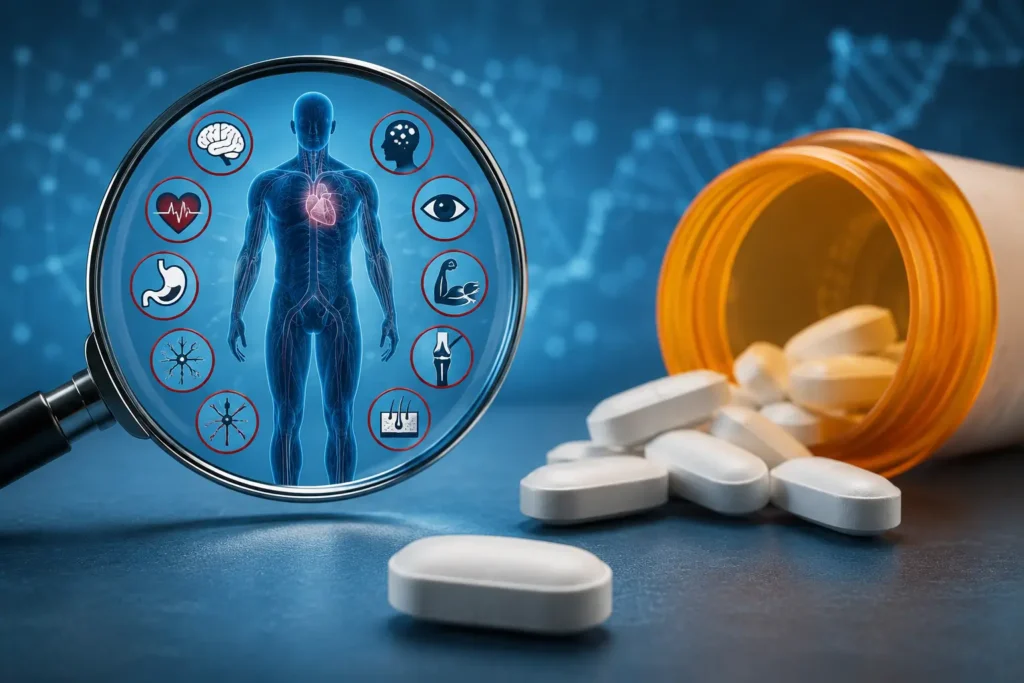
Statin Side Effects medicine packets commonly list 66 possible side effects. The Oxford team checked every single one against their data from 150,000+ patients.
Here is what they found:
62 out of 66 listed side effects showed NO significant difference between people taking statins and people taking a dummy pill.
Read that again. People swallowing a placebo — a pill with zero medicine in it — were just as likely to report memory problems, sleep issues, depression, and dozens of other symptoms as those taking the actual drug.
This is one of the biggest findings in heart health research in years. And it is why this study is still being talked about months after it was published.
Are Statin Side Effects Real or Exaggerated? Here Is the Truth
The question are statin side effects real or exaggerated has divided patients and doctors for over two decades. Social media is full of people claiming statins destroyed their memory, ruined their sleep, or caused depression. Doctors push back. Patients feel unheard. Trust breaks down.
This Oxford research is the most powerful answer yet — and it suggests that for the majority of listed side effects, the fear has been far greater than the reality.
Here is a clear breakdown of what the study found:
Side Effects NOT Caused by Statins:
| Symptom | Statin Group | Placebo Group | Verdict |
|---|---|---|---|
| Memory loss / cognitive impairment | 0.2% per year | 0.2% per year | Not caused by statins |
| Depression | No excess risk | Same | Not caused by statins |
| Sleep disturbance / insomnia | No excess risk | Same | Not caused by statins |
| Erectile dysfunction | No excess risk | Same | Not caused by statins |
| Weight gain | No excess risk | Same | Not caused by statins |
| Fatigue and headaches | No excess risk | Same | Not caused by statins |
| Nausea | No excess risk | Same | Not caused by statins |
| Peripheral neuropathy | No excess risk | Same | Not caused by statins |
The memory loss numbers are particularly eye-opening. The rate of cognitive complaints was 0.2% per year in both groups — completely identical. This directly answers the long-debated question: do statins cause memory loss and depression? Based on the best available trial data, the answer is no.
Why Do People Feel Side Effects That Statins Are Not Causing?
This is where an important scientific concept comes in — the nocebo effect in cholesterol medication patients.
Most people know about the placebo effect — feeling better because you believe a treatment is helping. The nocebo effect is the opposite: you feel worse because you expect to.
When a patient reads a list of 66 frightening side effects before taking their first statin, their brain is primed. A normal headache suddenly feels like proof. A restless night becomes “the statin affecting my sleep.” Mild joint pain that would have been ignored becomes “muscle damage.”
This is not imaginary. The symptoms are completely real. But the cause is expectation and anxiety — not the drug.
The Oxford study provides the strongest scientific evidence yet that the nocebo effect has been playing a massive, underappreciated role in statins cause memory loss and depression complaints around the world.
What Side Effects DO Statins Actually Cause?
The Oxford researchers were clear — statins are not completely side-effect free. A small number of genuine risks are confirmed:
Confirmed Real Side Effects:
1. Muscle pain (myalgia) Statins cause muscle aches in roughly 1% of patients in the first year — about 11 extra cases per 1,000 people. Rare but serious muscle conditions (myopathy) also exist. If you have significant muscle pain, speak to your doctor.
2. Small increase in blood sugar Statins can slightly raise blood glucose. People already at the edge of a type 2 diabetes diagnosis may develop it a little sooner. Even so, researchers note the heart protection benefits outweigh this in most patients.
3. Minor liver enzyme elevation A small increase of around 0.1% in abnormal liver blood test results was found, mainly at higher doses. Importantly, this did NOT lead to actual liver disease, hepatitis, or liver failure.
4. Minor urinary composition changes Some changes were noted in urinary markers. Their clinical significance remains under study.
That is it. Four confirmed concerns — out of 66 listed on the packet.
What the Lead Researcher Said
Lead author Christina Reith, Associate Professor at Oxford Population Health, explained:
“Statins are life-saving drugs used by hundreds of millions of people over the past 30 years. However, concerns about the safety of statins have deterred many people who are at risk of severe disability or death from a heart attack or stroke. Our study provides reassurance that, for most people, the risk of side effects is greatly outweighed by the benefits of statins.”
What Should You Do With This Information?
Again — I am not a doctor, so please treat this as informational only. But here is what the research suggests:
- Fear of memory loss or depression should not keep you off statins. The data shows no link in 150,000+ patients.
- Muscle pain is worth discussing with your doctor — it is a confirmed real side effect, even if rare.
- Blood sugar monitoring makes sense if you have diabetes risk factors.
- Never stop your medication without speaking to your doctor first. Stopping statins suddenly, especially after a cardiac event, carries real risks.
- Knowing about the nocebo effect can actually help you. Research shows that when patients are told their symptoms may be expectation-driven rather than drug-driven, many of those symptoms actually reduce.
The Bottom Line
The Oxford study on statin side effects is the largest and most rigorous review of its kind ever conducted — and its message is clear.
Sixty-two out of sixty-six side effects listed on statin packets are not supported by gold-standard clinical trial evidence. The nocebo effect — not the drug — appears to be driving the majority of statin complaints worldwide.
The confirmed real risks are small, rare, and manageable. The heart-protecting benefits are large, proven, and potentially life-saving.
Read More: H5N1 Bird Flu Third Positive Result Recorded — Should You Be Worried?