
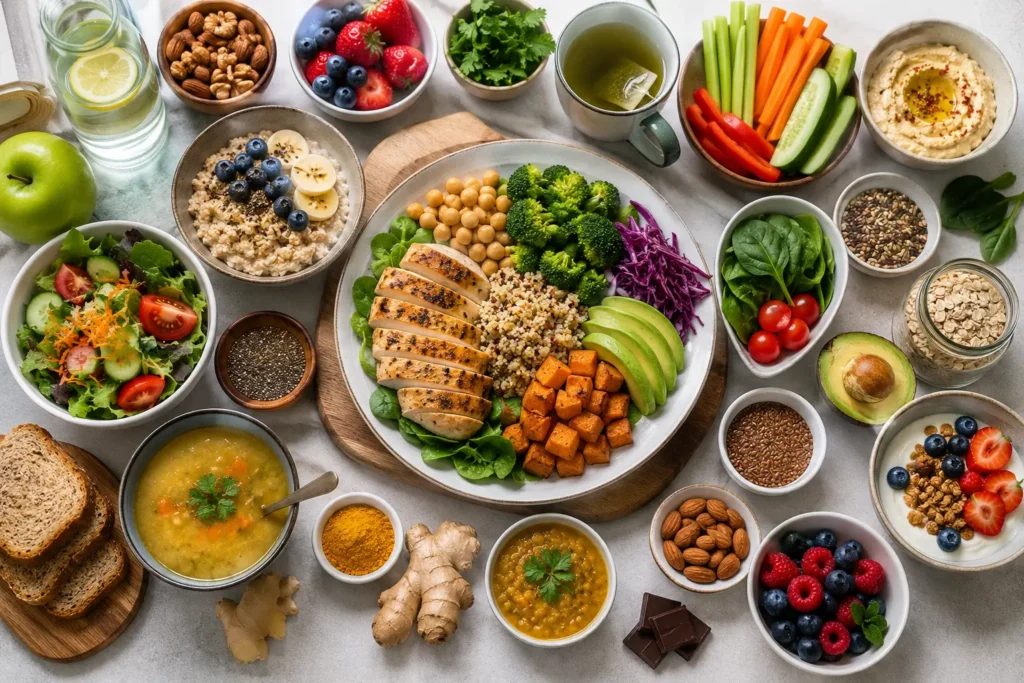
Food as Medicine Diet Plan
For years, the wellness industry told us to fix our health with a pill. Walk into any pharmacy and you’ll see shelves stacked with multivitamins, fish oil, and powdered greens promising everything from better skin to sharper focus. But in 2026, a quiet shift is happening. Registered dietitians and doctors are pushing a food as medicine diet plan instead of a supplement-first approach, and the science behind it is hard to ignore.
What Does “Food as Medicine” Actually Mean?
The idea is simple: instead of treating food as just fuel, you treat it as a tool to prevent and manage disease. A tomato isn’t just dinner, it’s lycopene. A handful of walnuts isn’t a snack, it’s omega-3s for your brain. This isn’t a new concept, but it’s gaining traction because more people are realizing that no pill can fully replace the hundreds of compounds working together in a single whole food.
Read More: Internal Shower Drink Chia Seeds: What It Actually Does to Your Gut
Why Dietitians Are Moving Away From Supplements
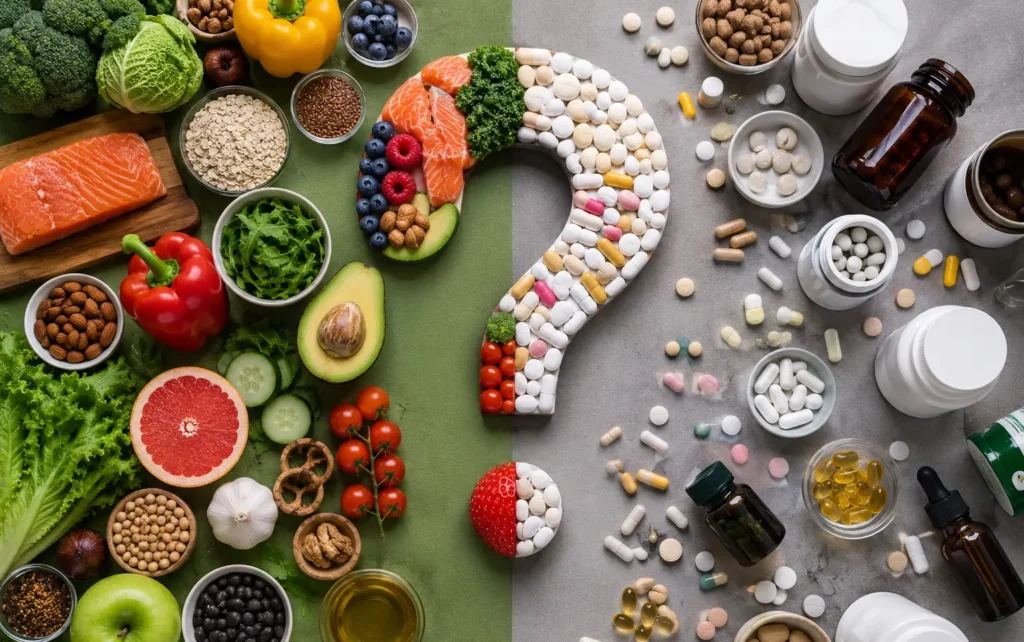
Dietitians aren’t saying supplements are useless. They’re saying most people don’t need a cabinet full of them when a few diet changes would do more.
The Problem With Relying on Pills Alone
- Supplements are isolated nutrients, while whole foods deliver fiber, antioxidants, and minerals together
- Your body absorbs nutrients from food more efficiently than from synthetic capsules
- Overuse of supplements can mask poor eating habits instead of fixing them
- Many supplements lack strict FDA regulation, so quality varies widely between brands
This is the real answer to the question, can diet really replace supplements? In most healthy adults without a diagnosed deficiency, a well-planned diet can cover the bulk of what a multivitamin claims to offer.
Best Anti-Inflammatory Foods for Chronic Disease
If you’re dealing with joint pain, fatigue, or a chronic condition, these anti-inflammatory foods for chronic disease are a good place to start:
- Fatty fish like salmon and sardines (rich in omega-3s)
- Leafy greens such as spinach and kale
- Berries, especially blueberries and cherries
- Extra virgin olive oil instead of refined cooking oils
- Turmeric and ginger added to everyday meals
- Nuts and seeds, particularly walnuts and flaxseeds
These foods don’t just reduce inflammation, they also support heart health, gut health, and long-term energy levels, which is why they sit at the center of most longevity-focused diets today.
How to Build a Whole Food Meal Plan for Gut Health
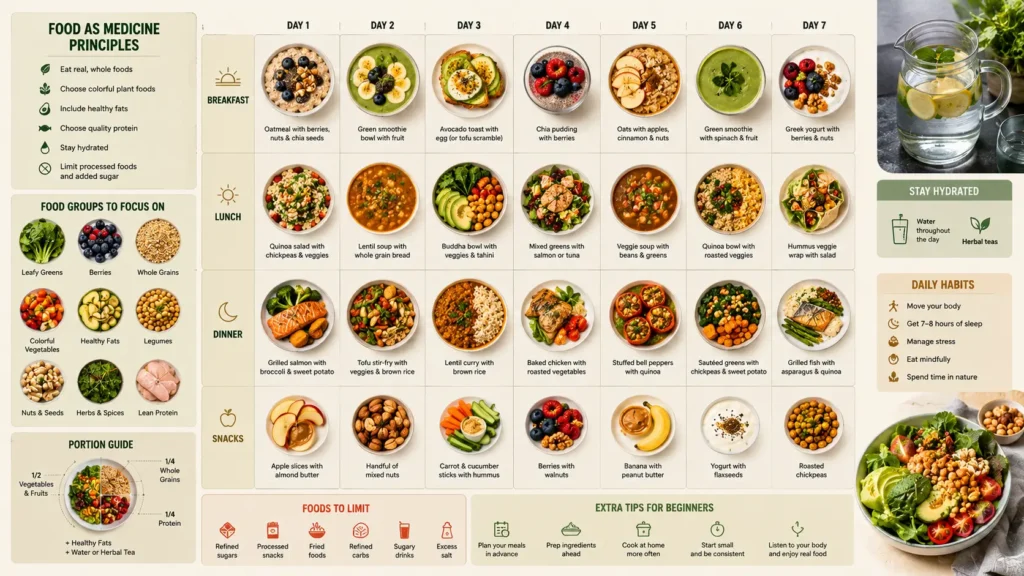
Your gut microbiome plays a bigger role in your overall health than most people realize, influencing everything from digestion to mood. Here’s a simple whole food meal plan for gut health you can start this week:
- Breakfast: Greek yogurt with berries and a spoon of ground flaxseed
- Lunch: A big salad with leafy greens, beans, olive oil, and grilled chicken or tofu
- Snack: A handful of almonds or a piece of fruit
- Dinner: Salmon or lentils with roasted vegetables and a side of fermented foods like sauerkraut or kimchi
Rotating in fermented foods a few times a week feeds the good bacteria in your gut, something no probiotic capsule can fully replicate on its own.
A Simple Food As Medicine Diet Plan for Beginners
If you’re just getting started, don’t try to overhaul your entire diet overnight. This beginner-friendly approach makes it manageable:
- Week 1: Add one extra vegetable to lunch and dinner
- Week 2: Swap one processed snack a day for fruit or nuts
- Week 3: Introduce a fermented food and a fatty fish meal weekly
- Week 4: Cut back on one supplement you don’t actually need and track how you feel
Small, consistent changes are far more sustainable than drastic diets, and they’re the foundation of any real food as medicine diet plan for beginners.
The Bottom Line
Supplements still have their place, especially for people with diagnosed deficiencies, certain medical conditions, or limited access to fresh food. But for most healthy adults, a plate full of colorful, whole, nutrient-dense food will do more for long-term health than a handful of pills ever could. The trend toward food as medicine isn’t a fad, it’s a return to something we’ve always known but conveniently forgot: real food heals.
Have you tried swapping a supplement for a whole food alternative? Share your experience in the comments below.
Read More: Do Calcium Supplements Prevent Bone Fractures? Here’s What the Research Says