
Tea Longevity Heart Disease Prevention 2026
If you reach for a cup of tea every morning, science just gave you one more reason to feel great about that habit. A major new review published in June 2026 confirms that tea longevity heart disease prevention 2026 is no longer just folk wisdom — it is backed by hard evidence. But here is the catch most Americans are missing: the way you drink your tea matters just as much as whether you drink it at all.
Researchers have found that best tea for cancer cognitive decline prevention comes down to how your cup is prepared — and if you have been sipping on bottled teas or bubble tea from your local boba shop, you may actually be doing more harm than good.
What the New 2026 Study Actually Found
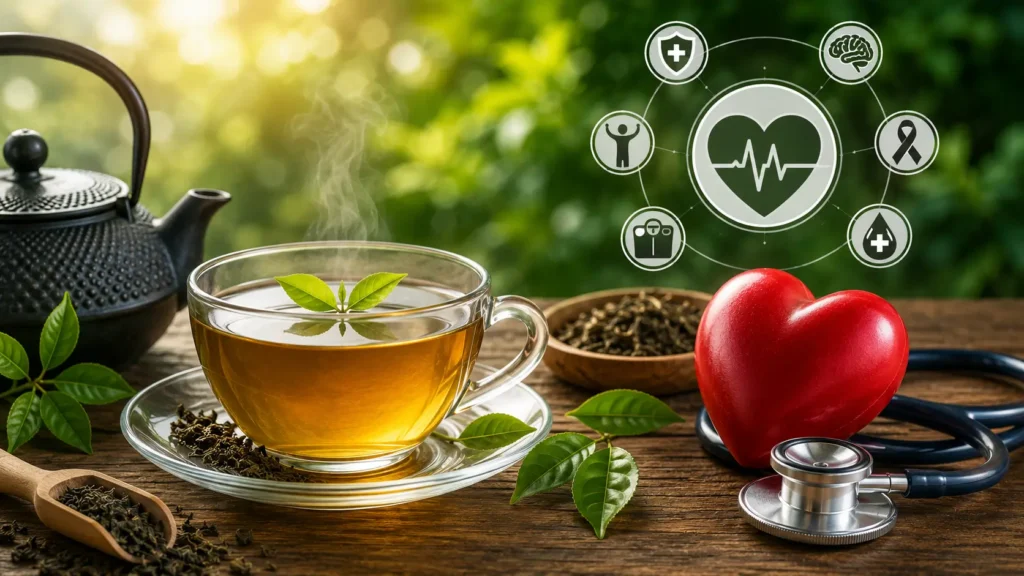
Published in the journal Beverage Plant Research and picked up by ScienceDaily on June 9, 2026, the comprehensive review was led by scientists from the Tea Research Institute at the Chinese Academy of Agricultural Sciences. The findings are remarkable:
- Heart health: Green tea is strongly linked to lower blood pressure and improved cholesterol levels. Regular tea drinkers show significantly reduced risk of cardiovascular disease (CVD).
- Cancer protection: Tea polyphenols — particularly catechins — are associated with lower rates of several types of cancer.
- Brain protection: Regular tea drinkers, especially older adults, show lower rates of cognitive decline and fewer biomarkers linked to Alzheimer’s disease. A separate 10-year longitudinal study confirmed that consistent tea drinking reduces cognitive decline risk by 14%.
- Diabetes management: Tea is linked to better insulin sensitivity and improved metabolic function.
- Muscle preservation: Tea catechins may help slow age-related muscle loss, supporting strength and physical function in seniors.
The conclusion is clear: drinking tea regularly is one of the most accessible, affordable health upgrades available to Americans today.
The Big Problem: How Most Americans Drink Tea
Despite all these benefits, the same 2026 review raised a serious warning that directly applies to American tea habits. The issue is not tea itself — it is what has been done to tea before it reaches your cup.
Bubble Tea vs Green Tea Health Risk Comparison 2026
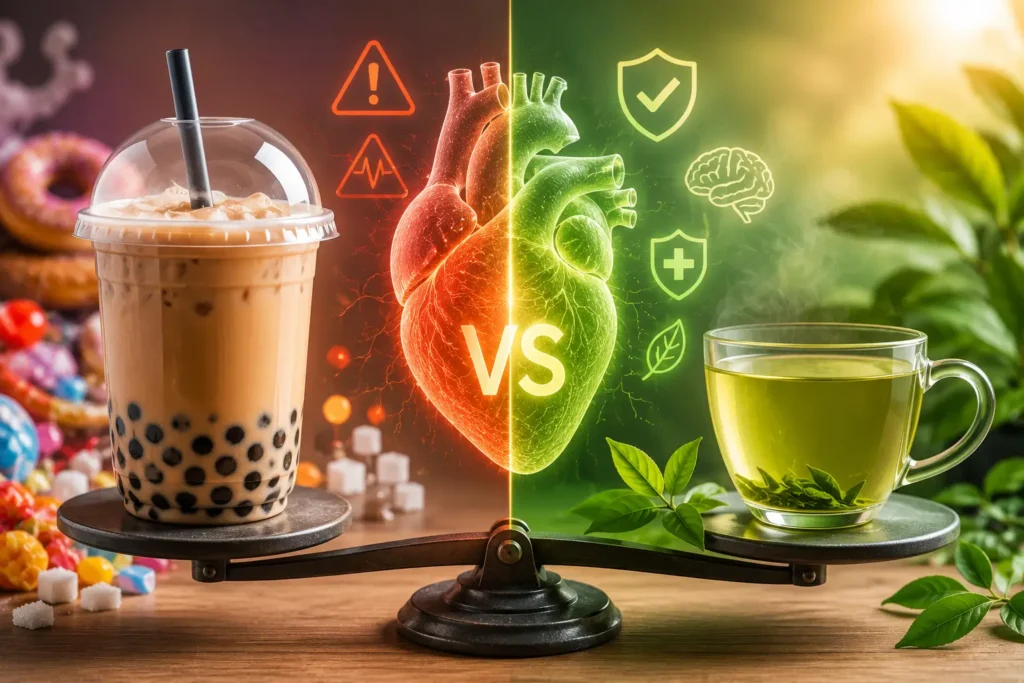
This bubble tea vs green tea health risk comparison 2026 is genuinely eye-opening. Here is what the research shows:
Freshly Brewed Green Tea:
- Rich in catechins and polyphenols (the active compounds behind all the health benefits)
- No added sugar, no artificial sweeteners
- Linked to reduced CVD, cancer, diabetes, and cognitive decline
- 2–3 cups per day is the sweet spot recommended by researchers
Bubble Tea (Boba):
- Often contains more sugar than a can of soda
- Tapioca pearls add 150–200 empty calories per serving
- Non-dairy creamers introduce saturated and trans fats
- Artificial sweeteners and preservatives may cancel out tea’s natural polyphenol benefits
- Linked to raised risks of obesity, type 2 diabetes, fatty liver disease, and poor dental health
- Some reports connect frequent consumption to kidney stones and worsened mental health
Bottled Iced Tea:
- Catechins are largely destroyed during commercial processing and pasteurization
- High-fructose corn syrup and artificial additives are common
- The “tea” label is often misleading — the health benefits of actual tea are largely absent
The bottom line from researchers: if you are drinking processed tea drinks thinking you are getting the same benefits as a freshly brewed cup, you are not.
How to Drink Tea for Maximum Health Benefits — 7 Proven Tips
Understanding how to drink tea for maximum health benefits research points toward these seven simple but powerful rules:
1. Always brew fresh. Bag, loose leaf, or whole leaf — brewing tea at home gives you full control over what goes in your cup. The catechins that protect your heart and brain degrade quickly in commercial processing.
2. Choose green tea as your daily driver. Green tea has the most robust body of research behind it. It consistently outperforms black, oolong, and white tea across cardiovascular, metabolic, and brain-health studies — though all have merits.
3. Skip the sugar entirely. Adding even a small amount of sugar begins to blunt the metabolic benefits of tea. If you need sweetness, a small drizzle of raw honey is a far better choice.
4. Drink 2–3 cups per day consistently. The 10-year longitudinal study found that inconsistent tea drinkers saw no significant reduction in cognitive decline risk. Consistency is what unlocks the long-term benefits.
5. Do not drink tea immediately after meals. Tea contains tannins that can bind to non-heme iron and calcium, reducing how well your body absorbs them. Wait at least 30–60 minutes after eating, especially if you follow a plant-based diet.
6. Watch the temperature. Very hot tea (above 149°F / 65°C) has been associated with increased esophageal cancer risk in some studies. Let your cup cool slightly before drinking.
7. Be mindful of contaminants. The 2026 review flagged traces of pesticides, heavy metals, and microplastics in some commercial teas. Choosing certified organic tea and filtering your brewing water reduces this risk significantly.
Best Tea for Cancer and Cognitive Decline Prevention
When it comes to the best tea for cancer cognitive decline prevention, the research points to specific compounds:
- EGCG (Epigallocatechin gallate): The most powerful catechin in green tea, EGCG has shown the ability to interfere with tumor cell growth and protect neurons from Alzheimer’s-related damage.
- L-Theanine: An amino acid found almost exclusively in tea, L-theanine promotes calm, focused mental energy and may support brain health over time.
- Polyphenols and flavonoids: These antioxidants reduce oxidative stress and inflammation — two major drivers of both cancer development and cognitive aging.
Green tea is the richest source of all three. For cancer prevention specifically, studies show benefits with both green and black tea, but green tea’s catechin content is significantly higher.
The Bottom Line
The science behind tea longevity heart disease prevention 2026 is compelling and growing stronger every year. Tea is one of the few everyday habits with solid, peer-reviewed evidence behind it across multiple major disease categories — heart disease, cancer, diabetes, and cognitive decline.
But the research is equally clear about the risks of processed tea drinks. If your current tea habit looks like a weekly boba run or a daily bottled iced tea from a gas station, you are missing the benefits almost entirely.
Read More: Ozempic Linked to 30% Lower Breast Cancer Risk: What the 2026 Study Found