
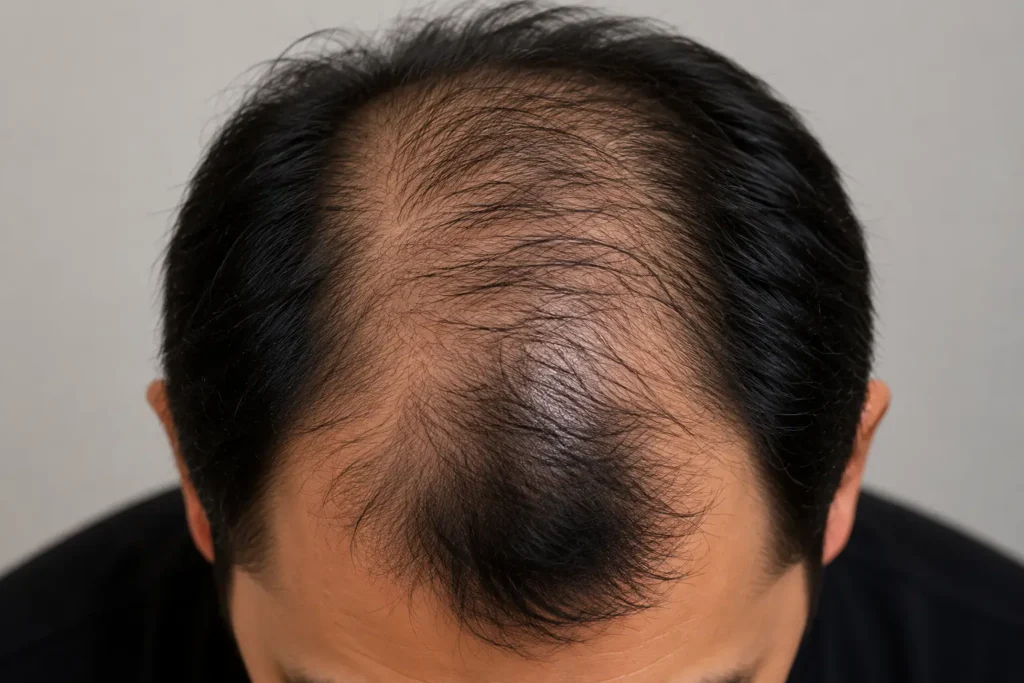
Chinese Herb Polygonum Multiflorum Hair Loss
Somewhere in a research lab in 2026, scientists are paying serious attention to a vine root that ancient Chinese healers were using over a thousand years ago.
Its name is Polygonum multiflorum — known in China as He Shou Wu, meaning “Mr. He’s black hair.” And according to a wave of new scientific reviews published this year, this traditional Chinese medicine hair loss treatment may work in ways that surprisingly align with cutting-edge hair biology.
What Is Polygonum Multiflorum? A Quick Background
Polygonum multiflorum is a flowering vine native to China, where its tuberous root has been harvested and used in traditional Chinese medicine for more than 1,000 years. Its earliest recorded use dates back to the Song Dynasty (973–974 A.D.), where practitioners used it to:
- Darken and strengthen hair
- Nourish the liver and kidneys
- Supplement blood and “essence”
- Combat premature aging
In Western markets, you will often find it sold under the name Fo-Ti. The name He Shou Wu itself comes from a centuries-old legend about an elderly man who rediscovered his dark, thick hair after consuming the root — a story that has fueled its reputation as a natural hair-restoring tonic ever since.
Today, androgenetic alopecia — commonly known as male or female pattern hair loss — affects an estimated 160 million people worldwide. With finasteride and minoxidil as the main FDA-approved options, many Americans are increasingly looking for gentler, more natural alternatives. That search has brought Polygonum Multiflorum Hair Loss back into the scientific spotlight.
Read More: Ozempic Linked to 30% Lower Breast Cancer Risk: What the 2026 Study Found
The New 2026 Research: What Scientists Actually Found
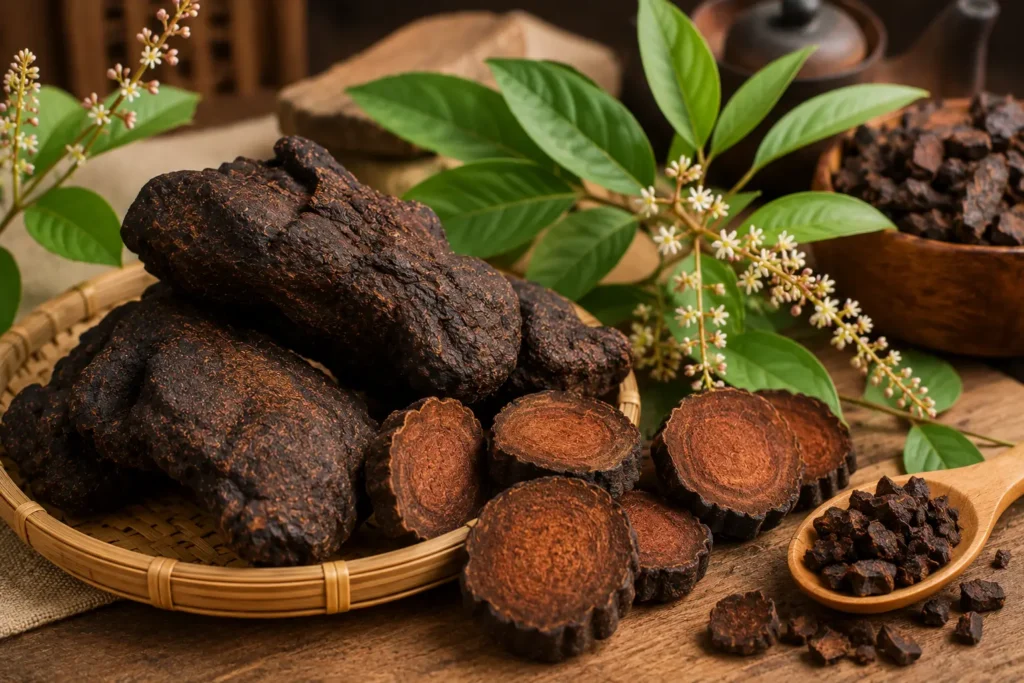
A new scientific review published in early 2026 and covered by ScienceDaily in June 2026 has put Polygonum multiflorum at the center of the conversation on Chinese herb for hair growth new research.
The review analyzed multiple lab studies and clinical reports on the herb and concluded something remarkable: unlike most standard hair loss treatments that target a single biological pathway, Polygonum multiflorum appears to work on multiple fronts simultaneously.
Here is what the research found it does:
4 Proven Ways Polygonum Multiflorum Hair Loss
It Blocks DHT — The Hormone That Shrinks Your Follicles
Dihydrotestosterone, or DHT, is the primary hormonal driver of androgenetic alopecia. When DHT binds to hair follicle receptors, it causes the follicles to miniaturize — producing progressively thinner, shorter hair until growth stops entirely.
As a natural DHT blocker hair growth herb study 2026 confirms, Polygonum multiflorum contains compounds — particularly emodin — that inhibit 5-alpha reductase, the enzyme responsible for converting testosterone into DHT. This is the same mechanism targeted by the prescription drug finasteride, but through a natural pathway.
The review states that Polygonum Multiflorum Hair Loss “may help reduce the effects of dihydrotestosterone, potentially protecting hair follicles from one of the main causes of pattern baldness.”
It Protects Follicle Cells from Premature Death
One of the lesser-known drivers of hair loss is follicle cell apoptosis — the premature death of the cells that make up your hair follicles. Once follicle cells die, regrowth becomes increasingly difficult.
Polygonum multiflorum contains a compound called TSG (2,3,5,4′-Tetrahydroxystilbene-2-O-β-D-glucoside) that has demonstrated powerful anti-apoptotic effects in hair follicle studies — essentially acting as a cellular bodyguard that keeps follicle cells alive longer.
It Boosts Blood Circulation to the Scalp
Hair follicles need a constant supply of oxygen and nutrients delivered through blood flow. Reduced scalp circulation — common in people with tight scalp tension or metabolic conditions — is a contributing factor to miniaturization.
Research shows that Polygonum multiflorum may improve microcirculation in the scalp, enhancing the delivery of nutrients directly to the follicle base. Interestingly, TSG (the same compound that protects follicle cells) has been compared to minoxidil in its effect on vascular endothelial cells — the cells lining blood vessels.
It Targets Multiple Hair Loss Pathways at Once
This is where Polygonum multiflorum stands apart from most available treatments.
- Finasteride targets only DHT reduction
- Minoxidil works mainly by extending the growth phase and improving blood flow
- Polygonum Multiflorum Hair Loss targets DHT, follicle apoptosis, growth signaling, AND blood flow — all simultaneously
As researchers noted in the 2026 review, this multi-target approach is theoretically ideal because androgenetic alopecia is not caused by a single broken switch — it is a network problem. A solution that addresses multiple pathways may produce more comprehensive results.
Traditional Chinese Medicine Hair Loss Treatment Science
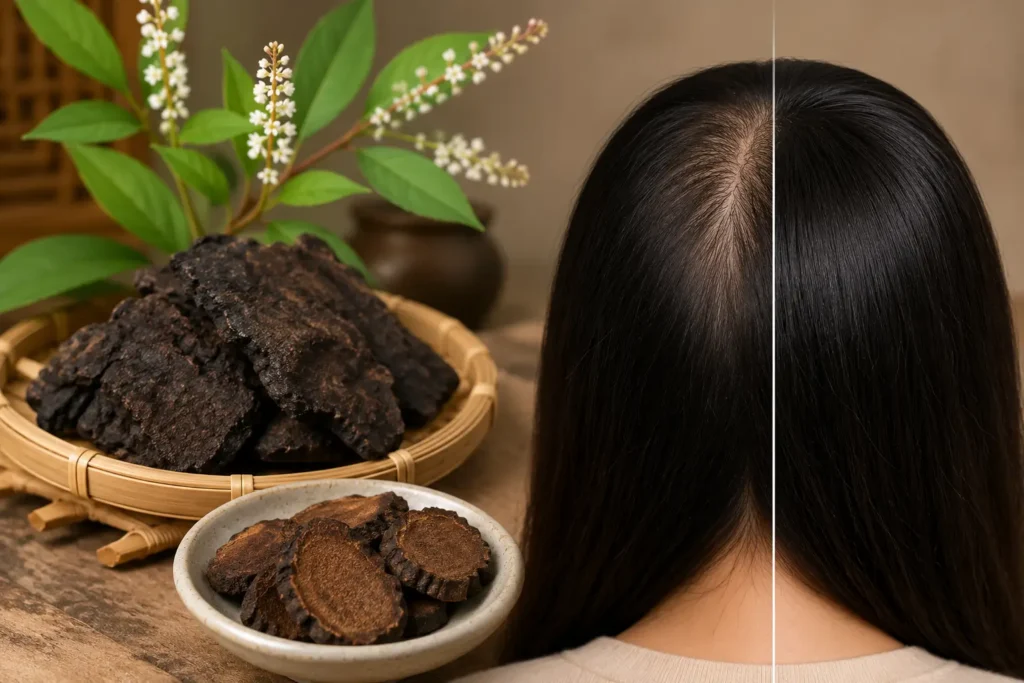
Here is the fully honest answer based on the current science:
Promising? Absolutely. Proven for humans? Not yet.
The majority of the studies supporting Polygonum Multiflorum Hair Loss are:
- Cell culture studies (in vitro)
- Animal studies (mice)
- Retrospective reviews of traditional use
What is still missing:
- Large-scale randomized controlled clinical trials in humans
- FDA approval for hair loss treatment
- Standardized dosing guidelines
Dermatologist Dr. Cindy Wassef confirmed that while the herb’s mechanisms are biologically plausible, “there is very limited clinical research on how Polygonum multiflorum can reactivate dormant follicles — it is unlikely that this alone can stimulate follicles without other supportive treatments.”
The scientific consensus right now: worth watching closely, but not yet ready to replace minoxidil or finasteride.
The Safety Warning You Cannot Skip: Liver Risk Is Real
Before you order a bottle of Fo-Ti from Amazon, you need to understand one critical safety concern.
Polygonum Multiflorum Hair Loss has been linked to liver injury (hepatotoxicity).
According to NIH’s LiverTox database:
- Cases of clinically apparent acute liver injury have been reported globally
- In some cases, the liver injury has been severe or fatal
- The risk appears to be idiosyncratic — linked to the HLA gene allele B*35:01, meaning certain people are genetically more susceptible
- Raw (unprocessed) He Shou Wu carries the highest risk — the traditional processed form (steamed in black bean liquid) is considered safer
- Recurrence of liver injury after restarting the herb is common — do not rechallenge if you have had a reaction
Bottom line on safety:
- Use only processed (zhi heshouwu) forms — never raw
- Buy from reputable, third-party tested brands
- Start with the lowest effective dose
- Do not use if you have pre-existing liver conditions
- Stop immediately and see a doctor if you notice yellowing skin, dark urine, or abdominal pain
How Does It Compare to Polygonum Multiflorum and Minoxidil and Finasteride?
| Feature | Polygonum Multiflorum | Minoxidil | Finasteride |
|---|---|---|---|
| DHT Blocking | Yes (partial) | No | Yes (primary mechanism) |
| Extends Anagen Phase | Yes | Yes | No |
| Boosts Scalp Blood Flow | Yes | Yes | No |
| FDA-Approved for Hair Loss | No | Yes | Yes |
| Human Clinical Trial Data | Limited | Extensive | Extensive |
| Liver Risk | Rare but real | None | None |
| Available OTC | Yes | Yes | Prescription only |
Who Should Consider Polygonum Multiflorum for Hair Loss in 2026?
You may be a good candidate if you:
- Are in the early stages of androgenetic alopecia
- Have experienced side effects from finasteride (sexual dysfunction is a common complaint)
- Are interested in a complementary approach alongside minoxidil
- Prefer natural, plant-based wellness products
- Have no pre-existing liver conditions
You should avoid it if you:
- Have a history of liver disease or hepatitis
- Are taking other medications that affect liver function
- Are pregnant or breastfeeding
- Are looking for a quick fix — hair regrowth with any treatment takes months
The Bottom Line
The 2026 scientific spotlight on Polygonum multiflorum hair loss research confirms what traditional Chinese medicine practitioners have known for a millennium: this root does something real in the hair follicle environment.
The natural DHT blocker hair growth herb study 2026 data shows it inhibits DHT, protects follicle cells, activates growth pathways, and improves scalp blood flow — a multi-pronged approach that no single FDA-approved drug currently matches. Chinese herb for hair growth new research suggests clinical trials are on the horizon.
Read More: Oura Ring 5 vs WHOOP 5: Which Health Tracker Is Right for You in 2026?