
Microplastics Health Effects on Human Body 2026: What Science Is Discovering Right Now
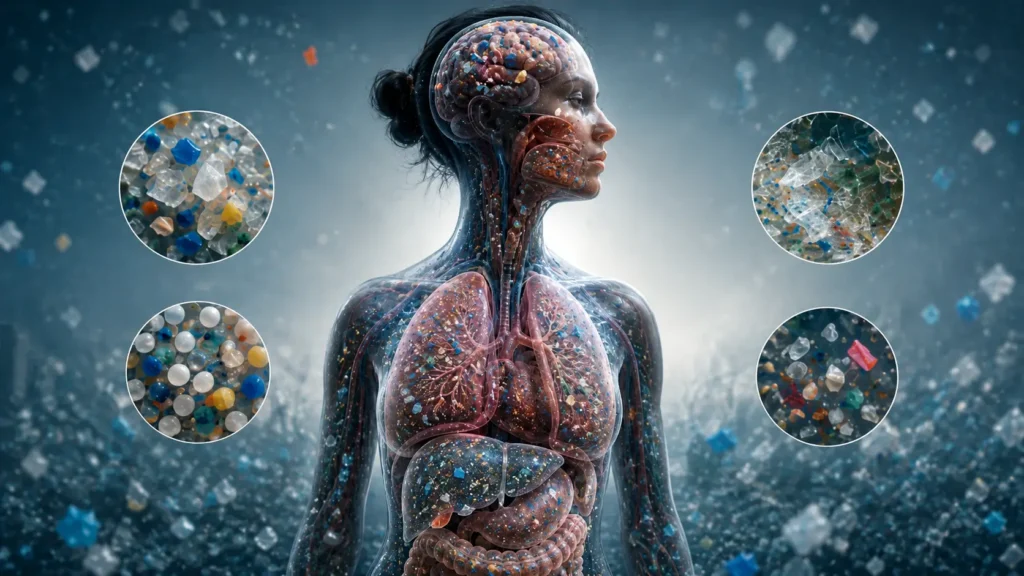
You cannot see them. You cannot taste them. But every single day, you are swallowing, breathing, and absorbing thousands of tiny plastic particles into your body. The microplastics health effects on human body 2026 have become one of the most alarming areas of scientific research worldwide — and what researchers are finding should make every one of us sit up and pay attention.
In 2026, scientists have confirmed that microplastics are no longer just an ocean problem. They have been detected in human blood, lungs, the placenta, brain tissue, and even the hearts of surgical patients. A landmark review published in April 2026 analyzed around 800 scientific articles and found strong evidence that microplastics disrupt the gut microbiome, trigger inflammation, and may accelerate the risk of heart disease, cancer, and neurological disorders.
This is not a future problem. It is happening inside your body right now.
What Exactly Are Microplastics?
Microplastics are tiny plastic particles smaller than 5 millimeters — some are invisible to the naked eye. They come from:
- Plastic bottles and packaging breaking down over time
- Synthetic clothing releasing fibers during washing
- Car tyre dust from roads entering water systems
- Takeaway food containers leaching particles into hot food
- Tap water and bottled water contaminated during treatment or storage
One widely cited estimate suggests humans may be consuming the equivalent weight of a credit card in plastic every single week.
Read More: GLP-1 Medication Side Effects Long Term — What to Know and How to Manage Them
8 Alarming Microplastics Health Effects on Human Body 2026
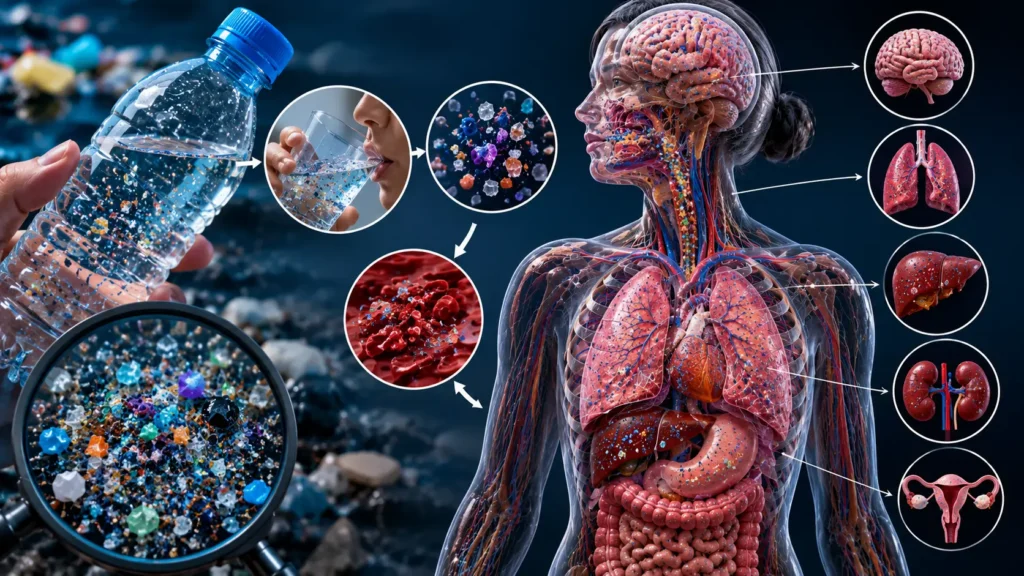
Research published across top journals including Frontiers in Cell Biology, The Lancet, and PubMed in 2025–2026 points to these serious risks:
1. Gut Microbiome Disruption
Microplastics Health Effects alter the natural balance of bacteria in your gut — a condition called dysbiosis. Studies show changes in the ratio of Firmicutes to Bacteroidetes bacteria, reduced microbial diversity, and increased gut inflammation. People with inflammatory bowel disease (IBD) have been found to carry significantly higher concentrations of microplastics in their stool.
2. Chronic Inflammation Throughout the Body
When plastic particles enter your tissues, the immune system treats them as invaders and triggers a continuous low-grade inflammatory response. Over months and years, this chronic inflammation is linked to arthritis, diabetes, heart disease, and even some cancers.
3. Cardiovascular Risk
People with polyethylene (a common plastic) found in their arterial plaque were found to be 4.5 times more likely to experience a heart attack, stroke, or death over a three-year period, according to a landmark study. This is one of the most startling findings in microplastics research to date.
4. Hormonal Disruption
Chemical additives in microplastics — including BPA and phthalates — act as endocrine disruptors. They mimic or block the body’s natural hormones, potentially causing infertility in men and women, thyroid imbalance, and developmental issues in children.
5. Potential Brain Penetration
Animal studies confirm that the smallest plastic particles (nanoplastics) can cross the blood–brain barrier and accumulate in neural tissue. Two researchers in 2025 found microplastics inside the tissue of brain tumors — a finding that has intensified neurological research globally.
6. Lung Damage
Microplastics have been detected in all sections of the human lung. Inhaling plastic particles — from synthetic dust, air fresheners, or microfiber fabric — may contribute to respiratory inflammation and reduced lung function over time.
7. Reproductive Harm
Studies in 2026 show microplastics are found in placental tissue, cord blood, and breast milk, raising urgent questions about fetal development. Scientists warn that early-life exposure may affect reproductive health across generations.
8. Children Are Most at Risk
Children face higher exposure due to hand-to-mouth behavior, playing on synthetic surfaces, and drinking from plastic bottles. Their immature biological barriers make it harder to defend against microplastic accumulation.
Microplastics Symptoms in the Gut
If microplastics have accumulated in your gut, your body may start sending warning signals. Watch out for these key symptoms:
- Stomach bloating or swelling — a sign of gut inflammation caused by plastic particle irritation
- Frequent constipation or loose stools — microplastics disrupt gut bacteria balance, triggering IBS-type digestive issues
- Persistent indigestion and acidity — a disturbed gut microbiome weakens your digestive lining over time
- Unexplained fatigue and weakness — chronic low-grade inflammation from plastic particles drains your energy levels
- Unexplained skin rashes or allergies — gut inflammation often surfaces through the skin as your immune system reacts to plastic toxins
- Hormonal imbalance — especially in women, chemical additives in microplastics act as endocrine disruptors, potentially causing irregular periods and thyroid issues
How to Reduce Microplastics in Drinking Water at Home
The single most effective step you can take today is filtering your drinking water. Here is a practical guide on how to reduce microplastics in drinking water at home:
Use a Certified Water Filter
Not all filters work. The best technologies for blocking microplastics are:
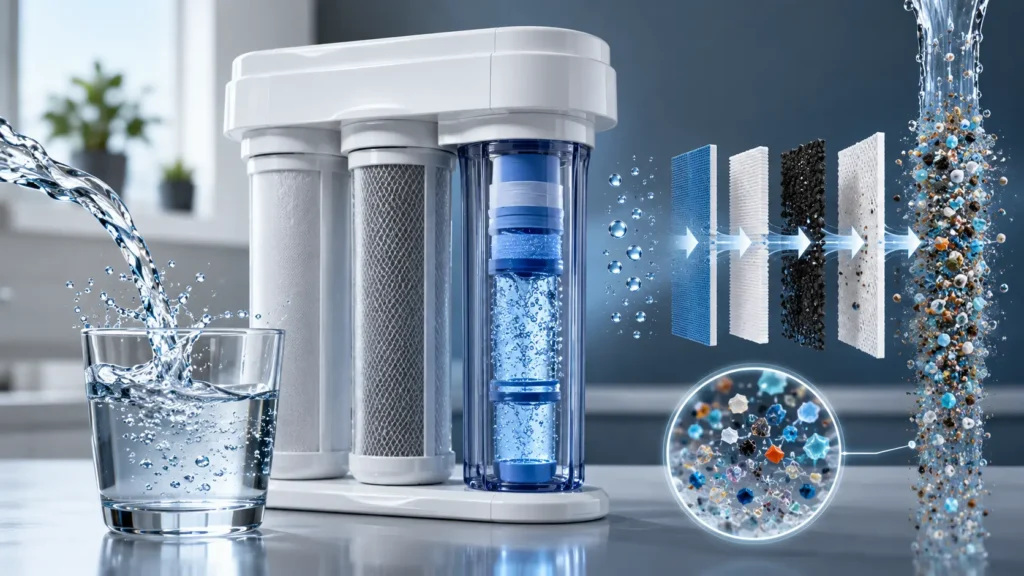
- Reverse Osmosis (RO) filters — considered the gold standard; an RO membrane at 0.0001 microns blocks 100% of microplastic particles, which range from 1 to 5,000 microns
- Ultrafiltration (UF) filters — effective for particles down to 0.01 microns
- NSF/ANSI 401-certified filters — the internationally recognised standard specifically for microplastic reduction
Other Steps to Reduce Daily Exposure
- Avoid heating food in plastic containers — heat dramatically increases leaching
- Switch to glass or stainless steel bottles instead of plastic water bottles
- Drink filtered tap water — bottled water often contains MORE microplastics than properly filtered tap water due to plastic bottle degradation
- Wash synthetic clothes in a microfibre-catching laundry bag
- Eat more whole, unprocessed foods — heavily packaged foods carry higher microplastic loads
- Use a vacuum cleaner with HEPA filters to reduce airborne plastic dust at home
Best Water Filter to Remove Microplastics India: What to Look For
Finding the best water filter to remove microplastics India can feel confusing, but the key is simple: look for RO-based systems with third-party certification.
What to check before buying:
- NSF/ANSI 401 certification — this is the specific standard for microplastic removal
- Membrane pore size of 0.0001 microns (RO systems)
- Multi-stage filtration — sediment pre-filter + RO membrane + activated carbon post-filter
- Avoid marketing claims without proof — insist on independent lab test data
Popular filter types available in India:
- RO + UV + UF purifiers from brands like Kent, Aquaguard, and Livpure — the RO stage in these models effectively blocks microplastics along with other contaminants
- Gravity-based ceramic filters — offer sub-micron filtration without electricity, suitable for areas with power cuts
- Countertop RO dispensers — portable, renter-friendly, and highly effective
Pro tip: Even if you already own an RO purifier in India, check when you last changed the RO membrane. An old or damaged membrane may allow microplastics through. Most membranes need replacement every 2–3 years.
Final Thoughts: You Have More Control Than You Think
The microplastics health effects on human body 2026 are serious, and the science is only getting clearer. But this is not a story of helplessness. By filtering your drinking water, reducing plastic use in your kitchen, and staying informed, you can meaningfully reduce your daily exposure.
Read More: Improve Deep Sleep Naturally Without Medication for Adults Over 30