
Introduction: The Outbreak That Shocked the World
A dream voyage to Antarctica has turned into a global health nightmare. The hantavirus cruise ship outbreak aboard the Dutch-flagged MV Hondius has sent shockwaves across the world — triggering emergency evacuations, international quarantines, and a Level 3 CDC emergency response. With 11 confirmed and suspected cases and 3 deaths spanning passengers from over 23 countries, health authorities worldwide are on high alert.
This is not just a story about a sick ship. It is a stark reminder of how quickly an obscure viral disease can go global — and why the world must never lower its guard.
Here is everything you need to know about the hantavirus cruise ship outbreak, what the Andes virus is, and how to keep yourself safe.
What Is Hantavirus? A Dangerous Virus You Must Know About
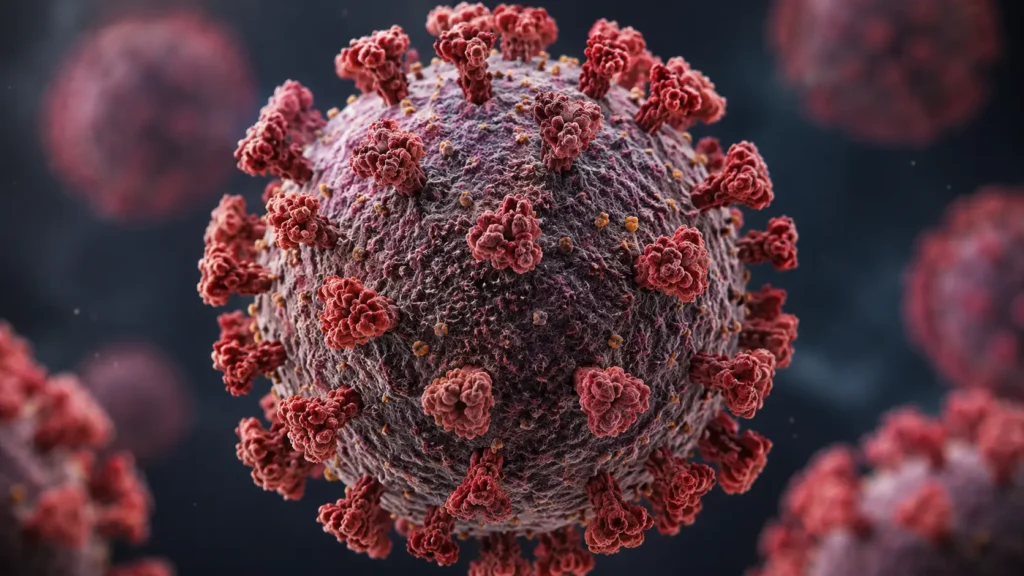
Hantavirus is a family of viruses primarily carried by rodents. Humans typically get infected through contact with infected rodent urine, feces, or saliva — usually by inhaling contaminated air particles. There are more than 50 types of hantaviruses, and most do not spread from person to person.
But the Andes virus is different — and that is exactly what makes this outbreak so alarming.
What Is Andes Virus (ANDV)?
- Origin: Primarily found in South America, especially Argentina and Chile
- Carrier: Rodents, particularly the long-tailed pygmy rice rat
- Disease caused: Hantavirus Pulmonary Syndrome (HPS) — a severe lung disease
- Fatality rate: Up to 38% in this current outbreak
- Unique danger: The only known hantavirus that spreads person-to-person
Unlike other hantaviruses, the Andes virus can transmit between humans through close, prolonged contact — including exposure to saliva, respiratory secretions, or shared spaces with a symptomatic person. This is what elevated the MV Hondius outbreak from a local medical emergency to a global public health concern.
The MV Hondius Outbreak: A Timeline of Events
How It All Began
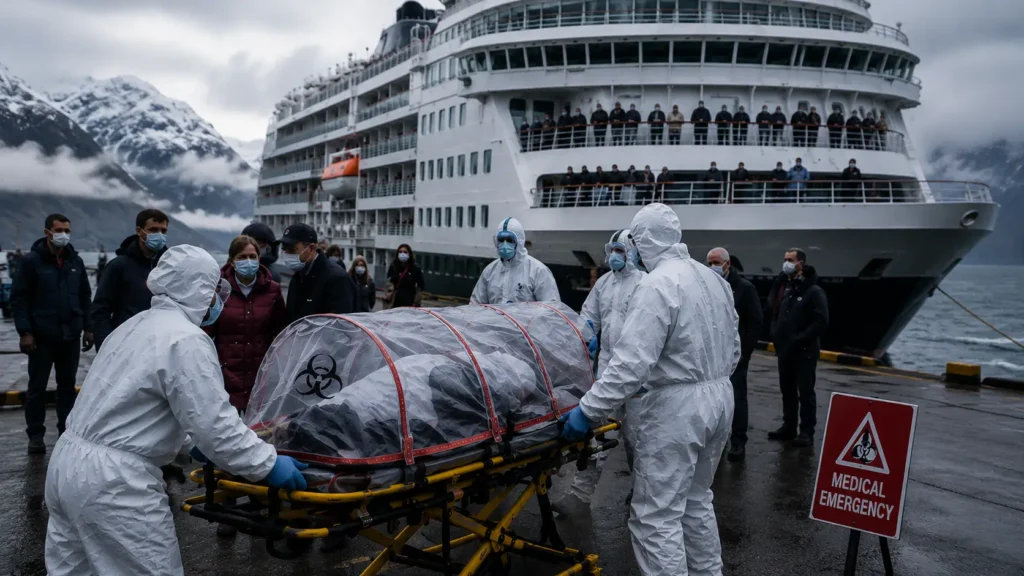
The MV Hondius departed from Ushuaia, Argentina on April 1, 2026 — a remote-destination cruise heading toward Antarctica. The ship carried passengers and crew from 23 countries, including nine EU/EEA member states. The route included stops at:
- Antarctica
- South Georgia Island
- Tristan da Cunha
- Saint Helena
- Ascension Island
Health experts now believe that some passengers were exposed to the Andes virus before boarding — while spending time in Argentina, where the virus is endemic in rodent populations.
Read More:- Hantavirus vs COVID-19: How Dangerous Is This Virus Really?
Key Dates at a Glance
| Date | Event |
|---|---|
| April 1, 2026 | MV Hondius departs Ushuaia, Argentina |
| April 24, 2026 | 30 passengers disembark at Saint Helena |
| May 2, 2026 | WHO notified of severe respiratory illness cluster on board |
| May 3, 2026 | First PCR test confirms Hantavirus |
| May 6, 2026 | Andes virus confirmed; ship anchored off Cape Verde |
| May 8, 2026 | 8 cases (6 confirmed), 3 deaths; CDC issues Level 3 alert |
| May 10, 2026 | Ship docks at Tenerife, Canary Islands; evacuations begin |
| May 11, 2026 | All passengers disembarked; repatriation flights completed |
| May 12, 2026 | 11 total cases (9 confirmed, 2 probable); 3 deaths confirmed |
Countries Involved in Response
Passengers were repatriated to six European countries, Canada, and the United States. American passengers were airlifted to the Nebraska Biocontainment Unit and Emory University Hospital in Atlanta — two of the most advanced biocontainment facilities in the world.
Symptoms of Hantavirus Pulmonary Syndrome (HPS)
Knowing the symptoms could save your life. The Andes virus typically has an incubation period of 4 to 42 days, making contact tracing particularly challenging.
Early Symptoms (Days 1–5):
- High fever (38°C / 100.4°F or above)
- Severe fatigue
- Muscle aches — especially in thighs, hips, back, and shoulders
- Nausea, vomiting, diarrhea, abdominal pain
- Headache and chills
Late Symptoms (Days 4–10) — Medical Emergency:
- Cough and shortness of breath
- Rapid progression to pneumonia
- Acute Respiratory Distress Syndrome (ARDS)
- Cardiovascular shock
Important: Early symptoms closely resemble the flu or COVID-19. If you were on or near the MV Hondius or in contact with someone who was, seek immediate medical attention.
How Is the Andes Virus Spreading on the Ship?
Health authorities are still investigating the exact transmission chain. However, the current leading hypothesis is:
- Some passengers were exposed to infected rodents or their droppings during excursions in Argentina before boarding
- The Andes virus spread through close, sustained contact among passengers in the ship’s confined spaces
- Possible airborne transmission in enclosed areas — currently under investigation
The Andes virus is the only hantavirus documented to spread human-to-human, and while this typically requires prolonged, close contact, the dynamics of a cruise ship environment — shared dining areas, cabins, and common spaces — created a high-risk setting.
Global Response: How Authorities Are Acting
CDC (United States)
- Declared Level 3 Emergency Response
- Sent expert team to the Canary Islands to assess U.S. passengers
- Repatriated American passengers to Nebraska and Georgia biocontainment facilities
- Issued nationwide guidance to healthcare professionals and laboratories
WHO (World Health Organization)
- Activated International Health Regulations (IHR) contact tracing
- Assessed global risk as “low” for the general population
- Continues monitoring and updating risk assessments daily
ECDC (European Centre for Disease Prevention and Control)
- Issued guidance for EU/EEA countries managing repatriated passengers
- Assessed risk to EU general population as “very low”
- Published infection prevention and control guidance for healthcare settings
Individual Country Responses
- 🇫🇷 France: Passengers placed in biocontainment units
- 🇳🇱 Netherlands: Passengers asked to self-isolate for 6 weeks
- 🇬🇧 UK: 22 passengers entered 72-hour quarantine in Wirral, then 45-day home isolation
- 🇺🇸 USA: Patients monitored in Arizona, California, Georgia, Texas, and Virginia
- 🇨🇭 Switzerland: Confirmed patient treated in Zurich
Should You Be Worried? What Experts Say
In short — the global risk is currently very low, but vigilance is essential.
Here is what health authorities confirm:
- No community spread has been detected anywhere
- All cases are linked directly to passengers on MV Hondius
- Person-to-person transmission requires close, prolonged contact
- There is no vaccine, but supportive care significantly improves survival
- The high case fatality rate (38%) is a serious concern
- The long incubation period (up to 42 days) means new cases could still emerge
How to Protect Yourself From Hantavirus
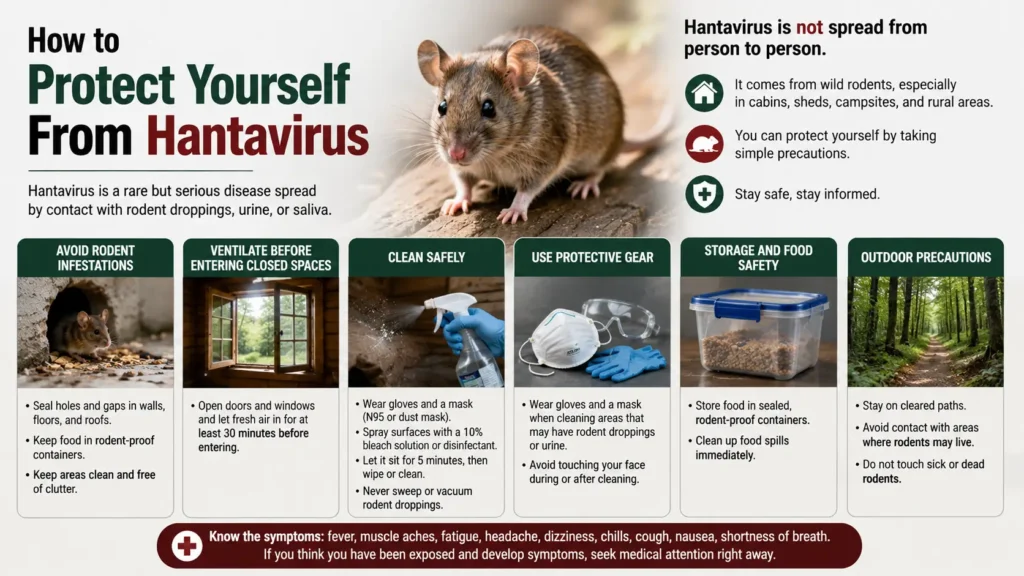
Even if you were not on the MV Hondius, hantavirus remains a risk in rodent-endemic areas. Here are proven precautions:
- Avoid rodent contact — do not touch dead rodents or their nesting areas
- Use gloves and masks when cleaning areas with possible rodent droppings
- Ventilate enclosed spaces before cleaning — never sweep dry droppings
- Wash hands thoroughly after outdoor activities in South American wilderness areas
- Seal food and trash when camping or in rural areas
- Seek immediate medical attention if you develop fever + muscle aches after possible exposure
Key Takeaways
- The hantavirus cruise ship outbreak on MV Hondius is a global health emergency with 11 cases and 3 deaths
- The culprit is Andes virus — the only hantavirus that spreads person-to-person
- Passengers from 23 countries were on board; many are now quarantined in home nations
- The CDC has declared Level 3 response; WHO and ECDC are actively monitoring
- Global risk remains low, but close contacts of passengers must monitor symptoms for up to 42 days
- No specific antiviral treatment exists — early supportive care is critical
Conclusion: A Wake-Up Call From the Ocean
The MV Hondius hantavirus cruise ship outbreak is a chilling reminder that infectious diseases do not respect borders, oceans, or luxury itineraries. What began as a remote-destination adventure has become one of the most closely watched global health events of 2026.
The world’s health agencies have responded swiftly and transparently — a positive sign. But as investigations continue and the incubation window remains open, the story is far from over. Stay informed, follow official guidance, and if you or someone you know was aboard the MV Hondius, contact your national health authority immediately.
Read More:- PCOS Gets a New Name — PMOS: Everything You Need to Know in 2026