
What Exactly Are Ultra-Processed Foods?
The term “ultra-processed” comes from the NOVA food classification system, developed by researchers at the University of São Paulo. It categorizes foods based on the extent and purpose of processing — not just nutritional content.
Ultra-processed foods are not simply “cooked” or “preserved.” They are industrially manufactured products that contain ingredients you would never find in a home kitchen — such as emulsifiers, flavor enhancers, artificial sweeteners, color stabilizers, and chemical preservatives.
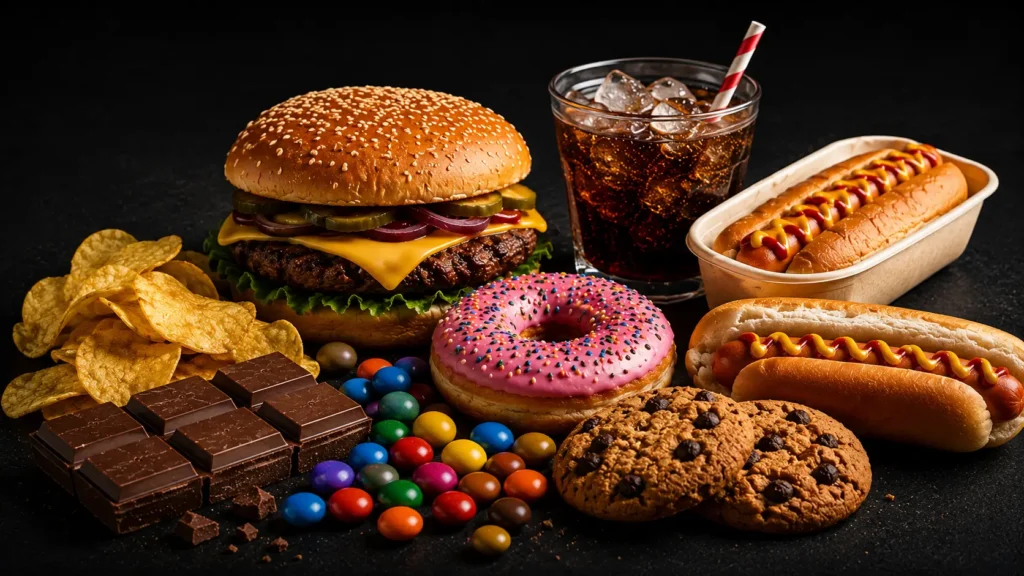
Common ultra-processed foods include:
- Packaged chips, crackers, and biscuits
- Instant noodles and ready-to-eat meals
- Flavored yogurts and sweetened cereals
- Soft drinks, energy drinks, and packaged fruit juices
- Processed meats like sausages, nuggets, and hot dogs
- Store-bought cakes, pastries, and flavored breads
- Most fast food items
If a food product has more than five ingredients — especially ones you cannot pronounce — it is very likely ultra-processed.
The Shocking Science: What UPFs Are Doing to Your Body
1. Fueling Chronic Disease
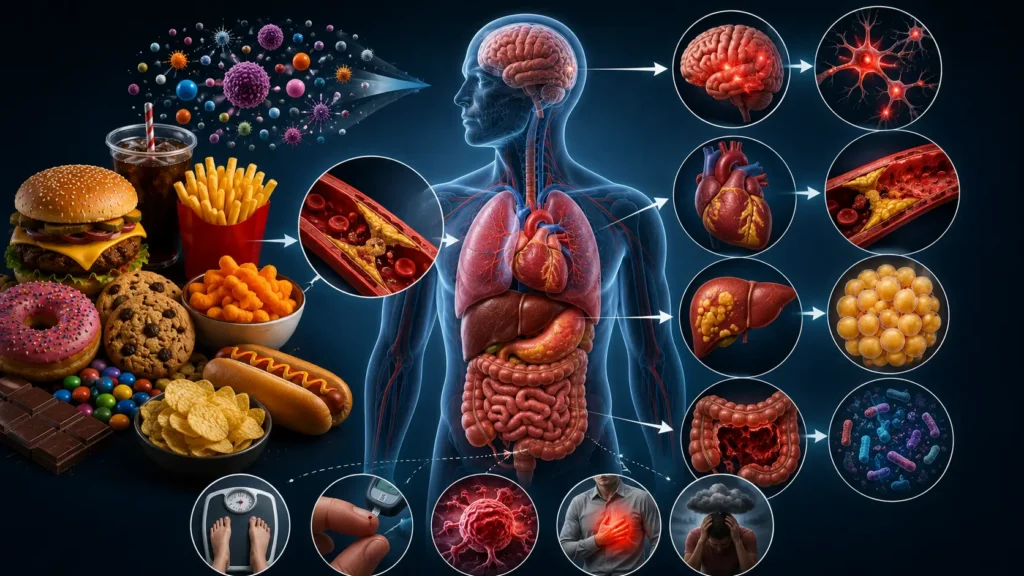
The evidence is no longer debatable. A landmark series of papers published in The Lancet by over 40 leading health experts confirmed that ultra-processed foods are a leading contributor to chronic disease worldwide. Research has consistently linked higher UPF consumption to weight gain, cardiometabolic risk, and all-cause mortality.
Specifically, regular UPF consumption has been linked to:
- Type 2 diabetes — due to high sugar content and insulin resistance
- Heart disease and stroke — from trans fats, sodium, and inflammatory additives
- Kidney and gastrointestinal diseases — from chemical preservatives and emulsifiers
- Depression and anxiety — through gut-brain axis disruption
- Certain cancers — particularly colorectal cancer
2. Destroying Your Gut Health
Your gut is home to trillions of bacteria that regulate immunity, mood, and metabolism. Ultra-processed foods are essentially a weapon against this ecosystem.
A 2025 experimental study found that two widely consumed food additive emulsifiers caused transgenerational microbiota alteration in mice — meaning the gut damage was passed down to the next generation. The implications for human health are deeply concerning.
When gut bacteria are thrown out of balance, the consequences ripple outward — weakened immunity, increased inflammation, poor nutrient absorption, and even mental health disorders.
Read More: Is Your Food Really Safe? Food Safety Scandals Worth Knowing About
3. Impairing Brain Function
This one will surprise you. A 2025 study published in research on aging populations found that higher UPF consumption was linked to impaired executive cognitive function in older adults. A separate study found poorer diet quality and elevated glucose levels in adolescents who regularly consumed ultra-processed foods.
In simple terms: the more junk food you eat, the worse your brain performs — at any age.
4. Causing Weight Gain Beyond Calories
Here is the part that most people get wrong. It is not just about calories. A 2025 randomized controlled trial confirmed that ultra-processed foods cause weight gain and metabolic harm even when calorie intake is not excessive.
The combination of hyper-palatable flavors, engineered textures, and appetite-disrupting additives makes UPFs uniquely dangerous — they override your body’s natural fullness signals, making it almost impossible to stop eating them in moderation.
Why Are UPFs Everywhere? (The Uncomfortable Truth)
Ultra-processed foods are not accidentally everywhere. They are engineered to be addictive, affordable, and shelf-stable — which makes them enormously profitable. As researchers at The Lancet bluntly stated, “the widespread sale and consumption of UPFs creates large corporate profits while making people sick.”
India’s dietary guidelines and food policies are now explicitly emphasizing the need to limit ultra-processed foods and prioritize minimally processed alternatives. But policy moves slowly. In the meantime, the responsibility falls on you as an informed consumer.
What to Eat Instead — Practical, Affordable Swaps
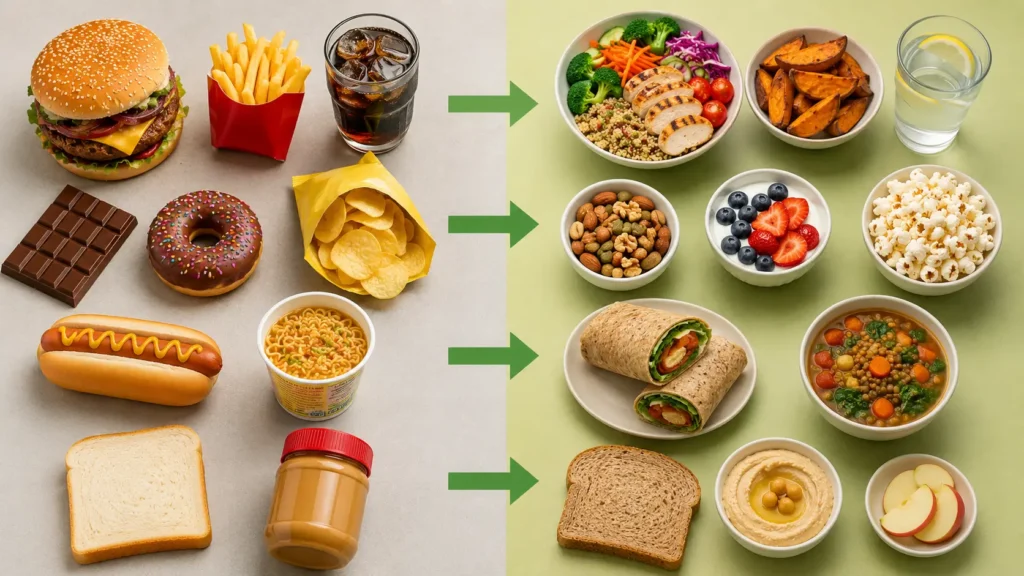
Making the switch does not require an expensive organic grocery haul. It requires awareness and a few deliberate choices.
Breakfast Swaps
| Instead of… | Eat This |
|---|---|
| Flavored cereal | Oats with banana and honey |
| Packaged fruit juice | Fresh fruit or whole fruit smoothie |
| White bread toast | Multigrain or sourdough bread |
Lunch & Dinner Swaps
| Instead of… | Eat This |
|---|---|
| Instant noodles | Homemade khichdi or dal rice |
| Packaged frozen meals | Simple home-cooked sabzi and roti |
| Processed meat (nuggets) | Grilled chicken, eggs, or paneer |
Snack Swaps
| Instead of… | Eat This |
|---|---|
| Chips and crackers | Roasted chana, makhana, or nuts |
| Energy drinks | Coconut water, lemon water, or chaas |
| Packaged biscuits | Homemade ladoo or fruit with peanut butter |
The NOVA Rule — A Simple Framework to Shop Smarter
You do not need to memorize nutrition labels. Just use this simple NOVA-inspired filter when shopping:
- Group 1 — Fresh & Whole: Fruits, vegetables, eggs, milk, meat, fish → Eat freely
- Group 2 — Minimally Processed: Oats, brown rice, cold-pressed oils, plain yogurt → Eat regularly
- Group 3 — Processed: Canned beans, cheese, bread with few ingredients → Eat occasionally
- Group 4 — Ultra-Processed: If it has emulsifiers, artificial flavors, or more than 5 ingredients you cannot identify → Limit or avoid
Small Steps That Make a Big Difference
You do not have to overhaul your entire diet overnight. Start with these three changes this week:
- Read ingredient labels. If you see words like “modified starch,” “high-fructose corn syrup,” or “sodium benzoate” — put it back.
- Cook one extra meal at home each day. Home-cooked food, even simple dal and rice, is almost always better than packaged alternatives.
- Replace one packaged snack per day with a whole food option — a banana, a handful of almonds, or roasted seeds.
Small changes, done consistently, create real results.
Final Thoughts
Ultra-processed foods are not inherently evil — eating a packet of biscuits once in a while will not harm you. The danger lies in how normalized daily, heavy UPF consumption has become, and how silently the damage accumulates over months and years.
The science is clear. The Lancet, Nature Medicine, BMJ — the world’s most respected medical journals are all pointing in the same direction. The food on your plate is either slowly healing you or slowly harming you.
You have more control than you think. Start today.
Read More:- Hantavirus vs COVID-19: How Dangerous Is This Virus Really?