
Legs Up the Wall for Weight Loss
What Is the Legs Up the Wall Pose?
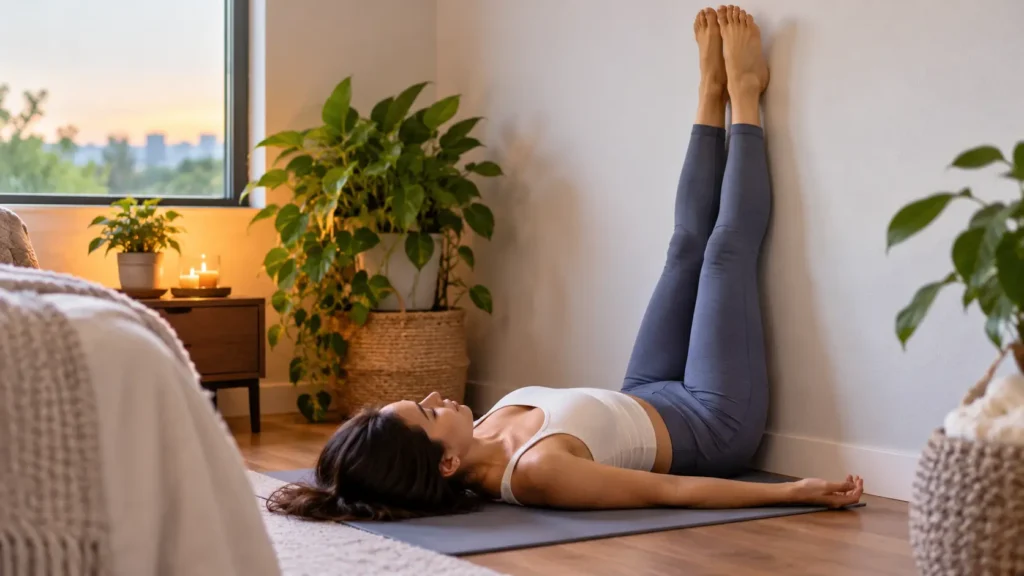
Legs up the wall is a passive, restorative yoga posture. You lie on your back, scoot your hips close to a wall, and rest your legs vertically against it, forming roughly an L-shape with your body. Unlike active yoga poses, there’s no muscular effort involved — you simply relax and breathe while gravity does the rest.
It’s often used at the end of a workout, during a stressful day, or right before bed as a way to help the body shift from “go mode” into “rest mode.”
If you’ve spent any time scrolling wellness content lately, you’ve probably seen someone lying on the floor with their legs propped straight up against a wall. It’s called Viparita Karani, or simply the “legs up the wall” pose, and it’s one of the most talked-about restorative yoga poses on the internet right now.
Read More: Jogging vs Cycling for Weight Loss: Which Burns More Calories? Complete Guide
But does it actually help with weight loss? Does Legs Up the Wall Improve Circulation? And how long should you hold it? Let’s break down what this pose can — and can’t — do for your body, backed by what’s currently understood about it.
Disclaimer: I am not a doctor, and this article is for general informational purposes only. Please consult a qualified healthcare professional before starting any new practice, especially if you have an existing medical condition.
Legs Up the Wall Benefits: 7 Reasons People Swear By It
Here are the most commonly reported legs up the wall benefits:
- Reduces swelling in the legs and feet — Elevating your legs helps fluid that has pooled in your lower body drain back toward your torso.
- Eases tired, achy legs — Popular among people who stand or sit for long hours, runners, and travelers after long flights.
- Calms the nervous system — The pose is thought to activate the parasympathetic (“rest and digest”) response, which can lower feelings of stress and anxiety.
- Gently relieves mild lower back tension — Resting in this position can take pressure off the lower spine for some people.
- Supports better sleep quality — As a wind-down ritual, it can help signal to your body that it’s time to relax.
- May ease mild headaches or eye strain — Some people find the gentle inversion soothing after a long day of screen time.
- Improves body awareness and mindfulness — Because you’re lying still and breathing deliberately, it doubles as a short mindfulness practice.
It’s worth noting that most of Legs Up the Wall Benefits come from relaxation and passive fluid drainage, not from any dramatic physiological transformation. It’s a low-effort, low-risk practice with real (if modest) upsides.
Legs Up the Wall for Weight Loss: What the Science Really Says
Let’s address the big question directly: is legs up the wall for weight loss actually effective?
The honest answer is no, not directly. This is a passive, stationary pose — you’re not burning meaningful calories, building muscle, or engaging in the kind of physical exertion that leads to fat loss. If your goal is weight loss, this pose alone will not get you there.
That said, there are a few indirect ways it might support a weight-loss routine:
- Better sleep supports weight regulation. Poor sleep is linked to increased hunger hormones and cravings. A calming pre-bed routine that includes legs up the wall may help you sleep better, which indirectly supports healthy weight management.
- Lower stress can reduce stress-eating. Chronic stress raises cortisol, which is associated with increased appetite and abdominal fat storage in some people. A relaxation practice may help manage stress levels over time.
- Post-workout recovery. Using the pose after exercise may help your legs feel less fatigued, potentially helping you stay more consistent with a fitness routine.
So while legs up the wall isn’t a weight-loss technique on its own, it can be a helpful supporting habit alongside proper nutrition, regular exercise, and good sleep hygiene. Be cautious of any content claiming this pose “burns fat” or “melts belly fat” — that’s not accurate.
Legs Up the Wall Weight Loss Side Effects to Know
Before trying this pose regularly, it helps to know the possible legs up the wall weight loss side effects and general precautions, since a few groups of people should be more careful:
- Eye conditions: If you have glaucoma or other conditions involving high eye pressure, inversions like this can increase intraocular pressure. Check with your doctor first.
- High or uncontrolled blood pressure, or heart conditions: Get medical clearance before adding this to your routine.
- Pregnancy: Often fine in a modified form (with support under the hips, or done at a gentler angle), but it’s best to check with your doctor, particularly in the later stages.
- Hamstring, hip, or lower back injuries: The angle of the legs against the wall may feel uncomfortable. Bending the knees slightly or moving your hips a bit farther from the wall can help.
- Mild dizziness or tingling: Some people feel lightheaded or notice a pins-and-needles sensation if they stay in the pose too long. This is a sign to come out of the pose.
- Standing up too quickly: Because your legs have been elevated, stand up slowly afterward to avoid a head rush.
For most healthy adults, Legs Up the Wall Weight Loss Side Effects are rare and mild, but it’s always worth listening to your body and stopping if anything feels wrong.
How Long Should You Put Your Legs Up the Wall?
A common question is: how long should you put your legs up the wall for Waigth loss the best results?
Most guidance suggests 5 to 15 minutes is the ideal range for most people. Here’s a simple breakdown:
- Beginners: Start with 3–5 minutes and gradually build up.
- General relaxation or recovery: 5–15 minutes is typically enough to feel the benefits.
- Maximum recommended: Around 20 minutes. Going beyond this doesn’t offer extra benefit and may increase the chance of numbness or lightheadedness.
When you’re done, don’t jump straight up. Bend your knees, roll gently to one side, pause for a few breaths, and then slowly sit up.
Legs Up the Wall for Better Sleep
One of the most popular uses of this pose is as a bedtime ritual. Using legs up the wall for better sleep works well because it fits naturally into a calming wind-down routine.
Here’s how people typically use it before bed:
- Dim the lights and put screens away 20–30 minutes beforehand.
- Get into the pose with your hips close to the wall and legs resting comfortably.
- Focus on slow, deep breathing — try inhaling for a count of four and exhaling for a count of six.
- Stay for 5–15 minutes, letting your body settle.
- Transition straight into bed afterward, while you’re still relaxed.
It’s important to be clear that this isn’t a clinical treatment for insomnia or sleep disorders. Think of it as one small, low-effort tool that can be part of a broader healthy sleep routine — alongside consistent sleep timing, a cool dark room, and limiting caffeine later in the day.
Does Legs Up the Wall Improve Circulation?
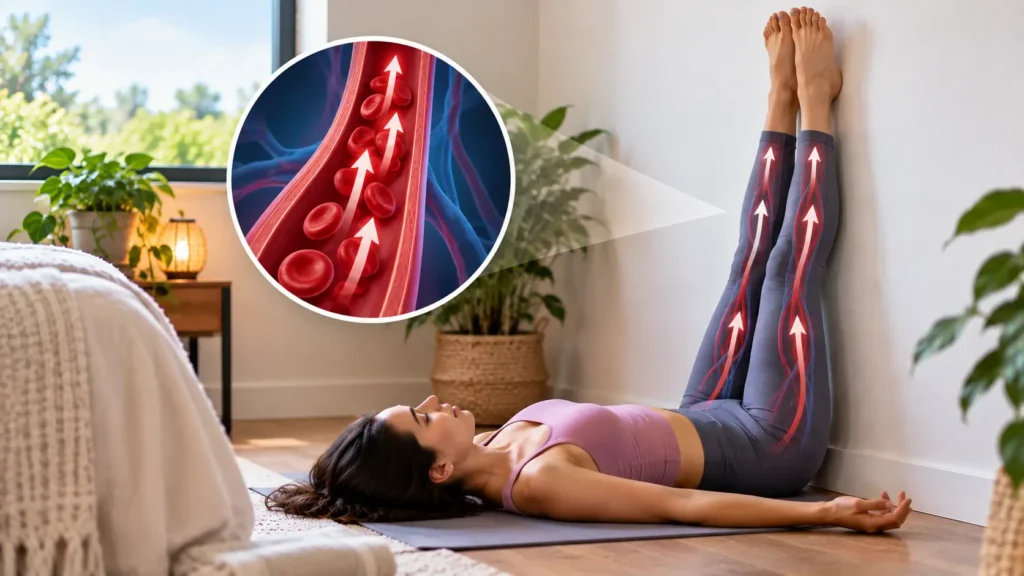
Another frequently asked question: does legs up the wall improve circulation?
The answer is yes, in a specific and modest sense. Elevating your legs above heart level uses gravity to help venous blood and lymphatic fluid move back up toward your torso more easily. This is why the pose is often recommended for:
- Tired or heavy-feeling legs after a long day
- Mild swelling in the feet and ankles
- Minor discomfort from varicose veins
- Recovery after long periods of standing, sitting, or travel (like long flights)
However, it’s important to set realistic expectations. This is not the same as improving your cardiovascular fitness or overall blood flow throughout your body long-term. It’s a localized, temporary effect — it helps drain fluid that has pooled in your lower legs, rather than strengthening your heart or blood vessels. If you have ongoing circulation concerns, such as significant swelling, discoloration, or pain, it’s worth discussing with a doctor rather than relying on this pose alone.
How to Do Legs Up the Wall: Step-by-Step
Ready to try it? Here’s a simple step-by-step guide:
- Find a clear wall space and grab a yoga mat, towel, or blanket to lie on.
- Sit sideways next to the wall, with one hip touching it.
- Swing your legs up the wall as you lower your back down onto the floor, adjusting until your hips are close to the wall and your legs are resting vertically.
- Rest your arms by your sides, palms facing up, in a comfortable position.
- Close your eyes and breathe slowly and deeply.
- Stay for 5–15 minutes, adjusting your distance from the wall if your hamstrings feel too tight.
- Come out slowly — bend your knees, roll to one side, and rest there for a breath or two before sitting up.
Tip: If your lower back feels uncomfortable, place a folded blanket or small pillow under your hips for extra support.
FAQs: Legs Up the Wall for Weight Loss
Is legs up the wall benefits every day? For most healthy people, doing it daily is considered safe and can help build it into a consistent relaxation habit.
Can beginners do this pose? Yes — it requires no flexibility or strength, making it one of the most accessible restorative yoga poses available.
Will it tone my legs? No. Since it’s a passive pose with no muscular engagement, it won’t build muscle tone. Pair it with strength training for that goal.
What’s the best time of day to do it? Anytime works, but two windows are especially popular: right after a workout, when your legs feel fatigued, and in the evening as part of a wind-down routine before bed.
Do I need any equipment? No special equipment is required. A yoga mat, towel, or blanket for comfort is optional but not necessary — all you really need is a clear stretch of wall and a few quiet minutes.
Can I do this if I’m a complete beginner to yoga? Absolutely. Because the pose is passive and doesn’t involve balance, strength, or flexibility, it’s often recommended as one of the very first poses beginners try.
A Few Variations to Try: Legs Up the Wall for Weight Loss
Once you’re comfortable with the basic pose, a few small variations can change how it feels:
- Legs wide apart (supported bound angle variation): Let your legs fall open into a gentle V-shape against the wall for a light inner-thigh stretch.
- With a bolster or pillow under the hips: This slightly deepens the angle and can feel more supportive for the lower back.
- With an eye pillow or cool cloth: Adds a sensory element that many people find extra calming, especially in the evening.
- Paired with deep breathing or a short meditation: Combining the pose with a guided breathing pattern can amplify the relaxation effect.
These variations don’t change the core benefits, but they can make the practice feel more personalized and enjoyable, which makes it easier to stick with consistently.
Final Thoughts: Legs Up the Wall for Weight Loss
Legs Up the Wall for Weight Loss, accessible, and genuinely relaxing practice with real (if modest)Legs Up the Wall Benefits — better circulation drainage, reduced leg fatigue, stress relief, and support for a good night’s sleep. What it isn’t, however, is a weight-loss shortcut. Used as a low-effort addition to a broader routine of good sleep, balanced nutrition, and regular movement, it can be a small but worthwhile habit. As always, if you have any underlying health conditions, check with a healthcare provider before adding it to your routine.
Read More: Dark Circles and Puffy Eyes: Simple Care Tips That Can Help

